Emergency Medicine (eBook)
John Wiley & Sons (Verlag)
978-1-118-35075-1 (ISBN)
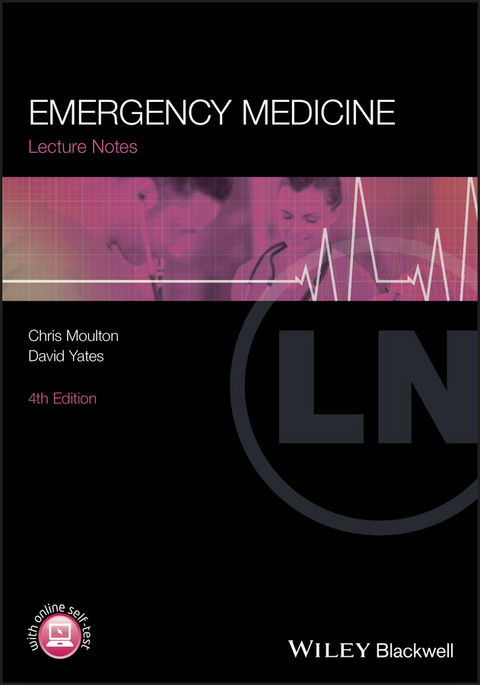
Emergency Medicine Lecture Notes provides all the necessary information, within one short volume, for a sound introduction to this core specialty area.
Presented in a user-friendly format, combining readability with flowcharts and high-quality illustrations, this fourth edition has been thoroughly revised to reflect recent advances in the field of emergency medicine. For this new edition, Emergency Medicine Lecture Notes features:
• Illustrations and flow charts in a two colour presentation throughout
• More detail on imaging, diagnosis and management of a wide range of acute conditions
• A brand new companion website at www.lecturenoteseries.com/emergencymed featuring a selection of MCQs to test readers on common pitfalls in emergency medicine
Not only is this book a great starting point to support initial teaching on the topic, but it is easy to dip in and out of for reference or revision at the end of a module, rotation or final exams. Whether you need to develop or refresh your knowledge of emergency medicine, Emergency Medicine Lecture Notes presents 'need to know' information for all those involved in treating those in an emergency setting.
Chris Moulton is a Consultant in Accident & Emergency Medicine at the Royal Bolton Hospital and a Senior Lecturer in Emergency Medicine at the University of Manchester.
David Yates is former Professor of Emergency Medicine at the University of Manchester.
Chris Moulton is a Consultant in Accident & Emergency Medicine at the Royal Bolton Hospital and a Senior Lecturer in Emergency Medicine at the University of Manchester. David Yates is former Professor of Emergency Medicine at the University of Manchester.
Title page 5
Copyright page 6
Contents 7
Preface to the fourth edition 9
Preface to the second edition 10
Preface to the first edition 11
1: What every emergency physician must know 13
What to do in an emergency 13
A – Airway 13
B – Breathing 15
C – Circulation 17
D – Disability 19
E – Environment and exposure 23
F – Fits 23
G – Glucose 24
H – History 24
I – Immediate analgesia and investigations 24
Further management in the ED 26
How much history, how much examination? 26
Investigations 26
Definitive care 26
Homelessness 26
Prehospital care 26
Major incidents 27
Sedation and general anaesthesia 27
Preparation for sedation and selection of patients 27
Facilities for the administration of sedation or general anaesthesia 28
Conditions during the period of sedation 28
Assessment of the level of sedation 28
Drugs for sedation in the ED 28
Discharge of patients who have received sedative drugs in the ED 30
2: Major trauma and multiple injuries 31
Epidemiology 31
Trauma care 31
Preparation for reception of trauma victims 32
The primary survey and resuscitation phase (initial assessment and management) 32
The secondary survey (further assessment) 32
The chain of care 33
Primary survey and resuscitation 33
Airway 33
Breathing 35
Circulation 36
Disability 39
Exposure 39
Further care of the trauma patient 39
The secondary survey 39
Investigations in trauma 40
Further assessment of the abdomen in multiple trauma 41
Definitive care of the trauma patient 42
Special situations 42
Blast injuries 42
Drowning 42
Suffocation and asphyxiation 43
Paediatric trauma 43
Trauma in pregnancy 43
Other aspects of trauma care 44
Bereaved relatives 44
Trauma scores 44
3: Head injuries 45
Biomechanics and brain injury 45
The patient with a depressed level of consciousness 46
Immediate assessment and management 46
Further assessment and management 46
Management of specific problems 48
Guidelines for neurosurgical consultation 50
The ambulant patient with a head injury 50
History 50
Assessment 51
Imaging 51
Patients at risk of developing complications after a head injury 51
Ambulant patients with head injuries who are not obviously at risk 52
Advice to discharged patients (‘head injury instructions’) 53
Head injuries in children 53
Specific injuries 54
Fracture of the vault of the skull 54
Compound fracture of the skull 55
Depressed fracture of the skull 55
Fracture of the base of the skull 55
Aerocele 56
Extradural haematoma 56
Acute subdural haematoma 56
Chronic subdural haematoma 57
Subarachnoid haemorrhage 57
Cerebral contusions 57
Transient complications after minor head injury 58
Prolonged symptoms after apparently minor traumatic brain injury 58
Radiology of the skull 58
4: The neck and the back 62
Immediate assessment and management 62
Injury to the spinal cord 62
Initial management of spinal cord injury 62
Special problems that may accompany injury to the spinal cord 63
Localisation of spinal cord damage 63
Delayed improvement or deterioration after spinal cord injury 65
Cord syndromes 65
Imaging and clearance of the spine in trauma 66
Radiographs of the cervical spine 66
Radiographs of the thoracolumbar spine 67
Clearance of the spine 67
Cervical injury and neck pain 68
Cervical spine fractures and dislocations 68
Whiplash injury (strain injury to the neck) 68
Clay shoveller’s shoulder 69
Torticollis 69
Cervical spondylosis 70
Diffuse neck pain 70
Cervical nerve root pain 70
Back injury and back pain 70
Fractures of the thoracolumbar spine 70
Severe soft-tissue injury to the back 71
Fractures of the transverse processes 71
Acute back pain 71
Atypical back pain 72
Spinal epidural abscess 73
Sciatica 73
Cauda equina syndrome 74
Injury to the coccyx and coccygodynia 74
Wounds to the neck and the back 74
Major wounds to the neck 74
Stab wounds to the back 74
5: Facial injuries 76
Fractures of the facial bones 76
Special features associated with facial fractures 77
Mandibular fractures 77
Temporomandibular joint dislocation 78
Malar fractures 78
Middle third fractures 79
Nasal fractures 79
Facial wounds 80
Injuries inside the mouth 81
Injuries to the tongue 81
Injuries to the buccal mucosa and gingiva 82
Injuries to permanent teeth 82
Injuries to deciduous (milk) teeth 83
Injuries to the ear 83
Injuries involving the cartilage of the ear 83
Bites to the ear 83
Injuries around the eye 83
Blow-out fractures of the orbit 83
Eyelid lacerations 83
6: Injuries to the trunk 84
Chest injuries 84
Immediate assessment and management 84
Further assessment and management 84
Wounds to the chest wall 85
Pneumothorax and haemothorax 86
Tension pneumothorax 86
Surgical emphysema 88
Rib fractures 88
Flail segment 89
Tracheobronchial tree injuries 89
Fracture of the sternum 89
Traumatic asphyxia syndrome 90
Injury to the heart 90
Injuries to the great vessels 92
Oesophageal injury 93
Abdominal injuries 93
Immediate action 93
Methods of assessment of intra-abdominal damage 93
Stab wounds to the abdomen 94
Blunt abdominal trauma 95
Rupture of the diaphragm 95
Retroperitoneal injuries 95
Renal injury 95
Abdominal trauma in pregnancy 95
Pelvic injuries 96
Bony injury to the pelvis 96
Injury to the pelvic viscera 96
Urogenital injuries 96
Other perineal injuries 97
7: The lower limb 98
General approach to limb problems 98
Immediate assessment and management 98
Vascular problems related to injury 99
Plaster casts 99
Physiotherapy 100
Crutches 100
Local injection of steroids 100
Sports injuries 101
The hip and thigh 101
Dislocation of the hip 101
Fracture of the hip (fracture of the proximal femur) 101
Fracture of the pubic rami 102
The elderly patient with failure to weight-bear after a fall 103
Degenerative disease of the hip 103
Irritable hip 103
Perthes’ disease 104
Slipped upper femoral epiphysis 104
Extra-articular problems around the hip 105
Fracture of the femoral shaft 105
The knee 106
Assessment of the knee joint 106
Wounds around the knee 107
Soft-tissue injuries to the knee 107
Fractures of the tibial condyles 109
Fracture of the neck of the fibula 109
Diffuse inflammation of the knee 109
Loose bodies in the knee joint 109
Fracture of the patella/quadriceps injury 110
Dislocation of the patella 110
Patellofemoral osteochondritis 110
Peripatellar bursitis 111
Rupture of a Baker’s cyst 111
Osgood–Schlatter disease 111
The lower leg 112
Fracture of the shaft of the tibia 112
Fracture of the shaft of the fibula 113
Pretibial pain 113
Calf muscle strain or tear 113
Achilles tendonitis (tendonosis) 113
Rupture of the Achilles tendon 113
The ankle 114
Inversion sprains 114
Eversion sprains 116
Ankle fractures 116
Dislocation of the ankle 116
The foot 116
Fracture of the talus 116
Fracture of the calcaneum 117
Tarsal fracture and tarsometatarsal dislocation 118
Pain in the foot 118
Fractures of the forefoot 119
Fractures of the toes 119
Vascular conditions of the lower limb 119
Arterial embolism 119
Intra-arterial injection 120
Venous thrombosis 120
Phlebitis 122
Venous disease in IV drug abusers 122
Acute compartment syndrome 122
8: The upper limb 123
The shoulder and upper arm 123
Fracture of the clavicle 123
Sternoclavicular joint disruption 123
Acromioclavicular joint disruption 123
Supraspinatus tendinitis/subacromial bursitis 124
Rotator cuff injury 124
Rupture of the long head of biceps 125
Dislocation of the shoulder joint 125
Brachial plexus injury 126
Fracture of the scapula 126
Fracture of the humoral neck 127
Frozen shoulder 127
Thoracic outlet obstruction 127
Referred pain at the shoulder 128
Fracture of the humoral shaft 128
The elbow 128
Pulled elbow 129
Supracondylar fracture 129
Fractures of the medial and lateral epicondyles 129
Fracture of the olecranon 130
Fracture of the head or neck of the radius 130
Dislocation of the elbow joint 130
Epicondylitis: tennis elbow and golfer’s elbow 131
Degenerative disease of the elbow joint 131
Olecranon bursitis 131
The forearm and wrist 131
Wounds to the forearm and wrist 131
Fractures of the midshafts of the radius and ulna 132
Forearm fractures in children 132
Fracture of the distal radius 133
Wrist fractures in children 135
Fracture of the radial styloid 135
Small chip fractures of the carpus 136
Fracture of the scaphoid bone 136
Carpal dislocation 137
Wrist sprain 137
Carpal tunnel syndrome 137
Peritendonitis crepitans 138
De Quervain’s tenosynovitis 138
Avascular necrosis of the lunate 138
Osteoarthrosis of the wrist 138
Sudek’s atrophy 138
Vascular problems in the upper limb 138
Deep vein thrombosis of the upper limb 138
Ischaemia of the hand 139
9: The hand 140
Immediate assessment and management 140
Wounds to the hand 140
Injection injuries to the hand 141
Crush injuries of the hand 141
Amputations of the fingers 141
Partial avulsion of the fingertip 142
Tendon injuries in the hand 142
Digital nerve injuries 143
Metacarpal fractures 143
Spiral fracture of the shaft of the metacarpus 143
Transverse fracture of the shaft of the metacarpus 143
Fracture of the neck of the metacarpus 144
Bone and joint injuries of the fingers 144
Dislocation of the MCP joint 144
Ligament injuries of the MCP joint 144
Fracture of the proximal phalanx 144
Proximal interphalangeal joint injuries 145
The boutonnière deformity 145
Dislocation of the PIP joint 145
Fracture of the intermediate phalanx 146
Dislocation of the DIP joint 146
Mallet finger 146
Fracture of the distal phalanx 146
Thumb injuries 146
Fracture of the thumb metacarpus 147
Ligament injuries of the thumb MCP joint 147
Other injuries to the thumb 147
10: Burns, contamination and irradiation 148
Large burns 148
Immediate assessment and management 148
Inhalation injury 148
Assessment of a burn 149
Treatment of burns 150
Definitive care of large burns 151
Small burns 152
Initial assessment and management 152
Dressing and follow-up of simple superficial burns 153
Skin grafting of burns 153
Special burns 154
Burns to the face 154
Burns to the hands 154
Burns to the perineum 154
Circumferential burns 154
Chemical burns 154
Hydrofluoric acid burns 155
White phosphorus burns 155
Chemical burns from giant hogweed 155
Burns from hot tar 156
Sunburn 156
Electrocution 156
High-voltage injury (including lightning) 156
Low-voltage injury 157
Contamination and irradiation 157
Contamination by toxic chemicals 157
Contamination by radioactive substances 157
Exposure to radioactive substances (irradiation) and acute radiation syndrome 159
11: Cardiac arrest and cardiac dysrhythmias 162
Cardiac arrest 162
Asystole 162
Ventricular fibrillation 162
Pulseless electrical activity 163
The chain of survival 163
Cardiac arrest in children 163
Basic life support 163
Advanced life support 166
Drugs in advanced life support 169
Ventricular fibrillation and pulseless ventricular tachycardia 170
Asystole 172
Pulseless electrical activity 172
Emergency pacing 172
Alternative techniques of cardiac compression 173
When to stop life support 173
Post-resuscitation care 173
Unsuccessful resuscitation 175
Care of suddenly bereaved individuals 175
Cardiac dysrhythmias 176
General principles 176
Assessment and management of bradycardia 176
Sinus bradycardia 177
Complete (third-degree) heart block 177
Incomplete heart block 177
Supraventricular tachycardia 179
Atrial flutter 182
Fast atrial fibrillation 183
Ventricular tachycardia 184
Torsade de pointes 185
Ectopic beats 186
Identification of pacemakers 187
12: Chest pain 188
Immediate assessment and management 188
Further assessment 188
MI and the acute coronary syndromes 189
Diagnosis of acute coronary syndromes and evolving MI 189
ECG diagnosis of coronary thrombosis and evolving infarction requiring immediate reperfusion therapy 190
Treatment of ST elevation MI (STEMI) 193
Reperfusion therapy for STEMI 194
Thrombolytic therapy for STEMI 195
Biochemical markers of myocardial damage 197
Acute coronary syndromes without persistent ST elevation 199
Treatment of complications of MI 201
Other common causes of chest pain 202
Pulmonary embolism 202
Angina pectoris (stable angina) 203
Dissecting aneurysm of the thoracic aorta 204
Pericarditis 204
Pneumothorax 204
Pneumomediastinum 206
Pleurisy 206
Tracheitis 206
Oesophagitis 206
Shingles 206
Precordial catch/severe transitory chest pains of young adults 207
Musculoskeletal chest pain 207
Other causes of chest pain 207
13: Respiratory distress 208
The upper airways 208
Choking and complete upper airway obstruction 208
Stridor and partial upper airway obstruction 210
Management of specific upper airway conditions 211
The lower airways and lungs 211
Respiratory arrest 211
Initial assessment and management of acute breathlessness 211
Investigations in respiratory distress 212
Foreign bodies in the lower airways 213
Asthma in adults 213
Acute exacerbations of chronic obstructive pulmonary disease 217
Acute exacerbations of bronchiectasis 219
Pulmonary oedema 220
Pneumonia 221
Legionnaires’ disease 223
Q fever 224
Influenza 224
Severe acute respiratory syndrome 225
Tuberculosis 225
Collapse of the lung (atelectasis) 226
Pulmonary embolism 226
Respiratory failure 229
Hyperventilation syndrome 230
Other causes of respiratory distress 230
Haemoptysis 230
14: Collapse and sudden illness 231
Collapse 231
Assessment and management of the collapsed patient 231
Poisoning 233
Collapse in children 233
Collapse in elderly people 233
Prevention of pressure sores 234
Prevention of venous thromboembolism 234
Driving after a collapse or sudden illness 234
Neurological problems 235
Syncope (transient loss of consciousness) 235
Headache 235
Head injury 236
Subarachnoid haemorrhage 236
Intracranial infection 237
Temporal arteritis 237
Migraine 238
Cluster headache (migrainous neuralgia) 239
Tension headache 239
Brain-stem CVA 239
Cerebrovascular events 239
Transient ischaemic attack 241
Transient global amnesia 243
Labyrinthitis (vestibular neuronitis) 243
Convulsions (seizures) 243
Pseudo-fits 244
Peripheral neuropathies and similar conditions 244
Guillain–Barré syndrome (acute polyneuritis) 245
Cholinergic and myasthenic crises 245
Tetanus 245
Botulism 246
Conditions caused by diving 248
Altitude-related illness 248
Cardiovascular problems 249
Shock 249
Hypovolaemic shock 250
Cardiogenic shock 250
Cardiac tamponade 250
Accelerated or very severe hypertension 251
Myocarditis 251
Endocarditis 251
Palpitations 252
Metabolic disorders 252
Hypoglycaemia 252
Diabetic ketoacidosis 253
Hyperosmolar (non-ketotic) diabetic coma 254
Hypothermia 255
Hyperpyrexia and hyperthermia 257
Addison’s disease 258
Hepatic coma 258
Renal failure 259
Hyperkalaemia 260
Hypokalaemia 261
Hypercalcaemia 261
Hypocalcaemia and tetany 261
Hypomagnesaemia and magnesium therapy 262
Hyponatraemia 262
Metabolic acidosis 263
Metabolic alkalosis 263
Zoonoses and diseases related to travel 265
Malaria 265
Rabies 265
Poliomyelitis 266
Haemorrhagic fevers 266
Travellers’ diarrhoea and vomiting 266
Other infections in travellers 267
Zoonoses (human infections of animal origin) 268
Haematological and other important diseases 269
Sickle cell disease 269
Acquired haemophilia 269
Low platelets 271
Adverse effects from oral anticoagulant drugs 271
Neutropenic sepsis 272
Sepsis and septic shock 272
Acquired immune deficiency syndrome 273
Syphilis 274
Haemolytic uraemic syndrome 274
Hereditary and other non-allergic angio-oedemas 275
Acute porphyrias 276
Dermatological emergencies 277
Rhabdomyolysis and myoglobinuria 277
Necrotising soft tissue infections 278
15: Poisoning 280
General principles in poisoning 280
Initial assessment and management 280
Further assessment and management 280
Metabolic acidosis, anion gap and osmolar gap in poisoning 281
Gastric decontamination 281
Treatment of respiratory depression 283
Treatment of circulatory depression 283
Treatment of hyperthermia 283
Poisons information services 283
Management of poisoning with unknown substance(s) 283
Poisoning with common medicines 284
Paracetamol (acetaminophen) 284
Aspirin 289
Ibuprofen, mefenamic acid and other NSAIDs 289
Salbutamol 290
? Blockers 290
Calcium channel blockers 290
Tricyclic and related antidepressants 290
Selective serotonin reuptake inhibitors 291
Theophylline 292
Lithium 292
Phenytoin 292
Carbamazepine 292
Benzodiazepines and related minor tranquillisers 293
Barbiturates 293
Phenothiazines and other major tranquillisers 293
Poisoning with drugs of abuse 294
Narcotic analgesics (opioids) 294
Stimulant drugs 294
MDMA (‘ecstasy’) 295
Mephedrone and other cathinones 295
Cocaine and ‘crack’ 296
Gamma-hydroxybutyrate 296
Ketamine and phencyclidine 296
Lysergic acid diethylamide (LSD) 296
Cannabis (marijuana or Indian hemp) 296
Mushroom poisoning 297
Solvent abuse 297
Alcohol (ethanol) 297
Poisoning with substances found at home and at work 298
Iron 298
Vitamins 299
Oral contraceptives 299
Methanol and glycols 300
Household substances 301
Plants and garden substances 302
Paraquat 303
Toxic effects from foods 303
Envenoming 303
Adder bites 304
Carbon monoxide 304
Poisoning with harmful agents that have been released into the environment 306
Incapacitating sprays and aerosols 306
Chemical agents 306
Methaemoglobinaemia 307
Noxious vapours and gases 307
Hydrogen sulphide 307
Ammonium nitrate 307
Mustard gas 307
Cyanide 308
Cholinesterase inhibitors (nerve agents) 308
Ricin and abrin 309
Biological agents 309
Further considerations in poisoning 310
Mental state and psychiatric assessment 310
Child abuse 310
Chronic poisoning 310
Forensic aspects 310
Atypical reactions to drugs and other substances 311
Allergic reactions 311
Acute dystonic reactions 312
Neuroleptic malignant syndrome 312
Serotonin syndrome 313
16: Abdominal pain 314
Immediate assessment and management 314
Further assessment 314
Pain and bleeding in the oesophagus and upper abdomen 315
Oesophageal pain 315
Oesophageal pain and bleeding after vomiting 316
Dyspepsia and gastritis 316
Peptic ulceration 316
Gastrointestinal haemorrhage 316
Variceal haemorrhage 317
Pyloric stenosis 318
Hepatitis 318
Biliary disease 318
Pancreatitis 319
Pain and bleeding in the central and lower abdomen 319
Peritonitis 319
Leaking abdominal aortic aneurysm 320
Other intra-abdominal bleeding 320
Mesenteric vascular disease 321
Appendicitis 321
Diverticular disease 321
Inflammatory bowel disease 322
Intestinal obstruction 322
Gastroenteritis 323
Non-specific abdominal pain 325
Non-surgical causes of abdominal pain 325
Pain from the genitourinary tract 325
Ureteric (‘renal’) colic 325
Urinary tract infection 326
Acute retention of urine 326
Pain from the testis and epididymis 326
Pelvic inflammatory disease 326
Other gynaecological causes of pain 327
17: Obstetric, gynaecological, genitourinary and perineal problems 328
Obstetric problems 328
Precipitant delivery 328
Antepartum haemorrhage 328
Postpartum haemorrhage 329
Eclampsia 329
Major trauma in pregnancy 330
Gynaecological problems 331
Hyperemesis gravidarum 331
Vaginal bleeding in pregnancy 332
Ectopic pregnancy 332
Other vaginal bleeding 333
Emergency contraception 333
Post-exposure prophylaxis after sexual exposure (to blood-borne viruses) 334
Dysmenorrhoea 335
Pelvic inflammatory disease 335
Mid-cycle pain 335
Vaginal discharge 335
Vaginal foreign bodies 335
Labial abscess 335
Breast abscesses and lumps 335
Genitourinary problems 335
Urinary tract infection 335
Haematuria in the absence of signs of infection 336
Prostatitis 336
Testicular swelling and pain 336
Sexually transmitted infections 336
Postcoital bleeding 337
Retention of urine 337
Catheter problems 337
Balanitis 337
Paraphimosis 337
‘Fracture’ of the penis 338
Iatrogenic priapism 338
Perineal problems 338
Perianal abscess 338
Pilonidal abscess 338
Foreign bodies in the rectum 338
Rectal bleeding 338
Haemorrhoids 338
Thrombosed external pile 339
Anal fissure 339
Perianal irritation 339
18: Children’s problems in the emergency department 340
Assessment of the ill or injured child: the differences between adults and children 340
Immediate assessment and management 341
A – Airway 341
B – Breathing 342
C – Circulation 343
D – Disability 344
E – Exposure and environment 344
F – Fits 345
G – Glucose 345
H – History 345
I – Immediate needs of the child 345
Further assessment of the child 345
Additional features in a paediatric history 345
Communication with a child 346
The needs of the parents 346
Continuing assessment 346
Consideration of other children in the vicinity 347
Respiratory problems 347
Stridor 347
Asthma in children 348
Bronchiolitis 350
Pneumonia 351
Other major illnesses in childhood 351
Meningitis 351
Meningococcal disease 353
Fits 355
Diabetic ketoacidosis in children 356
Congenital abnormalities 358
Common complaints in childhood 358
Upper respiratory tract infections and earache 358
Rashes 358
Measles 359
Scarlet fever 360
Kawasaki’s disease 360
Urinary tract infection 360
Diarrhoea and vomiting 360
Intussusception 361
Three months’ colic 361
Infants crying and parents not coping 361
Threadworms 362
Injuries and accidents 362
Poisoning 362
Osteochondritis 362
Epiphyseal injuries 362
Immunisation in childhood 364
Toxic shock syndrome 364
Sedation and analgesia for children undergoing procedures in the emergency department 364
Child abuse 365
Physical abuse 365
Neglect and emotional abuse 367
Sexual abuse 367
Sudden infant death syndrome 368
19: The disturbed patient 369
Initial assessment and management of the disturbed patient 369
Interaction with the disturbed patient 370
Confusion and psychotic behaviour 370
Acute confusional states 370
Drug-induced psychiatric syndromes 371
Psychoses 372
Medical conditions in psychiatric patients 372
Alcohol-related problems 372
Acute intoxication with alcohol 372
Alcohol withdrawal states 372
Alcoholism 374
Complications of chronic alcohol abuse 374
Detection of alcohol abuse 375
Depressed mood and self-harm 375
Depression 375
Suicide 376
Self-harm 376
Special situations 377
People with learning disabilities 377
Personality disorders 377
Neuroses 377
Requests for drugs 378
Withdrawal from opioid drugs (narcotic analgesics) 378
Withdrawal from other drugs 378
Violent behaviour 378
Angry relatives 379
Distressed relatives 380
Munchausen’s syndrome (factitious disorders) 380
Post-traumatic stress disorder 380
Counselling 381
20: Medicolegal aspects of emergency medicine 382
Clinical forensic medicine 382
Description of injuries 382
Types of wounds 382
Asphyxia 383
Violent crime 383
Domestic violence 384
Rape and sexual assault 385
Child abuse 385
Abuse of elderly people 385
Victim support and counselling 385
Alcohol and other drugs/fitness to drive 385
Misuse of drugs 385
Alcohol and trauma 386
Measurement of alcohol in the human body 387
Requests for specimens for analysis from patients in hospital 387
Driving and other drugs 388
Driving and medical conditions 388
Payment for emergency treatment of patients involved in road traffic accidents 389
Legal issues 389
Consent 389
Treatment under common law 390
Emergency treatment 390
Deprivation of liberty 390
Blood transfusion for Jehovah’s witnesses 390
Compulsory detention for assessment or treatment 391
The patient in police custody 391
Release of information to the police 393
The Freedom of Information Act 394
Statements by professional witnesses 395
Going to court 395
Responsibilities to children 396
Consent and confidentiality for patients aged < 16 years
Child protection procedures 396
Discharge of children from the ED 397
Death 397
Reporting of death and the role of the coroner 397
Clinical diagnosis of death 398
Brain-stem death 398
Organ and tissue donation 399
Other ED issues 399
Complaints 399
Notifiable diseases (and other notification duties of registered medical practitioners) 400
Sick notes 400
Conditions for safe discharge 402
Patients who have received sedative or opioid drugs in the ED 402
21: Small wounds and localised infections 403
Small wounds 403
Assessment of wounds 403
Anaesthesia for wounds 404
Cleaning and exploration of wounds 404
Radiographs for foreign bodies 405
Closure of wounds 405
Aftercare of wounds 406
Resuturing wounds 406
Skin grafts 406
Reimplantation of body parts 406
Prevention of wound infection 406
Prevention of tetanus 406
Wound botulism 409
Specific types of wounds 409
Abrasions 409
Crush wounds 409
Degloving injuries 410
Roller injuries 410
Flap wounds 410
Stab wounds 410
Gunshot wounds 410
Animal bites in the British Isles 411
Insect and spider bites in the British Isles 411
Stings in the British Isles 411
Bites and stings from exotic creatures 412
Cutaneous myiasis 412
Pretibial lacerations 412
Pretibial haematomas 412
Puncture wounds of the feet 413
Nails through hands or feet 413
Foreign bodies in the feet or hands 414
Subungual collections 414
Hair tourniquets around the digits 414
Injection injuries to the digits 414
Blood and body fluid exposure incidents (‘needlestick injuries’) 414
Localised infections and inflammations 417
Hot red joints 417
Septic arthritis 417
Acute gout 417
Bunions 417
Osteomyelitis 418
Cellulitis 418
Erysipelas 418
Impetigo 418
Herpes simplex infections 419
Large abscesses 419
Boils (furuncles) 419
Infected sebaceous cysts 419
Carbuncles 419
Skin lesions acquired from animals (zoonoses) 420
Other skin lesions 420
Paronychial infections 420
Ingrowing toenails 421
Frostbite 421
Wanderer’s foot 421
Scabies 421
22: Ophthalmic, ENT and facial conditions 423
The eyes 423
Assessment of the eye 423
Corneal abrasions 423
Contact lens abrasions 424
Subtarsal foreign body 424
Superficial foreign bodies imbedded in the eye 425
‘Arc’ eye 425
Chemical splashes 425
Penetrating injuries to the eye 425
Severe blunt trauma to the eye 426
Subconjunctival haemorrhage 426
Assessment of the red eye 426
Infective conjunctivitis 427
Allergic conjunctivitis 427
Acute conjunctival oedema 427
Episcleritis 427
Orbital cellulitis 427
Corneal ulcers (keratitis) 427
Uveitis (iritis) 427
Glaucoma 428
Recurrent corneal erosion 428
Marginal keratitis 428
The eyelids 428
Sudden loss of vision 428
The ears 429
Earache 429
Rupture of the tympanum 429
Problems with earrings 429
Foreign bodies in the ear 430
Sudden hearing loss 430
The nose 431
Nasal foreign bodies 431
Epistaxis 431
The mouth and the throat 432
Small foreign bodies stuck in the throat 432
Oesophageal food bolus impaction 432
Swallowed foreign bodies 432
Ingestion of ‘button’ batteries 433
Sore throat 434
Diphtheria 434
Epiglottitis 434
Retropharyngeal abscess 435
Dentoalveolar abscess 435
Other swellings in the mouth 436
Other throat and neck symptoms 436
Bleeding after tonsillectomy 436
Bleeding after dental extraction 436
Toothache 436
The face 437
Facial pain 437
Facial palsy 437
Mumps 437
Index 438
| Erscheint lt. Verlag | 24.9.2012 |
|---|---|
| Reihe/Serie | Lecture Notes |
| Lecture Notes | Lecture Notes |
| Sprache | englisch |
| Themenwelt | Medizin / Pharmazie ► Medizinische Fachgebiete ► Innere Medizin |
| Medizin / Pharmazie ► Medizinische Fachgebiete ► Notfallmedizin | |
| Schlagworte | Allgemeine u. Innere Medizin • Core • Detail • Edition • Emergency • Field • flowcharts • Format • General & Internal Medicine • Information • Introduction • Lecture • Medical Science • Medicine • Medizin • Necessary • New • Notfallmedizin • readability • Recent Advances • Reflect • Short • specialty area • userfriendly • Volume |
| ISBN-10 | 1-118-35075-8 / 1118350758 |
| ISBN-13 | 978-1-118-35075-1 / 9781118350751 |
| Informationen gemäß Produktsicherheitsverordnung (GPSR) | |
| Haben Sie eine Frage zum Produkt? |
 PDF (Adobe DRM)
Kopierschutz: Adobe-DRM
Adobe-DRM ist ein Kopierschutz, der das eBook vor Mißbrauch schützen soll. Dabei wird das eBook bereits beim Download auf Ihre persönliche Adobe-ID autorisiert. Lesen können Sie das eBook dann nur auf den Geräten, welche ebenfalls auf Ihre Adobe-ID registriert sind.
Details zum Adobe-DRM
Dateiformat: PDF (Portable Document Format)
Mit einem festen Seitenlayout eignet sich die PDF besonders für Fachbücher mit Spalten, Tabellen und Abbildungen. Eine PDF kann auf fast allen Geräten angezeigt werden, ist aber für kleine Displays (Smartphone, eReader) nur eingeschränkt geeignet.
Systemvoraussetzungen:
PC/Mac: Mit einem PC oder Mac können Sie dieses eBook lesen. Sie benötigen eine
eReader: Dieses eBook kann mit (fast) allen eBook-Readern gelesen werden. Mit dem amazon-Kindle ist es aber nicht kompatibel.
Smartphone/Tablet: Egal ob Apple oder Android, dieses eBook können Sie lesen. Sie benötigen eine
Geräteliste und zusätzliche Hinweise
Buying eBooks from abroad
For tax law reasons we can sell eBooks just within Germany and Switzerland. Regrettably we cannot fulfill eBook-orders from other countries.
aus dem Bereich