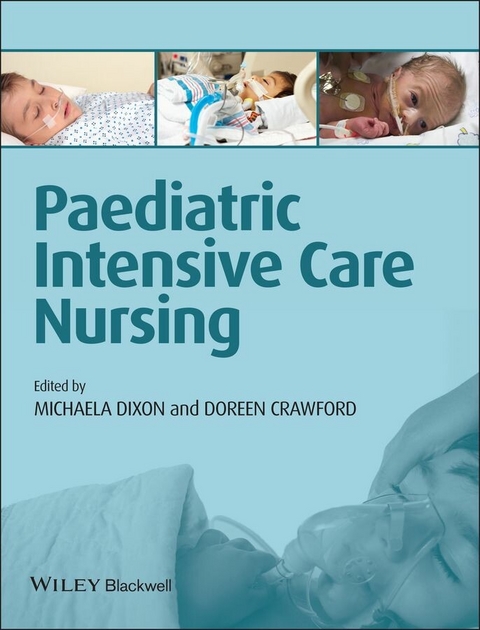
Paediatric Intensive Care Nursing (eBook)
John Wiley & Sons (Verlag)
978-1-118-30186-9 (ISBN)
The needs of critically ill children are unique and highly specialized. Paediatric Intensive Care Nursing is an essential manual of care and an invaluable resource to all those involved in the care of critically ill children and young people. Covering all the key aspects of pediatric intensive care, it is a fully comprehensive textbook which provides an evidence-based and up-to-date guide for all nurses who work with critically ill children.
Paediatric Intensive Care Nursing is divided into four user-friendly sections:
- The first section looks at the general background of paediatric intensive care
- Section two employs a systems approach, with each chapter focusing on a specific disease and following the same framework. This includes treating children with cardiac conditions, acute neurological dysfunction, musculoskeletal injuries and gastrointestinal and endocrine conditions
- Section three looks at the essential care of managing pain relief, transportation needs and treating wounds
- The final section explores the holistic aspects of nursing - nutrition and fluid management, infection control issues, safeguarding children and spirituality and bereavement
Written by a team of experts in the field, Paediatric Intensive Care Nursing is indispensable reading for nurses and health care professionals working with critically ill children.
Michaela Dixon is Senior Lecturer in Child Health at UWE and Clinical Development Nurse, Paediatric Intensive Care at Bristol Royal Hospital for Children.
Doreen Crawford is Senior Lecturer Nursing and Midwifery at De Montfort University. She is the Chair of the Children and Young Peoples Acute Care Forum, and has sat on the RCN, National Forum for Neonatal and Paediatric Intensive Care since 2005, which has led to work representing them with NPSA, BAPM, RCPCH and NICE.
Paediatric Intensive Care Nursing The needs of critically ill children are unique and highly specialised. Paediatric Intensive Care Nursing is an essential manual of care and an invaluable resource to all those involved in the care of critically ill children and young people. Covering all the key aspects of paediatric intensive care, it is a fully comprehensive textbook which provides an evidence-based and up-to-date guide for all nurses who work with critically ill children. Paediatric Intensive Care Nursing is structured in four user-friendly sections: The first section looks at the general background of paediatric intensive care. Section two employs a systems approach, with each chapter focusing on a specific disease and following the same framework. This includes treating children with cardiac conditions, acute neurological dysfunction, muscular skeletal injuries and gastrointestinal and endocrine care. Section three looks at the essential care of managing pain relief, transportation needs and treating wounds. The final section explores the holistic aspects of nursing nutrition and fluid management, infection control issues, safeguarding children, spirituality and bereavement. Written by a team of experts in the field, Paediatric Intensive Care Nursing is indispensable reading for nurses and health care professionals working with critically ill children.
About the Editors Michaela Dixon is Senior Lecturer in Child Health at UWE and Clinical Development Nurse, Paediatric Intensive Care, at Bristol Royal Hospital for Children. Doreen Crawford is Senior Lecturer in Nursing and Midwifery at De Montfort University. She is the Chair of the Children and Young People's Acute Care Forum, and has sat on the RCN National Forum for Neonatal and Paediatric Intensive Care since 2005, which has led to work representing them with NPSA, BAPM, RCPCH and NICE.
Title page 5
Copyright page 6
Contents 7
List of Contributors 13
Acknowledgements 15
Section 1: Introduction to Paediatric Intensive Care Nursing 17
Chapter 1: Introduction to Children’s Intensive Care 19
Introduction and background 19
The organisation of PICU care 19
Differentiating paediatric intensive care 20
Commissioning auditing and costing 20
Standards for staffing and skill mix 21
Developing roles in PICU 23
Education in PICU 23
Higher education and professional body partnerships 24
New ways of learning in PICU 25
Conclusion 25
References 25
Chapter 2: Assessment and Management of the Critically Ill Child/Resuscitation 27
Introduction 27
The priority 27
Second-level priorities 27
Fluids and drugs 27
Calorie requirement and nutrition 29
Potential impact on development and disability 30
Indicators of brain injury 30
Essential nursing care 31
Skin assessment 31
Bowel and bladder care in the PICU 31
Oral hygiene 31
Eye care 32
Passive limb physiotherapy 32
Resuscitation in the PICU 32
Drugs used in resuscitation 32
Adrenaline 32
Amiodarone 33
Atropine 33
Sodium bicarbonate 33
Dextrose 33
Electrolytes (magnesium and calcium) 33
Parents present during resuscitation 35
Advance directives, personal resuscitation plans, end-of-life instructions 35
Not for resuscitation 35
Withdrawing and withholding intervention 36
Conclusion 36
References 36
Chapter 3: Physiological Monitoring of Infants and Children in the Intensive Care Unit 38
Introduction 38
General safety and preparation before use 38
Electrocardiographic (ECG) monitoring 38
Five-electrode limb leads plus one precordial lead combination 39
Troubleshooting ECG monitoring (Table ) 39
Twelve-lead ECG recording (Figure ) 39
Atrial wire ECG recordings 39
Invasive pressure monitoring 39
Maintaining line patency 41
Arterial lines and monitoring 41
Physiology of the arterial pressure-pulse wave (arterial waveform) (Figure ) 42
Central venous pressure (CVP) monitoring 45
Pulse oximetry 46
Capnography and ETCO2 monitoring 46
Near-infrared spectroscopy 47
Conclusion 48
References 48
Section 2: Systems Approach 49
Chapter 4: Care of an Infant or Child with a Respiratory Illness and/or the Need for Respiratory Support 51
Introduction 51
Embryology 51
Transition to extra-uterine respiratory function 52
Brief overview of respiratory physiology 52
The role of surfactant 52
Gas exchange 52
Gas transport 52
Control of respiration 54
Central chemoreceptors 55
Peripheral chemoreceptors 55
Lung stretch receptors 55
Joint and muscle receptors 55
Irritant receptors 55
J receptors (juxtacapillary receptors) 55
Ventilation perfusion ratio and mismatch 55
Pulmonary volumes and capacities 56
Respiratory assessment 56
Physical inspection 56
Cyanosis 60
Palpation 60
Crepitus 60
Pleural friction rub 60
Percussion 60
The respiratory rate and rhythm 61
Auscultation 61
The chest X-ray 62
Blood gas analysis 62
Buffering system 64
Compensatory mechanisms 65
Electrolytes and acid base balance 65
Normal blood gas values 65
Blood gas interpretation 66
Systemic effects of a respiratory acidosis 67
Cardiovascular 67
Pulmonary vasculature 67
Cerebral vasculature 67
Peripheral vasculature 67
Assessment of the non-intubated child or the child with a tracheostomy 68
Assessment of the intubated child or child with a tracheostomy receiving mechanical ventilation 68
Respiratory support and airway protection 68
Non-invasive respiratory support – continuous positive airway pressure (CPAP) 69
Airway adjuncts 70
Oropharyngeal airway 70
Nasopharyngeal (NP) airways 70
Laryngeal mask airway 70
Intubation 70
Preparation for intubation 70
Rapid sequence induction (RSI) 71
Fibreoptic bronchoscope intubation 71
Intubation risks 71
Intubation medications 72
Depolarisation versus non-depolarising agents 72
Intubation procedure 72
Tracheostomies 75
Principles of ventilation 76
Types of ventilation 76
Negative-pressure ventilation 76
Positive-pressure ventilation (PPV) 76
Non-invasive PPV (NIPPV) 78
Invasive positive-pressure ventilation 78
High frequency oscillatory (oscillation) ventilation (HFOV) 78
Principles of HFOV (Table ) 80
Ventilator-associated pneumonia 83
Clinical indicators of VAP 83
Interventions to minimise the incidence of VAP 83
Extracorporeal membrane oxygenation 83
Examples of ECMO indications 83
Suctioning the artificial airway 85
Weaning and extubation 86
Preparation for extubation 86
Upper airway conditions 86
Croup 86
Bacterial tracheitis 89
Retropharyngeal abscess 89
Epiglottitis 90
Subglottic stenosis 91
Other causes of stridor 91
Lower respiratory tract conditions 92
Bronchiolitis 92
RSV infection 92
Clinical assessment findings 93
Asthma and status asthmaticus 94
Cardiovascular effects 97
Metabolic effects 97
Pneumonia 101
Aspiration pneumonia 103
Acute respiratory distress syndrome 103
Near-drowning 106
Smoke inhalation 109
Persistent pulmonary hypertension of the newborn (PPHN) 110
Congenital diaphragmatic hernia 111
Tracheomalacia/Bronchomalacia 112
Intercostal drain insertion 113
Conclusion 113
References 115
Chapter 5: Care of an Infant or Child with a Cardiac Condition or Disease 118
Introduction 118
Cardiac embryology 118
Foetal circulation 119
Brief overview of cardiac anatomy and physiology (Figure ) 120
External structure of the heart 120
The cardiac cycle 123
Innervation of the heart 123
Structure and function of cardiac muscle fibres 124
Cardiac action potentials 126
Regulation of cardiac action potentials 126
Atrial systole (ventricular diastole) 127
Isovolumetric contraction (first heart sound) 127
Ejection (R–S–T) 127
Isovolumetric relaxation (end of T-wave to beginning of P-wave) 129
Rapid filling phase (end of T-wave to beginning of P-wave) 129
Diastasis (slow filling phase) 129
Cardiac output 129
Heart Rate 129
Stroke Volume 129
Cardiac assessment 130
Physical inspection 131
Auscultation 131
Palpation 132
Blood pressure assessment 132
Additional assessment points 132
Congenital heart disease 132
Diagnosis of congenital heart disease 133
Categorising cardiac lesions 135
Common management strategies 136
Prostaglandin 136
Modified Blalock–Taussig (BT) shunt 136
Glenn procedure 136
Total caval pulmonary connection (TCPC) (Fontan procedure) 137
Cardiopulmonary bypass 137
Postoperative management of the child after open cardiac surgery 138
Cardiovascular system 140
Pulmonary hypertension 140
Acyanotic heart lesions 143
Atrial septal defect (ASD) 143
Ventricular septal defect (VSD) 144
Persistent ductus arteriosus (PDA) 144
Atrio-ventricular septal defect (AVSD) 145
Coarctation of the aorta 146
Post-ductal and juxta-ductal coarctation of the aorta 147
Aortic stenosis 147
Cyanotic heart lesions 148
Tetralogy of Fallot 148
Tricuspid atresia 150
Transposition of the great arteries (D-TGA) 151
Truncus arteriosus 152
Total anomalous pulmonary venous drainage (TAPVD) 153
Hypoplastic left heart syndrome (HLHS) 154
Extracorporeal membrane oxygenation (ECMO)/extracorporeal life support (ECLS) 155
ECLS for cardiac support 156
Cardiovascular considerations 156
Weaning from ECLS 156
Rhythm disturbances and temporary pacing 157
ECG (Figure ) 157
Bradyarrhythmias 158
Tachyarrhythmias 160
Types of pacing mode 162
Acquired heart disease 164
Acute myocarditis 165
Cardiomyopathy 167
Hypertrophic cardiomyopathy (HCM) 168
Restrictive cardiomyopathy 169
Kawasaki disease 169
Pharmacology (Appendix 1) 170
Vasoactive drugs 170
Volume and diuretics 172
Anti-arrhythmic medications 173
Circulatory failure 173
Shock 173
Compensatory mechanisms 174
Uncompensated shock 174
Cardiogenic shock 175
Sepsis and multi-organ dysfunction 176
Common causes of sepsis in children 176
Myocardial dysfunction 177
Endothelial injury and increased vascular permeability/capillary leak 178
Disseminated intravascular coagulation 178
Meningococcal disease 178
Management of sepsis 180
Current research studies 180
Use of steroids 180
Hyperglycaemic control 180
Conclusion 180
Appendix 5.1 A summary of vasoactive drugs, the adrenergic receptor stimulated the physiological response and side-effects 181
References 182
Chapter 6: Care of the Infant or Child in Renal Failure 185
Introduction 185
Terminology 185
Anatomy and physiology of the kidney 185
Renal pathology (Table ) 188
Prerenal 188
Intrinsic 188
Postrenal (obstructive) 189
Signs of acute kidney injury and useful tests in children 189
Acute treatment (Table ) 189
Restoration of circulating volume 189
Prevention of complications 191
Renal protection measures 191
Drug metabolism and excretion 191
Practical drug dosing 192
Long-term follow-up 193
Specific renal diseases that may present in PICU 193
Haemolytic uraemic syndrome (HUS) 193
Nephrotic syndrome 193
Hepatorenal syndrome 193
Tumour lysis syndrome (TLS) 193
Transplant 193
Renal replacement therapies 194
Acronyms 194
Peritoneal dialysis 194
Continuous venous-venous filtration and haemodialysis (CVVH and CVVHDF) (Figure and Figure ) 196
Intermittent haemodialysis 201
Conclusion 202
References 202
Chapter 7: Care of the Infant or Child with Acute Neurological Dysfunction 204
Introduction 204
Embryological development of the neurological system 204
Brief overview of neuroanatomy and physiology 205
The meninges 206
Spinal anaesthesia 206
Epidural anaesthesia 206
The ventricles 206
Cerebrospinal fluid (CSF) 206
Cranial nerves 207
The brain 207
The blood–brain barrier 207
Neurological assessment 207
Central nervous system infections 213
Bacterial meningitis 213
Viral meningitis 215
Viral encephalitis 215
Acute disseminating encephalomyelitis (ADEM) 216
Guillain-Barré syndrome (GBS) 216
Seizure disorders 217
Basic pathophysiology of seizures 217
Classification of seizures 217
Acute causes of seizures 217
Neonatal seizures 218
Status epilepticus (SE) 218
Management of the child in SE 218
Fluid management 219
Temperature management 219
Spinal cord injuries 219
Clinical presentation (Table ) 220
Management of a child with spinal cord injury 220
Steroids 220
Cerebrovascular events 220
CNS and brain tumours 221
Types of tumour 221
Management of the child with a brain or CNS tumour 221
Raised intracranial pressure 221
Cerebral perfusion pressure (CPP) 221
Measurement of intracranial pressure 222
Traumatic brain injury (TBI) 223
Depressed skull fractures 223
Basal skull fractures 223
Traumatic axonal injury (TAI) 223
Pathophysiology of axonal injury 223
Secondary brain injury 224
Post-traumatic ischaemia 224
Neuronal excitotoxicity 224
Brainstem death 224
Brainstem death tests 224
Management of the child with TBI 226
Ventilation management of child with traumatic brain injury 226
Temperature management 226
Hyperosmolar therapy 227
Seizure control 227
Sedation 227
Decompressive craniotomy and craniectomy 228
Extraventricular drains (EVD) 228
Diabetes insipidus 229
Conclusion 229
References 229
Chapter 8: CARE OF AN INFANT OR CHILD WITH GASTROINTESTINAL OR ENDOCRINE DYSFUNCTION 231
Introduction 231
Embryological development of the gastrointestinal tract (GIT) 231
Overview of the postnatal anatomy and physiology of the gastrointestinal tract 231
Basic functions 233
Ingestion 233
Digestion and absorption 233
Egestion and elimination 233
General care principles 233
Pre-operative fasting 233
Stress ulceration 235
Medical management of acute or life-threatening abdominal conditions 235
Pancreatitis 235
Crohn’s disease 236
Commonalities across gastrointestinal conditions, surgery or major gut insult 237
Necrotising enterocolitis (NEC) 238
Short gut syndrome and short bowel syndrome (SBS) 240
Strategies to manage short bowel syndrome 240
Refeeding collected gut secretions 240
Surgery 240
Intestinal transplant 241
Stoma formation and stoma care 241
Major surgery 242
Indications for major surgery 242
Minimally invasive surgery 242
Endoscopic approach 242
Congenital corrective surgery 242
Tracheoesophageal fistula and oesophageal atresia 242
Duodenal atresia 244
Pre-operative management 244
Surgical management 245
Postoperative management 245
Colonic atresia 245
Treatment 245
Colonic stenosis 245
Gastroschisis 245
Exomphalos or large omphalocoele 246
Intussusception 246
Volvulus or malrotation 247
Abdominal trauma 247
Complications of major organ lacerations 247
Neonatal liver disease 248
Unconjugated hyperbilirubinaemia 248
Management 248
Providing phototherapy in the PICU 248
Conjugated hyperbilirubinaemia 249
Biliary atresia 250
Cholangiopathies 250
Acute liver failure (ALF) 250
Clinical features of ALF 251
Hepatic encephalopathy (HE) 251
Bridging to transplant or recovery 253
Liver transplant 253
Endocrine presentations 253
Diabetic ketoacidosis 254
Diabetic ketoacidosis 254
Pathophysiology of diabetic ketoacidosis 254
Management of DKA (BSPED Guidelines ) 254
Fluids 254
Electrolytes 254
Insulin therapy 256
Anti-coagulant prophylaxis 257
Ketone monitoring 257
Complications of DKA 257
Adrenal insufficiency 257
Adrenocortical insufficiency 257
Addison’s disease 257
Acute adrenal insufficiency or crisis 258
Phaeochromocytoma 259
Management of phaeochromocytoma 259
Hypoglycaemia 259
Hyperinsulinism 260
Hyperammonaemia 260
References 261
Chapter 9: Care of a Child with MUSCULOSKELETAL Injury 266
Introduction 266
Because children are different 266
Developmental anatomy and physiology 266
Intramembranous ossification 267
Endochondral ossification 267
Fracture classification and bone healing following injury 267
Bone healing stages 271
Musculoskeletal trauma 271
Initial assessment when a child has traumatic injury 271
Primary survey 271
Secondary survey 272
Investigations required 272
Spinal cord injury (Table ) 272
Cervical spine injury (C-spine injury) 274
Spinal protection 274
Log-rolling 274
Physical examination 274
Radiography 274
Thoracic and lumbar spinal injuries 275
Acute spinal cord injury in context 275
Management in intensive care 275
Steroid use 275
Spinal neurological shock 275
Moving and handling 276
Special considerations with high spinal injury 276
On-going management 276
Pelvic injury 278
Classification of pelvic injury 278
Complications of pelvic fracture 278
Clinical examination 278
Radiological examination 279
Care of the child with a pelvic injury 279
Fractures to the limbs – extremity injury 280
Upper limb injuries and fractures 280
Lower limb injuries and fractures 281
Growth plate injuries 283
Open fracture 283
Internal and external fixators 284
Amputation 284
Compartment syndrome 284
Monitoring the pressure 285
Elevating limbs 285
General care of plaster of Paris and casts 285
Conclusion 286
References 286
Chapter 10: Care of the Infant or Child with Thermal Injury 289
Introduction 289
Causes of burns 289
Burn physiology 289
Burn assessment 290
Size 290
Depth 290
Management of burns 291
Primary and secondary survey 291
The secondary survey 292
Wound management 294
Pain 295
Nutritional requirements 296
Toxic shock syndrome 296
Environmental and continuing care considerations 297
Psychosocial needs 297
Conclusion 297
References 297
Chapter 11: Care of the Child with Cancer 300
Introduction 300
Treatment 300
Chemotherapy 302
Radiotherapy 302
Surgery 303
Novel therapies 303
Bone marrow and stem cell transplantation 303
Conditions related to the disease process 304
Superior vena cava syndrome 304
Spinal cord compression 305
Tumour lysis syndrome 305
Other issues where children who require specialist input may present in ITU 306
Side-effects of chemotherapy 306
Bone marrow suppression 306
Anaemia 306
Thrombocytopenia 306
Neutropenia 307
Gastrointestinal problems 307
Mucositis 307
Nausea and vomiting 308
Diarrhoea 308
Constipation 308
Nutrition 308
Neutropenic enterocolitis 308
Potential surgical problems – bowel obstruction 309
Neurological insult 310
Liver 311
Sinusoidal obstructive syndrome 311
Cardiac 312
Renal 312
Respiratory 312
Skin 312
Hearing 312
Viral infections 312
Varicella 312
Measles 312
References 312
Section 3: Essential Care 317
Chapter 12: Nutrition and Fluid Management 319
Introduction 319
The distribution and movement of body fluids 319
The normal regulation of water balance 320
Clinical considerations 321
Electrolytes 323
Electrolyte action 323
Nutritional needs of the child 325
Carbohydrate metabolism 326
Fat metabolism 326
Protein metabolism 326
Insulin 326
Glucagon 327
Growth of the infant and child 327
Nutritional assessment 327
Types and methods of feeding 327
Bolus or continuous enteral feeding, gastric or transpyloric feeding 328
Types of enteral feeds 328
The best enteral feed for the child 329
Long-term enteral tube feeding 329
Parenteral nutrition (PN) 331
Managing swings in blood sugar 331
Phlebitis 331
Cholestasis 332
Management of TPN at home 332
Future options 332
Acknowledgements 332
References 332
Chapter 13: Management of Pain and Sedation in Intensive Care 334
Introduction 334
Pain as a vital sign 335
Development of the nervous system 335
The biology behind the nervous system 335
Components of the nervous system 335
Developmental aspects of the central nervous system 335
How nervous tissue works 338
Neurotransmitters 338
Biology of pain and sedation 340
Pain processing 340
Pain classifications 341
Nociceptive pain or non-nociceptive pain 341
Acute or chronic pain 342
Assessing a child’s need for sedation 342
Pharmacological means of managing a child’s distress 343
The pharmacology 343
Pain management 344
Use of tools for assessment 344
The use of pharmacology 345
Analgesics – first-level therapy 345
Second- and third-level therapy 345
Delivery systems for IV infusion 346
Patient-controlled analgesia (PCA) 346
Continuous subcutaneous infusion 347
Local anaesthesia 348
Local blocks 349
Regional 349
The role of the paediatric acute pain team 350
Long-term implications of pain 350
Appendix 13.1 Drugs used for pain management 351
References 352
Chapter 14: Managing Skin Integrity, Wound Healing and Care 354
Introduction 354
Anatomy and physiology of the skin 354
Managing a child’s skin in ITU 355
Assessment of risk 356
Planning skin management 357
Essential skincare 358
Management of pressure ulcers (Table ) 358
Healing 358
Cleansing skin prior to surgical interventions or invasive procedures 360
Dressings 360
Conclusion 362
References 362
Chapter 15: Transportation of the Critically Ill Infant Or Child 365
Introduction 365
Types of transportation 365
Emergency transfer 366
Preparation of equipment 366
Arrival at the referring hospital 367
Assessment and stabilisation 367
Airway 367
Breathing 368
Circulation 368
Disability 369
Prior to departure 369
Airway 369
Breathing 369
Circulation 369
Disability 370
Normothermia 370
During the journey 370
Safety 370
Immobilising the trauma patient 371
Land versus air 371
Parents 371
Consent 372
On return to the lead centre 372
Staff training 372
Networking with the district general hospital 372
Governance 372
The Tanner Report 373
Withdrawal in the futile case 373
Debriefings 373
The PICS National Retrieval Group 373
Conclusion 373
References 373
Section 4: Holistic Care 375
Chapter 16: Care of the Family 377
Introduction 377
Important factors in the family’s journey 377
Seeing the child in PICU for the first time 377
Suspension of the normal parenting role and responsibility, and family routines 378
Dealing with emotional highs and lows 379
Not saying what they want to hear 379
Withdrawing or withholding life-sustaining managements 379
Brain death 380
Permanent vegetative state 380
No chance situations 380
No purpose 380
Unbearable illness 380
A working ethical framework to support practice in a PICU 380
The four quadrants 381
Respect for autonomy 382
Beneficence and non-maleficence 382
Justice 382
Outcomes 382
Organ donation 382
Natural end of life 383
Postmortem 383
Acknowledgement 384
References 384
Chapter 17: Spiritual Care and Bereavement in Paediatric Intensive Care 386
Introduction 386
Death in PICU 386
Spiritual care 386
Defining spirituality 387
Children and spiritual needs 387
The child’s understanding of spiritual needs 387
Breaking bad news 388
Bereavement 389
Theories of grief 389
Caring for the child after death 390
Religious observance 391
Siblings 392
Parents’ emotional wellbeing and parenting after a child’s death 392
Follow-up care 394
References 395
Chapter 18: Safeguarding Children in the Intensive Care Unit 397
Introduction 397
Background to the current safeguarding child recommendations 397
Named professionals 398
Staff education and training 399
Level 2 399
Level 3 399
Action to take when a child is admitted to the unit 399
Recognising and taking responsibility 400
Assessment of children 400
Recognition of abuse or neglect 401
What is abuse and neglect? 401
Physical abuse 401
Fabricated and induced illness 401
Features of physical abuse 401
Neglect 402
Sexual abuse 402
Features of sexual abuse 402
Emotional abuse 402
Features of emotional abuse 402
Parent or carer–child interactions 403
Domestic violence (DV) 403
Impact of domestic violence 403
Effects of DV on children 403
Impact of DV on the child 403
Signs and symptoms of DV 403
Identification of concerns 404
Assessment and documentation 404
Guidelines for recording concerns 405
Signs and symptoms 405
Using the intensive care nurse’s professional judgement 406
Making a referral 406
Information sharing 406
Confidentiality 407
Emotional impact 407
When a child dies 407
When the process will not be invoked 408
Where there are shared roles 408
Conclusion 408
References 408
Index 411
"Written by a team of experts in the field, Paediatric
Intensive Care Nursing is indispensable reading for nurses and
health care professionals working with critically ill
children." (Newbooks.lib.ntu.edu.tw,5 May
2014)
"The strengths are the systematic and logical approach
that this textbook takes in order to enhance knowledge and
understanding. Within the essential care section the chapters on
Nutrition and Fluid Management and Management of
Pain and Sedation are both really good and clearly link
important aspects of paediatric care and
management." (Nursing Times, 19 February
2014)
"The book is reasonably priced considering the vast amount
of information it covers and it is a must read for all PICU
nurses." (Nursing Children and Young People, 1
April 2013)
| Erscheint lt. Verlag | 4.9.2012 |
|---|---|
| Sprache | englisch |
| Themenwelt | Medizin / Pharmazie ► Pflege ► Fachpflege |
| Medizin / Pharmazie ► Pflege ► Kinderkrankenpflege | |
| Medizin / Pharmazie ► Pflege ► Palliativpflege / Sterbebegleitung | |
| Schlagworte | Aspects • Care • Care nursing • children • Comprehensive • critically • Critically Ill • Essential • evidencebased • First • Fully • Guide • intensive • Intensive/Critical Care • Intensivpflege • invaluable • Key • Krankenpflege • Krankenpflege in der Pädiatrie u. Neonatologie • Krankenpflege in der Pädiatrie u. Neonatologie • Manual • Medical Science • Medizin • nurses • nursing • Nursing Children & Young People • Pädiatrie • Pädiatrie • Paediatric • resource • Specialised • Textbook • userfriendly |
| ISBN-10 | 1-118-30186-2 / 1118301862 |
| ISBN-13 | 978-1-118-30186-9 / 9781118301869 |
| Informationen gemäß Produktsicherheitsverordnung (GPSR) | |
| Haben Sie eine Frage zum Produkt? |
 PDF (Adobe DRM)
Kopierschutz: Adobe-DRM
Adobe-DRM ist ein Kopierschutz, der das eBook vor Mißbrauch schützen soll. Dabei wird das eBook bereits beim Download auf Ihre persönliche Adobe-ID autorisiert. Lesen können Sie das eBook dann nur auf den Geräten, welche ebenfalls auf Ihre Adobe-ID registriert sind.
Details zum Adobe-DRM
Dateiformat: PDF (Portable Document Format)
Mit einem festen Seitenlayout eignet sich die PDF besonders für Fachbücher mit Spalten, Tabellen und Abbildungen. Eine PDF kann auf fast allen Geräten angezeigt werden, ist aber für kleine Displays (Smartphone, eReader) nur eingeschränkt geeignet.
Systemvoraussetzungen:
PC/Mac: Mit einem PC oder Mac können Sie dieses eBook lesen. Sie benötigen eine
eReader: Dieses eBook kann mit (fast) allen eBook-Readern gelesen werden. Mit dem amazon-Kindle ist es aber nicht kompatibel.
Smartphone/Tablet: Egal ob Apple oder Android, dieses eBook können Sie lesen. Sie benötigen eine
Geräteliste und zusätzliche Hinweise
Buying eBooks from abroad
For tax law reasons we can sell eBooks just within Germany and Switzerland. Regrettably we cannot fulfill eBook-orders from other countries.
aus dem Bereich