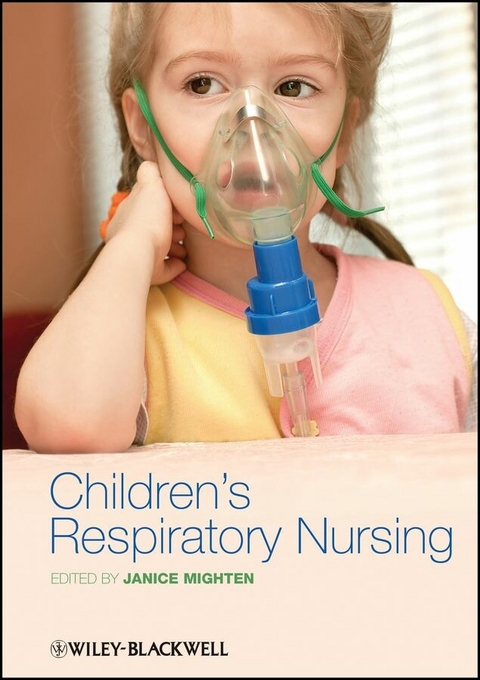
Children's Respiratory Nursing (eBook)
John Wiley & Sons (Verlag)
978-1-118-27826-0 (ISBN)
Children’s Respiratory Nursing is structured in four user-friendly sections:
- The first section provides a general background for children’s respiratory nursing.
- Section two explores the various investigations that aid diagnosis and treatment; such as assessment of defects in airflow and lung volume, oxygen therapy and long term ventilation.
- Section three looks at respiratory infection and provides an overview of the common infections in children with reference to national and local guidelines.
- The final section considers the practical issues that impact on children’s nurses - the transition from children to adult services, legal and ethical issues and the professional communication skills needed for dealing with children and their families.
This practical text is essential reading for all children’s nurses who have a special interest with respiratory conditions and would like to develop a level of understanding of the special management required in the specialty.
Special Features
- Examples of good practice provided throughout
- Provides research and evidence-based case studies
- Explores care in both hospital and community settings
- A strong practical approach throughout
Children's Respiratory Nursing is a comprehensive, patient-centred text providing up-to-date information about the contemporary management of children with respiratory conditions. It looks at acute and chronic respiratory conditions in both primary and secondary health care sectors and explores the subject from a child- and family-focused perspective. Children s Respiratory Nursing is divided into four user-friendly sections: The first section provides a general background for children s respiratory nursing Section two explores the various investigations that aid diagnosis and treatment, such as assessment of defects in airflow and lung volume, oxygen therapy, and long term ventilation Section three looks at respiratory infection and provides an overview of the common infections in children with reference to national and local guidelines The final section considers the practical issues that impact on children s nurses - the transition from children to adult services, legal and ethical issues and the professional communication skills needed for dealing with children and their families This practical text is essential reading for all children s nurses who have a special interest in respiratory conditions and would like to develop a greater level of understanding of the management required. Special Features Examples of good practice provided throughout Includes evidence-based case studies Explores care in both hospital and community settings A strong practical approach throughout
Janice Mighten is a Practitioner health lecturer at Nottingham University & Children's Respiratory Nurse at Nottingham Children's hospital.
Children’s Respiratory Nursing 5
Contents 7
Contributors 9
Foreword by Angela Horsley, Clinical Lead, Nottingham Children’s Hospital 11
Preface 13
Acknowledgements 15
Introduction: the evolution of children’s respiratory nursing 17
Section I The fundamental principles of respiratory nursing 19
1 Anatomy and physiology of the respiratory system 21
Introduction 21
Anatomy of the upper respiratory tract 21
Anatomy of the lower respiratory tract 23
Surface anatomical landmarks 23
Development of the respiratory system 23
Changes in anatomy with age 24
Physiology of the respiratory system 24
Conclusion 26
References 26
2 Homeostasis and the respiratory system 27
Introduction 27
Respiratory rate, carbon dioxide and pH 27
Carbon dioxide dissolved in the blood regulates the respiratory rate 28
In disease homeostasis is disrupted 29
The regulation of blood pH is called acid–base balance and is assessed with blood gas analysis 29
Conclusion 30
References 31
3 Nursing assessment, history taking and collaborative working 32
Introduction 32
Assessment 32
History taking 34
Consultation skills 35
Collaborative working 36
Conclusion 38
References 38
Section II Respiratory investigations and assessments 41
4 Investigations 43
Chest x-ray 43
Bronchoscopy and bronchial lavage 48
Nursing management 53
Conclusion 55
References 56
5 Assessment of defects in airflow and lung volume using spirometry 57
Respiratory assessment 57
Spirometry 58
Nursing management 64
Conclusion 70
References 70
6 Oxygen therapy 71
Pathophysiology of oxygenation 71
Hypoxaemia/hypoxia 71
Respiratory failure 72
Pulse oximetry 75
Home oxygen guidelines 76
Long-term oxygen therapy 79
Nursing management 84
Conclusion 87
References 87
7 Long-term ventilation 89
Introduction 89
Normal respiration 89
Pathophysiological aspects 90
Indications for long-term ventilation 91
Non-invasive ventilation: part of a package of care 92
Outcomes of long-term ventilation 94
Technical aspects of long-term ventilation: equipment 95
Care of the child with long-term ventilation 98
Care in the community 99
Conclusion 102
References 102
Section III Respiratory conditions 105
8 Management of lung infection in children 107
Introduction 107
Bronchiolitis 108
Pneumonia 109
Empyema 110
Infectious and non-infectious causes of acute stridor in children 112
Tuberculosis in children 115
Conclusion 119
References 121
9 Pharmacology and the respiratory system 123
Introduction 123
How drugs work 123
Frequently administered respiratory drugs 125
The nurse’s role in drug administration 126
Conclusion 127
References 128
10 Management of asthma and allergy 129
Introduction 129
Definition of asthma 130
Treatment of asthma 131
Acute severe asthma 137
Nursing management 141
Care in the community 146
Conclusion 147
References 147
Useful websites 149
11 Complications with lung development and progressive airway injury 150
Chronic lung disease of prematurity 150
Interstitial lung disease 154
Bronchiectasis 157
Congenital abnormalities (anomalies) 161
Nursing management of neonatal chronic lung disease and home oxygen 166
Conclusion 168
References 169
12 Inherited lung disease in children 172
Primary ciliary dyskinesia 172
Cystic fibrosis 174
Physiotherapy and promoting independence 181
Exercise 185
Physiotherapy management of babies and young children 186
Physiotherapy management of older children and teenagers 187
Nursing management for cystic fibrosis 189
Care in the community 192
Conclusion 196
References 198
13 Lung transplantation in children 202
Introduction 202
Indications for lung transplantation 203
Patient selection 203
The lung transplant assessment process 207
Listing for lung transplantation and donor allocation 211
Care of the patient on the transplant waiting list 211
Nursing care of the lung transplant patient 212
Long-term shared care of the transplant patient 217
Conclusion 219
References 220
Section IV Practical elements and governance issues 223
14 Transition to adult services 225
Introduction 225
Transition as a journey 225
Hospital youth work 227
Transition programmes 228
Conclusion 229
References 230
15 Professional issues 231
Introduction 231
Legal context of practice 232
Evidence-based practice 232
Nurse prescribing 232
Law and ethics 232
Quality assurance 236
National documents 237
Conclusion 238
References 238
16 Communication: a holistic approach 240
Communication in healthcare 240
General communication problems 241
Improving communication 242
Communication with parents 242
Communication with colleagues 243
Written communication 243
Communication skills in the context of nursing 244
Reflective practice, self-awareness and boundaries 251
Conclusion 251
References 252
Glossary 254
Abbreviations 256
Answers 259
Index 264
"As such it makes an excellent starting point and source
of reference for those involved in nursing children and young
people." (Nursing Times, 21 January 2014)
"Reasonably priced, this is a useful book to refer to and
might prove valuable for children's nurses working in
hospitals and in the community." (Nursing Children
and Young People, 1 March 2013)
| Erscheint lt. Verlag | 13.8.2012 |
|---|---|
| Sprache | englisch |
| Themenwelt | Medizinische Fachgebiete ► Innere Medizin ► Pneumologie |
| Medizin / Pharmazie ► Pflege ► Kinderkrankenpflege | |
| Schlagworte | Acute • children • Childrens • childrens respiratory nursing • Chronic • Comprehensive • Contemporary • First • Health • Information • Krankenpflege • Krankenpflege in der Pädiatrie u. Neonatologie • Krankenpflege in der Pädiatrie u. Neonatologie • nursing • Nursing Children & Young People • patientcentered • respiratory conditions • Secondary • section • sections • Sectors • Subject • userfriendly |
| ISBN-10 | 1-118-27826-7 / 1118278267 |
| ISBN-13 | 978-1-118-27826-0 / 9781118278260 |
| Informationen gemäß Produktsicherheitsverordnung (GPSR) | |
| Haben Sie eine Frage zum Produkt? |
 PDF (Adobe DRM)
Kopierschutz: Adobe-DRM
Adobe-DRM ist ein Kopierschutz, der das eBook vor Mißbrauch schützen soll. Dabei wird das eBook bereits beim Download auf Ihre persönliche Adobe-ID autorisiert. Lesen können Sie das eBook dann nur auf den Geräten, welche ebenfalls auf Ihre Adobe-ID registriert sind.
Details zum Adobe-DRM
Dateiformat: PDF (Portable Document Format)
Mit einem festen Seitenlayout eignet sich die PDF besonders für Fachbücher mit Spalten, Tabellen und Abbildungen. Eine PDF kann auf fast allen Geräten angezeigt werden, ist aber für kleine Displays (Smartphone, eReader) nur eingeschränkt geeignet.
Systemvoraussetzungen:
PC/Mac: Mit einem PC oder Mac können Sie dieses eBook lesen. Sie benötigen eine
eReader: Dieses eBook kann mit (fast) allen eBook-Readern gelesen werden. Mit dem amazon-Kindle ist es aber nicht kompatibel.
Smartphone/Tablet: Egal ob Apple oder Android, dieses eBook können Sie lesen. Sie benötigen eine
Geräteliste und zusätzliche Hinweise
Buying eBooks from abroad
For tax law reasons we can sell eBooks just within Germany and Switzerland. Regrettably we cannot fulfill eBook-orders from other countries.
aus dem Bereich