Stigmatization, Tolerance and Repair (eBook)
Cambridge University Press (Verlag)
978-0-511-35310-9 (ISBN)
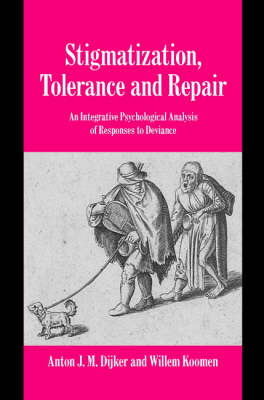
Society is faced with a variety of undesirable behaviors and conditions such as crime, mental and physical illnesses and disabilities, that usually provoke different responses in people such as emotions of anger, fear or pity. In our evolutionary past, these emotions adaptively motivated the repair of interpersonal relationships, whereas more recently they may also result in other types of social control such as stigmatization or tolerance. Dijker and Koomen show, on the basis of elementary psychological processes, how peoples' responses are not only dependent on type of deviance but also on personality, situation, historical period and culture. They also examine the implications of these responses for the well-being and coping of people with deviant conditions or stigmas. This book provides conceptual tools for developing interventions to reduce stigmatization and offers a deeper understanding of the psychological basis of social control as well as opportunities to influence its potentially harmful consequences.
Society is faced with a variety of undesirable behaviours and conditions such as crime, mental and physical illnesses and disabilities, that usually provoke different responses in people such as emotions of anger, fear or pity. In our evolutionary past, these emotions adaptively motivated the repair of interpersonal relationships, whereas more recently they may also result in other types of social control such as stigmatization or tolerance. Dijker and Koomen show, on the basis of elementary psychological processes, how peoples' responses are not only dependent on type of deviance but also on personality, situation, historical period and culture. They also examine the implications of these responses for the well-being and coping of people with deviant conditions or stigmas. This book provides conceptual tools for developing interventions to reduce stigmatization and offers a deeper understanding of the psychological basis of social control as well as opportunities to influence its potentially harmful consequences.
| Erscheint lt. Verlag | 22.11.2007 |
|---|---|
| Sprache | englisch |
| Themenwelt | Sachbuch/Ratgeber |
| Geisteswissenschaften ► Psychologie ► Persönlichkeitsstörungen | |
| Geisteswissenschaften ► Psychologie ► Sozialpsychologie | |
| Medizin / Pharmazie | |
| ISBN-10 | 0-511-35310-3 / 0511353103 |
| ISBN-13 | 978-0-511-35310-9 / 9780511353109 |
| Informationen gemäß Produktsicherheitsverordnung (GPSR) | |
| Haben Sie eine Frage zum Produkt? |
 PDF (Adobe DRM)
Kopierschutz: Adobe-DRM
Adobe-DRM ist ein Kopierschutz, der das eBook vor Mißbrauch schützen soll. Dabei wird das eBook bereits beim Download auf Ihre persönliche Adobe-ID autorisiert. Lesen können Sie das eBook dann nur auf den Geräten, welche ebenfalls auf Ihre Adobe-ID registriert sind.
Details zum Adobe-DRM
Dateiformat: PDF (Portable Document Format)
Mit einem festen Seitenlayout eignet sich die PDF besonders für Fachbücher mit Spalten, Tabellen und Abbildungen. Eine PDF kann auf fast allen Geräten angezeigt werden, ist aber für kleine Displays (Smartphone, eReader) nur eingeschränkt geeignet.
Systemvoraussetzungen:
PC/Mac: Mit einem PC oder Mac können Sie dieses eBook lesen. Sie benötigen eine
eReader: Dieses eBook kann mit (fast) allen eBook-Readern gelesen werden. Mit dem amazon-Kindle ist es aber nicht kompatibel.
Smartphone/Tablet: Egal ob Apple oder Android, dieses eBook können Sie lesen. Sie benötigen eine
Geräteliste und zusätzliche Hinweise
Buying eBooks from abroad
For tax law reasons we can sell eBooks just within Germany and Switzerland. Regrettably we cannot fulfill eBook-orders from other countries.
aus dem Bereich