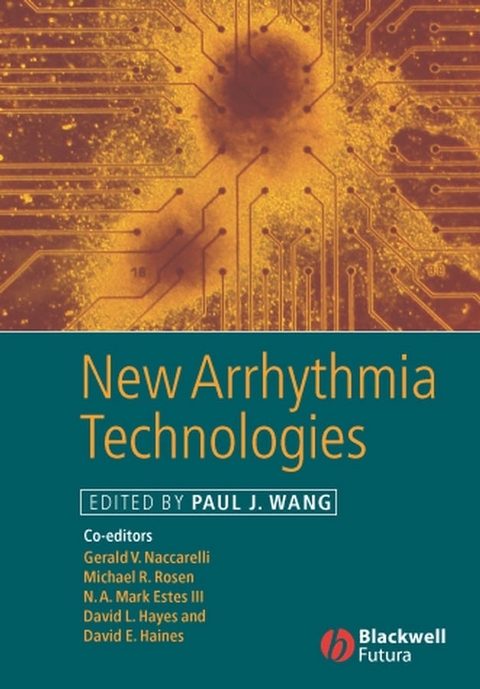
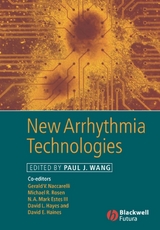
This forward-thinking book details successful trials and investigates areas of research that have not yet reached the trial phase.
The elite panel of authors have explored fresh information on:
- advances in antiarrhythmic pharmacologis therapy
- advances in monitoring, risk assessment, and noninvasive mapping
- advances in pacing therapy
- advances in implantable defibrillators
- advances in catheter and surgical ablation
- advances in antiarrhythmic biological therapy
- vision for the future of arrhythmia technologies
- web-based defibrillation monitoring.
New Arrhythmia Technologies presents a unique view of the latest in arrhythmia innovations through the eyes of the experts in the field.
Paul Wang
Dr Paul J Wang is the Director of the Stanford Cardiac Arrhythmia Service and Cardiac Electrophysiology Laboratory. He received his undergraduate degree at Harvard University and his medical degree at Columbia University in New York City. He received his medical residency at Columbia-Presbyterian Medical Center in New York City and completed his cardiovascular training at Brigham and Women's Hospital.
Dr Wang has co-authored textbooks on implantable defibrillators, sudden cardiac death, and cardiac resynchronization/biventricular pacing therapy and has invented a number of new arrhythmia technologies.
He articipates on numerous national boards and panels in cardiac electrophysiology. He is currently Vice-Chair of the Education Committee of the Heart Rhythm Society. He is co-director of an Advanced Course in Pacemakers, Implantable Defibrillators, and Resynchronization Therapy sponsored by the Heart Rhythm Society. He also serves as a member of the Cardiac Electrophysiology Board Certification Exam Writing Committee of the American Board of Internal Medicine.
New Arrhythmia Technologies provides a complete discussion of recent, emerging, and future arrhythmia technologies. This forward-thinking book details successful trials and investigates areas of research that have not yet reached the trial phase. The elite panel of authors have explored fresh information on: advances in antiarrhythmic pharmacologis therapy advances in monitoring, risk assessment, and noninvasive mapping advances in pacing therapy advances in implantable defibrillators advances in catheter and surgical ablation advances in antiarrhythmic biological therapy vision for the future of arrhythmia technologies web-based defibrillation monitoring. New Arrhythmia Technologies presents a unique view of the latest in arrhythmia innovations through the eyes of the experts in the field.
Dr Paul J Wang is the Director of the Stanford Cardiac Arrhythmia Service and Cardiac Electrophysiology Laboratory. He received his undergraduate degree at Harvard University and his medical degree at Columbia University in New York City. He received his medical residency at Columbia-Presbyterian Medical Center in New York City and completed his cardiovascular training at Brigham and Women's Hospital. Dr Wang has co-authored textbooks on implantable defibrillators, sudden cardiac death, and cardiac resynchronization/biventricular pacing therapy and has invented a number of new arrhythmia technologies. He articipates on numerous national boards and panels in cardiac electrophysiology. He is currently Vice-Chair of the Education Committee of the Heart Rhythm Society. He is co-director of an Advanced Course in Pacemakers, Implantable Defibrillators, and Resynchronization Therapy sponsored by the Heart Rhythm Society. He also serves as a member of the Cardiac Electrophysiology Board Certification Exam Writing Committee of the American Board of Internal Medicine.
New Arrhythmia Technologies 1
Contents 7
List of Contributors 9
Preface 15
Part I: Advances in antiarrhythmic pharmacologic therapy 17
1 New antiarrhythmic pharmacologic therapies and regulatory issues in antiarrhythmic drug development 19
2 New frontiers in antithrombotic therapy for atrial fibrillation 30
Part II: Future of antiarrhythmic therapy 45
3 Principles of pharmacogenomics: Focus on arrhythmias 47
4 The cardiac sodium-channel carboxy terminus: predicted and detected structure provide a novel target for antiarrhythmic drugs development 52
5 Embryonic stem-cell-derived cardiomyocytes as a model for arrhythmia 64
6 Gene and cell therapy for sinus and AV nodal dysfunction 70
7 Gene therapy for cardiac tachyarrhythmias 81
Part III: Monitoring, noninvasive mapping, risk assessment, and external defibrillation 89
8 New developments in noninvasive rhythm monitoring, implantable hemodynamic monitoring, functional status monitoring and noninvasive mapping 91
9 Techniques of prediction of arrhythmia occurrence and stratification for sudden cardiac death 100
10 Beta-blocker efficacy in long-QT syndrome patients with mutations in the pore and nonpore regions of the hERG potassiumchannel gene 107
11 New developments in out-of-hospital cardiac defibrillation: evaluation of AED strategies 111
Part IV: Advances in pacing 125
12 Sensor and sensor integration 127
13 New electrode and lead designs for pacemakers 135
14 Current concepts in intravascular pacemaker and defibrillator lead extraction 140
15 Left ventricular epicardial lead implantation: Anatomy, techniques, and tools 150
16 New resynchronization lead systems and devices 161
17 New indications for pacing 170
Part V: Advances in implantable defibrillators 177
18 Implantable defibrillator sensing and discrimination algorithms 179
19 Arrhythmia prevention and termination algorithms 194
20 New lead designs and lead-less systems 203
21 Optimization of defibrillation function 213
22 Remote web-based device monitoring 222
23 New ICD indications 235
Part VI: Advances in catheter surgical ablation 247
24 Advances in surgical ablation devices for atrial fibrillation 249
25 Epicardial access: present and future applications for interventional electrophysiologists 258
26 Advances in catheter control devices 273
27 Advances in energy sources in catheter ablation 278
28 New ablation paradigms: Anatomic ablation of complex arrhythmia substrates 290
Index 299
| Erscheint lt. Verlag | 15.4.2008 |
|---|---|
| Sprache | englisch |
| Themenwelt | Medizin / Pharmazie ► Allgemeines / Lexika |
| Medizinische Fachgebiete ► Innere Medizin ► Kardiologie / Angiologie | |
| Schlagworte | Advances • antiarrhythmic • antiarrhythmic pharmacologis • Areas • Arrhythmia • Authors • discussion • electrophysiology • Elektrophysiologie • Elite • forwardthinking book details • Fresh • Information • investigates • Medical Science • Medizin • New • noninvasive • Panel • Phase • Radiologie u. Bildgebende Verfahren • Radiology & Imaging • Research • surgical • therapy • Trial |
| ISBN-10 | 0-470-99420-7 / 0470994207 |
| ISBN-13 | 978-0-470-99420-7 / 9780470994207 |
| Informationen gemäß Produktsicherheitsverordnung (GPSR) | |
| Haben Sie eine Frage zum Produkt? |
 PDF (Adobe DRM)
Kopierschutz: Adobe-DRM
Adobe-DRM ist ein Kopierschutz, der das eBook vor Mißbrauch schützen soll. Dabei wird das eBook bereits beim Download auf Ihre persönliche Adobe-ID autorisiert. Lesen können Sie das eBook dann nur auf den Geräten, welche ebenfalls auf Ihre Adobe-ID registriert sind.
Details zum Adobe-DRM
Dateiformat: PDF (Portable Document Format)
Mit einem festen Seitenlayout eignet sich die PDF besonders für Fachbücher mit Spalten, Tabellen und Abbildungen. Eine PDF kann auf fast allen Geräten angezeigt werden, ist aber für kleine Displays (Smartphone, eReader) nur eingeschränkt geeignet.
Systemvoraussetzungen:
PC/Mac: Mit einem PC oder Mac können Sie dieses eBook lesen. Sie benötigen eine
eReader: Dieses eBook kann mit (fast) allen eBook-Readern gelesen werden. Mit dem amazon-Kindle ist es aber nicht kompatibel.
Smartphone/Tablet: Egal ob Apple oder Android, dieses eBook können Sie lesen. Sie benötigen eine
Geräteliste und zusätzliche Hinweise
Buying eBooks from abroad
For tax law reasons we can sell eBooks just within Germany and Switzerland. Regrettably we cannot fulfill eBook-orders from other countries.
aus dem Bereich