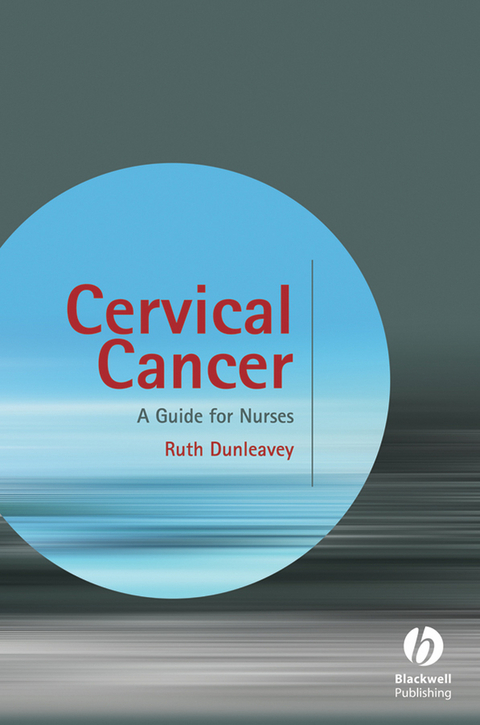
Cervical Cancer (eBook)
John Wiley & Sons (Verlag)
978-0-470-98803-9 (ISBN)
As well as containing the essential chapters about the pathophysiology and treatment of cervical abnormalities and cervical cancer, the book also addresses specific nursing issues such as sexuality, fertility, and symptom control. Moreover it examines the bigger, global picture of the disease. Full appreciation of global impact of cervical cancer on women involves an appreciation of the social, political and public health aspects of the disease - not only in the developed world but also in developing countries.
Ruth Dunleavey, Department of Haematology/Medical Oncology, St Vincents Hospital, Sydney.
This is a comprehensive guide to cervical cancer for nurses. It is a practically-based text for clinical nurses who wish to consolidate and update their knowledge of cervical cancer. It is concise, containing comprehensive information for general practice together with useful references to facilitate more in-depth study. Thus it provides an invaluable resource for both the registered nurse with a general interest in cervical cancer and for the nurse specialist working in primary health, gynaecology, oncology and palliative care. As well as containing the essential chapters about the pathophysiology and treatment of cervical abnormalities and cervical cancer, the book also addresses specific nursing issues such as sexuality, fertility, and symptom control. Moreover it examines the bigger, global picture of the disease. Full appreciation of global impact of cervical cancer on women involves an appreciation of the social, political and public health aspects of the disease not only in the developed world but also in developing countries.
Ruth Dunleavey, Department of Haematology/Medical Oncology, St Vincents Hospital, Sydney.
Cervical Cancer: A Guide for Nurses 5
Contents 7
Acknowledgements 12
Chapter 1: Dysplasia, HPV and cervical cancer 13
Introduction 13
The size of the problem 13
The healthy cervix 15
Types of cervical cancer 16
Cervical cytology grading 16
The Bethesda System (TBS) 16
Cervical histopathology grading 17
Causative factors in cervical neoplasia 20
Human papilloma virus 21
High and low risk HPV 22
HPV infection symptoms 23
Incidence of and risk factors for HPV infection 23
Prevention of HPV transmission 24
Progression of HPV infection and cervical cancer 25
Risk factors in the persistence and progression of dysplasia 26
Cervical cancer 28
Diagnostic and staging investigations 29
Prognosis 32
Conclusion 33
Frequently asked questions 33
Resources 34
References 34
Chapter 2: Pre-invasive disease, colposcopy and adenocarcinoma 38
Introduction 38
Cervical cytology testing 38
Cervical cytology: conventional smear versus liquid based cytology (LBC) 39
An abnormal smear – what next? 41
Colposcopy 41
When is a colposcopy performed? 41
How is a colposcopy performed? 44
Nursing care of a patient undergoing a diagnostic colposcopy 45
Who carries out colposcopies? 46
Management of high grade CIN 47
Ablative techniques 48
Excisional techniques – cervical conisation 48
Which CIN treatment is the best? 51
‘See and treat’ colposcopy 51
Adenocarcinoma of the cervix 52
Stages of adenocarcinoma 54
Adenocarcinoma in situ (AIS) 54
Microinvasive adenocarcinoma 55
Invasive adenocarcinoma 55
Adenosquamous carcinoma 55
Diethylstilbestrol (DES) exposure and adenocarcinoma 55
Conclusion 56
Frequently asked questions (see also Chapter 8, Cervical screening) 57
Resources 58
References 58
Chapter 3: Surgery 62
Introduction 62
Surgical management of cervical cancer 62
Surgical management of non-invasive and micro-invasive cancer 63
Surgical management of early stage disease (IB1) 63
Radical trachelectomy 64
Hysterectomy 65
Post-hysterectomy complications 65
Genital system 66
Urinary dysfunction 68
Bowel dysfunction 69
Nursing issues in the management of a patient undergoing a radical hysterectomy 69
Cervical cancer and the lymphatic system 71
Lymphocele (lymphocyst) 72
Lower limb lymphoedema 72
The management of locally advanced/recurrent disease 78
Post-operative morbidity after pelvic exenteration 78
Conclusion 81
Frequently asked questions 81
Resources 82
References 82
Chapter 4: Radiotherapy 86
Introduction 86
The great debate: surgery versus radiotherapy 86
Surgery plus adjuvant radiotherapy 87
How does radiotherapy work? 88
Methods of radiotherapy administration 88
Radiotherapy simulation and planning 90
Radiotherapy treatment factors 92
Optimising radiotherapy treatment 93
Treatment-related toxicities 95
Acute radiotherapy toxicities 96
Late radiotherapy toxicities 102
Second malignancies 106
Radiotherapy and quality of life 107
Conclusion 108
Frequently asked questions 108
Resources 108
References 109
Chapter 5: Chemotherapy 114
Introduction 114
Chemotherapy as a radiosensitiser 114
Which chemotherapy agents are the best radiosensitisers? 115
Chemotherapy for recurrent or advanced disease 116
Neoadjuvant chemotherapy 118
Intra-arterial chemotherapy 119
Bone marrow suppression 119
Nausea and vomiting 121
The mechanism of chemotherapy associated nausea and vomiting 121
Management of nausea and vomiting 121
Conclusion 125
Frequently asked questions 126
Resources 126
References 126
Chapter 6: Psychological and social aspects of cervical cancer 129
Introduction 129
Psychological impact of cervical cancer and quality of life 130
Coping 132
The impact of cervical cancer on relationships 132
Sexuality 134
Sexual function 135
Talking to children 139
Long-term support and the role of support groups 140
Conclusion 142
Frequently asked questions 143
Resources 143
References 144
Chapter 7: Fertility and menopause 147
Introduction 147
Fertility 147
Psychological effects of infertility 148
Surgical options 148
Assisted Reproductive Technology (ART) options 150
Surrogacy 152
Cervical cancer and menopause 152
Primary surgery 153
Primary radiotherapy for cervical cancer 153
Chemotherapy 154
Symptoms of menopause 154
Longer-term symptoms of menopause 155
Management of menopausal symptoms 156
Hormone therapy 157
Benefits of hormone therapy 157
The risks of hormone therapy 158
The main types of hormone therapy 159
Alternatives to hormone therapy 160
Conclusion 161
Frequently asked questions 161
Resources 161
References 161
Chapter 8: Cervical screening 165
Introduction 165
Cervical screening programmes – do they work? 168
Problems with cervical screening programmes 168
Screening intervals 170
When should screening be instigated and terminated? 170
Problems with access 172
Improving screening uptake amongst minority groups 172
Information and consent 174
Information leaflets 175
Psychological sequelae of cervical screening 176
Conclusion 180
Frequently asked questions 180
Resources 181
References 181
Chapter 9: Cervical cancer in developing countries 185
Introduction 185
Cervical cancer screening in the developing countries 186
Difficulties with implementing screening in developing nations 187
Problems with the screening test 187
Problems with the screening uptake 191
Treatment 193
Uganda – the problems of cervical cancer in a developing nation 198
The future 200
Conclusion 200
Resources 201
References 201
Chapter 10: Survivorship, recurrence and symptom management in cervical cancer 204
Introduction 204
Survivorship 204
Cervical cancer recurrence 206
Detection of recurrence and prognostic factors 207
Psychological factors 208
Treatment 208
Symptom control in advanced cervical cancer 209
Difficult pain syndromes 210
Fistulas 212
Vaginal discharge, haemorrhage and odour 213
Lower limblymphoedema (LLL) in palliative care 214
Ureteric obstruction 215
Conclusion 216
Resources 216
References 217
Chapter 11: Cervical cancer vaccines 220
Introduction 220
The role of vaccines in cancer therapy 220
Prophylactic vaccines 221
HPV vaccination – the decision-making triangle 224
The adolescent 224
The parent 225
The health professional 226
Therapeutic vaccines 231
Conclusion 232
Frequently asked questions 232
Resources 233
References 233
Index 237
"This is a high quality book, both in content and thoroughness." (Doody's Reviews, May 2009)
| Erscheint lt. Verlag | 20.11.2008 |
|---|---|
| Sprache | englisch |
| Themenwelt | Medizin / Pharmazie ► Medizinische Fachgebiete ► Onkologie |
| Medizin / Pharmazie ► Pflege | |
| Schlagworte | Aspects • Cancer • Cancer & Palliative Care Nursing • Cervical • Cervical cancer • Clinical • Comprehensive • concise • Containing • Countries • General • Guide • indepth • Information • Knowledge • Krankenpflege • nurses • nursing • Pflege i. d. Krebs- u. Palliativmedizin • practicallybased • Practice • References • Study • Text |
| ISBN-10 | 0-470-98803-7 / 0470988037 |
| ISBN-13 | 978-0-470-98803-9 / 9780470988039 |
| Informationen gemäß Produktsicherheitsverordnung (GPSR) | |
| Haben Sie eine Frage zum Produkt? |
 PDF (Adobe DRM)
Kopierschutz: Adobe-DRM
Adobe-DRM ist ein Kopierschutz, der das eBook vor Mißbrauch schützen soll. Dabei wird das eBook bereits beim Download auf Ihre persönliche Adobe-ID autorisiert. Lesen können Sie das eBook dann nur auf den Geräten, welche ebenfalls auf Ihre Adobe-ID registriert sind.
Details zum Adobe-DRM
Dateiformat: PDF (Portable Document Format)
Mit einem festen Seitenlayout eignet sich die PDF besonders für Fachbücher mit Spalten, Tabellen und Abbildungen. Eine PDF kann auf fast allen Geräten angezeigt werden, ist aber für kleine Displays (Smartphone, eReader) nur eingeschränkt geeignet.
Systemvoraussetzungen:
PC/Mac: Mit einem PC oder Mac können Sie dieses eBook lesen. Sie benötigen eine
eReader: Dieses eBook kann mit (fast) allen eBook-Readern gelesen werden. Mit dem amazon-Kindle ist es aber nicht kompatibel.
Smartphone/Tablet: Egal ob Apple oder Android, dieses eBook können Sie lesen. Sie benötigen eine
Geräteliste und zusätzliche Hinweise
Buying eBooks from abroad
For tax law reasons we can sell eBooks just within Germany and Switzerland. Regrettably we cannot fulfill eBook-orders from other countries.
aus dem Bereich