Diseases of the Liver and Biliary System (eBook)
John Wiley & Sons (Verlag)
978-0-470-98681-3 (ISBN)
Dame Sheila Patricia Violet Sherlock FRCP FRCPE FRS HFRSE FMGA FCRGA was a British physician and medical educator who is considered the major 20th century contributor to the field of hepatology.
James Dooley is the author of Diseases of the Liver and Biliary System, 11th Edition, published by Wiley.
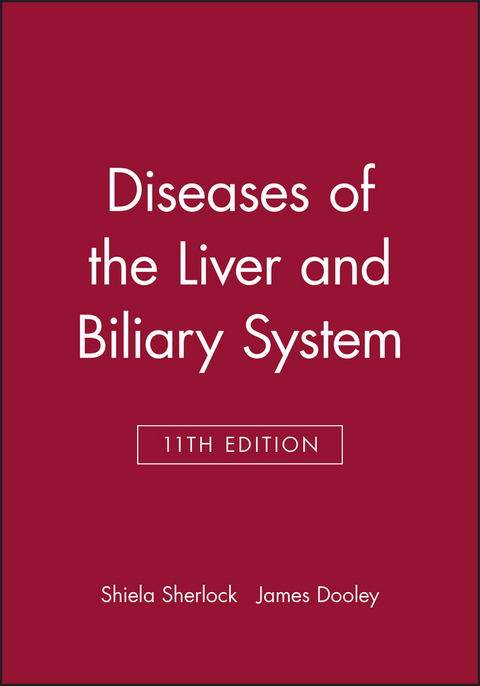
Diseases of the Liver and Biliary System continues to be the pre-eminent textbook of choice for trainee as well as practising gastroenterologists who want a clear and lucid description of the very latest issues in this growing discipline. Every chapter has been updated with the most recent advances in the study and control of hepatitis, in its various forms. Technical and therapeutic advances have appeared in all areas of hepatology, in particular portal hypertension, liver tumours, genetic diseases and imaging, both diagnostic and therapeutic. All are brought up-to-date in the very readable style characteristic of this standard text.
Dame Sheila Patricia Violet Sherlock FRCP FRCPE FRS HFRSE FMGA FCRGA was a British physician and medical educator who is considered the major 20th century contributor to the field of hepatology. James Dooley is the author of Diseases of the Liver and Biliary System, 11th Edition, published by Wiley.
Diseases of the Liver and Biliary System 1
Contents 7
Preface to the Eleventh Edition 17
Preface to the First Edition 18
1. Anatomy and Function 19
Functional anatomy: sectors and segments 20
Anatomy of the biliary tract 21
Development of the liver and bile ducts 22
Anatomical abnormalities of the liver 22
Surface marking 23
Methods of examination 23
Hepatic morphology 24
Electron microscopy and hepato-cellular function 27
Sinusoidal cells 29
Hepatocyte death and regeneration 31
Extra-cellular matrix 32
Altered hepatic microcirculation and disease 32
Adhesion molecules 32
Functional heterogeneity 32
Sinusoidal membrane traffic 34
Bile duct epithelial cells 34
2. Assessment of Liver Function 37
Selection of biochemical tests 37
Bile pigments 38
Bilirubin 38
Urobilinogen 38
Bromsulphalein 39
Serum enzyme tests 39
Alkaline phosphatase 39
Gamma glutamyl transpeptidase 40
Aminotransferases 40
Other serum enzymes 41
Quantitative assessment of hepatic function 41
Galactose elimination capacity 41
Breath tests 41
Salivary caffeine clearance 42
Lignocaine metabolite formation 43
Arterial blood ketone body ratio 43
Antipyrine 43
Indocyanine green 43
Asialoglycoprotein receptor 43
Excretory capacity (BSP) 43
Lipid and lipoprotein metabolism 44
Lipids 44
Lipoproteins 44
Changes in liver disease 45
Bile acids 46
Changes in disease 47
Serum bile acids 48
Amino acid metabolism 49
Clinical significance 49
Plasma proteins 50
Electrophoretic pattern of serum proteins 51
Carbohydrate metabolism 52
Effects of ageing on the liver 52
3. Biopsy of the Liver 55
Selection and preparation of the patient 55
Techniques 55
Difficulties 58
Liver biopsy in paediatrics 58
Risks and complications 58
Pleurisy and peri-hepatitis 58
Haemorrhage 58
Intra-hepatic haematomas 59
Haemobilia 59
Arteriovenous fistula 60
Biliary peritonitis 60
Puncture of other organs 61
Infection 61
Carcinoid crisis 61
Sampling variability 61
Naked eye appearances 61
Preparation of the specimen 61
Interpretation 61
Indications 62
Special methods 62
4. The Haematology of Liver Disease 65
General features 65
The liver and blood coagulation 67
Haemolytic jaundice 71
The liver in haemolytic anaemias 72
Hereditary spherocytosis 72
Thalassaemia 73
Paroxysmal nocturnal haemoglobinuria 74
Acquired haemolytic anaemia 74
Haemolytic disease of the newborn 74
Incompatible blood transfusion 74
The liver in myelo- and lymphoproliferative disease 74
Leukaemia 75
Myeloid 75
Lymphoid 75
Hairy cell leukaemia 75
Bone marrow transplantation 75
Lymphoma 76
Jaundice in lymphoma 77
Primary hepatic lymphoma 78
Lymphosarcoma 78
Multiple myeloma 79
Angio-immunoblastic lymphadenopathy 79
Extra-medullary haemopoiesis 79
Systemic mastocytosis 79
Langerhans’ cell histiocytosis (histiocytosis X) 79
Lipid storage diseases 80
Primary and secondary xanthomatosis 80
Cholesteryl ester storage disease 80
Gaucher’s disease 80
Niemann–Pick disease 81
Sea-blue histiocyte syndrome 82
5. Ultrasound, Computed Tomography and Magnetic Resonance Imaging 85
Radio-isotope scanning 85
Positron emission tomography (PET) 85
Ultrasound 85
Doppler ultrasound 87
Endoscopic ultrasound 88
Computed tomography 88
Magnetic resonance imaging 92
MR spectroscopy 94
Conclusions and choice 95
6. Hepato-cellular Failure 99
General failure of health 99
Jaundice 99
Vasodilatation and hyperdynamic circulation 99
Hepato-pulmonary syndrome 100
Pulmonary hypertension 102
Fever and septicaemia 104
Fetor hepaticus 105
Changes in nitrogen metabolism 105
Skin changes 105
Vascular spiders 105
Palmar erythema (liver palms) 106
White nails 107
Mechanism of skin changes 107
Endocrine changes 107
Hypogonadism 108
Hypothalamic–pituitary function 109
Metabolism of hormones 109
General treatment 110
Precipitating factors 110
General measures 110
7. Hepatic Encephalopathy 111
Clinical features 111
Investigations 113
Neuropathological changes 114
Clinical variants in cirrhotics 115
Differential diagnosis 116
Prognosis 117
Pathogenetic mechanisms 117
Portal-systemic encephalopathy 117
Intestinal bacteria 118
Neurotransmission 118
Conclusions 121
Treatment of hepatic encephalopathy 122
Diet 122
Antibiotics 123
Lactulose and lactilol 123
Sodium benzoate and L-ornithine -L-aspartate 124
Levodopa and bromocriptine 124
Flumazenil 124
Branched-chain amino acids 124
Other precipitating factors 124
Shunt occlusion 124
Temporary hepatic support 125
Hepatic transplantation 125
8. Acute Liver Failure 129
Definition 129
Causes 129
Clinical features 131
Investigations 131
Associations 133
Prognosis 136
Treatment 137
Conclusion 142
9. Ascites 145
Mechanism of ascites formation 145
Underfill and peripheral vasodilatation hypotheses 145
Overfill hypothesis 147
Other renal factors 147
Circulation of ascites 148
Summary 148
Clinical features 148
Spontaneous bacterial peritonitis 150
Treatment of cirrhotic ascites 152
Refractory ascites 156
Prognosis 157
Hepato-renal syndrome 158
Hyponatraemia 161
10. The Portal Venous System and Portal Hypertension 165
Collateral circulation 165
Intra-hepatic obstruction (cirrhosis) 165
Extra-hepatic obstruction 166
Effects 166
Pathology of portal hypertension 166
Varices 167
Portal hypertensive intestinal vasculopathy 169
Haemodynamics of portal hypertension 169
Clinical features of portal hypertension 170
History and general examination 170
Abdominal wall veins 171
Spleen 172
Liver 172
Ascites 172
Rectum 172
X-ray of the abdomen and chest 172
Barium studies 173
Endoscopy 173
Imaging the portal venous system 175
Ultrasound 175
Doppler ultrasound 175
CT scan 176
Magnetic resonance angiography 176
Venography 176
Venographic appearances 176
Visceral angiography 177
Digital subtraction angiography 177
Splenic venography 177
Carbon dioxide wedged venography 178
Portal pressure measurement 178
Variceal pressure 178
Estimation of hepatic blood flow 179
Azygos blood flow 180
Experimental portal venous occlusion and hypertension 181
Classification of portal hypertension 181
Extra-hepatic portal venous obstruction 181
Aetiology 181
Clinical features 183
Prognosis 184
Treatment 185
Splenic vein obstruction 185
Hepatic arterio-portal venous fistulae 185
Porto-hepatic venous shunts 186
Intra-hepatic pre-sinusoidal and sinusoidal portal hypertension 186
Portal tract lesions 186
Toxic causes 186
Hepato-portal sclerosis 186
Tropical splenomegaly syndrome 187
Intra-hepatic portal hypertension 187
Cirrhosis 187
Non-cirrhotic nodules 188
Bleeding oesophageal varices 188
Predicting rupture 188
Prevention of bleeding 189
Diagnosis of bleeding 190
Prognosis 190
Management of acute variceal bleeding 191
Vaso-active drugs 192
Sengstaken–Blakemore tube 192
Endoscopic sclerotherapy and banding 193
Emergency surgery 194
Prevention of re-bleeding 194
Portal-systemic shunt procedures 195
Porta-caval 195
Meso-caval 196
Selective ‘distal’ spleno-renal 196
General results of portal-systemic shunts 196
TIPS (transjugular intrahepatic portosystemic shunt) 196
Shunt stenosis and occlusion 197
Control of bleeding 198
TIPS encephalopathy 198
Circulatory changes 198
Other indications 198
Conclusions 198
Hepatic transplantation 198
Pharmacological control of the portal circulation 198
Conclusions 198
11. The Hepatic Artery and Hepatic Veins: the Liver in Circulatory Failure 205
The hepatic artery 205
Hepatic artery occlusion 206
Hepatic arterial lesions following liver transplantation 207
Aneurysms of the hepatic artery 207
Hepatic arteriovenous shunts 208
The hepatic veins 208
Experimental hepatic venous obstruction 209
Budd–Chiari (hepatic venous obstruction) syndrome 210
Pathological changes 211
Clinical features 211
Diagnosis 213
Prognosis 214
Treatment 215
Veno-occlusive disease 216
Spread of disease by the hepatic veins 216
Circulatory failure 217
Hepatic changes in acute heart failure and shock 217
Ischaemic hepatitis 218
Post-operative jaundice 218
Jaundice after cardiac surgery 219
The liver in congestive heart failure 219
The liver in constrictive pericarditis 221
12. Jaundice 223
Bilirubin metabolism 223
Hepatic transport and conjugation of bilirubin 223
Distribution of jaundice in the tissues 225
Factors determining the depth of jaundice 225
Classification of jaundice 226
Diagnosis of jaundice 227
Clinical history 227
Examination 229
Diagnostic routine 230
Familial non-haemolytic hyperbilirubinaemias 231
Primary hyperbilirubinaemia 231
Gilbert’s syndrome 231
Crigler–Najjar syndrome 233
Dubin–Johnson syndrome 234
Rotor type 235
The group of familial non-haemolytic hyperbilirubinaemias 235
13. Cholestasis 237
Anatomy of the biliary system 237
Secretion of bile 238
Cellular mechanisms 239
Syndrome of cholestasis 241
Definition 241
Classification 241
Pathogenesis 242
Pathology 242
Clinical features 244
Diagnostic approach 249
Diagnostic possibilities 250
14. Primary Biliary Cirrhosis 259
Aetiology 259
Epidemiology and genetics 261
Clinical features 261
Diagnosis 264
Prognosis 265
Treatment 266
Immune cholangiopathy 268
Autoimmune cholangitis 271
15. Sclerosing Cholangitis 273
Primary sclerosing cholangitis 273
Infective sclerosing cholangitis 279
Bacterial cholangitis 279
Immunodeficiency-related opportunistic cholangitis 279
Graft-versus-host disease 281
Vascular cholangitis 281
Drug-related cholangitis 281
Histiocytosis X 281
16. Viral Hepatitis: General Features, Hepatitis A, Hepatitis E and Other Viruses 285
Pathology 285
Clinical types 286
Investigations 289
Differential diagnosis 289
Prognosis 290
Treatment 290
Follow-up 290
Hepatitis A virus 291
Epidemiology 292
Clinical course 293
Prognosis 293
Prevention 293
Hepatitis E virus 294
Clinical features 295
Diagnostic tests 295
Liver biopsy 295
Prevention 295
Hepatitis G virus 296
Hepatitis TT virus 296
Yellow fever 297
Pathology 297
Clinical features 297
Treatment 297
Infectious mononucleosis (Epstein–Barr virus) 297
Hepatic histology 297
Clinical features 298
Diagnosis 298
Distinction from viral hepatitis 298
Other viruses 299
Cytomegalovirus 299
Herpes simplex 299
Miscellaneous 299
Hepatitis due to exotic viruses 300
Treatment 301
17. Hepatitis B Virus and Hepatitis Delta Virus 303
Hepatitis B virus (HBV) 303
Acute hepatitis B 305
Epidemiology 308
Clinical course 308
Prevention 310
Chronic hepatitis B 312
Clinical relapse and reactivation 312
Laboratory tests 313
Needle liver biopsy 313
Course and prognosis 313
Treatment 314
Outstanding problems 316
Screening for hepato-cellular carcinoma 316
Hepatitis delta virus (HDV) 318
Epidemiology 318
Diagnosis 319
Clinical features 319
Hepatic histology 320
Prevention 320
Treatment 320
18. Hepatitis C Virus 323
Molecular virology 323
Serological tests 324
Immune response 325
Epidemiology 325
Natural history 326
Clinical course 326
Hepatic histology 327
Hepatitis C and serum autoantibodies 328
Associated diseases 328
Diagnosis 329
Prognosis 329
Prevention: vaccines 330
Treatment 330
Hepatic transplantation 334
19. Chronic Hepatitis: General Features, and Autoimmune Chronic Disease 339
Clinical presentation 339
Hepatic histology 340
The role of liver biopsy 340
Classification 342
Autoimmune chronic hepatitis 343
Type 1 (formerly called lupoid) 344
Type 2 344
Primary biliary cirrhosis and immune cholangitis 344
Chronic autoimmune hepatitis (type 1) 344
Aetiology 344
Hepatic pathology 346
Clinical features 346
Differential diagnosis 348
Treatment 349
Course and prognosis 350
Syncytial giant-cell hepatitis 350
20. Drugs and the Liver 353
Hepato-cellular zone 3 necrosis 358
Carbon tetrachloride 360
Amanita mushrooms 361
Paracetamol (acetaminophen) 361
Salicylates 362
Hyperthermia 362
Hypothermia 362
Burns 362
Hepato-cellular zone 1 necrosis 362
Ferrous sulphate 363
Phosphorus 363
Mitochondrial cytopathies 363
Sodium valproate 363
Tetracyclines 363
Tacrine 363
Antiviral nucleoside analogues 363
Bacillus cereus 364
Steato-hepatitis 364
Perhexiline maleate 364
Amiodarone 364
Synthetic oestrogens 364
Calcium channel blockers 365
Fibrosis 365
Methotrexate 365
Other cytotoxic drugs 365
Arsenic 366
Vinyl chloride 366
Vitamin A 366
Retinoids 366
Vascular changes 366
Sinusoidal dilatation 366
Peliosis hepatis 367
Veno-occlusive disease (VOD) 367
Acute hepatitis 367
Isoniazid 368
Methyl dopa 369
Halothane 369
Hydrofluorocarbons 370
Systemic antifungals 370
Oncology drugs 370
Nervous system modifiers 371
Sustained-release nicotinic acid (niacin) 371
Sulphonamides and derivatives 371
Non-steroidal anti-inflammatory drugs 371
Anti-thyroid drugs 371
Quinidine and quinine 371
Troglitazone 372
Anti-convulsants 372
Chronic hepatitis 372
Herbal remedies 372
Recreational drugs 373
Canalicular cholestasis 373
Cyclosporin A 373
Ciprofloxacin 373
Hepato-canalicular cholestasis 373
Chlorpromazine 374
Penicillins 375
Sulphonomides 375
Erythromycin 375
Haloperidol 375
Cimetidine and ranitidine 375
Oral hypoglycaemics 375
Tamoxifen 375
Other causes 375
Dextropropoxyphene 375
Ductular cholestasis 375
Biliary sludge 375
Sclerosing cholangitis 375
Hepatic nodules and tumours 376
Hepato-cellular carcinoma 376
Conclusions 377
21. Hepatic Cirrhosis 383
Classification of cirrhosis 386
Clinical cirrhosis 389
Compensated cirrhosis 392
Decompensated cirrhosis 393
Prognosis 394
Treatment 395
22. Alcohol and the Liver 399
Risk factors for alcoholic liver diseases 399
Metabolism of alcohol 400
Mechanisms of liver injury 402
Morphological changes 404
Fatty liver (steatosis) 404
Alcoholic hepatitis 405
Cirrhosis 405
Early recognition 407
Investigation 407
Clinical syndromes 408
Fatty liver 408
Acute alcoholic hepatitis 408
Hepatic cirrhosis 409
Cholestatic syndromes 409
Hepato-cellular cancer 411
Associated features 411
Prognosis 411
Treatment 412
Acute alcoholic hepatitis 412
Cirrhosis 413
Hepatic transplantation 413
23. Iron Overload States 417
Normal iron metabolism 417
Iron overload and liver damage 419
Genetic haemochromatosis 419
Other iron storage diseases 425
Non-HFE-related inherited iron overload 425
Dysmetabolic syndrome 426
Erythropoietic siderosis 426
Late stage cirrhosis 426
Chronic viral hepatitis 426
Non-alcoholic fatty liver disease 426
Neonatal haemochromatosis 427
African iron overload (Bantu siderosis) 427
Porphyria cutanea tarda 427
Haemodialysis 427
Acaeruloplasminaemia 427
Transferrin deficiency 427
24. Wilson’s Disease 431
Molecular genetics: pathogenesis 431
Pathology 432
Clinical picture 433
Hepatic forms 434
Neuropsychiatric forms 435
Renal changes 435
Other changes 435
Laboratory tests 435
Liver biopsy 436
Scanning 436
Diagnostic difficulties 436
Treatment 437
Prognosis 438
Indian childhood cirrhosis 439
Hereditary acaeruloplasminaemia 439
25. Nutritional and Metabolic Liver Diseases 441
Malnutrition 441
Fatty liver 441
Diagnosis 442
Classification 442
Non-alcoholic fatty liver disease 445
Non-alcoholic hepatic steatosis 446
Non-alcoholic steatonecrosis 446
Effects of jejuno-ileal bypass 447
Parenteral nutrition 447
Vitamins 447
Carbohydrate metabolism in liver disease 449
Hypoglycaemia 449
Hyperglycaemia 449
The liver in diabetes mellitus 449
Insulin and the liver 449
Hepatic histology 449
Clinical features 450
Liver function tests 450
Hepato-biliary disease and diabetes 450
Glucose intolerance of cirrhosis 450
Treatment of diabetes in cirrhotic patients 451
Glycogen storage diseases 452
Type I (von Gierke’s disease) 453
Type II (Pompe’s disease) 454
Type III (Cori’s disease) 454
Type IV (Andersen’s disease) 455
Type VI (Hers’ disease) 455
Hepatic glycogen synthetase deficiency (type 0) 455
Hereditary fructose intolerance 456
Glutaric aciduria type II 456
Galactosaemia 456
Mucopolysaccharidoses 457
Familial hypercholesterolaemia 457
Amyloidosis 458
a1 -Antitrypsin deficiency 461
Hereditary tyrosinaemia 463
Cystic fibrosis 464
Liver and thyroid 465
Thyrotoxicosis 465
Myxoedema 465
Changes with hepato-cellular disease 465
Liver and adrenal 466
Liver and growth hormone 466
Hepatic porphyrias 466
Acute intermittent porphyria 467
Hereditary coproporphyria 468
Variegate porphyria 468
Porphyria cutanea tarda 468
Erythropoietic protoporphyria 468
Congenital erythropoietic porphyria 469
Hepato-erythropoietic porphyria 469
Secondary coproporphyrias 469
Hereditary haemorrhagic telangiectasia 470
Dystrophia myotonica 470
26. The Liver in Infancy and Childhood 471
Neonatal hyperbilirubinaemia 471
Unconjugated hyperbilirubinaemia 471
Haemolytic disease of the newborn 472
Hepatitis and cholestatic syndromes (conjugated hyperbilirubinaemia) 473
Viral hepatitis 475
Non-viral causes of hepatitis 477
Urinary tract infections 477
Neonatal hepatitis syndrome 477
Infantile cholangiopathies 478
Biliary atresia 478
Extra-hepatic biliary atresia 478
Alagille’s syndrome (arterio-hepatic dysplasia) 480
Prolonged parenteral nutrition 480
Abnormal bile acid synthesis 481
Genetic cholestatic syndromes 481
Symptomatic treatment of cholestatic syndromes 482
Other causes of cholestatic jaundice 482
Reye’s syndrome 483
Reye-like syndromes 483
Cirrhosis in infancy and childhood 483
Indian childhood cirrhosis 484
Non-Indian childhood cirrhosis (copper-associated liver disease) 484
Hepatic steatosis 485
Fetal alcohol syndrome 485
Idiopathic steato-hepatitis 485
Tumours of the liver 485
Hamartomas 485
Mesenchymal hamartoma 485
Malignant mesenchymoma (undifferentiated sarcoma) 485
Adenomas 485
Hepato-cellular carcinoma 485
Hepatoblastoma 485
Infantile haemangio-endothelioma 485
Nodular regenerative hyperplasia 486
Hepatic transplantation 486
27. The Liver in Pregnancy 489
Normal pregnancy 489
Liver disease in pregnancy 489
Hyperemesis gravidarum 489
Liver diseases of late pregnancy 489
Acute fatty liver of pregnancy 489
Pregnancy toxaemias 492
The HELLP syndrome 492
Toxaemia and the HELLP syndrome 493
Hepatic haemorrhage 493
Cholestasis of pregnancy 493
Budd–Chiari syndrome 494
Intercurrent jaundice 494
Viral hepatitis 494
Biliary tract disease 495
Hepato-toxic drugs and the pregnant woman 496
Effect of pregnancy on pre-existing chronic liver disease 496
Pregnancy in liver transplant recipients 496
28. The Liver in Systemic Disease, Granulomas and Hepatic Trauma 499
The liver in collagen diseases 499
Arthropathy associated with liver disease 499
Genetic haemochromatosis 499
Hepatitis B virus (HBV) associations 499
Hepatitis C virus (HCV) associations 500
Hepatic granulomas 500
Clinical syndrome of hepatic granulomas 501
‘Granulomatous hepatitis’ 502
Sarcoidosis 502
Granulomatous drug reactions 504
Granulomas associated with infections 505
Hepatic granulomas in the patient with AIDS 506
Industrial causes 507
Other conditions with hepatic granulomas 507
Hepato-biliary associations of inflammatory bowel disease 508
Hepatic trauma 509
Rupture of the gallbladder 510
29. The Liver in Infections 513
Pyogenic liver abscess 513
Other infections 516
Hepatic amoebiasis 516
Tuberculosis of the liver 519
Hepatic actinomycosis 520
Other fungal infections 520
Syphilis of the liver 521
Congenital 521
Secondary 521
Tertiary 521
Jaundice complicating penicillin treatment 522
Leptospirosis 522
Weil’s disease 522
Other types of leptospirosis 524
Relapsing fever 525
Lyme disease 525
Q fever 525
Rocky mountain spotted fever 526
Schistosomiasis (bilharziasis) 526
Malaria 528
Kala-azar (leishmaniasis) 529
Hydatid disease 529
Echinococcus multilocularis (alveolar echinococcosis) 534
Ascariasis 535
Strongyloides stercoralis 536
Trichiniasis 536
Toxocara canis (visceral larva migrans) 536
Liver flukes 536
Clonorchis sinensis 536
Fasciola hepatica 537
Recurrent pyogenic cholangitis 537
Peri-hepatitis 538
Hepato-biliary disease in HIV infection 538
Infections 539
Hepatitis B, C and D co-infection 540
Neoplasms 540
Hepato-biliary disease 541
Acalculous cholecystitis 542
Jaundice of infections 543
Bacterial pneumonia 543
Septicaemia and septic shock 543
30. Nodules and Benign Liver Lesions 545
Small hepato-cellular cancer 545
Nodules in the absence of underlying liver disease 546
Simple cysts 546
Focal nodular hyperplasia 548
Hepatic adenoma 549
Focal nodular hyperplasia and adenoma contrasted 550
Liver metastases 550
Other benign tumours 552
Cholangioma (bile duct adenoma) 552
Biliary cystadenoma 552
Nodular regenerative hyperplasia 552
Partial nodular transformation 553
31. Malignant Liver Tumours 555
Hepato-cellular cancer 555
Aetiological factors 555
Pathology 558
Clinical features 559
Tumour localization 561
Needle liver biopsy 564
Screening 564
Prognosis and risk factors 565
Surgical treatment 565
Non-surgical treatment 566
Fibro-lamellar carcinoma of the liver 569
Hepatoblastoma 569
Intra-hepatic cholangiocarcinoma 570
Combined hepato-cellular–cholangiocarcinoma 571
Other primary liver tumours 571
Cystadenocarcinoma 571
Angiosarcoma (haemangio-endothelioma) 571
Epithelioid haemangio-endothelioma 572
Undifferentiated sarcoma of the liver 572
Benign tumours of the liver 572
Mesenchymal hamartoma 572
Paraneoplastic hepatopathy 572
Hepatic metastases 572
32. Imaging of the Biliary Tract: Interventional Radiology and Endoscopy 581
Plain film of the abdomen 581
Ultrasound (US) 581
Bile ducts 581
Gallbladder 581
Computed tomography (CT) 582
Magnetic resonance cholangiopancreatography (MRCP) 583
Endoscopic ultrasound (EUS) 584
Biliary scintigraphy 585
Oral cholecystography 585
Intravenous cholangiography 586
Endoscopic retrograde cholangiopancreatography 586
Endoscopic sphincterotomy 588
Endoscopic biliary endoprostheses 591
Percutaneous trans-hepatic cholangiography 594
Percutaneous bile drainage 594
Percutaneous biliary endoprosthesis 595
Resectability of tumours 596
Choice between surgical and non-surgical palliation of malignant obstruction 596
Choice between endoscopic and percutaneous approach 596
Percutaneous cholecystostomy 596
Operative and post-operative cholangiography 597
33. Cysts and Congenital Biliary Abnormalities 601
Fibropolycystic disease 601
Childhood fibropolycystic diseases 602
Adult polycystic disease 602
Congenital hepatic fibrosis 604
Congenital intra-hepatic biliary dilatation (Caroli’s disease) 606
Congenital hepatic fibrosis and Caroli’s disease 607
Choledochal cyst 607
Microhamartoma (von Meyenberg complexes) 609
Carcinoma secondary to fibropolycystic disease 609
Solitary non-parasitic liver cyst 609
Other cysts 609
Congenital anomalies of the biliary tract 610
Absence of the gallbladder 610
Double gallbladder 610
Accessory bile ducts 611
Left-sided gallbladder 612
Rokitansky–Aschoff sinuses of the gallbladder 612
Folded gallbladder 612
Diverticula of the gallbladder and ducts 612
Intra-hepatic gallbladder 612
Congenital adhesions to the gallbladder 612
Floating gallbladder and torsion of the gallbladder 612
Anomalies of the cystic duct and cystic artery 613
34. Gallstones and Inflammatory Gallbladder Diseases 615
Composition of gallstones 615
Composition of bile 615
Factors in cholesterol gallstone formation 616
Pigment gallstones 621
Radiology of gallstones 621
Natural history of gallstones 622
Silent gallstones 623
Treatment of gallstones in the gallbladder 623
Cholecystectomy 623
Laparoscopic cholecystectomy 623
Non-surgical treatment of gallstones in the gallbladder 625
Dissolution therapy 625
Direct solvent dissolution 626
Shock-wave therapy 626
Percutaneous cholecystolithotomy 627
Conclusions 627
Acute cholecystitis 628
Empyema of the gallbladder 630
Perforation of the gallbladder 630
Emphysematous cholecystitis 630
Chronic calculous cholecystitis 631
Acalculous cholecystitis 632
Acute 632
Chronic 632
Typhoid cholecystitis 632
Acute cholecystitis in AIDS 632
Other associations 633
Other gallbladder pathology 633
Cholesterolosis of the gallbladder 633
Xanthogranulomatous cholecystitis 633
Adenomyomatosis 633
Porcelain gallbladder 633
Post-cholecystectomy problems 633
Sphincter of Oddi dysfunction 634
Gallstones in the common bile duct (choledocholithiasis) 634
Management of common duct stones 636
Acute obstructive suppurative cholangitis 636
Acute cholangitis 636
Common duct stones without cholangitis 637
Patients with gallbladder in situ 637
Acute gallstone pancreatitis 637
Large common duct stones 637
Trans T-tube tract removal of stones 638
Intra-hepatic gallstones 638
Mirizzi’s syndrome 638
Biliary fistulae 639
External 639
Internal 639
Gallstone ileus 639
Haemobilia 640
Bile peritonitis 640
Association of gallstones with other diseases 641
Colorectal and other cancers 641
Diabetes mellitus 641
35. Benign Stricture of the Bile Ducts 647
Post-cholecystectomy 647
Bile duct/bowel anastomotic stricture 652
Post liver transplantation 653
Primary sclerosing cholangitis 654
Other causes 654
Summary 654
36. Diseases of the Ampulla of Vater and Pancreas 657
Peri-ampullary carcinoma 657
Benign villous adenoma of the ampulla of Vater 662
Cystic tumours of the pancreas 662
Endocrine tumours of the pancreas 662
Chronic pancreatitis 662
Obstruction of the common bile duct by enlarged lymph glands 663
Other causes of extrinsic pressure on the common bile duct 663
37. Tumours of the Gallbladder and Bile Ducts 665
Benign lesions of the gallbladder 665
Carcinoma of the gallbladder 665
Other tumours 666
Benign tumours of the extra-hepatic bile duct 666
Carcinoma of the bile duct (cholangiocarcinoma) 666
Cholangiocellular carcinoma 672
Metastases at the hilum 673
38. Hepatic Transplantation 675
Selection of patients 675
Candidates: outcome 675
Cirrhosis 677
Autoimmune chronic hepatitis 677
Chronic viral hepatitis 677
Neonatal hepatitis 678
Alcoholic liver disease 678
Cholestatic liver disease 678
Primary metabolic disease 679
Acute liver failure 680
Malignant disease 680
Miscellaneous 681
Absolute and relative contraindications 681
Absolute 681
Relative (higher risk) 682
General preparation of the patient 682
Donor selection and operation 682
The recipient operation 683
Segmental (split) liver transplantation 683
Auxiliary liver transplantation 684
Xeno-transplantation 684
Domino liver transplantation 684
Hepatocyte transplantation 685
Liver transplantation in paediatrics 685
Immunosuppression 685
Tolerance 686
Post-operative course 686
Post-transplantation complications 686
Rejection 689
Infections 691
Malignancies 693
Drug-related toxicity 693
Disease recurrence 693
Central nervous system toxicity 693
Bone disease 693
Ectopic soft-tissue calcification 693
Conclusion 693
Index 699
"More than any other text in liver diseases, this one provides the
best source of synthesized clinical wisdom, a currency in ever
increasingly short supply as our fund of factual knowledge
burgeons. Indeed, if one demanded that an author confine the
breadth of our knowledge in liver disease into a readable clinical
textbook of less than 700 pages, he or she could do no better than
to direct that individual to Sherlock and Dooley's Diseases of the
Liver and Biliary System". -Gastroenterology (the highest
impact journal in the field) on the 10th edition.
"Sherlock and Dooley's Diseases of the Liver and Biliary System,
the only text written by the two authors, remains an outstanding
clinical liver guide for the generalist and specialist alike".
-JAMA on the 10th edition.
| Erscheint lt. Verlag | 15.4.2008 |
|---|---|
| Sprache | englisch |
| Themenwelt | Medizin / Pharmazie ► Allgemeines / Lexika |
| Medizinische Fachgebiete ► Innere Medizin ► Gastroenterologie | |
| Medizinische Fachgebiete ► Innere Medizin ► Hepatologie | |
| Schlagworte | appeal • author • Best • Book • breadth • burgeons • Clinical • confine • Currency • Disease • Diseases • factual • Fund • Gastroenterologie • gastroenterology • gastroenterology sums • Increasingly • Knowledge • Liver • Medical Science • Medizin • readable • Review • Short • source • synthesised clinical • Textbook • wisdom |
| ISBN-10 | 0-470-98681-6 / 0470986816 |
| ISBN-13 | 978-0-470-98681-3 / 9780470986813 |
| Informationen gemäß Produktsicherheitsverordnung (GPSR) | |
| Haben Sie eine Frage zum Produkt? |
 PDF (Adobe DRM)
Kopierschutz: Adobe-DRM
Adobe-DRM ist ein Kopierschutz, der das eBook vor Mißbrauch schützen soll. Dabei wird das eBook bereits beim Download auf Ihre persönliche Adobe-ID autorisiert. Lesen können Sie das eBook dann nur auf den Geräten, welche ebenfalls auf Ihre Adobe-ID registriert sind.
Details zum Adobe-DRM
Dateiformat: PDF (Portable Document Format)
Mit einem festen Seitenlayout eignet sich die PDF besonders für Fachbücher mit Spalten, Tabellen und Abbildungen. Eine PDF kann auf fast allen Geräten angezeigt werden, ist aber für kleine Displays (Smartphone, eReader) nur eingeschränkt geeignet.
Systemvoraussetzungen:
PC/Mac: Mit einem PC oder Mac können Sie dieses eBook lesen. Sie benötigen eine
eReader: Dieses eBook kann mit (fast) allen eBook-Readern gelesen werden. Mit dem amazon-Kindle ist es aber nicht kompatibel.
Smartphone/Tablet: Egal ob Apple oder Android, dieses eBook können Sie lesen. Sie benötigen eine
Geräteliste und zusätzliche Hinweise
Buying eBooks from abroad
For tax law reasons we can sell eBooks just within Germany and Switzerland. Regrettably we cannot fulfill eBook-orders from other countries.
aus dem Bereich