· wildlife conservation,
· welfare of, and alleged cruelty to, animals,
· insurance, certification and malpractice
· the identification of live and dead species or their derivatives.
It also discusses and analyses current concern over possible links between domestic violence and abuse of animals. Throughout the book the emphasis is on the need for a systematic and thorough approach to forensic work. A particular feature is practical advice, with protocols on dealing with common problems, together with case studies, various appendices and an extensive bibliography.
A vital reference for members of the veterinary profession, lawyers, enforcement bodies and welfare and conservation organisations. The comparative aspects provide an important source of information for those working in human forensic medicine and the biological sciences.
John and Margaret Cooper are a husband and wife team, from the United Kingdom. John E Cooper trained as a veterinary surgeon and is now a specialist pathologist with particular interests in wildlife and exotic species, tropical diseases and comparative medicine. Margaret E Cooper is a lawyer who trained originally as a British solicitor and has made the study of animal and conservation law her special interest.
The Coopers have travelled widely and lectured together in many countries. They have spent nearly ten years living in Africa, including a period in Rwanda working with the mountain gorillas. They are currently based at the University of the West Indies in Trinidad and Tobago where they continue to combine their medical and legal backgrounds in the promotion of an interdisciplinary approach to veterinary and biological education, wildlife conservation and forensic science.
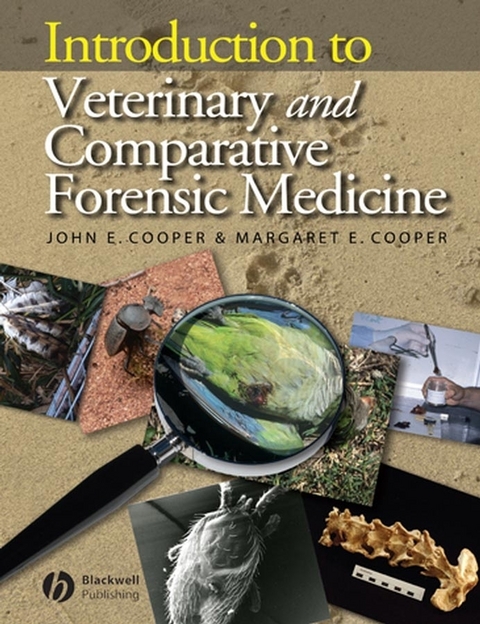
Introduction to Veterinary and Comparative Forensic Medicine is a ground-breaking book in an emerging new speciality. It reflects the increasing demand for expert opinion by veterinarians and others in courts of law and elsewhere on such matters as: wildlife conservation, welfare of, and alleged cruelty to, animals, insurance, certification and malpractice the identification of live and dead species or their derivatives. It also discusses and analyses current concern over possible links between domestic violence and abuse of animals. Throughout the book the emphasis is on the need for a systematic and thorough approach to forensic work. A particular feature is practical advice, with protocols on dealing with common problems, together with case studies, various appendices and an extensive bibliography. A vital reference for members of the veterinary profession, lawyers, enforcement bodies and welfare and conservation organisations. The comparative aspects provide an important source of information for those working in human forensic medicine and the biological sciences.
John and Margaret Cooper are a husband and wife team, from the United Kingdom. John E Cooper trained as a veterinary surgeon and is now a specialist pathologist with particular interests in wildlife and exotic species, tropical diseases and comparative medicine. Margaret E Cooper is a lawyer who trained originally as a British solicitor and has made the study of animal and conservation law her special interest. The Coopers have travelled widely and lectured together in many countries. They have spent nearly ten years living in Africa, including a period in Rwanda working with the mountain gorillas. They are currently based at the University of the West Indies in Trinidad and Tobago where they continue to combine their medical and legal backgrounds in the promotion of an interdisciplinary approach to veterinary and biological education, wildlife conservation and forensic science.
Introduction to Veterinary and Comparative Forensic Medicine 5
Contents 7
Dedication 9
Foreword 10
Authors' Preface 12
Acknowledgements 15
Abbreviations 18
Part A: Introduction 19
Chapter 1 What is Forensic Medicine? 21
Chapter 2 Special Features of Veterinary and Comparative Forensic Medicine 28
Chapter 3 Importance and Application of Animal Law 60
Part B: Particular Types of Case 79
Chapter 4 Animal Welfare 81
Chapter 5 Conservation and Wildlife Crime 103
Part C: Methodology 133
Chapter 6 Clinical Work 135
Chapter 7 Pathology and Post-Mortem Examinations 186
Chapter 8 Laboratory Investigations 243
Chapter 9 Site Visits, Fieldwork and Collection of Evidence 267
Chapter 10 Record-Keeping and Collation and Analysis of Findings 287
Chapter 11 Storage, Labelling and Presentation of Material 302
Chapter 12 Serving as an Expert and Appearing in Court 311
Chapter 13 The Future 330
Part D: Appendices, References and Further Reading 339
Appendix A Submission and Report Forms 341
Appendix B Journals, Societies, Organisations, Useful Addresses and Sources of Information 357
Appendix C Glossary of Terms 367
Appendix D Some Case Studies, Demonstrating Approach and Techniques 374
Appendix E Facilities and Equipment Lists 389
Appendix F Scientific Names of Species and Taxa in Text, with Notes on Taxonomy 394
Appendix G The CRFP's Code of Practice 398
References and Further Reading 400
Index 430
Colour Plate 259
| Erscheint lt. Verlag | 15.4.2008 |
|---|---|
| Sprache | englisch |
| Themenwelt | Medizin / Pharmazie |
| Veterinärmedizin | |
| Schlagworte | animals • Animal Welfare, Ethics & Law • Book • Comparative • Courts • Dead • Derivatives • Domestic • Expert • Forensic • groundbreaking • Identification • Increasing demand • Introduction • Law • Live • malpractice • Medicine • New • opinion • others • possible • Speciality • Tierschutz, Ethik u. Recht • Veterinärmedizin • veterinarians • Veterinärmedizin • Veterinary Medicine |
| ISBN-13 | 9780470752920 / 9780470752920 |
| Informationen gemäß Produktsicherheitsverordnung (GPSR) | |
| Haben Sie eine Frage zum Produkt? |
 PDF (Adobe DRM)
Kopierschutz: Adobe-DRM
Adobe-DRM ist ein Kopierschutz, der das eBook vor Mißbrauch schützen soll. Dabei wird das eBook bereits beim Download auf Ihre persönliche Adobe-ID autorisiert. Lesen können Sie das eBook dann nur auf den Geräten, welche ebenfalls auf Ihre Adobe-ID registriert sind.
Details zum Adobe-DRM
Dateiformat: PDF (Portable Document Format)
Mit einem festen Seitenlayout eignet sich die PDF besonders für Fachbücher mit Spalten, Tabellen und Abbildungen. Eine PDF kann auf fast allen Geräten angezeigt werden, ist aber für kleine Displays (Smartphone, eReader) nur eingeschränkt geeignet.
Systemvoraussetzungen:
PC/Mac: Mit einem PC oder Mac können Sie dieses eBook lesen. Sie benötigen eine
eReader: Dieses eBook kann mit (fast) allen eBook-Readern gelesen werden. Mit dem amazon-Kindle ist es aber nicht kompatibel.
Smartphone/Tablet: Egal ob Apple oder Android, dieses eBook können Sie lesen. Sie benötigen eine
Geräteliste und zusätzliche Hinweise
Buying eBooks from abroad
For tax law reasons we can sell eBooks just within Germany and Switzerland. Regrettably we cannot fulfill eBook-orders from other countries.
aus dem Bereich