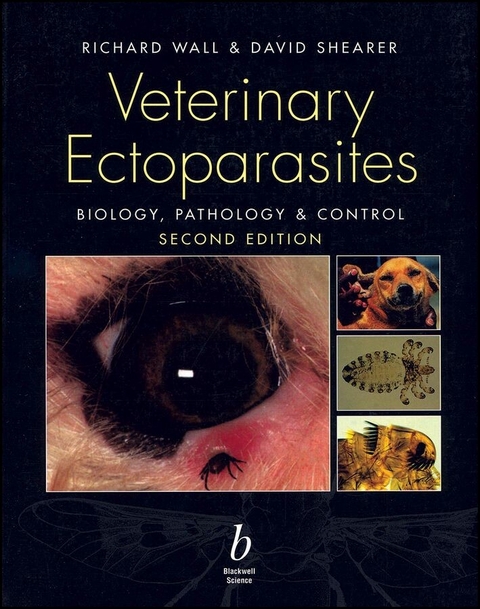
Veterinary Ectoparasites (eBook)
John Wiley & Sons (Verlag)
978-0-470-68022-3 (ISBN)
This is the only up-to-date book available written specifically for practitioners and students of veterinary medicine, animal husbandry and applied animal sciences. Such a unique volume is essential because in veterinary parasitology, ectoparasites such as the lice, mites, ticks, fleas or dipteran agents of myiasis assume far greater prominence than in other parasitological disciplines. Ectoparasite infestation of domestic and companion animals, therefore, has overt clinical features requiring a distinct approach to diagnosis and control. This book has been written with this in mind. The text takes a unique integrated approach combining both ectoparasite biology and veterinary dermatology.
In the second edition of this successful book (previously, entitled Veterinary Parasitology), the detailed coverage of individual ectoparasite species has been expanded. Up-to-date information of new veterinary drugs and modes of application has been included and the practical clinical relevance of the information has been strengthened.
Richard Wall is professor of Zoology in the School of Biological Sciences of the University of Bristol. He specializes in the ecology, behavior, and evolution of arthropod parasites, pests and vectors.
David Shearer is a Veterinary Surgeon who works as a diagnostic pathologist and a referral dermatologist in Norfolk. He has a particular interest in ectoparasites, dermatohistopathology, skin immunology and skin microbiology.
Ectoparasites are of growing significance in modern veterinary medicine and a detailed understanding of the biology of these parasites is fundamental to their appropriate treatment and control. The authors of this book have therefore provided a complete overview of the biology, and behaviour of arthropod ectoparasites along with the pathology and treatment of diseases in livestock and companion animals of temperate habitats. This is the only up-to-date book available written specifically for practitioners and students of veterinary medicine, animal husbandry and applied animal sciences. Such a unique volume is essential because in veterinary parasitology, ectoparasites such as the lice, mites, ticks, fleas or dipteran agents of myiasis assume far greater prominence than in other parasitological disciplines. Ectoparasite infestation of domestic and companion animals, therefore, has overt clinical features requiring a distinct approach to diagnosis and control. This book has been written with this in mind. The text takes a unique integrated approach combining both ectoparasite biology and veterinary dermatology. In the second edition of this successful book (previously, entitled Veterinary Parasitology), the detailed coverage of individual ectoparasite species has been expanded. Up-to-date information of new veterinary drugs and modes of application has been included and the practical clinical relevance of the information has been strengthened.
Richard Wall is professor of Zoology in the School of Biological Sciences of the University of Bristol. He specializes in the ecology, behavior, and evolution of arthropod parasites, pests and vectors. David Shearer is a Veterinary Surgeon who works as a diagnostic pathologist and a referral dermatologist in Norfolk. He has a particular interest in ectoparasites, dermatohistopathology, skin immunology and skin microbiology.
Veterinary Ectoparasites: Biology, Pathology and Control 1
Contents 7
Preface to Second Edition 11
Acknowledgements 12
Chapter 1 The Importance and Diversity of Arthropod Ectoparasites 13
1.1 Introduction 13
1.2 Ectoparasite-host relationships 13
1.3 Ectoparasite damage 14
1.4 The evolution of ectoparasite-host relationships 15
1.5 A modern and growing problem? 17
1.6 An introduction to arthropod structure and function 18
1.6.1 Arthropod segmentation 18
1.6.2 The arthropod exoskeleton 18
1.6.3 Jointed legs 20
1.6.4 Spiracles and gas exchange 20
1.6.5 The arthropod circulatory system 21
1.6.6 The arthropod nervous system 22
1.6.7 Digestion and absorption 23
1.6.8 Arthropod sense organs 24
1.6.9 Arthropod reproduction 25
1.6.10 Arthropod size 25
1.7 Patterns of arthropod development 26
1.7.1 Moulting 26
1.7.2 Simple and complex life-cycles 26
1.8 The classification of diversity 28
1.9 The origins of arthropods 28
1.10 Living arthropod groups 29
1.10.1 Arachnids 30
1.10.2 Insects 31
1.10.3 Other living arthropod classes 32
1.11 Arthropod distributions 33
Further reading and references 34
Chapter 2 Mites (Acari) 35
2.1 Introduction 35
2.2 Morphology 35
2.3 Life history 37
2.4 Pathology 38
2.5 Classification 38
2.5.1 Astigmata 38
2.5.2 Prostigmata 39
2.5.3 Mesostigmata 39
2.6 Recognition of mites of veterinary importance 39
2.7 Astigmata (Sacroptiformes) 39
2.7.1 Sarcoptidae 39
Guide to the suborders of Acari 40
Guide to species and families of veterinary importance 40
2.7.2 Psoroptidae 46
Guide to the identification of life-cycle stages of Psoroptes mites 48
2.7.3 Knemidocoptidae 52
2.7.4 Listrophoridae 53
2.7.5 Astigmatid mites of minor veterinary interest 55
2.8 Prostigmata (Trombidiformes) 56
2.8.1 Demodicidae 56
2.8.2 Cheyletiellidae 57
2.8.3 Trombiculidae 59
2.8.4 Psorergatidae 60
2.8.5 Prostigmatid mites of minor veterinary interest 61
2.9 Mesostigmata (Gamesid mites) 62
2.9.1 Macronyssidae 62
2.9.2 Dermanyssidae 64
2.9.3 Mesostigmatid mites of minor veterinary interest 65
Further reading and references 66
Chapter 3 Ticks (Acari) 67
3.1 Introduction 67
3.2 Morphology 67
3.2.1 Ixodidae 67
3.2.2 Argasidae 69
3.3 Life history 70
3.3.1 Ixodidae 70
3.3.2 Argasidae 72
3.4 Pathology 73
3.4.1 Cutaneous effects of tick feeding 73
3.4.2 Systemic effect: vectors of disease 73
3.4.3 Systemic effects: tick paralysis 76
3.4.4 Other systemic effects 77
3.5 Classification 77
3.6 Recognition of ticks of veterinary importance 77
Guide to tick identification 78
3.7 Ixodidae 79
3.7.1 Ixodes 79
3.7.2 Dermacentor 83
3.7.3 Haemaphysalis 86
3.7.4 Rhipicephatus 87
3.7.5 Boophilus 88
3.7.6 Amblyomma 89
3.7.7 Hyalomma 90
3.8 Argasidae 90
3.8.1 Argas 90
3.8.2 Otobius 92
3.8.3 Ornithodoros 92
Further reading and references 93
Chapter 4 Adult Flies (Diptera) 95
4.1 Introduction 95
4.2 Morphology 95
4.3 Life history 97
4.4 Pathology 98
4.5 Classification 99
4.5.1 Cyclorrhapha 99
4.5.2 Brachycera 100
4.5.3 Nematocera 100
4.6 Recognition of flies of veterinary importance 100
4.7 Cyclorrhapha 100
Guide to families of adult Diptera of veterinary importance 101
4.7.1 Muscidae 104
4.7.2 Fanniidae 109
4.7.3 Hippoboscidae (keds and forest flies) 110
4.7.4 Glossinidae (tsetse flies) 111
4.7.5 Cyclorrhaphous flies of minor veterinary interest 112
4.8 Brachycera 113
4.8.1 Tabanidae (horse flies, deer flies and clegs) 113
4.9 Nematocera 116
4.9.1 Simuliidae (black flies) 116
4.9.2 Ceratopogonidae (biting midges) 119
4.9.3 Culicidae (mosquitoes) 120
4.9.4 Psychodidae (sand flies) 122
4.10 Other Diptera of veterinary interest 123
4.10.1 Eye gnats 123
Further reading and references 124
Chapter 5 Myiasis 126
5.1 Introduction 126
5.2 Morphology 126
5.3 Life history 127
5.4 Pathology 128
5.5 Classification 128
5.6 Recognition of dipterous agents of myiasis 129
Guide to third-stage larvae causing myiasis in domestic animals 129
Guide to genera of adult Diptera causing myiasis in domestic animals 131
5.7 Oestridae 133
5.7.1 Oestrinae 133
5.7.2 Gasterophilinae Guide to the third-stage larvae of the most important 135
Gasterophilus species 136
5.7.3 Hypodermatinae 138
5.7.4 Cuterebrinae 141
5.8 Calliphoridae 142
5.8.1 Cochliomyia 142
5.8.2 Chrysomya 144
5.8.3 Lucilia 146
5.8.4 Phormia and Protophormia 149
5.8.5 Calliphora 150
5.8.6 Cordylobia 151
5.9 Sarcophagidae 152
5.9.1 Wohlfahrtia 152
Further reading and references 153
Chapter 6 Fleas (Siphonaptera) 155
6.1 Introduction 155
6.2 Morphology 156
6.3 Life history 158
6.4 Pathology 160
6.5 Classification 161
6.6 Recognition of fleas of veterinary importance 161
6.7 Pulicidae 161
6.7.1 Ctenocephalides 161
Guide to the flea species of veterinary importance 162
6.7.2 Spilopsyllus 166
6.7.3 Echidnophaga 167
6.7.4 Pulex 168
6.7.5 Xenopsylla 168
6.8 Ceratophyllidae 169
6.8.1 Ceratophyllus 169
6.8.2 Nosopsyllus 170
6.9 Flea species of minor veterinary interest 172
Further reading and references 172
Chapter 7 Lice (Phthiraptera) 174
7.1 Introduction 174
7.2 Morphology 174
7.3 Life history 176
7.4 Pathology 176
7.5 Classification 177
7.6 Recognition of lice of veterinary importance 178
Guide to the genera of lice of veterinary interest 178
7.7 Amblycera 180
7.7.1 Menoponidae 180
7.7.2 Boopidae 181
7.7.3 Gyropidae 181
7.8 Ischnocera 182
7.8.1 Philopteridae 182
7.8.2 Trichodectidae 184
7.9 Anoplura 186
7.9.1 Haematopinindae 186
7.9.2 Linognathidae 188
7.9.3 Polyplacidae 189
Further reading and references 190
Chapter 8 The Diagnosis and Control of Ectoparasite Infestation 191
8.1 Introduction 191
8.2 Diagnosis of ectoparasite infestation 191
8.2.1 Hair examination 192
8.2.2 Acetate strip examination 192
8.2.3 Superficial skin scraping (epidermal surface examination) 192
8.2.4 Deep skin scraping (deep epidermal examination) 193
8.2.5 Collection of free-living ectoparasites 193
8.2.6 Biopsy and histopathology 193
8.3 The chemical control of ectoparasites -ectoparasiticides 193
8.3.1 Ectoparasiticides: early compounds 193
8.3.2 Ectoparasiticides: neurotoxins 194
8.3.3 Ectoparasiticides: insect growth regulators 196
8.3.4 Repellents 197
8.3.5 Desiccants 197
8.4 Mode of ectoparasiticide application 197
8.4.1 Topical preparations 197
8.4.2 Systemic preparations 197
8.4.3 Environmental preparations 198
8.5 Problems with chemical control 198
8.5.1 Poisoning and environmental contamination 198
8.5.2 Resistance 199
8.6 Non-chemical control of ectoparasites 199
8.6.1 Physical control 199
8.6.2 Barriers 200
8.6.3 Biological control 200
8.6.4 Vaccination 200
8.6.5 Trapping 201
8.6.6 Sterile insect technique 201
8.6.7 Modelling and forecasting 201
8.7 Cattle 202
8.7.1 Mites 202
8.7.2 Ticks 204
8.7.3 Flies 205
8.7.4 Myiasis 206
8.7.5 Fleas 207
8.7.6 Lice 207
8.8 Sheep 208
8.8.1 Mites 208
8.8.2 Ticks 211
8.8.3 Flies 211
8.8.4 Myiasis 212
8.8.5 Fleas 214
8.8.6 Lice 214
8.9 Horses 214
8.9.1 Mites 214
8.9.2 Ticks 216
8.9.3 Flies 217
8.9.4 Myiasis 219
8.9.5 Fleas 220
8.9.6 Lice 220
8.10 Pigs 220
8.10.1 Mites 220
8.10.2 Ticks 222
8.10.3 Flies 222
8.10.4 Myiasis 222
8.10.5 Fleas 223
8.10.6 Lice 223
8.11 Goats 223
8.11.1 Mites 223
8.11.2 Ticks 225
8.11.3 Flies 226
8.11.4 Myiasis 226
8.11.5 Fleas 227
8.11.6 Lice 227
8.12 Dogs 227
8.12.1 Mites 227
8.12.2 Ticks 231
8.12.3 Flies 231
8.12.4 Myiasis 232
8.12.5 Fleas 233
8.12.6 Lice 233
8.13 Cats 234
8.13.1 Mites 234
8.13.2 Ticks 237
8.13.3 Flies 237
8.13.4 Myiasis 238
8.13.5 Fleas 238
8.13.6 Lice 239
8.14 Rabbits 239
8.14.1 Mites 239
8.14.2 Flies 241
8.14.3 Myiasis 241
8.14.4 Fleas 242
8.14.5 Lice 242
8.15 Guinea-pigs 242
8.15.1 Mites 242
8.15.2 Flies 243
8.15.3 Myiasis 243
8.15.4 Fleas 243
8.15.5 Lice 244
8.16 Mice and rats 244
8.16.1 Mites 244
8.16.2 Flies 245
8.16.3 Myiasis 245
8.16.4 Fleas 245
8.16.5 Lice 245
8.17 Hamsters and gerbils 246
8.17.1 Mites 246
8.17.2 Flies 247
8.17.3 Myiasis 247
8.17.4 Fleas 247
8.18 Ferrets 247
8.18.1 Mites 247
8.18.2 Ticks 248
8.18.3 Myiasis 248
8.18.4 Fleas 248
8.19 Birds 248
8.19.1 Mites 248
8.19.2 Ticks 250
8.19.3 Flies 250
8.19.4 Myiasis 251
8.19.5 Fleas 251
8.19.6 Lice 252
8.20 Reptiles 252
8.20.1 Mites 252
8.20.2 Ticks 252
8.20.3 Flies 252
8.20.4 Treatment of reptile ectoparasites 253
Further reading and references 253
Glossary 255
Index 265
"The second edition of this book is greatly improved with important
changes to the appearance of the text and format.... The diagnostic
sections on ectoparasites of small animals, such as hamsters,
rabbits and guinea pigs, are particularly useful to the veterinary
practitioner or student.... The information contained in this book
is valuable to veterinarians and students of veterinary medicine,
animal husbandry and zoology." (Veterinary Times)
"I believe the book is an excellent source of materials for the
academic setting..." (Laboratory Animal Practitioner,
2002)
| Erscheint lt. Verlag | 15.4.2008 |
|---|---|
| Sprache | englisch |
| Themenwelt | Medizin / Pharmazie |
| Veterinärmedizin ► Klinische Fächer ► Parasitologie | |
| Schlagworte | Agents • Arthropod • Book • combination • Domestic • Ectoparasites • Habitats • importance • increasingly prominent • infestation • Lice • Medicine • Myiasis • Parasitology • Pathology • PLAYS • Practice • Role • Temperate • Treatment • Veterinärmedizin • Veterinärmedizin / Dermatologie • Veterinärmedizin • Veterinärmedizin / Dermatologie • Veterinary • Veterinary Dermatology • Veterinary Medicine |
| ISBN-10 | 0-470-68022-9 / 0470680229 |
| ISBN-13 | 978-0-470-68022-3 / 9780470680223 |
| Informationen gemäß Produktsicherheitsverordnung (GPSR) | |
| Haben Sie eine Frage zum Produkt? |
 PDF (Adobe DRM)
Kopierschutz: Adobe-DRM
Adobe-DRM ist ein Kopierschutz, der das eBook vor Mißbrauch schützen soll. Dabei wird das eBook bereits beim Download auf Ihre persönliche Adobe-ID autorisiert. Lesen können Sie das eBook dann nur auf den Geräten, welche ebenfalls auf Ihre Adobe-ID registriert sind.
Details zum Adobe-DRM
Dateiformat: PDF (Portable Document Format)
Mit einem festen Seitenlayout eignet sich die PDF besonders für Fachbücher mit Spalten, Tabellen und Abbildungen. Eine PDF kann auf fast allen Geräten angezeigt werden, ist aber für kleine Displays (Smartphone, eReader) nur eingeschränkt geeignet.
Systemvoraussetzungen:
PC/Mac: Mit einem PC oder Mac können Sie dieses eBook lesen. Sie benötigen eine
eReader: Dieses eBook kann mit (fast) allen eBook-Readern gelesen werden. Mit dem amazon-Kindle ist es aber nicht kompatibel.
Smartphone/Tablet: Egal ob Apple oder Android, dieses eBook können Sie lesen. Sie benötigen eine
Geräteliste und zusätzliche Hinweise
Buying eBooks from abroad
For tax law reasons we can sell eBooks just within Germany and Switzerland. Regrettably we cannot fulfill eBook-orders from other countries.
aus dem Bereich