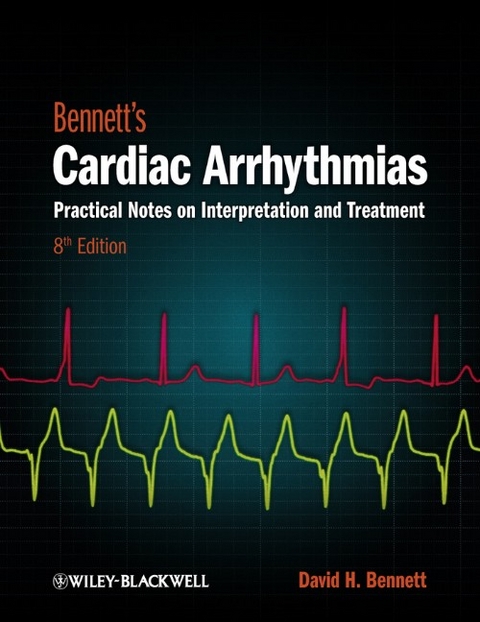
Bennett's Cardiac Arrhythmias (eBook)
John Wiley & Sons (Verlag)
978-1-118-43240-2 (ISBN)
Reviews of previous editions:
'...a well conceived practical guide to the interpretation and treatment of the main cardiac rhythm disturbances.'
-Lancet
'This book presents a concise and simplified approach to the diagnosis and management of abnormalities in cardiac rhythm.... One of the book's strengths is the number and quality of electrocardiographic tracings'
-New England Journal of Medicine
'...this book provides an excellent foundation for all those involved in the care of arrhythmia patients'
-British Journal of Hospital Medicine
'...would recommend it unreservedly to anaesthetists who wish to improve their knowledge of cardiac arrhythmias'
-British Journal of Anaesthesia
'This book about cardiac arrhythmias is of much educational value'
-European Heart Journal
A trusted source for junior doctors, students, nurses and cardiac technicians for over 30 years, the new edition of this classic reference continues the winning formula of previous editions while at the same time incorporating essential new content on today's most important clinical topics, including:
- Atrial fibrillation: ablation, drugs, rate control versus rhythm control, risk of systemic embolism, prognosis
- Indications for and management of implantable defibrillators including complications such as arrhythmia storms
- Indications for pacemaker implantation
- Anticoagulant therapy (for atrial fibrillation)
- Long QT syndromes and other channelopathies
- Recently-approved anti-arrhythmia drugs
The 8th edition also features the latest guidelines on ECG screening of athletes and clear guidance for anaesthetists and surgeons dealing with patients with arrhythmias an/or implantable devices. Rich with example ECGs and designed for ease of access to information, Bennett's Cardiac Arrhythmias is the reference you can trust to help you master arrhythmia diagnosis and provide optimal treatment of any patient under your care.
David H. Bennett, Senior Consultant Cardiologist, Regional Cardiac Centre, University Hospital of South Manchester & Honorary Clinical Lecturer in Cardiology, University of Manchester
Reviews of previous editions: "e;...a well conceived practical guide to the interpretation and treatment of the main cardiac rhythm disturbances."e; Lancet "e;This book presents a concise and simplified approach to the diagnosis and management of abnormalities in cardiac rhythm.... One of the book's strengths is the number and quality of electrocardiographic tracings"e; New England Journal of Medicine "e;...this book provides an excellent foundation for all those involved in the care of arrhythmia patients"e; British Journal of Hospital Medicine "e; would recommend it unreservedly to anaesthetists who wish to improve their knowledge of cardiac arrhythmias"e; British Journal of Anaesthesia "e;This book about cardiac arrhythmias is of much educational value"e; European Heart Journal A trusted source for junior doctors, students, nurses and cardiac technicians for over 30 years, the new edition of this classic reference continues the winning formula of previous editions while at the same time incorporating essential new content on today's most important clinical topics, including: Atrial fibrillation: ablation, drugs, rate control versus rhythm control, risk of systemic embolism, prognosis Indications for and management of implantable defibrillators including complications such as arrhythmia storms Indications for pacemaker implantation Anticoagulant therapy (for atrial fibrillation) Long QT syndromes and other channelopathies Recently-approved anti-arrhythmia drugs The 8th edition also features the latest guidelines on ECG screening of athletes and clear guidance for anaesthetists and surgeons dealing with patients with arrhythmias an/or implantable devices. Rich with example ECGs and designed for ease of access to information, Bennett's Cardiac Arrhythmias is the reference you can trust to help you master arrhythmia diagnosis and provide optimal treatment of any patient under your care.
David H. Bennett, Senior Consultant Cardiologist, Regional Cardiac Centre, University Hospital of South Manchester & Honorary Clinical Lecturer in Cardiology, University of Manchester
Bennett’s Cardiac Arrhythmias: Practical Notes on Interpretation and Treatment 5
Copyright 6
Contents 7
Preface 9
Notes 10
1 Sinus Rhythm 11
ECG characteristics 11
P wave 11
PR interval 11
QRS complex 12
T wave 13
Relative speeds of impulse conduction 14
Sinus bradycardia 14
Sinus tachycardia 14
Sinus arrhythmia 15
2 Ectopic Beats 16
Prematurity 16
Atrial ectopic beats 18
P wave 18
Atrioventricular and intraventricular conduction 18
Significance 19
Atrioventricular junctional ectopic beats 19
ECG appearance 19
Ventricular ectopic beats 20
ECG appearance 20
Causes and significance of ventricular ectopic beats 23
3 Escape Beats 25
Timing 25
Origins 26
4 Bundle Branch and Fascicular Blocks 27
Right bundle branch block 27
ECG appearance 27
Causes and significance 28
Left bundle branch block 28
ECG appearance 28
Causes and significance 29
Left anterior and posterior fascicular blocks 29
Hexaxial reference system 30
Left anterior fascicular block 31
Left posterior fascicular block 33
Axis deviation and arrhythmias 33
5 The Supraventricular Tachycardias 34
Main types 34
Atrial origin versus atrioventricular re-entry 35
Atrioventricular junctional re-entrant tachycardias 35
Atrial tachyarrhythmias 36
Effects of supraventricular tachycardias 36
6 Atrial Fibrillation 39
ECG characteristics 39
Atrial activity 40
Atrioventricular conduction 40
Intraventricular conduction 41
Initiation 43
Causes 43
Prevalence 44
Prognosis 44
Classification 44
Lone atrial fibrillation 44
Paroxysmal lone atrial fibrillation 44
Management 45
Systemic embolism 45
Risk 46
Oral anticoagulants 46
Rhythm management 48
Rate control 48
Rhythm control 51
7 Atrial Flutter 54
Common atrial flutter 54
ECG characteristics 54
Atrial fibrillation 59
Causes 59
Prevalence 59
Treatment 59
Catheter ablation 59
Cardioversion 59
Antiarrhythmic drugs 60
Rapid atrial pacing 61
Systemic embolism 61
8 Atrial Tachycardia 62
ECG characteristics 62
Causes 64
Treatment 65
Multifocal atrial tachycardia 65
9 Atrioventricular Junctional Re-entrant Tachycardias 66
Mechanism 66
Accessory atrioventricular pathway 66
Dual atrioventricular nodal pathways 67
ECG characteristics 67
Timing of atrial activity during tachycardia 70
Clinical features 72
Treatment 73
Vagal stimulation 73
Intravenous drugs 73
Electrical methods 75
Prevention 75
10 Wolff–Parkinson–White Syndrome 77
Pre-excitation 77
ECG characteristics 78
Location of the accessory pathway 78
Arrhythmias 79
Atrial fibrillation 79
Atrioventricular re-entrant tachycardia 82
Treatment 82
Radiofrequency ablation 82
Atrioventricular re-entrant tachycardia 84
Atrial fibrillation 84
T wave memory 85
11 Ventricular Tachyarrhythmias 87
Ventricular tachycardia 87
Monomorphic and polymorphic 87
Ventricular fibrillation 88
Supraventricular versus ventricular tachycardia 88
12 Monomorphic Ventricular Tachycardia 89
ECG characteristics 89
Atrial activity during ventricular tachycardia 89
Causes 91
Mechanisms of ventricular tachycardias 91
Re-entry 92
Enhanced automaticity 92
Investigations 93
Twelve-lead ECG 93
Imaging 93
Ambulatory electrocardiography 94
Exercise testing 94
Ventricular stimulation study 94
Signal-averaged electrocardiography 94
Treatment 95
Termination of tachycardia 96
Prevention of recurrence of ventricular tachycardia 96
Coronary heart disease 98
Hypertrophic cardiomyopathy 98
Arrhythmogenic right ventricular cardiomyopathy 99
Dilated cardiomyopathy 102
Ventricular tachycardias not due to structural heart disease 102
Right ventricular outflow tract tachycardia 102
Fascicular tachycardia 103
Non-sustained ventricular tachycardia 107
Accelerated idioventricular rhythm 107
13 Polymorphic Ventricular Tachycardia and Ventricular Fibrillation 108
Polymorphic ventricular tachycardia 108
QT interval 108
Torsade de pointes tachycardia 109
Antipsychotic drugs 110
Management of torsade de pointes tachycardia 112
Hereditary long QT syndromes 112
Diagnosis 113
Arrhythmias 115
Treatment 115
Hereditary short QT syndrome 115
Ventricular fibrillation 116
ECG characteristics 116
Causes 116
Treatment 117
Brugada syndrome 117
Early repolarisation syndrome 120
Bidirectional ventricular tachycardia 122
14 Tachycardias with Broad Ventricular Complexes 125
Causes of a broad complex tachycardia 125
Useless guidelines 126
Useful guidelines 126
Independent atrial activity 126
Carotid sinus massage 127
Configuration of ventricular complex 128
Ectopic beats 129
Adenosine 129
Clinical factors 131
Previous ECG 132
15 Atrioventricular Block 133
Classification 133
First-degree atrioventricular block 133
Second-degree atrioventricular block 134
Third-degree atrioventricular block 136
Causes of atrioventricular block 137
Atrioventricular dissociation 138
Bilateral bundle branch disease 138
Bifascicular block 139
Clinical aspects of atrioventricular block 140
Stokes–Adams attacks 140
Congenital heart block 141
Acquired heart block 141
Treatment 141
16 Sick Sinus Syndrome 142
Causes 142
ECG characteristics 143
Sinus bradycardia 143
Sinus arrest 143
Sinoatrial block 143
Escape beats and rhythms 144
Atrial ectopic beats 144
Bradycardia–tachycardia syndrome 144
Atrioventricular block 144
Clinical features 145
Chronotropic incompetence 145
Diagnosis 145
Treatment 146
17 Neurally Mediated Syncope 147
Malignant vasovagal syndrome 147
Tilt-table test 148
Treatment of vasovagal syndrome 148
Simple faint 151
Carotid sinus syndrome 151
Postural orthostatic tachycardia syndrome 151
Causes of syncope 152
18 Arrhythmias due to Myocardial Infarction 153
Ventricular fibrillation 154
Treatment 154
Ventricular flutter 154
Prevention of ventricular fibrillation in acute infarction 154
Ventricular tachycardia 156
Reperfusion arrhythmias 156
Arrhythmias subsequent to recent myocardial infarction 156
Long-term significance of ventricular arrhythmias 157
Accelerated idioventricular rhythm 157
Supraventricular tachycardias 158
Atrial fibrillation 158
Sinus and junctional bradycardias 158
Atrioventricular block 159
Inferior infarction 159
Anterior infarction 160
Atrioventricular dissociation 161
19 Antiarrhythmic Drugs 162
Limitations 162
Proarrhythmic effect 162
Choice of treatment 163
Modes of action 163
Clinical classification 163
Action potential classification 163
Notes on individual drugs 164
Flecainide 164
Propafenone 165
Amiodarone 165
Dronedarone 169
Dofetilide 169
Vernakalant 170
Adenosine 170
Verapamil 172
Diltiazem 172
Beta-adrenoceptor antagonists 172
Sotalol 172
Digoxin 173
Lignocaine 174
Quinidine 175
Disopyramide 175
Procainamide 175
Ranalozine 176
Grapefruit 176
Antiarrhythmic drugs during pregnancy 176
20 Sudden Cardiac Death 177
Definition 177
Causes of arrhythmic sudden death 178
Genetically determined causes 178
Aborted sudden cardiac death 179
Impaired ventricular function 179
Athletic activities 179
Commotio cordis 180
21 Cardioversion 181
Transthoracic cardioversion 181
Procedure 181
Indications 183
Transvenous cardioversion 184
22 Ambulatory ECG Monitoring 186
Continuous ECG recording 186
Artefacts 187
Clinical applications 188
Normal findings 191
Intermittent ECG recording 193
Event recorders 193
Implantable loop recorders 194
23 Cardiac Pacing 197
Long-term cardiac pacing 197
Common indications for long-term pacing 197
Complete atrioventricular block 198
Second-degree atrioventricular block 198
First-degree atrioventricular block 199
Bundle branch and fascicular blocks 199
Sick sinus syndrome 200
Hypertrophic cardiomyopathy 200
Resynchronisation therapy 200
Pacing modes 200
Pacing system code 202
Single-chamber pacing 202
Dual-chamber pacing 203
‘Physiological pacing’ 206
Pacemaker hardware 210
Pulse generator 210
Pacemaker leads 211
Pacemaker implantation 212
Subclavian approach 213
Cephalic vein approach 214
Ventricular lead positioning 214
Atrial lead positioning 215
Measurement of stimulation and sensing thresholds 215
Fashioning a pacemaker pocket 217
Complications of pacemaker implantation 218
Complications related to pulse generator 220
Complications related to pacing lead 221
Automatic capture management 222
Telemetry data 223
Pacemaker clinic 225
Follow-up 225
Battery depletion 225
Electromagnetic interference 225
Electronic article surveillance systems (EAS) and metal detectors 226
Transcutaneous electrical nerve stimulation (TENS) 226
Cellular phones 226
Magnets 226
Diathermy 226
Radiotherapy 226
Magnetic resonance imaging 227
Arc welding 227
Neurostimulators 227
Devices that are safe 227
Other precautions 227
Cardioversion and defibrillation 227
Lithotripsy 227
Driving 227
Diving 227
Cremation 228
Temporary cardiac pacing 228
Indications 228
Methods 228
Temporary transcutaneous and oesophageal pacing 230
24 Implantable Cardioverter Defibrillators 231
Defibrillator implantation 233
Defibrillation threshold 233
Subcutaneous ICD 234
Indications for ICD implanation 234
UK guidelines (National Institute for Health and Clinical Excellence) 234
American College of Cardiology and American Heart Association guidelines 235
Reservations concerning defibrillator implantation for primary prevention 235
Defibrillator function 236
Arrhythmia recording 236
Tiered therapy 236
Pacing mode 238
Defibrillator clinic 239
Drug therapy in patients with defibrillators 240
Arrhythmia storms 241
Minimising shock delivery 242
ICD replacement 242
Deactivation of device 242
Hardware costs 243
Precautions 243
Driving 243
25 Catheter Ablation 244
Procedure 244
Normal sinus rhythm 245
Wolff–Parkinson–White syndrome 247
Concealed accessory pathways 248
Typical atrioventricular nodal re-entrant tachycardia 251
Atypical atrioventricular nodal re-entrant tachycardia 252
Atrial tachycardia 253
Atrial flutter 254
Atrial fibrillation 254
Atrioventricular nodal ablation 255
Cardiac pacing 256
Right ventricular outflow tract tachycardia 257
Fascicular ventricular tachycardia 258
Ventricular tachycardia due to structural heart disease 259
Bundle branch re-entry 259
Catheter ablation: what should the patient expect? 260
26 Arrhythmias for Interpretation 262
Questions 262
Interpretations and answers 318
Index 327
"Rich with example ECGs and designed for ease of access to
information, Bennett's Cardiac Arrhythmias is the reference
you can trust to help you master arrhythmia diagnosis and provide
optimal treatment of any patient under your care."
(Kingbook73's Medical Ebook and Video Collection, 7 October
2014)
"Bennett's cardiac arrhythmias offers a
comprehensive overview of the mechanisms and management of the most
commonly encountered types of arrhythmia in clinical practice. A
large variety of good quality examples are provided appended with
concise explanatory notes......not only does the author outline and
exemplify mechanisms and types of arrhythmia, but he also provides
an introduction to electrophysiological principles and catheter
ablation for arrhythmias.
The basic principles of device functioning and programming are
beautifully and clearly outlined in their respective chapters
.... Chapters focusing on anti-arrhythmic agents, with details
on mechanisms, indications, and recently introduced anti-arrhythmic
drugs, including those allowed to be used in pregnancy, as well as
arrhythmic problems encountered in athletes, add more to the
comprehensive nature of this book.
This all makes this book a reference for a large variety of
health care professionals and a good foundation for those needing a
broad and thorough approach to the diagnosis and the most
appropriate management of cardiac arrhythmias." (British
Journal of Cardiology, 1 March 2014)
"...contains detailed ECG tracings of almost every
variation of arrhythmias, and combines with detailed descriptions
and clear explanations. It then goes further, with in-depth
explanations of aspects such as antiarrhythmic drugs, cardiac
pacing, implantable defibrillators, and catheter ablation. Every
step of the way, this book concentrates on the practical aspects of
arrhythmias by giving advice on identification and treatment, as
well as "what not to do." This book will be of use to
all grades from trainee up to consultant.
All in all, I found this book a pleasure to read. It is
very practical, it is very clear, and best of all, it is extremely
well illustrated." (British Journal of
Anaesthesia, 1 March 2014)
"This is an excellent book for clinicians at various
levels of comfort with electrocardiograms and telemetry, given that
it starts with basic overviews of broad categories followed by
detailed descriptions of individual arrhythmiasence."
(Doody's, 16 September 2013)
| Erscheint lt. Verlag | 22.10.2012 |
|---|---|
| Sprache | englisch |
| Themenwelt | Medizin / Pharmazie ► Allgemeines / Lexika |
| Medizinische Fachgebiete ► Innere Medizin ► Kardiologie / Angiologie | |
| Schlagworte | Arrhythmia • Cardiovascular Disease • Classic • complications • Control • Defibrillators • doctors • Edition • Editions • electrophysiology • Elektrophysiologie • formula • incorporating • Indications • Junior • Kardiovaskuläre Erkrankungen • Kardiovaskuläre Erkrankungen • Medical Science • Medizin • New • pacemaker • previous • prognosis • Reference • Risk • source • Systemic • technicians • Time • winning • years |
| ISBN-10 | 1-118-43240-1 / 1118432401 |
| ISBN-13 | 978-1-118-43240-2 / 9781118432402 |
| Informationen gemäß Produktsicherheitsverordnung (GPSR) | |
| Haben Sie eine Frage zum Produkt? |
 PDF (Adobe DRM)
Kopierschutz: Adobe-DRM
Adobe-DRM ist ein Kopierschutz, der das eBook vor Mißbrauch schützen soll. Dabei wird das eBook bereits beim Download auf Ihre persönliche Adobe-ID autorisiert. Lesen können Sie das eBook dann nur auf den Geräten, welche ebenfalls auf Ihre Adobe-ID registriert sind.
Details zum Adobe-DRM
Dateiformat: PDF (Portable Document Format)
Mit einem festen Seitenlayout eignet sich die PDF besonders für Fachbücher mit Spalten, Tabellen und Abbildungen. Eine PDF kann auf fast allen Geräten angezeigt werden, ist aber für kleine Displays (Smartphone, eReader) nur eingeschränkt geeignet.
Systemvoraussetzungen:
PC/Mac: Mit einem PC oder Mac können Sie dieses eBook lesen. Sie benötigen eine
eReader: Dieses eBook kann mit (fast) allen eBook-Readern gelesen werden. Mit dem amazon-Kindle ist es aber nicht kompatibel.
Smartphone/Tablet: Egal ob Apple oder Android, dieses eBook können Sie lesen. Sie benötigen eine
Geräteliste und zusätzliche Hinweise
Buying eBooks from abroad
For tax law reasons we can sell eBooks just within Germany and Switzerland. Regrettably we cannot fulfill eBook-orders from other countries.
aus dem Bereich