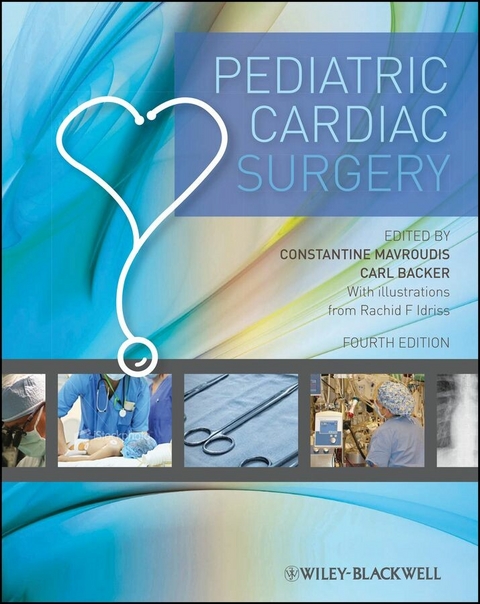
Pediatric Cardiac Surgery (eBook)
John Wiley & Sons (Verlag)
978-1-118-32078-5 (ISBN)
Pediatric cardiac surgery is a dynamic, fast-moving field. Busy practitioners, like you, need clear and comprehensive guidance you can rely on to ensure optimal patient care.
For over 25 years Pediatric Cardiac Surgery has been the gold-standard reference for pediatric and adult congenital heart surgeons, pediatric and congenital cardiologists, intensivists, anesthesiologists, residents and nurses.
Now, in this thoroughly revised fourth edition, you again get trusted, complete coverage of the field with timely new features and expert reviews of critical topics including heart transplantation, emerging modalities for diagnosing congenital heart and tracheal defects, the surgical technique of Fontan conversion with arrhythmia surgery, the medical challenges of managing adult CHD patients, and more.
This new edition includes:
- Contributions from over 65 world-renowned experts
- More beautiful illustrations, by renowned medical illustrator Rachid Idriss, which have brought acclaim to previous editions
- Reviews of the embryology, physical findings, diagnostic criteria, and therapeutic choices for each disease entity and describes the latest in surgical techniques in each chapter
- All-new chapters that guide readers through new treatment options and other key developments since the publication of the third edition highlighting recent advances in congenital heart surgery.
- All-new new chapters that review advances in right ventricular to pulmonary artery conduits, arrhythmia surgery, double outlet ventricles, and adult congenital heart disease, among other key topics.
Pediatric cardiac surgery is a dynamic, fast-moving field. Busy practitioners, like you, need clear and comprehensive guidance you can rely on to ensure optimal patient care. For over 25 years Pediatric Cardiac Surgery has been the gold-standard reference for pediatric and adult congenital heart surgeons, pediatric and congenital cardiologists, intensivists, anesthesiologists, residents and nurses. Now, in this thoroughly revised fourth edition, you again get trusted, complete coverage of the field with timely new features and expert reviews of critical topics including heart transplantation, emerging modalities for diagnosing congenital heart and tracheal defects, the surgical technique of Fontan conversion with arrhythmia surgery, the medical challenges of managing adult CHD patients, and more. This new edition includes: Contributions from over 65 world-renowned experts More beautiful illustrations, by renowned medical illustrator Rachid Idriss, which have brought acclaim to previous editions Reviews of the embryology, physical findings, diagnostic criteria, and therapeutic choices for each disease entity and describes the latest in surgical techniques in each chapter All-new chapters that guide readers through new treatment options and other key developments since the publication of the third edition highlighting recent advances in congenital heart surgery. All-new new chapters that review advances in right ventricular to pulmonary artery conduits, arrhythmia surgery, double outlet ventricles, and adult congenital heart disease, among other key topics.
EDITED BY CONSTANTINE MAVROUDIS, MD Director, Congenital Heart Institute, Florida Hospital for Children Site Director, Johns Hopkins Children's Heart Surgery, Florida Hospital for Children, Orlando, FL, USA CARL L. BACKER, MD Division Head, Cardiovascular-Thoracic Surgery, Ann & Robert H. Lurie Children's Hospital of Chicago Professor of Surgery, Department of Surgery, Northwestern University Feinberg School of Medicine, Chicago, IL, USA
Title page 5
Copyright page 6
Contents 7
List of Contributors 9
Preface 15
CHAPTER 1: Development of the Heart and Great Vessels 17
Introduction 17
Formation of Cardiac Precursors 17
Formation of the Tube Heart 18
The Tube Heart, Segments, and Segmental Identity 20
Genetic Determination of Cardiac Segmentation 21
Looping 22
Looping, Convergence, and Septation – Key Landmarks 23
Endocardial Cushion Development and Myocardialization 24
Atrial Septation 25
Interventricular Septation 25
The Atrioventricular Junction Segment and Atrioventricular Valve Development 28
Development of the Conduction System 30
Morphogenesis of the Outflow Tract 30
Landmarks in the Outflow Tract 30
Aorticopulmonary Septation 31
Development of the Semilunar Valves 32
Conus Septation 32
Morphogenesis of the Great Vessels and Coronary Circulation 33
The Neural Crest and Cardiac Development 33
Origins of the Outflow Tract Endothelium 33
Epicardial Cell Migration and Development of the Coronary Arteries 33
Development of the Aortic Arch 34
Development of the Pulmonary Veins 35
Development of the Systemic Veins 35
References 36
CHAPTER 2: Nomenclature and Classification of Pediatric and Congenital Heart Disease 43
Background 43
Segmental Anatomy 44
The Meaning of Left and Right 44
Cardiac Relations and Cardiac Connections (or Cardiac Alignments) 44
Atrial Situs 46
Ventricular Loop 48
Atrioventricular Connection 48
Ventriculoarterial Connection 48
The Position of the Heart and the Orientation of Its Apex 49
Classification of Cardiac Lesions 49
Description of Cardiac Lesions 51
Consensus Definitions 52
Nomenclature, Definitions, and Classification Controversies 57
Summary 61
References 61
CHAPTER 3: Physiology of the Fetal and Neonatal Circulations and Fetal Cardiac Surgery 68
Fetal Circulation 68
Fetal Intra- and Extracardiac Shunts 68
Venous Return 68
Cardiac Output, Oxygenation, and Distribution 69
Intracardiac and Vascular Pressures 70
Circulatory Changes at Birth 70
The Transition 70
Closure of the Ductus Arteriosus 70
Pulmonary Circulation 71
Myocardial Performance 71
Fetal Surgery 71
Fetal Cardiac Surgery 71
Animal Models of Congenital Lesions 71
Cardiopulmonary Bypass and the Placenta 72
Understanding Placental Hemodynamics 72
The Fetal Stress Response 72
Role of the Endothelium in Placental Dysfunction 72
Understanding the Fetal Bypass Circuit 72
Fetal Myocardial Protection 73
Miscellaneous Factors 73
Future Directions 73
References 73
CHAPTER 4: Preoperative Diagnostic Evaluation 76
Introduction 76
History 76
Physical Examination 77
Chest Radiography 77
Abdominal Situs 77
Cardiac Silhouette 77
Aortic Arch 78
Lung Parenchyma 78
Electrocardiography 78
Preoperative Echocardiography 79
Atrial Septal Defects 79
Ventricular Septal Defects 81
Tetralogy of Fallot 81
Truncus Arteriosus 83
Common Atrioventricular Canal 83
d-Transposition of the Great Arteries 84
Coarctation of the Aorta 85
Hypoplastic Left Heart Syndrome 87
Cardiac Magnetic Resonance Imaging 88
Applications of Cardiac MRI 88
Intracardiac Shunts 89
Tetralogy of Fallot (TOF) 89
Pulmonary Blood Supply in Patients with Pulmonary Atresia 90
Congenital Vascular Abnormalities 90
Single Ventricle 91
Multislice Computerized Tomography 91
Cardiac Catheterization 91
Pressure Measurements 92
Saturations and Shunt Measurements 93
Cardiac Output Measurements 93
Resistance and Valve Area Measurements 93
Angiography 94
Coronary Arteries 95
References 96
CHAPTER 5: Hybrid Procedures for Congenital Heart Disease 100
Introduction 100
Elements of a Hybrid Program for Congenital Heart Disease 100
Design of a Hybrid Suite 101
Hybrid Therapy for Vascular Stenoses 103
The role of Hybrid Vascular Therapy 103
Selecting the Appropriate Therapy 104
Setup, Equipment, Stents, and Balloons 106
Hybrid Closure of Atrial Septal Defects and Ventricular Septal Defects 108
Hybrid Closure of Atrial Septal Defects 108
Hybrid Closure of Ventricular Septal Defects 108
Hybrid Approach for Hypoplastic Left Heart Syndrome 110
Introduction 110
Technique 110
Results 111
Future 112
Completion Angiography in the Cardiac Operating Suite 112
Hybrid Approach to Valve Replacement 114
Summary 115
References 115
CHAPTER 6: Anesthesia for the Patient with Congenital Heart Disease 119
Demographics 119
Anesthetic Assessment 120
Anesthetic Management 121
Regional Anesthesia 123
Fast Tracking and Early Extubation 123
Anesthesia and Cardiac Imaging 124
Pulmonary Hypertension 124
Cardiac Pharmacology 125
Postanesthesia Process 125
Conclusion 125
References 126
CHAPTER 7: Perioperative Care 129
Preoperative Preparation 129
Intraoperative Care 131
Electrocardiographic Leads 131
Temperature Monitoring 132
Oxygen Saturation Probe 132
Arterial Catheter 132
Venous Catheters 132
Atrial Catheters 133
Pulmonary Artery Catheter 133
Near-Infrared Spectroscopy 133
Pacemaker Wires 133
Chest Tubes 134
Nasogastric Tube 134
Urinary Catheter 134
Corticosteroids 134
Routine Postoperative Care 134
Transport to the Intensive Care Unit 134
Airway and Breathing 135
Cardiovascular System 136
Fluid and Electrolyte Replacement 137
Hyperglycemia 141
Renal System 141
Nutrition 142
Infection Prophylaxis 143
Postoperative Complications 144
Low Cardiac Output 144
Heart Rate 144
Preload 144
Afterload 145
Contractility 146
Cardiac Arrhythmias 147
Bleeding 148
Cardiac Tamponade 149
Pulmonary Hypertensive Crises 149
Cardiac Arrest 150
Pulmonary Dysfunction 151
Renal Failure 151
Infectious Complications 152
Central Nervous System 152
Conclusion 153
References 153
CHAPTER 8: The Nurse Practitioner’s Role in Patient Management 159
History of Nurse Practitioners in Cardiothoracic Surgery 159
Diagnosis 159
Preoperative Evaluation 160
Perioperative Process 160
Intraoperative Phase 160
Initial Postoperative Phase 161
Postoperative Assessment and Complications 161
Decreased Cardiac Output 161
Arrhythmias 161
Fluids/renal Function 162
Potential Neurological Complications 162
Pulmonary Complications 162
Infection 163
Nutrition 163
Pain Management 164
Discharge Planning 164
Neonatal Discharge Planning 164
Discharge Planning Past the Neonatal Period 165
Final Discharge Details 167
Patient and Family Satisfaction 167
Conclusion 168
References 168
CHAPTER 9: Palliative Operations 171
Pulmonary Artery band 172
Aortopulmonary Shunts 176
Classic Blalock–Taussig Shunt 176
Modified Blalock–Taussig Shunt 176
Waterston/Cooley Shunt 179
Potts Shunt 180
Miscellaneous Palliative Procedures 182
Conclusion 182
References 183
CHAPTER 10: Management of Pediatric Cardiopulmonary Bypass 185
History 185
Cardiopulmonary Bypass in Infants versus Adults 186
Physiology of Cardiopulmonary Bypass 186
Hypothermia 186
Pulsatile versus Nonpulsatile Flow 189
Strategies for Blood Gas Management: alpha Stat and pH Stat 190
Neurological Injury and Protection 192
Preoperative Factors 193
Intraoperative Factors 194
Postoperative Factors 194
Neuromonitoring and Neuroprotection 194
Postoperative Factors 197
Myocardial Protection 197
Pulmonary Effects of Cardiopulmonary Bypass 199
Renal Function and Protection on Cardiopulmonary Bypass 200
Endocrine Response to CPB 201
Systemic Inflammation 202
Management of Cardiopulmonary Bypass 204
Hemodilution 204
Circuit Miniaturization 205
Oxygenators 207
Initiation of Cardiopulmonary Bypass 208
Anticoagulation 209
Termination of Bypass 211
Conclusions 221
References 221
CHAPTER 11: Intraoperative Myocardial Protection 230
Physiologic Differences Between Immature and Mature Myocardium 230
Substrate for Energy Production 230
Calcium Metabolism 231
Enzyme Systems 231
Catecholamine Sensitivity 232
Summary 232
Clinical Strategies for Myocardial Protection 232
Hypothermia 232
Cardioplegia 232
Blood Versus Crystalloid Cardioplegia 233
Potassium Depolarization Arrest Versus Hyperpolarization Arrest 233
Warm Induction 235
Substrate Enhancement 235
Clinical Techniques 235
Cardiac Distention 236
Cardioplegia Protocols 236
Retrograde Cardioplegia 237
Conclusion 237
References 237
CHAPTER 12: Patent Ductus Arteriosus 241
Introduction 241
Anatomy 241
Etiologic Factors 242
Prostaglandins 242
Prematurity 242
Drugs 242
Genetic Factors 242
Congenital Infections 242
Pathophysiology 242
Natural History 242
Clinical Features 242
Diagnosis 243
Management 243
Management in Premature Infants 244
Surgical Repair of PDA 244
Left Thoracotomy 244
Median Sternotomy 244
Minimally Invasive Techniques 245
Special Considerations in Premature Infants 245
Special Consideration in Infants and Children 245
Special Considerations in Adults 245
Surgical Outcomes 245
Percutaneous Closure of PDA 246
Conclusion 247
References 248
CHAPTER 13: Vascular Rings and Pulmonary Artery Sling 250
Classification 250
Embryology and Pathology 250
Double Aortic Arch 251
Right Aortic Arch 251
Pulmonary Artery Sling 251
Innominate Artery Compression 251
Aberrant Right Subclavian Artery 251
Rare Vascular Rings 254
Clinical Presentation and Diagnosis 255
Chest Radiograph 255
Barium Esophagogram 256
Computed Tomography (CT) 256
Magnetic Resonance Imaging (MRI) 257
Bronchoscopy 259
Tracheograms 259
Cardiac Catheterization 260
Echocardiography 260
Surgical Management 260
Double Aortic Arch 260
Right Aortic Arch with Left Ligamentum 262
Innominate Artery Compression Syndrome 263
Pulmonary Artery Sling 264
Tracheal Stenosis 265
Postoperative Care 267
Video-Assisted Thoracoscopic Surgery 267
Conclusion 268
References 269
CHAPTER 14: Coarctation of the Aorta 272
Embryology and Anatomy 272
Embryology 273
Anatomy 274
Natural History and Pathophysiology 275
Diagnosis 276
Surgical Techniques 277
General Considerations 277
Resection and End-to-End Anastomosis 278
Prosthetic Patch Aortoplasty 280
Prosthetic Interposition Graft 282
Subclavian Flap Aortoplasty 282
Resection with Extended End-to-End Anastomosis 285
Balloon Dilation Angioplasty 287
Complications 288
Conclusion 292
References 293
CHAPTER 15: Interrupted Aortic Arch 299
Introduction 299
Pathologic Anatomy of the Aortic Arch 299
Associated Anomalies 300
Pathophysiology and Clinical Features 300
Historical Perspective 301
Diagnosis of Interrupted Aortic Arch 301
Anatomy 301
Hemodynamic Assessment 302
Management of Interrupted Aortic Arch 302
Medical and Interventional 302
Surgical Techniques: Interrupted Arch and Ventricular Septal Defect 303
Selective Cerebral Perfusion 305
Interrupted Aortic Arch with VSD and LVOTO 306
Interrupted Arch with Other Anomalies 306
Postoperative Management of Interrupted Aortic Arch 307
Results of Surgery 307
Complications of Surgery 307
Early 307
Late 307
Conclusion 309
References 309
CHAPTER 16: Atrial Septal Defect, Partial Anomalous Pulmonary Venous Connection, and Scimitar Syndrome 311
Anatomy and Pathology 311
Ostium Secundum Atrial Septal Defect 311
Sinus Venosus Atrial Septal Defect 312
Partial Atrioventricular Septal Defect 313
Common Atrium 313
Patent Foramen Ovale 313
Unroofed Coronary Sinus 313
Pathophysiology and Natural History 313
Diagnosis 314
Transcatheter Closure 315
Surgical Technique 315
Postoperative Care 320
Technical Pitfalls 320
Results of Operation 321
Results of Transcatheter Closure 322
Results in Older Patients 322
Scimitar Syndrome 323
Conclusion 324
References 324
CHAPTER 17: Ventricular Septal Defect 327
Definition and Prevalence 327
Historical Perspectives 327
Embryology and Pathologic Anatomy 328
New Concepts of Nomenclature 333
Pathophysiology 334
Natural History 334
Diagnosis 335
Medical Management 338
Patient Selection 338
Patients with Large Ventricular Septal Defects 338
Patients with Small Defects 338
Patients with Defects Opening Directly Beneath the Pulmonary Valve (Conal Ventricular Septal Defects) 339
Surgical Considerations 339
Right Atrial Approach 339
Transpulmonary Arterial Approach 343
Transaortic Approach 345
Right Ventricular Approach 345
Left Ventricular Approach 346
Relationship of the Conduction Pathways to Different Types of Ventricular Septal Defects 347
Avoiding Conduction Injury During Closure of Different Types of Ventricular Septal Defects 347
The Conduction System and the Transaortic approach 347
Surgical Management of Ventricular Septal Defects with Associated Lesions 348
Patent Ductus Arteriosus 348
Ventricular Septal Defect with Aortic Insufficiency 348
Ventricular Septal Defects with Coarctation of the Aorta 350
Complications 350
Results 351
Transcatheter/Transventricular Device Closure 351
Conclusions 352
References 352
CHAPTER 18: Atrioventricular Canal Defects 358
Pathology and Anatomy 359
Hemodynamics/Natural History 360
Diagnosis 361
Indications and Timing of Operation 361
Operative Management and Results 362
Single-Patch Technique 363
Two-Patch Technique 364
Modified Single-Patch Technique 369
AV Canal with Tetralogy of Fallot 369
Results 371
Risk Factors 373
Conclusion 373
References 374
CHAPTER 19: Truncus Arteriosus 377
Embryologic and Anatomic Features 377
Physiology and Clinical Findings 379
Natural History 380
Management 381
Operative Technique 381
Repair of Truncus with Interrupted Aortic Arch 384
Truncal Valve Repair/Replacement 385
Results of Total Correction 387
References 388
CHAPTER 20: Aortopulmonary Window and Aortic Origin of a Pulmonary Artery 392
Introduction 392
Historical Aspects 392
Embryology and Anatomy 392
Clinical Features and Natural History 394
Diagnosis 394
Surgical Treatment 394
Postoperative Course 397
Outcome After Surgery 398
References 399
CHAPTER 21: Isolated Right Ventricular Outflow Tract Obstruction 401
Pulmonary Atresia with Intact Ventricular Septum 401
Incidence, Definition, and Etiology 401
Morphology 402
Natural History 403
Pathophysiology 403
Clinical Presentation and Diagnosis 404
Management 405
Surgical Technique 411
Valvar Pulmonary Stenosis 412
Incidence and Etiology 412
Morphology 413
Critical Pulmonary Stenosis of the Neonate 413
Valvar Pulmonary Stenosis in Older Infants and Children 417
Management of Pulmonary Stenosis 419
Other Forms of Isolated Right Ventricular Outflow Tract Obstruction 421
Supravalvar Pulmonary Artery Stenosis 421
Primary Infundibular Stenosis 421
Conclusion 421
References 421
CHAPTER 22: Tetralogy of Fallot 426
Definition, Morphology, and Nomenclature 426
History of Surgical Management 428
Presentation and Diagnosis 429
Medical Management 431
Surgical Repair 431
Palliative Procedures 432
Complete Repair 432
Results 434
Mortality 434
Morbidity 435
Early Reoperation and Reinterventions 435
Arrhythmias and Sudden Death 435
Long-term Complications Following Repair of Tetralogy of Fallot 436
Pulmonary Valve Replacement 437
Neurological Outcomes 437
Aortic Complications 438
Special Circumstances 438
Tetralogy of Fallot with Absent Pulmonary Valve 438
Tetralogy of Fallot and Atrioventricular Septal Defect 439
Conclusion 439
References 439
CHAPTER 23: Surgical Treatment of Pulmonary Atresia with Ventricular Septal Defect 444
Introduction 444
Clinical Features 444
Diagnostic Evaluation 445
Surgical Management 445
Techniques of Repair 448
Postoperative Management 454
Follow-Up Evaluation 455
Outcomes 455
References 456
CHAPTER 24: Ventricular to Pulmonary Artery Conduits 459
Polytetrafluoroethylene Monocusp Right Ventricular Outflow Tract Reconstruction 459
Allograft Conduits 462
Pulmonary Allografts in Ross Aortic Valve Replacement Patients 463
Bovine Jugular Venous Valved Conduit 465
Percutaneous Pulmonary Valves 467
Nonvalved Right Ventricular–Pulmonary Artery Conduits 467
Stented and Stentless Xenograft Valves in the Right Ventricular–Pulmonary Artery Position 467
Mechanical Valves in the Pulmonary Position 468
Bioengineered Valved Conduits for Right Ventricular Outflow Tract Reconstruction 468
When to Operate for Right Ventricular Outflow Tract Dysfunction 468
Conclusion 469
References 470
CHAPTER 25: Double-Outlet Ventricles 473
Double-Outlet Right Ventricle 473
Introduction 473
Definition 473
Controversies 473
History 474
Embryology 474
Morphology 474
Atrioventricular and Ventriculoarterial Relationships 474
Characteristics of the Ventricular Septal Defect 475
Classification 480
Pathophysiology 481
Congestive Heart Failure 481
Cyanosis 481
Diagnosis 481
Physical Examination, Electrocardiogram (ECG), Chest Radiograph 481
Echocardiogram 481
Cardiac Catheterization and Cineangiography 482
Magnetic Resonance Imaging 483
Natural History 483
Treatment 483
Impediments to Complete Anatomic Repair 483
General Aspects of Surgical Repair 483
DORV, VSD Type (Subaortic or Doubly Committed VSD Without Pulmonary Stenosis) 483
DORV, tetralogy of Fallot Type (Subaortic or Doubly Committed VSD with Pulmonary Stenosis) 485
DORV, TGA Type (Subpulmonary VSD) 486
DORV with Subpulmonary VSD and Pulmonary Stenosis 493
DORV, Remote VSD Type 495
DORV with AVSD 496
Complex DORV with Straddling Atrioventricular Valves 497
Late Sudden Death in Survivors of Repair of DORV 497
Double-Outlet Left Ventricle 497
Introduction 497
History 497
Embryology 497
Morphology 497
General 497
Ventricular Septal Defect 497
Subaortic and Subpulmonary Coni 498
Associated Cardiac Lesions 498
The Conduction System 498
Pathophysiology 498
Diagnosis 498
Natural History 498
Treatment 498
General 498
DOLV with Pulmonary Stenosis 498
DOLV Without Pulmonary Stenosis 499
DOLV with Tricuspid and Right Ventricular Hypoplasia 500
References 500
CHAPTER 26: Transposition of the Great Arteries 508
Embryologic and Anatomic Considerations 508
Physiology 509
Clinical Presentation 510
Medical Management of the Neonate 511
Surgical Management 513
Arterial Switch Operation for Transposition of the Great Arteries with Intact Ventricular Septum 514
Results and Analysis 522
Arterial Switch and Ventricular Septal Defect Closure for Transposition of the Great Arteries and Ventricular Septal Defect 523
Current Approach 523
Staged Repair of Transposition of the Great Arteries with Intact Ventricular Septum 524
Arterial Switch Operation for Double-Outlet Right Ventricle and Subpulmonary Ventricular Septal Defect (Taussig-Bing Anomaly) 525
Staged Arterial Switch Operation for Right Ventricular Failure After the Atrial Baffle Procedures 526
Late Complications and Reoperations Following the Arterial Switch Operation 527
Acquired Supravalvar Pulmonary Stenosis 527
Postoperative Arrhythmias 528
Neoaortic Insufficiency and Neoaortic Anastomotic Stenosis 528
Coronary Artery Problems 529
Damus-Stansel-Kaye Procedure 529
TGA, VSD, and Pulmonary Stenosis 529
TGA-VSD-Coarctation/Interrupted Aortic Arch 535
References 537
CHAPTER 27: Congenitally Corrected Transposition of the Great Arteries 546
History 546
Anatomy 546
Natural History and Physiology 547
Diagnosis 548
Surgical Management 548
Classic Repair 549
Anatomic Repair 553
Results 554
Classic Repair 554
Anatomic Repair 554
Conclusion 555
References 555
CHAPTER 28: The Functionally Univentricular Heart and Fontan’s Operation 558
Background 558
Nomenclature and Classification 558
Anatomy 559
Double-Inlet Ventricle 559
Tricuspid Atresia 560
Mitral Atresia 561
Unbalanced Common Atrioventricular Canal Defect 562
Functionally Univentricular Heart in Heterotaxy Syndrome 562
Natural History 563
Evolution of Surgery for Functionally Univentricular Hearts 564
Septation of the Single Ventricle 564
The Cavopulmonary Shunt 565
Fontan’s and Kreutzer’s Operations 566
Staging Fontan’s Operation 569
The Incomplete Fontan Operation 570
Surgical Methods 571
The Hemi-Fontan Procedure 571
The Completion Fontan Procedure 573
Results of Surgery 575
Mortality 575
Late Considerations 576
Functional Status 577
Neurologic Status 578
Thromboembolic Complications 578
Systemic Ventricular Outflow Tract Obstruction 578
Rhythm Disturbances 579
Protein-Losing Enteropathy 581
Conclusion 582
References 582
CHAPTER 29: Ebstein Anomaly 587
Anatomy 587
Physiology 587
The Neonate 588
Presentation and Diagnosis 588
Indications for Surgery 589
Surgical Strategies 589
Children and Adults 591
Presentation and Diagnosis 591
Indications for Surgery 593
Surgical Strategies 593
Postoperative Management 599
Risk Factors and Outcome 600
References 601
CHAPTER 30: Left Ventricular Outflow Tract Obstruction 604
Introduction 604
Valvar Aortic Stenosis 604
Aortic Stenosis in the Neonate and Infant 605
Treatment 606
Results 609
Aortic Stenosis in the Older Child 610
Treatment 611
Results 615
Aortic Valve Replacement 616
Ross and Ross-Konno Procedure 617
Subvalvar Aortic Stenosis 620
Fixed Subvalvar Stenosis and Fibromuscular Obstruction 620
Hypertrophic Cardiomyopathy 622
Supravalvar Aortic Stenosis 623
Pathologic Features 623
Pathophysiology and Natural History 624
Clinical Picture and Diagnosis 624
Treatment 624
Results 626
Left Ventricular Outflow Tract Obstruction as Part of Multiple Obstructions in the Heart–Aorta Complex 627
Shone’s Complex 627
Hypoplastic Left Heart Complex 628
References 628
CHAPTER 31: Hypoplastic Left Heart Syndrome 635
Pathology 635
Clinical Picture and Medical Treatment 636
Therapy 637
Staged Reconstruction 637
First-Stage Palliation: Norwood Procedure 638
Second-Stage Palliation: Hemi-Fontan or Bidirectional Glenn Anastomosis 642
Third-Stage Palliation: the Fontan Procedure 644
Neurodevelopmental Outcomes 645
Orthotopic Cardiac Transplantation 645
Surgical Technique 645
Postoperative Support 646
Results 648
Conclusion 648
References 648
CHAPTER 32: Aortico-Left Ventricular Tunnel 652
Pathophysiology and Anatomy 652
Pathogenesis 652
Presentation and Diagnosis 653
Treatment 654
Conclusion 655
References 655
CHAPTER 33: Congenital Anomalies of the Mitral Valve 656
Historical Notes 656
Normal Mitral Valve Anatomy 656
Pathologic Anatomy, Classification, and Analysis 657
Mitral Stenosis Lesions 657
Mitral Insufficiency Lesions 659
Pathophysiology 661
Principles of Treatment 661
Surgical Technique 662
Postoperative Care 669
Results 670
References 672
CHAPTER 34: Total Anomalous Pulmonary Venous Connection 675
Overview 675
Embryology 675
Classification 675
Cardiac Anatomy, Associated Lesions 676
Natural History 677
Diagnosis 677
Operative Management and Anesthetic Considerations 678
Surgical Repair of Supracardiac Type 678
Repair of the Cardiac Type 679
Repair of the Infracardiac Type 681
Repair of the Mixed Type 682
Results 684
References 686
CHAPTER 35: Cor Triatriatum Sinister, Pulmonary Vein Stenosis, Atresia of the Common Pulmonary Vein, and Cor Triatriatum Dexter 690
Embryology of Pulmonary Venous System 690
Pathologic Anatomy 690
Cor Triatriatum Sinister 692
Anatomy 692
Pathophysiology 694
Clinical Presentation 694
Treatment 695
Atresia of the Common Pulmonary Vein 696
Pulmonary Vein Stenosis 696
Cor Triatriatum Dexter 699
References 699
CHAPTER 36: Anomalous Systemic Venous Connections 701
Introduction 701
History 701
Incidence 702
Anatomy 702
Left Superior Vena Cava to Coronary Sinus without Coronary Sinus Ostial Atresia 702
Left Superior Vena Cava with Coronary Sinus Ostial Atresia 702
Unroofed Coronary Sinus Syndrome 704
Right Superior Vena Cava to the Left Atrium 704
Direct Inferior Vena Caval Connections 706
Indirect Inferior Vena Caval Connections 706
Atrial (Appendage) Isomerism 706
Diagnosis 708
Pathophysiology and Natural History 708
Surgical Management of Systemic Venous Route Abnormalities 708
Left Superior Vena Cava with Coronary Sinus Ostial Atresia 708
Left Superior Vena Cava to the Coronary Sinus without Coronary Sinus Ostial Atresia 709
Azygos or Hemiazygos Continuation of the Inferior Vena Cava 709
Separate Connection of Hepatic Veins into the Right Atrium 709
Surgical Management of Systemic Venous Destination Abnormalities 709
Left Superior Vena Cava to the Left Atrium without a Coronary Sinus 709
Partially Unroofed Midportion of the Coronary Sinus 713
Inferior Vena Cava to the Left Atrium 713
Total Anomalous Systemic Venous Drainage 713
Right Superior Vena Cava to the Left Atrium 714
Results 714
Special Situations 715
References 717
CHAPTER 37: Sinus of Valsalva Aneurysm 720
Introduction 720
Definition 720
History 720
Epidemiology 720
Anatomy 721
Embryology and Histology 722
Classification 722
Associated Defects 723
Natural History 723
Diagnosis 723
Clinical Presentation 723
Physical Examination 723
Diagnostic Testing 723
Treatment 724
Surgical Technique 724
Results 726
References 727
CHAPTER 38: Coronary Artery Anomalies 731
Introduction 731
Anomalous Left Coronary Artery from Pulmonary Artery 732
Pathophysiology 732
Clinical Features 733
Surgical Management 734
Results 737
Discussion 738
Anomalous Aortic Origins of Coronary Arteries 739
Left Main Coronary Artery from Right Aortic Sinus of Valsalva 739
Right Coronary Artery from Left Aortic Sinus of Valsalva 741
Anomalous Circumflex Coronary Artery from Right Aortic Sinus of Valsalva or Right Coronary Artery 741
Surgical Management 742
Anomalous Pulmonary Origins of Coronary Arteries 742
Single Coronary Artery 742
Congenital Atresia/Stenosis of the Left Main Coronary Artery 746
Surgical Management 746
Coronary Arteriovenous Fistulas 746
Intramyocardial Course of Coronary Arteries (Bridging) 749
Therapeutic Considerations 750
Coronary Aneurysms 751
Coronary Aneurysms in Kawasaki Disease 752
Surgical Management 753
References 754
CHAPTER 39: Cardiac Tumors 760
Historical Background 760
Nomenclature 760
Incidence 760
Clinical Appearance 761
Diagnostic Modalities 762
Chest Roentgenography 762
Electrocardiography 762
Echocardiography 762
Magnetic Resonance Imaging 762
Angiography 763
General Principles of Surgical Resection 763
General Considerations of Treatment Strategies 764
Primary Benign Cardiac Tumors 764
Rhabdomyomas 764
Fibromas 765
Myxomas 766
Intrapericardial Teratomas 767
Angiomas 768
Hamartomas 768
Other Primary Benign Cardiac Tumors 768
Primary Malignant Cardiac Tumors 769
Secondary Cardiac Tumors 769
Acknowledgments 770
References 770
CHAPTER 40: Diseases of the Pericardium 774
Historical Perspectives 774
Embryology and Anatomy 774
Diseases of the Pericardium 775
Effusive Pericarditis 775
Constrictive Pericarditis 777
Cardiac Tamponade 780
Postoperative Pericardial Effusion 780
Postoperative Cardiac Tamponade 780
Postpericardiotomy Syndrome 781
Congenital Defects of Pericardium 781
Pericardial Neoplasia 781
Benign Pericardial Mass 781
Pericardial Cyst 782
Pneumopericardium 782
Chylopericardium 782
References 783
CHAPTER 41: Surgical Therapy of Cardiac Arrhythmias 785
Evolving Role of Surgical Therapy 785
Historical Considerations 785
Indications for Arrhythmia Surgery 786
Operative Planning 787
Accessory Connection-Mediated Atrial Tachycardia 789
Mechanism 789
Surgical Therapy of Accessory Connection-Mediated Tachycardia 789
Macro Re-Entrant Atrial Tachycardia (Atrial Re-Entry Tachycardia, Atrial Flutter) 794
Mechanism 794
Indications for Surgery 795
Structurally Normal Hearts 795
Concomitant Repair of Congenital Heart Disease 795
Atrial Re-Entry Tachycardia in Fontan Patients 795
Anatomic and Electrophysiologic Variations of Fontan Conversion 799
Atrioventricular Nodal Re-Entry Tachycardia 810
Mechanism 810
Ablation of Atrioventricular Nodal Re-Entry Tachycardia 810
Focal (Automatic) Atrial Tachycardia 810
Mechanism 810
Ablation of Focal/Automatic Atrial Tachycardia 810
Atrial Fibrillation 811
Mechanism 811
Ablation of Atrial Fibrillation 811
Ventricular Tachycardia 812
Mechanism 812
Surgery for Ventricular Tachycardia 812
Ventricular Tachycardia Associated with Ion Channelopathies 813
Mechanism 813
Medical and Surgical Therapeutic Options 813
Prophylactic Arrhythmia Surgery 813
Pacemaker and Device Therapy 814
Pacemakers 815
Antibradycardia Pacing 815
Antitachycardia Pacing 817
Cardiac Resynchronization Therapy 817
Automatic Implantable Defibrillators 818
Management of Acute Perioperative Arrhythmias 819
Junctional Ectopic Tachycardia 820
Atrial Fibrillation 821
Ventricular Arrhythmias 821
References 821
CHAPTER 42: Heart Transplantation 829
History of Heart Transplantation 829
Etiology and Indication for Heart Transplantation in Children 829
Management of Chronic Heart Failure 830
Pharmacologic Agents used for Treatment of Heart Failure 830
Management of Acute Heart Failure 831
Transplantation Evaluation 832
Medical Evaluation 832
Donor Evaluation 834
Surgical Technique 835
Postoperative Recovery 836
Long-Term Outcomes and Follow-Up 837
References 837
CHAPTER 43: Pediatric Lung and Heart-Lung Transplantation 843
Introduction 843
Historical Background 843
Indications for Transplantation 844
Contraindications to Transplantation 845
Timing of Referral 846
Allocation of Organs 846
Donor Selection 847
Anesthetic and Operative Considerations 847
Operative Technique 848
Organ Procurement 848
Deceased Donor Lung Transplantation 849
Living Donor Lobar Lung Transplantation 851
Heart-Lung Transplantation 851
Postoperative Management 852
Immunosuppression 852
Induction Immunosuppression 853
Perioperative Antimicrobial Prophylaxis 853
Outcome 854
Survival 854
Quality of Life After Lung Transplantation 855
Acute and Chronic Rejection 855
Infection 857
Posttransplant Lymphoproliferative Disorders 857
Morbidity 857
Summary 858
References 858
CHAPTER 44: Infective Endocarditis 861
Definition 861
Epidemiology 861
Pathophysiology 862
Microbiology 862
Diagnosis 862
Clinical Manifestations 862
Laboratory Investigations 863
Imaging Studies 863
Antimicrobial Therapy 864
Indications for Surgery 864
Congestive Heart Failure 865
Valvar Dysfunction 865
Mechanical Intracardiac Complications 865
Remote Embolic Complications 865
Failure of Adequate Medical Therapy 865
Culture-Negative Endocarditis 866
Prosthetic Valve/Device Endocarditis 866
Timing of Surgery 866
Surgical Procedures 866
Technique of Cardiopulmonary Bypass 866
Aortic Valve Endocarditis 867
Mitral Valve Endocarditis 867
Tricuspid Valve 867
Pulmonary Valve 867
Ventricular Septal Defect 867
Patent Ductus Arteriosus 868
Systemic-to-Pulmonary Artery Shunts 868
Infections in Prosthetic Valves 868
Results 868
Infective Endocarditis in Children 868
Early Surgery 868
Risk Factors for Death 869
Summary 869
References 869
CHAPTER 45: Pediatric Mechanical Circulatory Support 872
Introduction 872
Available Devices for Pediatric Mechanical Circulatory Support 872
Extracorporeal Membrane Oxygenation 872
The Bio-Pump 874
Adult Systems Used for Pediatric Support 874
The MicroMed DeBakey VAD Child 875
The Berlin Heart VAD 875
Other Devices 876
Decision Matrix to Guide Device Selection for Pediatric Circulatory Support 876
Graphical Depiction of the Clinical Setting on the Decision Matrix 876
The National Heart, Lung, and Blood Institute Pediatric Circulatory Support Program 877
The PediaFlow Ventricular Assist Device 878
The PediPump 878
Pediatric Cardiopulmonary Assist System 878
The Pediatric Jarvik 2000 878
Penn State Pediatric VAD 878
Future Directions 879
Acknowledgment 880
References 880
CHAPTER 46: Adult Congenital Heart Disease 883
General Considerations 883
Heart Failure 883
Pulmonary Arterial Hypertension 884
Arrhythmias 885
Cyanosis 886
Hemostatic Dysfunction 887
Stroke 888
Renal Dysfunction 888
Metabolic Complications 888
Hemoptysis 889
Re-Sternotomy 889
Collateral Vessels 890
Pregnancy and Heart Disease 890
Surgical Considerations in Patients with Previous Operations 891
Blalock-Taussig Shunt 891
Glenn Shunt 891
Pulmonary Artery Band 891
Anesthesia Considerations 891
Monitoring 892
Intracardiac Shunts 892
Tetralogy of Fallot 892
Postoperative Care 892
Respiratory Management 893
Cardiovascular Monitoring 893
Low Cardiac Output 893
Mechanical Assist Devices 894
Specific Congenital Heart Defects 895
Atrial Septal Defects 895
Ventricular Septal Defects 899
Tetralogy of Fallot 899
Coarctation of the Aorta 902
Fontan-Type Repair 904
Transposition of the Great Arteries 910
Left Ventricular Outflow Obstruction 912
References 915
Index 926
Supplemental Images 961
"Pediatric cardiac surgery is a dynamic, fast-moving
field. Busy practitioners, like you, need clear and comprehensive
guidance you can rely on to ensure optimal patient
care." (Kingbook73's Medical Ebook and Video
Collection, 27 August 2014)
"Overall, this is a reasonable update that brings this
book current with the best examples of others in this area. It is
large, complete, well illustrated, and readable, covering a very
complex set of congenital anomalies."
(Doody's, 10 January 2013)
| Erscheint lt. Verlag | 5.11.2012 |
|---|---|
| Illustrationen | Rachid F. Idriss |
| Sprache | englisch |
| Themenwelt | Medizin / Pharmazie ► Allgemeines / Lexika |
| Medizinische Fachgebiete ► Chirurgie ► Herz- / Thorax- / Gefäßchirurgie | |
| Medizinische Fachgebiete ► Innere Medizin ► Kardiologie / Angiologie | |
| Medizin / Pharmazie ► Medizinische Fachgebiete ► Pädiatrie | |
| Schlagworte | Cardiac Surgery • Care • Congenital • Coverage • Critical • dynamic • Expert • Field • Goldstandard • heart • Including • Kardiovaskuläre Erkrankung • Kardiovaskuläre Erkrankung • Medical Science • Medizin • Modalities • New • Pädiatrische Kardiologie • Pädiatrische Kardiologie • Patient • Pediatric • pediatric cardiology • Reference • thoroughly • Timely • Topics • Transplantation • years |
| ISBN-10 | 1-118-32078-6 / 1118320786 |
| ISBN-13 | 978-1-118-32078-5 / 9781118320785 |
| Informationen gemäß Produktsicherheitsverordnung (GPSR) | |
| Haben Sie eine Frage zum Produkt? |
 PDF (Adobe DRM)
Kopierschutz: Adobe-DRM
Adobe-DRM ist ein Kopierschutz, der das eBook vor Mißbrauch schützen soll. Dabei wird das eBook bereits beim Download auf Ihre persönliche Adobe-ID autorisiert. Lesen können Sie das eBook dann nur auf den Geräten, welche ebenfalls auf Ihre Adobe-ID registriert sind.
Details zum Adobe-DRM
Dateiformat: PDF (Portable Document Format)
Mit einem festen Seitenlayout eignet sich die PDF besonders für Fachbücher mit Spalten, Tabellen und Abbildungen. Eine PDF kann auf fast allen Geräten angezeigt werden, ist aber für kleine Displays (Smartphone, eReader) nur eingeschränkt geeignet.
Systemvoraussetzungen:
PC/Mac: Mit einem PC oder Mac können Sie dieses eBook lesen. Sie benötigen eine
eReader: Dieses eBook kann mit (fast) allen eBook-Readern gelesen werden. Mit dem amazon-Kindle ist es aber nicht kompatibel.
Smartphone/Tablet: Egal ob Apple oder Android, dieses eBook können Sie lesen. Sie benötigen eine
Geräteliste und zusätzliche Hinweise
Buying eBooks from abroad
For tax law reasons we can sell eBooks just within Germany and Switzerland. Regrettably we cannot fulfill eBook-orders from other countries.
aus dem Bereich