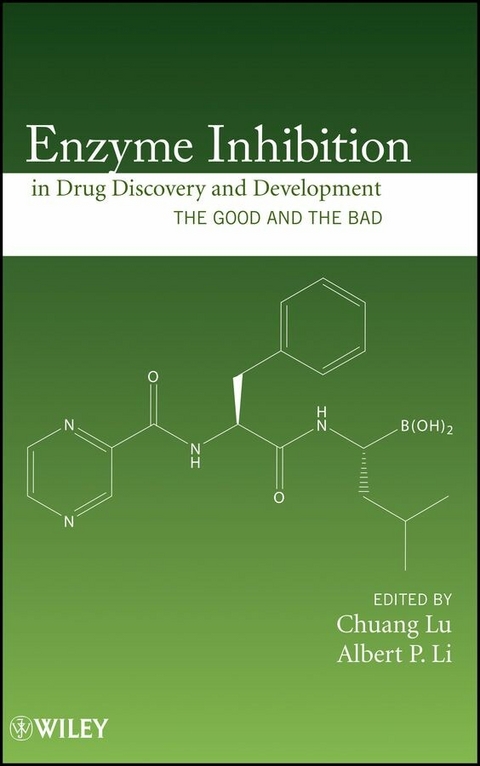
Enzyme Inhibition in Drug Discovery and Development (eBook)
John Wiley & Sons (Verlag)
978-0-470-53894-4 (ISBN)
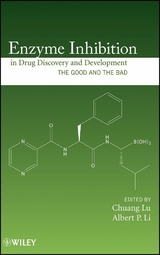
Offering a unique approach that includes both the pharmacologic and pharmaco-kinetic aspects of enzyme inhibition, Enzyme Inhibition in Drug Discovery and Development examines the scientific concepts and experimental approaches related to enzyme inhibition as applied in drug discovery and drug development.
With chapters written by over fifty leading experts in their fields, Enzyme Inhibition in Drug Discovery and Development fosters a cross-fertilization of pharmacology, drug metabolism, pharmacokinetics, and toxicology by understanding the 'good' inhibitions—desirable pharmacological effects—and 'bad' inhibitions—drug–drug interactions and toxicity. The book discusses:
The drug discovery process, including drug discovery strategy, medicinal chemistry, analytical chemistry, drug metabolism, pharmacokinetics, and safety biomarker assessment
The manipulations of drug metabolizing enzymes and transporters as well as the negative consequences, such as drug–drug interactions
The inhibition of several major drug target pathways, such as the GPCR pathway, the NFkB pathway, and the ion channel pathway
Through this focused, single-source reference on the fundamentals of drug discovery and development, researchers in drug metabolism and pharmacokinetics (DMPK) will learn and appreciate target biology in drug discovery; discovery biologists and medicinal chemists will also broaden their understanding of DMPK.
The science and applied approaches of enzyme inhibition in drug discovery and development Offering a unique approach that includes both the pharmacologic and pharmaco-kinetic aspects of enzyme inhibition, Enzyme Inhibition in Drug Discovery and Development examines the scientific concepts and experimental approaches related to enzyme inhibition as applied in drug discovery and drug development. With chapters written by over fifty leading experts in their fields, Enzyme Inhibition in Drug Discovery and Development fosters a cross-fertilization of pharmacology, drug metabolism, pharmacokinetics, and toxicology by understanding the "e;good"e; inhibitions desirable pharmacological effects and "e;bad"e; inhibitions drug drug interactions and toxicity. The book discusses: The drug discovery process, including drug discovery strategy, medicinal chemistry, analytical chemistry, drug metabolism, pharmacokinetics, and safety biomarker assessment The manipulations of drug metabolizing enzymes and transporters as well as the negative consequences, such as drug drug interactions The inhibition of several major drug target pathways, such as the GPCR pathway, the NFkB pathway, and the ion channel pathway Through this focused, single-source reference on the fundamentals of drug discovery and development, researchers in drug metabolism and pharmacokinetics (DMPK) will learn and appreciate target biology in drug discovery; discovery biologists and medicinal chemists will also broaden their understanding of DMPK.
Chuang Lu, PhD, is the Associate Director in the Drug Safety and Disposition Department of Millennium Pharmaceuticals. His current research interests include drug-metabolizing enzymes, drug-drug interaction, and in vitro-in vivo correlation. Albert P. Li, PhD, is the President and CEO of In Vitro ADMET Laboratories, LLC and Advanced Pharmaceutical Sciences, Inc., and the cofounder, Chairman, and CSO of the ADMET Group. His experience spans over twenty-five years in the drug development industry, with over 150 publications. He is the editor of several books, including Drug-Drug Interactions in Pharmaceutical Development, published by Wiley.
ENZYME INHIBITION IN DRUG DISCOVERY AND DEVELOPMENT 3
CONTENTS 7
PREFACE 11
CONTRIBUTORS 13
PART I. DRUG DISCOVERY APPROACHES AND TECHNOLOGIES 17
1. The Drug Discovery Process 19
2. Medicinal Chemistry of the Optimization of Enzyme Inhibitors 31
3. Bioanalytical Technologies in Drug Discovery 59
4. Safety Biomarkers in Drug Development: Emerging Trends and Implications 87
5. The Role of Drug Metabolism in Drug Discovery 107
6. Applied Pharmacokinetics in Drug Discovery and Development 193
PART II. INHIBITION OF THE DRUG METABOLIZING ENZYMES—THE UNDESIRABLE INHIBITION 257
7. Enzyme Inhibition and Inactivation: Cytochrome P450 Enzymes 259
8. Cytochrome P450 Induction 281
9. Inhibition of Drug-Metabolizing Enzymes in the Gastrointestinal Tract and Its Influence on the Drug–Drug Interaction Prediction 331
10. Enzyme Inhibition in Various In Vitro Systems 361
11. Cytochrome P450 Degradation and Its Clinical Relevance 379
12. Complexities of Working with UDP-Glucuronosyltransferases (UGTs): Focus on Enzyme Inhibition 423
13. Evaluation of Inhibitors of Drug Metabolism in Human Hepatocytes 439
14. Grapefruit Juice and Its Constituents as New Esterase Inhibitors 459
15. Transporter–Xenobiotic Interactions: An Important Aspect of Drug Development Studies 483
16. Polymorphisms of Drug Transporters and Their Clinical Implications 519
17. Clinical Drug Interactions Due to Metabolic Inhibition: Prediction, Assessment, and Interpretation 549
18. Predicting Interindividual Variability of Metabolic Drug–Drug Interactions: Identifying the Causes and Accounting for Them Using a Systems Approach 565
PART III. INHIBITION OF THE DRUG TARGET ENZYMES—THE DESIRABLE INHIBITION 585
19. NF-?B: Mechanism, Tumor Biology, and Inhibitors 587
20. G-Protein-Coupled Receptors as Drug Targets 641
21. Pharmacological Modulation of Ion Channels for the Treatment of Chronic Pain 685
22. Targeting the mTOR Pathway for Tumor Therapeutics 735
23. HIV-1 Protease Inhibitors as Antiretroviral Agents 765
INDEX 827
"The description of each topic is clear, well organized and
informative, making the book a useful or even essential high-level
handbook." (ChemMedChem, November 2010)
| Erscheint lt. Verlag | 26.1.2010 |
|---|---|
| Sprache | englisch |
| Themenwelt | Medizin / Pharmazie ► Medizinische Fachgebiete ► Pharmakologie / Pharmakotherapie |
| Naturwissenschaften ► Chemie | |
| Schlagworte | Applied • Approach • APPROACHES • Chapters • Chemie • Chemistry • Concepts • crossfertilization • Drug • Drug Discovery & Development • Enzyme • Enzyme inhibition • Enzymes & Receptors • Enzyme u. Rezeptoren • Experimental • Experts • Fields • fifty leading • Medical Science • Medizin • pharmacology • Pharmacology & Pharmaceutical Medicine • Pharmakologie • Pharmakologie u. Pharmazeutische Medizin • Science • Scientific • Unique • Wirkstoffforschung • Wirkstoffforschung u. -entwicklung |
| ISBN-10 | 0-470-53894-5 / 0470538945 |
| ISBN-13 | 978-0-470-53894-4 / 9780470538944 |
| Informationen gemäß Produktsicherheitsverordnung (GPSR) | |
| Haben Sie eine Frage zum Produkt? |
 PDF (Adobe DRM)
Kopierschutz: Adobe-DRM
Adobe-DRM ist ein Kopierschutz, der das eBook vor Mißbrauch schützen soll. Dabei wird das eBook bereits beim Download auf Ihre persönliche Adobe-ID autorisiert. Lesen können Sie das eBook dann nur auf den Geräten, welche ebenfalls auf Ihre Adobe-ID registriert sind.
Details zum Adobe-DRM
Dateiformat: PDF (Portable Document Format)
Mit einem festen Seitenlayout eignet sich die PDF besonders für Fachbücher mit Spalten, Tabellen und Abbildungen. Eine PDF kann auf fast allen Geräten angezeigt werden, ist aber für kleine Displays (Smartphone, eReader) nur eingeschränkt geeignet.
Systemvoraussetzungen:
PC/Mac: Mit einem PC oder Mac können Sie dieses eBook lesen. Sie benötigen eine
eReader: Dieses eBook kann mit (fast) allen eBook-Readern gelesen werden. Mit dem amazon-Kindle ist es aber nicht kompatibel.
Smartphone/Tablet: Egal ob Apple oder Android, dieses eBook können Sie lesen. Sie benötigen eine
Geräteliste und zusätzliche Hinweise
Buying eBooks from abroad
For tax law reasons we can sell eBooks just within Germany and Switzerland. Regrettably we cannot fulfill eBook-orders from other countries.
aus dem Bereich