Alzheimer's Disease (eBook)
John Wiley & Sons (Verlag)
978-0-470-85174-6 (ISBN)
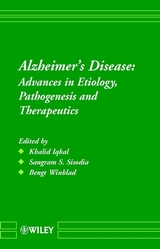
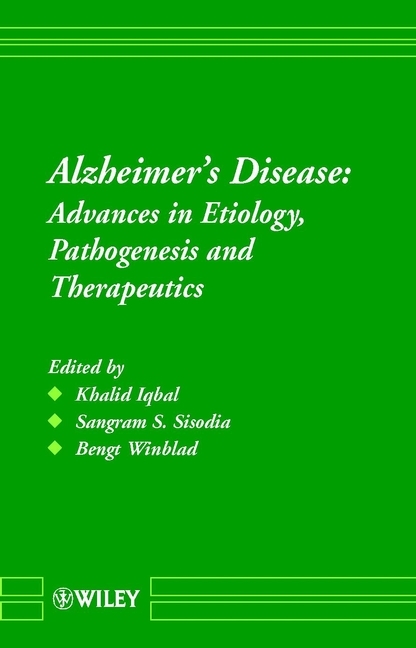
This new volume provides a unique source of reference to the important work being done in this field, it gives academics and clinicians an opportunity to learn about cutting edge developments and covers all aspects of Alzheimer's Disease, including diagnosis, clinical course, epidemiological course and therapeutics and disease mechanisms.
Alzheimer's Disease: Advances in Etiology, Pathogenesis and Therapeutics will provide essential information for basic and clinical researchers in Alzheimer's Disease and other dementias as well as for those who care for patients.
Khalid Iqbal is the editor of Alzheimer's Disease: Advances in Etiology, Pathogenesis and Therapeutics, published by Wiley.
Sangram S. Sisodia is the editor of Alzheimer's Disease: Advances in Etiology, Pathogenesis and Therapeutics, published by Wiley.
Bengt Winblad is the editor of Alzheimer's Disease: Advances in Etiology, Pathogenesis and Therapeutics, published by Wiley.
Alzheimer's Disease is an ever present problem affecting millions of people around the world and, as people's average lifespan lengthens, its prevalence is set to increase. A global effort is needed to combat the disease, including research to investigate the causes, development of effective treatments and, ultimately, prevention of the disease. Published every two years, these timely books discuss the very latest research. This new volume provides a unique source of reference to the important work being done in this field, it gives academics and clinicians an opportunity to learn about cutting edge developments and covers all aspects of Alzheimer's Disease, including diagnosis, clinical course, epidemiological course and therapeutics and disease mechanisms. Alzheimer's Disease: Advances in Etiology, Pathogenesis and Therapeutics will provide essential information for basic and clinical researchers in Alzheimer's Disease and other dementias as well as for those who care for patients.
Khalid Iqbal is the editor of Alzheimer's Disease: Advances in Etiology, Pathogenesis and Therapeutics, published by Wiley. Sangram S. Sisodia is the editor of Alzheimer's Disease: Advances in Etiology, Pathogenesis and Therapeutics, published by Wiley. Bengt Winblad is the editor of Alzheimer's Disease: Advances in Etiology, Pathogenesis and Therapeutics, published by Wiley.
Alzheimer’s Disease ADVANCES IN ETIOLOGY, PATHOGENESIS AND THERAPEUTICS 3
Contents 7
List of Contributors 14
Dedications 28
Scientists Honored for Pioneering Research 31
Preface 37
Acknowledgments 38
I. EPIDEMIOLOGY AND RISK FACTORS 39
1. The Transition from Normal Functioning to Dementia in the Aging Population 41
2. Epidemiology of Alzheimer’s Disease and Dementia: Advances and Challenges 49
3. Epidemiology of Dementia in Down’s Syndrome 61
II. GENETICS 69
4. A Genomic Search for Alzheimer’s Disease Genes 71
5. Candidate Genes Showing No Evidence of Association with Alzheimer’s Disease: Results of the NIMH-AD Genetics Initiative 83
6. Familial Alzheimer’s Disease with Spastic Paraparesis Associated with a Mutation at Codon 261 of the Presenilin 1 Gene 91
7. Genetic Analysis of the Presenilin Pathway in Drosophila 99
8. Molecular Genetics and Transgenic Modeling of the Tauopathies 109
9. Regulation of Four-repeat tau Expression: Interactions between Exon and Intron Splicing Regulatory Sequences 125
III. DIAGNOSIS AND CLINICAL COURSE 135
10. Preclinical Prediction of AD: Relation Between Neuropsychological and Neuroimaging Findings 137
11. Neuropsychological Detection of Preclinical Alzheimer’s Disease: Results of a Neuropathological Series of ‘Normal’ Controls 149
12. Potentially Reversible Conditions in Memory Clinic Patients 161
13. The Alzheimer’s Disease Centers’ Neuropsychological Database Initiative: A Resource for Alzheimer’s Disease Prevention Trials 167
14. Mild Cognitive Impairment: Transition from Aging to Alzheimer’s Disease 179
15. Brain Functional Imaging in Early and Preclinical Alzheimer’s Disease 191
16. Amyloid, PHF-tau, Ubiquitin and Synaptic Markers in the Progression of Alzheimer’s Disease: Immunochemical Analyses of Frontal Cortex from Prospectively Studied Elderly Humans 203
17. Imaging the Consequences of Alzheimer’s Disease Pathology 219
18. Influence of apoE Genotype and PET Brain Imaging on Preclinical Prediction of Alzheimer’s Disease 231
19. Overview of Vascular Dementia 243
20. Clinical and Imaging Characteristics of Vascular Dementia in a Memory Clinic 257
21. MRI of Entorhinal Cortex and Hippocampus in Alzheimer’s Disease, Subcortical Ischemic Vascular Dementia and Mixed Dementia 267
22. Olfactory Function and Event-related Potentials in Alzheimer’s Disease 275
23. Phenotypic Differences in Cholinergic Markers within the Nucleus Basalis in Individuals with Mild Cognitive Impairment 291
24. Evaluating CNS Biomarkers for Alzheimer’s Disease 303
25. CSF Markers for Early Alzheimer’s Disease 313
26. CSF-Phospho-tau (181P) as a Promising Marker for Discriminating Alzheimer’s Disease from Dementia with Lewy Bodies 323
27. Increased Levels of a Minor Glycoform of Acetylcholinesterase in Alzheimer’s Disease Brain and Cerebrospinal Fluid 331
28. Plasma b-Amyloid as a Surrogate Genetic Marker in Late-onset Alzheimer’s Disease 341
29. Levels of Total and Deposited Ab are Correlated with Dementia 349
30. What Should We Tell Patients Attending a Memory Disorders Clinic About Their Diagnosis? 357
IV. MECHANISMS OF NEURODEGENERATION 367
31. Innate Immunity, Autotoxicity and Degenerative Neurologies 369
32. Neuroinflammatory Responses in the Alzheimer’s Disease Brain Promote the Oxidative Post-translational Modification of Amyloid Deposits 379
33. Plasma Antioxidants and Oxidative DNA Damage in Lymphocytes from Normal Aged People and Alzheimer’s Disease Patients 401
34. Oxidative Damage and Antioxidant Responses in Alzheimer’s Disease 409
35. Cyclooxygenase (COX)-2 and Clinical Progression of Alzheimer’s Disease Dementia: Implications in the Role of Neuronal COX-2 in Cell Cycle 417
36. Parallels between the Redox Properties and Toxicity of Ab in Alzheimer’s Disease and Mutant Cu/Zn-SOD in Familial Amyotrophic Lateral Sclerosis 431
37. b-Amyloid Toxicity: Diverse Biological Activities Drive Multiple Cellular Mechanisms 445
38. Mechanisms of Ab Production and Ab Degradation: Routes to the Treatment of Alzheimer’s Disease 459
39. A High Fat, High Cholesterol Diet Accelerates b-Amyloid Accumulation in the CNS of a Transgenic Mouse Model of Alzheimer’s Disease 471
40. Electron Microscopy and X-ray Diffraction Studies further Confirm the Efficacy of PTI-00703TM(R) (Cat’s Claw Derivative) as a Potential Inhibitor of Alzheimer’s b-Amyloid Protein Fibrillogenesis 487
41. Accelerated Ab Generation in a Cell Model of Alzheimer’s Disease-related Endosomal–Lysosomal System Upregulation 499
42. The Amyloid Precursor Protein V717I Mutation Increases Susceptibility to Cell Death in a Cholesterol-dependent Manner 507
43. Intracellular and Secreted Ab(42/40) Ratios Are Differently Influenced by APP Mutations 517
44. Familial British Dementia 525
45. Cellular Metabolism of Familial British Dementia-associated BRI-L 533
46. A Decamer Duplication in the BRI Gene Originates a de novo Amyloid Peptide that Causes Dementia in a Danish Kindred 545
47. Familial Alzheimer’s Disease-linked Mutant Presenilins Attenuate Capacitative Calcium Entry 553
48. Presenilin-1 Is a Regulatory Component of the Cadherin Cell Adhesion Complex: Implications for Alzheimer’s Disease 559
49. Presenilins and Notch Signaling Pathway 569
50. Functional Consequences of the Association of PS1 with b-Catenin 579
51. A Novel Protease Active Site Motif Conserved in Presenilins and Polytopic Bacterial Aspartyl Proteases? 587
52. The Unfolded Protein Response-mediated Upregulation of BiP and CHOP Is not Affected by Presenilin Expression 597
53. Mechanisms of a-Synuclein and NAC Fibrillogenesis 607
54. Neurofibrillary Degeneration: Patterns of Tau Isoform Expression 625
55. Phosphorylation, Microtubule Binding and Aggregation of Tau Protein in Alzheimer’s Disease 639
56. Phosphorylation of Protein Tau and Rescue of Protein Tau-induced Axonopathy by GSK-3b in GSK-3b × htau40 Double Transgenic Mice 647
57. Pathogenic Implication of Altered Tau Properties Caused by FTDP-17 Mutations 659
58. A Hexapeptide Motif ((306)VQIVYK(311))-forming b Structure Induces the Aggregation of Tau Protein to Paired Helical Filaments 669
V. ANIMAL AND CELLULAR MODELS 679
59. Formation of Neurofibrillary Tangles in Mouse Brain 681
60. Inducible Transgenic Expression of Wild-type tau in H4 Neuroglioma Cells 689
61. Lewy-like Pathology in Mice Transgenic for Mutant (A53T) and Wild-type Human a-Synuclein 699
62. Somal and Neuritic Accumulation of the Parkinson’s Disease-associated Mutant [A30P]a-Synuclein in Transgenic Mice 709
63. Ex vivo Transmission of Mouse-adapted Prion Strains to N2a and GT1-7 Cell Lines 717
64. In Vivo Perturbation of Lysosomal Function Promotes Neurodegeneration in the PS1(M146V)/APP(K670N,M671L) Mouse Model of Alzheimer’s Disease Pathology 725
65. Changes in Cognitive Characteristics of Tg(APP)CRND8 Mice at Early Stages of Immunization with Beta-Amyloid Peptide 735
VI. THERAPEUTICS AND THERAPEUTIC STRATEGIES 743
66. Galantamine, a Novel Treatment for Alzheimer’s Disease: A Review of Long-term Benefits to Patients and Caregivers 745
67. Benefits of Donepezil on Cognition, Function and Neuropsychiatric Symptoms in Patients with Mild and Moderate Alzheimer’s Disease over One Year 763
68. Characterization of Alzheimer’s b-Secretase Protein BACE: Processing and Other Post-translational Modifications 777
69. Androgen Treatment Reduces Cognitive Deficits in Female apoE4 Transgenic Mice 785
70. Studies with the Memory-enhancing Drug AIT-082 in PC12 Cells 797
71. Generation of Auto-antibodies toward Alzheimer’s Disease Vaccination 807
72. Toward the Identification of g-Secretase: Using Transition State Analog Inhibitors 815
73. Photoactivated, Active-site-directed g-Secretase Inhibitors Covalently Label Presenilin 1 827
74. Functional Analysis of b-Secretase Using Mutagenesis and Structural Homology Modeling 837
75. Therapeutic Approaches to Prion Diseases: In Vitro Studies with Tetracycline Compounds 847
VII. PSYCHOSOCIAL CARE 859
76. Influence of a Memory Training Program on Attention and Memory Performance of Patients with Dementia 861
77. Prediction of Use of Emergency Community Services by Cognitively Impaired Seniors who Live Alone: Preliminary Findings of a Prospective Study 871
Index 881
"Articles are divided into seven sections on epidemiology and risk factors.... About 400 contributors lend expertise to this professional compendium and contact information is provided for at least one author of every article." (SciTech Book News, Vol. 25, No. 4, December 2001)
| Erscheint lt. Verlag | 24.1.2003 |
|---|---|
| Sprache | englisch |
| Themenwelt | Medizin / Pharmazie ► Gesundheitsfachberufe |
| Medizin / Pharmazie ► Medizinische Fachgebiete ► Neurologie | |
| Medizin / Pharmazie ► Medizinische Fachgebiete ► Psychiatrie / Psychotherapie | |
| Schlagworte | affecting • alzheimers • books • causes • Disease • everpresent • global effort • important • Latest • Medical Science • Medizin • millions • People • peoples • Prevalence • prevention • Problem • Psychiatrie • Psychiatry • Reference • Research • series • Timely • Treatments • two • Work • World • years |
| ISBN-10 | 0-470-85174-0 / 0470851740 |
| ISBN-13 | 978-0-470-85174-6 / 9780470851746 |
| Informationen gemäß Produktsicherheitsverordnung (GPSR) | |
| Haben Sie eine Frage zum Produkt? |
 PDF (Adobe DRM)
Kopierschutz: Adobe-DRM
Adobe-DRM ist ein Kopierschutz, der das eBook vor Mißbrauch schützen soll. Dabei wird das eBook bereits beim Download auf Ihre persönliche Adobe-ID autorisiert. Lesen können Sie das eBook dann nur auf den Geräten, welche ebenfalls auf Ihre Adobe-ID registriert sind.
Details zum Adobe-DRM
Dateiformat: PDF (Portable Document Format)
Mit einem festen Seitenlayout eignet sich die PDF besonders für Fachbücher mit Spalten, Tabellen und Abbildungen. Eine PDF kann auf fast allen Geräten angezeigt werden, ist aber für kleine Displays (Smartphone, eReader) nur eingeschränkt geeignet.
Systemvoraussetzungen:
PC/Mac: Mit einem PC oder Mac können Sie dieses eBook lesen. Sie benötigen eine
eReader: Dieses eBook kann mit (fast) allen eBook-Readern gelesen werden. Mit dem amazon-Kindle ist es aber nicht kompatibel.
Smartphone/Tablet: Egal ob Apple oder Android, dieses eBook können Sie lesen. Sie benötigen eine
Geräteliste und zusätzliche Hinweise
Buying eBooks from abroad
For tax law reasons we can sell eBooks just within Germany and Switzerland. Regrettably we cannot fulfill eBook-orders from other countries.
aus dem Bereich