Tinnitus (eBook)
John Wiley & Sons (Verlag)
978-1-118-48869-0 (ISBN)
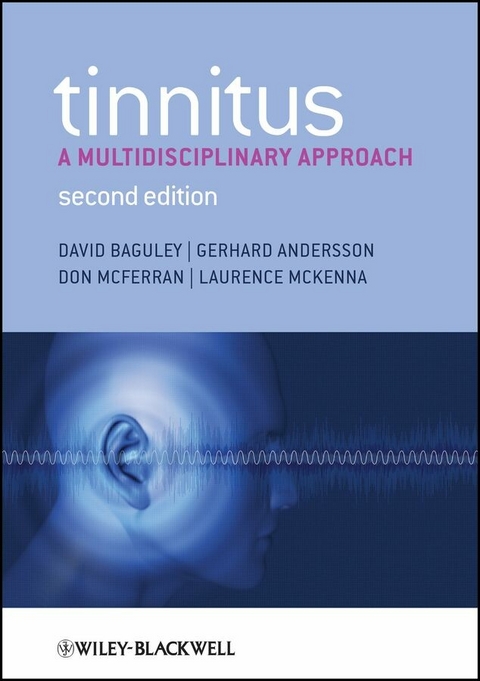
The 2nd edition has been thoroughly updated and revised in line with the very latest developments in the field. The book contains 40% new material including two brand new chapters on neurophysiological models of tinnitus and emerging treatments; and the addition of a glossary as well as appendices detailing treatment protocols for use in an audiology and psychology context respectively.
ABOUT THE AUTHORS
Dr. David Baguley, Consultant Clinical Scientist and Head of Audiology at Cambridge University Hospitals, and Visiting Professor at Anglia Ruskin University, Cambridge, UK.
Professor Gerhard Andersson, Professor of Clinical Psychology at Linköping University in the Department of Behavioural Sciences and Learning; Clinical Psychologist at Linköping University Hospital in the Department of Audiology and Guest Researcher at the Karolinska Institute in the Department of Clinical Neuroscience, Stockholm, Sweden.
Mr. Don McFerran, Consultant ENT Surgeon at Colchester Hospital University NHS Foundation Trust, Colchester, UK. Also immediate Past-Chair of the British Tinnitus Association Professional Advisory Board.
Dr. Laurence McKenna, Clinical Psychologist at the Royal National Throat Nose & Ear Hospital, University College London Hospitals; Clinical Psychologist at the South Maudsley NHS Trust and Honorary Lecturer at the UCL Ear Institute, London, UK. Also member of the British Tinnitus Association Professional Advisory Board.
ABOUT THE AUTHORS Dr. David Baguley, Consultant Clinical Scientist and Head of Audiology at Cambridge University Hospitals, and Visiting Professor at Anglia Ruskin University, Cambridge, UK. Professor Gerhard Andersson, Professor of Clinical Psychology at Linköping University in the Department of Behavioural Sciences and Learning; Clinical Psychologist at Linköping University Hospital in the Department of Audiology and Guest Researcher at the Karolinska Institute in the Department of Clinical Neuroscience, Stockholm, Sweden. Mr. Don McFerran, Consultant ENT Surgeon at Colchester Hospital University NHS Foundation Trust, Colchester, UK. Also immediate Past-Chair of the British Tinnitus Association Professional Advisory Board. Dr. Laurence McKenna, Clinical Psychologist at the Royal National Throat Nose & Ear Hospital, University College London Hospitals; Clinical Psychologist at the South Maudsley NHS Trust and Honorary Lecturer at the UCL Ear Institute, London, UK. Also member of the British Tinnitus Association Professional Advisory Board.
Tinnitus: A multidisciplinary approach 5
Copyright 6
Contents 7
Foreword 9
Preface 11
Chapter 1 Introduction 13
Definitions 13
Historical aspects 15
Chapter 2 Prevalence and natural history 19
Is tinnitus a universal phenomenon? 19
Prevalence studies 20
Incidence 24
Prevalence of tinnitus in childhood 25
Tinnitus in older adults 25
Other risk factors 26
Longitudinal studies 28
Localization of tinnitus 28
Seeking help 29
Chapter 3 Anatomy and physiology 30
Anatomy of the ear 30
Outer ear 30
Tympanic membrane 31
Middle ear 31
Cochlea 32
Spiral ganglion 35
Internal auditory canal and cerebellopontine angle 35
Central auditory anatomy 35
Cochlear nucleus 36
Inferior colliculus 37
Medial geniculate body 37
Auditory and associative cortices 37
Descending auditory pathways 38
Superior olivary complex and medial olivo-cochlear bundle 38
Interactions with other systems 38
Plasticity 39
Habituation 39
Chapter 4 Mechanisms of tinnitus 41
Tinnitus and the ear 41
Tinnitus mechanisms associated with the outer and middle ear 42
Tinnitus mechanisms associated with the cochlea 42
Discordant damage of inner and outer hair cells 42
Discordant damage in normal hearing 43
Discordant damage in profound hearing loss 44
Otoacoustic emissions 44
Calcium 44
Neurotransmitters and their receptors 46
Alpha-amino-3-hydroxy-5-methyl-4-isoxazolepropionic acid receptors 46
N-methyl-D-aspartate receptors 46
Tinnitus and the brain 47
Abnormal synchrony 48
Modified cortical tonotopic frequency maps 49
Medial efferent system 51
Somatic modulation 51
Analogies with pain 52
Gaze evoked tinnitus 52
Ephaptic coupling 52
Stochastic resonance 53
5HT 53
Auditory–limbic interactions 53
Chapter 5 Medical models of tinnitus 55
Drug-induced tinnitus 55
Otosclerosis 57
Other forms of conductive hearing loss 59
Ménière’s disease 60
Vestibular schwannomas and other cerebellopontine angle lesions 63
Pulsatile tinnitus 66
Vascular loops 69
Superior semicircular canal dehiscence 70
Myoclonus and allied conditions 71
Middle ear myoclonus 71
Palatal tremor (palatal myoclonus) 72
Tonic tensor tympani syndrome 73
Patulous Eustachian tube 73
Spontaneous otoacoustic emissions 74
Temporomandibular disorder and tinnitus 75
Unilateral sudden sensorineural hearing loss 76
Chapter 6 Objective correlates of tinnitus 79
Reaction time 79
Evoked response audiometry 80
Auditory brainstem responses 80
Cortical evoked potentials 81
Positron emission tomography and related methods 82
fMRI 88
Studies on anatomical differences associated with tinnitus 89
Measures of neural activity associated with tinnitus 90
Integrating the findings and future directions 90
Chapter 7 Consequences and moderating factors 93
Tinnitus and thinking 94
The thought content of tinnitus patients 94
The efficiency of tinnitus patients’ thoughts 94
Psychological state 96
Tinnitus and anxiety and depression 96
Tinnitus and suicide 98
Psychological state as a trigger for tinnitus 99
Personality and coping style 101
Arousal level 104
Increased arousal as a trigger for tinnitus 105
Selective attention 105
Sleep 107
Family relationships 109
Work 110
Gender 110
Other somatic symptoms 111
Hearing impairment 111
Smoking, alcohol and caffeine 112
Environment 113
Chapter 8 Psychological models of tinnitus 114
Introduction 114
Behavioural theories 114
Cognitive theories 116
Acceptance-based theory 118
Emotion-based theory 119
Cognitive-affective links: the changing state theory 119
Moderators and mediators 120
Chapter 9 The Jastreboff neurophysiological model 122
Chapter 10 How tinnitus is perceived and measured 126
Sound quality 126
Pitch 128
Loudness 129
Maskability 131
Effects of masking 133
Chapter 11 Self-report and interview measures of tinnitus severity and impact 134
Structured interviews 136
Tinnitus self-report measures 137
Visual analogue scales 137
Tinnitus-specific questionnaires 138
Open-ended approaches 141
Other useful self-report instruments 142
Discussion 143
Chapter 12 Hyperacusis 145
Definitions and related constructs 145
Prevalence 148
Measurements of hyperacusis 151
Causes and mechanisms 152
Mechanisms 154
Treatment 157
Chapter 13 Traditional treatments 160
Surgical treatment 160
Destructive operations 160
Decompressive operations 161
Pharmacological 161
Local anaesthetics 162
Psychoactive drugs 163
Tricyclic antidepressants 164
Selective serotonin reuptake inhibitors (SSRIs) 164
Neurokinin antagonists 164
Benzodiazepines 165
Antipsychotic drugs 165
Antispasmodics 165
Neuropathic pain drugs 165
Glutamate antagonists 166
Acamprosate 166
Antiepileptics 167
Drugs acting on dopamine receptors 167
Melatonin 167
Drugs affecting the circulation 168
Vasodilators 168
Diuretics 168
Anticoagulants 169
Prostaglandins 169
Botox 169
Intratympanic drugs 169
Otoprotective agents 170
Sound therapy for tinnitus 171
Hearing aids 173
Electrical stimulation and cochlear implants 173
Biofeedback 175
Relaxation training therapy 176
Hypnotherapy 177
Psychodynamic and supportive therapy 177
Individual or group care? 178
Chapter 14 Tinnitus retraining therapy 180
Clinical protocol of tinnitus retraining therapy 181
Criticism of tinnitus retraining therapy 184
Evidence of efficacy 185
Chapter 15 A cognitive behavioural treatment programme 187
The cognitive behavioural treatment model and its rationale 187
Psychological assessment 189
Applied relaxation 189
Distraction and focusing 190
Sound enrichment 191
Sleep management 191
Hearing tactics 192
Cognitive therapy 193
Relapse prevention 193
Self-help and use of the Internet 194
Evidence base for cognitive behaviour therapy 197
The third wave of behaviour therapy 199
Who should provide cognitive behaviour therapy? 201
Chapter 16 Emerging treatment approaches 203
Transcranial magnetic stimulation 203
Direct brain stimulation 205
Other brain stimulation 206
Phase shift 208
Laser therapy 209
Coordinated reset stimulation 209
Other sound-based emergent approaches 210
Acceptance-based treatments 210
Chapter 17 Complementary medicine approaches to tinnitus 212
Homeopathic remedies 213
Acupuncture 213
Ginkgo biloba 214
Other CAM approaches to tinnitus 216
Dietary supplements 217
Stimulation of the ear 218
Ear candles 218
Chapter 18 Tinnitus and hyperacusis in childhood and adolescence 220
Prevalence and incidence of childhood tinnitus 220
Tinnitus in the general paediatric population and among children with normal hearing 221
Tinnitus in children with hearing impairment 221
Prevalence of childhood hyperacusis 222
Impact of tinnitus 222
Associated conditions 223
Management 224
Chapter 19 Special populations 227
Acoustic shock 227
Single-sided deafness 229
Low-frequency noise complaint 230
Musical hallucination 231
Armed forces and combat veterans 231
Functional tinnitus 232
Chapter 20 A multidisciplinary synthesis 233
Appendix 1 A treatment protocol for use in primary care, audiology and otolaryngology 237
Primary care 237
Secondary care 239
Patients presenting with tinnitus as an incidental symptom 239
Patients presenting with tinnitus as the main problem 240
Tertiary care 245
Frequent questions 246
Suicide 246
Flying 246
Prescription drugs 246
Recreational drugs 247
Complementary and alternative medicine 247
Recreational noise 247
Using the Internet and other media 247
Diet and supplements 247
Appendix 2 Cognitive behaviour therapy 249
Education 249
Relaxation training 249
The cognitive component 250
References 255
Index 315
"Overall, this book is a well presented, user-friendly
text for those working in, or looking to develop their knowledge
and understanding of tinnitus." (ENT & audiology
news, 1 October 2013)
| Erscheint lt. Verlag | 6.12.2012 |
|---|---|
| Sprache | englisch |
| Themenwelt | Medizin / Pharmazie ► Medizinische Fachgebiete ► HNO-Heilkunde |
| Schlagworte | Account • alike • Approach • Audiologie • audiology • broad • Clinical • Collaborative • ConText • Edition • Field • Gesundheits- u. Sozialwesen • Health & Social Care • incorporating insights • Latest • latest developments • line • Multidisciplinary approach • Neuroscience • Populations • protocols • Research • Second • Tinnitus |
| ISBN-10 | 1-118-48869-5 / 1118488695 |
| ISBN-13 | 978-1-118-48869-0 / 9781118488690 |
| Informationen gemäß Produktsicherheitsverordnung (GPSR) | |
| Haben Sie eine Frage zum Produkt? |
 PDF (Adobe DRM)
Kopierschutz: Adobe-DRM
Adobe-DRM ist ein Kopierschutz, der das eBook vor Mißbrauch schützen soll. Dabei wird das eBook bereits beim Download auf Ihre persönliche Adobe-ID autorisiert. Lesen können Sie das eBook dann nur auf den Geräten, welche ebenfalls auf Ihre Adobe-ID registriert sind.
Details zum Adobe-DRM
Dateiformat: PDF (Portable Document Format)
Mit einem festen Seitenlayout eignet sich die PDF besonders für Fachbücher mit Spalten, Tabellen und Abbildungen. Eine PDF kann auf fast allen Geräten angezeigt werden, ist aber für kleine Displays (Smartphone, eReader) nur eingeschränkt geeignet.
Systemvoraussetzungen:
PC/Mac: Mit einem PC oder Mac können Sie dieses eBook lesen. Sie benötigen eine
eReader: Dieses eBook kann mit (fast) allen eBook-Readern gelesen werden. Mit dem amazon-Kindle ist es aber nicht kompatibel.
Smartphone/Tablet: Egal ob Apple oder Android, dieses eBook können Sie lesen. Sie benötigen eine
Geräteliste und zusätzliche Hinweise
Buying eBooks from abroad
For tax law reasons we can sell eBooks just within Germany and Switzerland. Regrettably we cannot fulfill eBook-orders from other countries.
aus dem Bereich