


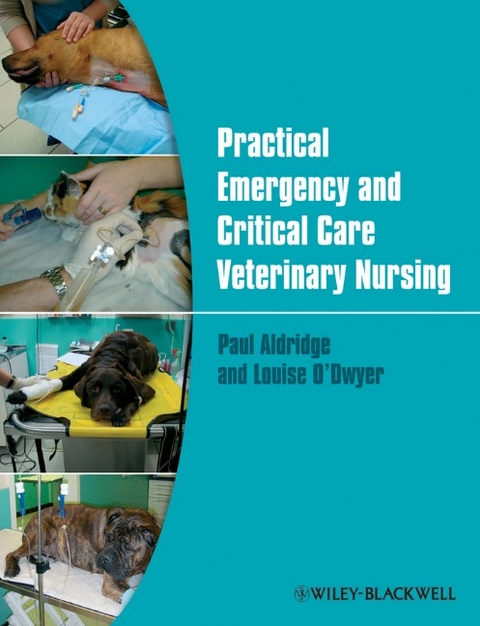
Practical Emergency and Critical Care Veterinary Nursing (eBook)
John Wiley & Sons (Verlag)
978-1-118-48347-3 (ISBN)
Your step-by-step guide to key emergency and critical care procedures and hands-on nursing care. Whether you need to know how to prioritise your response to a patient with multiple injuries, or you need a quick practical guide to fluid therapy, this is the go-to resource. Colour photographs of real life cases take you through the procedures and after-care, detailing essential skills. This book provides vital information for emergency and critical care situations, whether you're looking for confidence in handling emergency cases in a first-opinion practice, or a relevant, succinct guide for an emergency clinic. Be inspired to become more confident in your clinical skills and abilities, and learn how to apply your existing skills to an emergency situation.
A companion website provides additional resources useful in the management of emergency and critical patients. Visit the website to find information charts and video clips of procedures.
Written by a veterinary nurse and a veterinary surgeon who work together in the largest UK emergency clinic, this book is a practical, how-to manual with a nursing focus.
Suitable as a complete reference for nurses studying towards qualifications, or as a practical guide for daily use by veterinary nurses working in veterinary emergency and critical care.
Paul Aldridge BVSc Cert SAS MRCVS
Paul is senior surgeon at Petmedics in Manchester; a hospital based practice that hosts the largest out of hours emergency service in the UK, dividing his time between emergency cases and surgical referrals. He is keenly involved in the provision of CPD on emergency medicine and surgery to both veterinary surgeons and nurses. His clinical interests include all aspect of emergency surgery, but particularly the management of multiple trauma patients.
Louise O'Dwyer MBA BSc (Hons) VTS (ECC) Dip AVN (Medical) Dip AVN (Surgical) RVN
Louise gained her Diploma in Advanced Veterinary Nursing (Surgical) in 2004 followed by her Diploma in Advanced Veterinary Nursing (Medical) in 2007 and Veterinary Technician Specialist (Emergency and Critical Care) in 2011. She has contributed to over 20 journal articles and books and lectures regularly on all aspects of emergency and critical care. She worked as Head Nurse for PetMedics in Manchester the largest emergency clinic in the UK for the past 10 years, and is now Clinical Director. Louise's interests include all aspects of emergency care but particularly trauma and respiratory patients, as well as infection control and wound management.
Your step-by-step guide to key emergency and critical care procedures and hands-on nursing care. Whether you need to know how to prioritise your response to a patient with multiple injuries, or you need a quick practical guide to fluid therapy, this is the go-to resource. Colour photographs of real life cases take you through the procedures and after-care, detailing essential skills. This book provides vital information for emergency and critical care situations, whether you re looking for confidence in handling emergency cases in a first-opinion practice, or a relevant, succinct guide for an emergency clinic. Be inspired to become more confident in your clinical skills and abilities, and learn how to apply your existing skills to an emergency situation. A companion website provides additional resources useful in the management of emergency and critical patients. Visit the website to find information charts and video clips of procedures. Written by a veterinary nurse and a veterinary surgeon who work together in the largest UK emergency clinic, this book is a practical, how-to manual with a nursing focus. Suitable as a complete reference for nurses studying towards qualifications, or as a practical guide for daily use by veterinary nurses working in veterinary emergency and critical care.
Paul Aldridge BVSc Cert SAS MRCVS Paul is senior surgeon at Petmedics in Manchester; a hospital based practice that hosts the largest out of hours emergency service in the UK, dividing his time between emergency cases and surgical referrals. He is keenly involved in the provision of CPD on emergency medicine and surgery to both veterinary surgeons and nurses. His clinical interests include all aspect of emergency surgery, but particularly the management of multiple trauma patients. Louise O'Dwyer MBA BSc (Hons) VTS (ECC) Dip AVN (Medical) Dip AVN (Surgical) RVN Louise gained her Diploma in Advanced Veterinary Nursing (Surgical) in 2004 followed by her Diploma in Advanced Veterinary Nursing (Medical) in 2007 and Veterinary Technician Specialist (Emergency and Critical Care) in 2011. She has contributed to over 20 journal articles and books and lectures regularly on all aspects of emergency and critical care. She worked as Head Nurse for PetMedics in Manchester the largest emergency clinic in the UK for the past 10 years, and is now Clinical Director. Louise's interests include all aspects of emergency care but particularly trauma and respiratory patients, as well as infection control and wound management.
Title page 5
Copyright page 6
Contents 7
Preface 8
1: Triage and Assessment of the Emergency Patient 9
Introduction 9
Telephone triage 9
Hospital triage 10
A and B: Respiratory system 11
C: Cardiovascular 12
D: Dysfunction of the central nervous system 15
Summary of triage 15
Secondary evaluation 16
2: Monitoring the Critical Patient 17
Introduction 17
Organ function 17
Respiratory system 17
Cardiovascular system 19
Central nervous system 21
Urinary system 21
Gastrointestinal system 21
Fluid balance 21
Body temperature 22
Clinical pathology 22
Blood glucose 22
Packed cell volume and total protein 22
Electrolytes 22
Pain scoring 22
Pain 22
Recumbency care 23
Practical techniques 23
Central venous pressure (see Figure ) 23
Technique 23
Measurement of CVP using a manometer 23
3: Vascular Access 25
Introduction 25
Planning intravenous access 25
Catheter selection 25
Vein selection 26
Techniques for difficult cases 30
Improving access to veins 30
Intraosseous needles and catheters 31
Practical techniques 32
Placing an intravenous over the needle catheter 32
Placing a central catheter using the Seldinger technique 32
Placing an intraosseus needle in the femur 33
Placement of an arterial catheter 35
Catheterisation of the dorsal metatarsal artery 35
4: ‘Shock’ and Intravenous Fluid Therapy 37
Normal physiology 37
Abnormal losses from fluid compartments 38
Forming a fluid therapy plan 39
Does the patient need fluid therapy? 39
Which route should be used? 42
Which fluid should be administered? 43
Rate, quantity and duration of fluid therapy 44
Treatment of hypovolaemic shock, acute fluid therapy 45
Chronic fluid therapy: patients with normal perfusion parameters 46
Other methods for calculating requirement 47
Duration of fluid therapy 47
Monitoring fluid therapy 47
Fluid balance measurement 48
5: Blood Gas, Acid–Base Analysis and Electrolyte Abnormalities 49
Introduction 49
Blood gas analysis 49
Assessing ventilation 50
Assessing acid–base status 50
Metabolic assessment 51
Treating acid–base disorders 51
Metabolic acidosis 51
Respiratory acidosis (hypoventilation) 52
Metabolic alkalosis 52
Respiratory alkalosis (hyperventilation) 52
Understanding electrolyte balance 54
Sodium 54
Hyponatraemia 54
Hypernatraemia 55
Chloride 55
Hypochloraemia 56
Hyperchloraemia 56
Potassium: hypokalaemia 56
Hyperkalaemia 57
Magnesium 57
Hypomagnesaemia 58
Hypermagnesaemia 58
Calcium 58
Hypercalcaemia 58
Hypocalcaemia 59
Further reading 59
6: Analgesia and Anaesthesia of the Emergency and Critical Patient 60
Introduction 60
Patient assessment 60
Respiration 61
Cardiovascular system 61
Neurological system 61
Anticipated problems and contingency plans 61
Anaesthesia drug plan 62
Sedatives 63
Analgesia and neuroleptanalgesia 63
Opioids 64
Mu-agonist opioids 64
Morphine 65
Methadone 66
Pethidine 66
Fentanyl 66
Opioid agonists/antagonists and partial agonists 66
Butorphanol 66
Buprenorphine 66
Tramadol 66
Dissociative drugs 67
Local anaesthetics 67
General anaesthesia 67
Patient monitoring 67
Drug selection 68
Premedication 68
Induction drugs 69
Anaesthesia maintenance 69
Peri-operative support 70
Postoperative considerations 70
Further reading 70
7: Practical Laboratory Techniques 71
Introduction 71
Laboratory tests 71
Electrolyte levels 71
Acid–base assessment 72
Haematology 72
Other tests 72
Packed cell volume and total protein 73
Saline agglutination 73
Prepare and examine blood films 74
Stains 74
Film examination 74
Examination of red blood cells 74
Features of regeneration 75
Evaluation for a possible cause of anaemia 75
Examination of leucocytes 77
Platelets 79
Cytology of effusions 79
Classification 79
Fluid analysis 79
Glucose monitoring in the critical patient 80
Lactate measurement in the critical patient 80
Interpretation of results 81
Urinalysis 82
Specific gravity 82
Ketones 82
Urine sediment 82
Urine protein : creatinine ratio 83
Further reading 83
8: Techniques for Oxygen Supplementation 84
Introduction 84
Oxygen supplementation techniques 84
Short-term methods of oxygen supplementation 85
Longer term oxygen supplementation 87
Endotracheal intubation 89
Oxygen toxicity 89
Practical techniques 89
Transtracheal catheterisation 89
Technique for nasal catheter placement 90
Endotracheal intubation 91
9: Nursing the Dyspnoeic Patient 94
Introduction 94
Initial presentation 94
Observation 95
Physical examination 95
Thoracic radiography 98
Practical techniques 99
Tracheostomy tube placement 99
Tracheostomy tube care 100
10: Nursing the Cardiac Patient 105
Introduction 105
History 105
Clinical signs 105
Initial stabilisation of the cardiac patient 106
Assessment 107
Arterial blood pressure 107
Arterial blood gases 107
Radiography 108
Electrocardiography 108
Echocardiography (ultrasound examination) 108
Common emergency presentations 109
Congestive heart failure 109
Rhythm disturbances 110
Bradyarrhythmias 110
Tachyarrhythmias 111
Pericardial effusion 113
Procedure for draining pericardial effusion 113
Feline thromboembolism 114
Clinical signs 114
Treatment 115
Electrocardiography 115
Further reading 116
11: Nursing the Acute Abdomen Patient 117
Introduction 117
Presentation and history 117
Clinical examination 118
Respiratory system 118
Cardiovascular system 118
Neurological deficits 118
Abdominal examination 118
Stabilisation 119
Diagnostic techniques 120
Clinical pathology 120
Radiography 120
Ultrasound examination 121
Abdominocentesis 121
Indications for surgery 122
Surgical considerations 123
Anaesthesia 123
Patient preparation 124
Patient positioning 124
Body temperature 124
Abdominal lavage 124
Peritoneal drainage 125
Postoperative management 125
Nutrition 125
Monitoring 125
Analgesia 126
Management of common presentations 126
Gastric dilation and volvulus 126
Haemoabdomen 127
Practical techniques 128
Focused assessment with sonography for trauma (FAST) procedure 128
Abdominocentesis 128
Diagnostic peritoneal lavage 129
Orogastric intubation (‘stomach tubing’) 129
12: Nursing Urinary Tract Emergencies 131
Introduction 131
Stabilisation 131
Urinary tract obstruction 132
Urinary tract trauma 134
Urine diversion 135
Urine collection systems 136
Monitoring urine output 136
Complications of urinary catheterisation 137
Trauma 137
Infection 137
Acute renal failure 137
Practical techniques 138
Catheterising male cats 138
Catheterising female cats 139
Catheterising male dogs 139
Catheterising female dogs 139
Abdominal drain 139
Peritoneal dialysis 140
13: Nursing the Poisoned Patient 141
Introduction 141
Treatment of the poisoned patient 141
Supportive care 142
Reducing absorption 142
Antidotes 143
Increase elimination 144
Treat known likely effects of the toxin 144
Common toxicities 144
Metaldehyde poisoning 144
Anticoagulant rodenticides 145
Ethylene glycol (antifreeze) 146
Paracetamol 147
Non-steroidal anti-inflammatory drugs 147
Chocolate 148
Grapes, raisins and sultanas 149
Xylitol 149
Permethrin 149
Lilies 149
Practical techniques 150
Gastric lavage 150
14: Nursing the Trauma Patient 152
Introduction 152
Abdominal trauma 152
Thoracic trauma 153
Initial management and stabilisation 153
Further investigations 154
Surgical exploration 154
Monitoring the head trauma patient 155
Brain injury 155
Intracranial pressure 156
Assessment 156
Neurological assessment 156
Treatment 156
Wounds and fractures 158
Wounds 158
Fractures 161
Further reading 162
15: Nursing the Reproductive Patient 163
Introduction 163
Female reproductive disorders 163
Normal parturition 163
Dystocia 163
Retained placenta 165
Pyometra 165
Mastitis 165
Uterine prolapse 166
Uterine haemorrhage 167
Eclampsia/hypocalcaemia 167
Male reproductive system emergencies 168
Penile disorders 168
Testicular/scrotal disorders 168
Prostatic disorders 169
Further reading 170
16: Small Animal Critical Care and Hospitalised Patient Nutrition 171
Introduction 171
Patient selection 172
How much food to give? 173
What food should we give? 173
Recommendations for avoiding complications of the re-feeding syndrome 174
How to feed? 175
Methods of encouragement 175
Choice of feeding tube 175
Feeding via a tube 186
Complications 186
Procedure 188
How long to feed? 188
Further reading 188
17: Nursing the Emergency Ophthalmology Patient 189
Introduction 189
Trauma 189
Prolapsed globe 189
Ocular haemorrhage 190
Corneal laceration 190
Foreign body 191
Corneal ulcers 191
Diagnosis 192
Treatment 192
Anterior uveitis 193
Diagnosis 193
Treatment 193
Glaucoma 193
Diagnosis 193
Treatment 194
Lens luxation 194
Practical procedures 194
Assessing pupillary light reflex 194
Schirmer tear test 195
Fluorescein 195
Measuring intraocular pressure 195
Surgical procedures 196
18: Cardiopulmonary Arrest and Resuscitation 197
Introduction 197
Immediate recognition 197
Early intervention 198
The resuscitation team 199
Early CPR 200
Monitoring during basic life support and advanced life support 202
Effective advanced life support 203
Integrated post-cardiac arrest care 204
Drugs in CPR 204
Further reading 205
19: Nursing Considerations in the Critical Patient 206
Introduction 206
Nursing considerations and planning 206
Fluid balance 207
Nutritional status 208
Care of indwelling catheters and tubes 208
Intravenous catheters 208
Chest drains 208
Tracheostomy tubes 208
Feeding tubes 210
Urinary catheters 210
Nursing the recumbent patient 210
Eye and oral care 212
Coupage 212
Embolus formation 212
Physiotherapy 213
Nursing the neurological patient 213
Pain management 213
Mental well-being 213
Client communication 214
Record keeping 214
Infection control 214
Further reading 215
Index 217
"Whether working in a "traditional" clinic or
in a specialised ICU, the contribution of nurses to the management
of emergencies is invaluable." (Vet Nurses
Today, 1 July 2013)
"Practical Emergency and Critical Care Veterinary Nursing
provides a fine, step-by-step guide to key emergency procedures and
nursing care and teaches how to handle injuries and therapies
associated with critical care. Color photos of real life cases
accompany step-by-step discussions of procedures and skills needed,
offering a valuable reference written by a veterinary nurse and a
veterinary surgeon who here work together to explore the most
common care scenarios and special needs. This is a solid,
real-world reference any veterinary collection must
have." (Midwest Book Review, 1 June 2013)
"Practical Emergency and Critical Care Veterinary Nursing"
is a scholarly and core addition to any college collection focusing
on high level veterinary care." (Bookwatch, 1
April 2013)
| Erscheint lt. Verlag | 6.12.2012 |
|---|---|
| Sprache | englisch |
| Themenwelt | Medizin / Pharmazie |
| Veterinärmedizin ► Allgemein ► Tiermedizinische Fachangestellte | |
| Schlagworte | Pflege i. d. Veterinärmedizin • Pflege i. d. Veterinärmedizin • Tierpflege • Veterinärmedizin • Veterinärmedizin / Hunde u. Katzen • Veterinärmedizin / Notfallmedizin • Veterinärmedizin • Veterinärmedizin / Hunde u. Katzen • Veterinärmedizin / Notfallmedizin • Veterinary Emergency & Critical Care • Veterinary Medicine • Veterinary Medicine - Dogs & Cats • Veterinary nurse, VN, CPD, ECC, emergency nursing, critical care nursing, veterinary triage • Veterinary Nursing & Animal Care |
| ISBN-10 | 1-118-48347-2 / 1118483472 |
| ISBN-13 | 978-1-118-48347-3 / 9781118483473 |
| Informationen gemäß Produktsicherheitsverordnung (GPSR) | |
| Haben Sie eine Frage zum Produkt? |
 PDF (Adobe DRM)
Kopierschutz: Adobe-DRM
Adobe-DRM ist ein Kopierschutz, der das eBook vor Mißbrauch schützen soll. Dabei wird das eBook bereits beim Download auf Ihre persönliche Adobe-ID autorisiert. Lesen können Sie das eBook dann nur auf den Geräten, welche ebenfalls auf Ihre Adobe-ID registriert sind.
Details zum Adobe-DRM
Dateiformat: PDF (Portable Document Format)
Mit einem festen Seitenlayout eignet sich die PDF besonders für Fachbücher mit Spalten, Tabellen und Abbildungen. Eine PDF kann auf fast allen Geräten angezeigt werden, ist aber für kleine Displays (Smartphone, eReader) nur eingeschränkt geeignet.
Systemvoraussetzungen:
PC/Mac: Mit einem PC oder Mac können Sie dieses eBook lesen. Sie benötigen eine
eReader: Dieses eBook kann mit (fast) allen eBook-Readern gelesen werden. Mit dem amazon-Kindle ist es aber nicht kompatibel.
Smartphone/Tablet: Egal ob Apple oder Android, dieses eBook können Sie lesen. Sie benötigen eine
Geräteliste und zusätzliche Hinweise
Buying eBooks from abroad
For tax law reasons we can sell eBooks just within Germany and Switzerland. Regrettably we cannot fulfill eBook-orders from other countries.


