The Midwife's Labour and Birth Handbook (eBook)
John Wiley & Sons (Verlag)
978-1-118-48009-0 (ISBN)
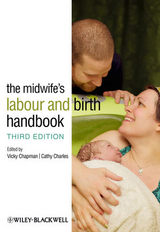
Praise for previous editions:
'An excellent resource for both student midwives and qualified staff alike.' (Alison James, Midwifery Lecturer, Plymouth University)
'A lovely book with a lot of practical advice and easy to navigate. (Jayne Samples, Midwifery Lecturer, University of Huddersfield)
This fully revised and updated third edition of The Midwife's Labour and Birth Handbook is a practical and accessible guide to midwifery care.
It addresses important questions such as:
- Why are women being pressured into caesarean section for breech presentation when the evidence is equivocal?
- If a baby needs assisted ventilation breaths at birth, why not bring the ambubag to the baby and leave the cord intact so the baby can benefit from the extra maternal oxygen supply?
- Why is skin-to-skin contact at birth so rarely offered to preterm babies when there is evidence of benefit?
This well-regarded text promotes normality and woman-centred care, using research, evidence-based guidelines and anecdotal accounts from women. It challenges practice and guidelines which are biased or based on poor evidence. Guidance is offered on how to deal with difficult, sometimes controversial, situations.
The Midwife's Labour and Birth Handbook 3rd edition is an essential guide for both student midwives and experienced practising midwives.
New to this edition:
- Full colour photographs including a kneeling breech birth
- Suturing diagrams to assist left-handed midwives.
- Expanded chapters on slow progress in labour and malposition/malpresentations, including a rare photograph of a face presentation birth.
Vicky Chapman is a registered nurse and midwife.?As a midwife Vicky has worked in a variety of hospital settings and as a caseload midwife. She has a particular interest in normal birth, as well as an interest the politics of childbirth and their impact on women's birth experiences. Vicky has recently returned to midwifery practice in Surrey, having had a break in order to be at home with her four children, the last three of which were born at home, including twins.
Cathy Charles is a midwife and ventouse practitioner, practising in acute and community settings in Wiltshire and Somerset. She has lectured and written on the subject of practising as a midwife ventouse practitioner in a stand-alone birthing centre. Like Vicky, Cathy has an interest in waterbirth and home births. She also gained experience in investigating adverse events as a clinical audit/risk management co-ordinator and has been a supervisor of midwives. She teaches aquanatal classes.
Praise for previous editions: An excellent resource for both student midwives and qualified staff alike. (Alison James, Midwifery Lecturer, Plymouth University) "e;A lovely book with a lot of practical advice and easy to navigate. (Jayne Samples, Midwifery Lecturer, University of Huddersfield) This fully revised and updated third edition of The Midwife s Labour and Birth Handbook is a practical and accessible guide to midwifery care. It addresses important questions such as: Why are women being pressured into caesarean section for breech presentation when the evidence is equivocal? If a baby needs assisted ventilation breaths at birth, why not bring the ambubag to the baby and leave the cord intact so the baby can benefit from the extra maternal oxygen supply? Why is skin-to-skin contact at birth so rarely offered to preterm babies when there is evidence of benefit? This well-regarded text promotes normality and woman-centred care, using research, evidence-based guidelines and anecdotal accounts from women. It challenges practice and guidelines which are biased or based on poor evidence. Guidance is offered on how to deal with difficult, sometimes controversial, situations. The Midwife's Labour and Birth Handbook 3rd edition is an essential guide for both student midwives and experienced practising midwives. New to this edition: Full colour photographs including a kneeling breech birth Suturing diagrams to assist left-handed midwives. Expanded chapters on slow progress in labour and malposition/malpresentations, including a rare photograph of a face presentation birth.
Vicky Chapman is a registered nurse and midwife.?As a midwife Vicky has worked in a variety of hospital settings and as a caseload midwife. She has a particular interest in normal birth, as well as an interest the politics of childbirth and their impact on women's birth experiences. Vicky has recently returned to midwifery practice in Surrey, having had a break in order to be at home with her four children, the last three of which were born at home, including twins. Cathy Charles is a midwife and ventouse practitioner, practising in acute and community settings in Wiltshire and Somerset. She has lectured and written on the subject of practising as a midwife ventouse practitioner in a stand-alone birthing centre. Like Vicky, Cathy has an interest in waterbirth and home births. She also gained experience in investigating adverse events as a clinical audit/risk management co-ordinator and has been a supervisor of midwives. She teaches aquanatal classes.
The Midwife’s Labour and Birth Handbook 3
Contents 7
Preface 15
Contributors 17
1 Labour and normal birth 21
Introduction 21
Facts and recommendations for care 22
Mode of delivery statistics 22
The birth environment 23
Signs that precede labour 25
Prelabour rupture of membranes at term 26
First stage of labour 26
Latent stage 27
Established first stage of labour 29
Analgesia 32
Transition 37
Second stage of labour 38
Characteristics of second stage 38
Midwifery care in second stage 39
Pushing 40
The birth 42
Third stage of labour 45
Pros and cons of physiological versus active management 45
Active management of the third stage of labour 48
After the birth 50
Summary 51
Latent phase 51
Established first stage 51
Second stage 51
Third stage 51
Useful contacts and information 52
References 52
2 Vaginal examinations and artificial rupture of the membranes 59
Vaginal examinations 59
Incidence and facts 60
Accuracy and timing of VEs 60
Consent or compliance? 61
Performing a VE 62
Before a VE 62
VE procedure 62
Following the examination 63
Some common problems 65
Poor progress 65
Misleading results 65
Anterior lip 65
Oedematous cervix 66
‘Shrinking’ cervix 66
Invasive examinations and sexual abuse 66
Phobias and behaviours linked to past abuse 67
What can the midwife do to help? 67
Artificial rupture of the membranes 67
Indications for ARM 68
Contraindications to ARM 68
Summary 69
References 69
3 Fetal heart rate monitoring in labour 72
Introduction 72
Intermittent auscultation 72
Using a pinards/hand-held doppler 73
Electronic fetal monitoring 74
To perform a CTG 75
Fetal scalp electrode 76
ST analysis 76
Classification of fetal heart rate features 76
Positive and negative aspects of EFM 79
Positive aspects 79
Negative aspects 79
Summary 80
References 81
Appendix: Continuous EFM algorithm (NICE, 2007) 83
4 Perineal trauma and suturing 84
Introduction 84
Incidence 84
Facts 85
Reducing perineal trauma 85
Assessment of perineal trauma 86
Labial tears 87
Urethral tears 87
First and second degree tears: to suture or not to suture? 87
Third and fourth degree tears 89
Providing care for survivors of childhood sexual abuse 89
Suturing procedure 89
Pain relief 89
Optimising the effect of local anaesthetic 90
Suturing materials 90
Suturing techniques 91
Left-handed suturing 92
Suturing at home 92
Perineal suturing procedure 98
Summary 102
Suturing 102
Recommended reading 102
References 102
5 Examination of the newborn baby at birth 106
Introduction 106
The midwife’s assessment of the baby at birth 107
Colour 108
Respirations and cry 108
Heart rate 109
Muscle tone 109
Measurements of the newborn 109
Weight 109
Length 110
Head circumference 110
Vitamin K prophylaxis 110
Incidence and facts 111
Vitamin K controversy 111
Top-to-toe check 111
Head 113
Face 113
Eyes 113
Ears 113
Mouth 113
Neck 114
Chest and abdomen 114
Genitalia 114
Anus 115
Back and spine 115
Limbs 115
Skin 116
Neonatal infection 116
Antenatal/intrapartum risk factors for infection 117
Giving upsetting news to parents 118
Useful contacts 119
References 119
6 Home birth 122
Introduction 122
Incidence and facts 123
Benefits of home birth 123
Average cost of birth 124
Issues to consider before choosing home birth 124
Attending home births 124
Supervision issues 125
Preparing for a home birth 126
Home visit 126
Environmental planning/risk assessement 126
Equipment preparation 126
Preparation by the mother 126
Care in labour 128
Early labour 128
Labour 128
The birth 129
Possible transfer to hospital 132
Non-emergency transfer to hospital 133
Emergency transfer to hospital 133
Home birth problems 134
Summary 135
Useful contacts 135
References 135
7 Water for labour and birth 137
Introduction 137
Facts 138
Benefits of warm water immersion 138
Possible risks of warm water immersion 139
Criteria for labouring in water 140
Relative contraindications 140
Preparation 141
Water temperature 141
Cleansing 142
Equipment 142
Water birth at home 142
Labour care 143
First stage of labour 143
Second stage of labour 143
Third stage of labour 145
Possible problems 145
Most common reasons to leave the pool 146
Cord entanglement 146
Snapped cord 146
Shoulder dystocia 147
Postpartum haemorrhage 147
Loss of consciousness 147
The unresponsive baby 147
Summary 147
Useful contacts 148
Recommended reading 148
References 148
8 Malpositions and malpresentations in labour 150
Introduction 150
Definitions 150
Malposition 150
Malpresentation 151
Occipitoposterior position 153
Incidence and facts 155
Diagnosis 156
Manual rotation from OP to OA 156
Technique 156
Characteristics of OP labour and birth 157
Midwifery care 157
What may help? 158
Mobilisation and upright postures 158
Face presentation 160
Incidence and facts 160
Characteristics of a face presentation 160
Midwifery care 161
Brow presentation 161
Incidence and facts 162
Characteristics of a brow presentation 162
Midwifery care 162
Transverse lie (shoulder presentation) 162
Incidence and facts 162
Characteristics of a transverse lie/shoulder presentation 162
Midwifery care 163
Breech presentation 163
Summary 163
References 164
9 Slow progress in labour 166
Introduction 166
Incidence and facts 167
Prolonged labour 167
How slow is too slow? 167
Assessing progress in labour and the partogram 168
Obstructed labour 168
Causes of a prolonged labour 168
Physical causes 168
Less common physical causes 169
Analgesia choice 169
Stress response and emotional dystocia 169
Prolonged latent phase 169
Midwifery care 170
Prolonged active first stage 170
Midwifery care 171
Prolonged second stage 173
Reassess 173
Referral 173
Problem solving 174
Effective positions for a slow second stage 175
Summary 175
Recommended reading 176
References 176
10 Assisted birth: ventouse and forceps 180
Introduction 180
Incidence and facts 180
Avoiding an instrumental delivery 181
Indications for an instrumental delivery 181
Types of instrument 182
Choice of instrument 182
Care of a woman undergoing instrumental delivery 183
Communication 184
Reducing fear 184
Analgesia 184
Use of IV oxytocin 185
Positioning 185
Bladder care 185
Episiotomy 186
Assisting at an instrumental delivery 186
Mutual staff support 186
Equipment preparation 186
Instrumental procedure 187
Advocacy/accountability 187
Post-procedure care 187
Midwife instrumental delivery 187
Do midwife practitioners bring anything special to instrumental birth? 188
Criteria for a midwife instrumental delivery 188
Preparation 189
Midwifery ventouse delivery 190
Midwife forceps delivery 191
Advocacy/accountability 192
Post-birth discussion and care 192
Summary 194
References 194
Appendix 10.1 Midwife ventouse practitioner log book record 197
Appendix 10.2 Decision to decline midwife ventouse delivery 198
11 Caesarean section 199
Introduction 199
Incidence and facts 199
Risks and benefits of CS 200
Benefits 200
Risks 201
Stemming the flow 202
Indications for elective CS 203
Maternal request 203
The experience of CS 203
Elective CS birth plan 204
Midwifery care for CS 204
Physical preparation 205
In theatre 206
Postnatal care 208
Summary 209
Support groups for women following CS 210
Further reading 210
References 210
12 Vaginal birth after caesarean section 213
Introduction 213
Incidence and facts 214
The influence and opinions of professionals 214
VBAC or elective CS 214
Considerations and risks associated with VBAC 215
Risks associated with CS 215
What improves the success rate in VBAC? 216
Induction of labour for VBAC 216
Place of birth 217
Preparing for birth at home/birthing centre 217
Midwifery care for VBAC labour 217
First stage 217
Second stage of labour 220
Third stage 220
Uterine scar rupture 220
Summary 221
In hospital 221
At home/birthing centre 221
References 221
13 Preterm birth 224
Introduction 224
Incidence and facts 225
Causes and associated factors of preterm birth 226
Place of delivery 226
Preterm prelabour rupture of membranes (PPROM) 226
Corticosteroids for threatened preterm birth 228
Tocolysis in threatened preterm labour 228
Monitoring the fetal heart in preterm labour 229
Midwifery care 229
Second stage of labour 230
Mode of delivery 230
Care immediately after birth 231
Delayed cord clamping (DCC) 231
Skin-to-skin contact 232
Resuscitation 233
Immediate action following birth for babies needing resuscitation 233
Care related to specific types of preterm labour 234
Very preterm infants (22–26 weeks) 234
Breech presentation 235
Multiple pregnancies 235
Preterm birth at home 235
Postnatal care 235
Summary 236
Useful contacts 237
References 237
14 Breech birth 240
Introduction 240
Incidence 241
Facts 241
Types of breech presentation 241
Women’s options and the provision of care 243
Self-help measures 243
External cephalic version 243
Caesarean section 244
Concerns and possible complications with a breech birth 245
Hypoxia 245
Umbilical cord prolapse 245
Entrapment of aftercoming head 245
Deflexion and hyperextension (star gazing) of the baby’s head 246
Head and neck trauma 246
Premature placental separation 246
Labour and birth 246
Preparation/birth planning 246
The midwife’s role 247
Mechanisms of a breech birth 247
Onset of labour 247
Pain management 248
First stage 249
Second stage 252
The birth 253
Assisted breech delivery 255
The baby at birth 255
Third stage 256
Summary 256
Useful contacts 256
Recommended reading 256
References 256
15 Twins and higher-order births 260
Introduction 260
Incidence and facts 260
Place of delivery 261
Mode of delivery 261
Care in labour 263
Monitoring the fetal heart rates 264
Second stage of labour 265
Birth of the first baby 265
Birth of the second/subsequent baby 265
Third stage of labour 266
Active management 267
Physiological third stage 267
Care after the birth 268
Documentation 268
Summary 269
Useful contacts 269
References 269
16 Haemorrhage 272
Introduction 272
Incidence and facts 272
Placenta praevia 273
Incidence and facts 273
Vasa praevia 275
Placental abruption 275
Incidence and facts 276
Risk factors for placental abruption 276
Care of a woman with placenta praevia or placental abruption 276
In labour 277
Third-stage management 280
Postpartum haemorrhage 280
Incidence and facts 280
The 4Ts: Tone, Tissue, Trauma, Thrombophilias 281
Tone (uterine atony) 281
Tissue 282
Trauma 282
Treatment of trauma 283
Haematoma 284
Thrombophilias/clotting problems 284
Retained placenta 285
Incidence and facts 285
Role of the midwife in delivering a retained placenta 286
Summary 287
Placenta praevia and placental abruption 287
Postpartum haemorrhage 287
References 288
17 Emergencies in labour and birth 291
Introduction 291
Snapped cord 292
Cord prolapse and cord presentation 292
Incidence and facts 292
Signs and symptoms of cord prolapse 293
Practice recommendations/manoeuvres 293
Amniotic fluid embolism 294
Incidence and facts 294
Signs and symptoms of AFE 295
Practice recommendations 295
Uterine rupture 296
Incidence and facts 296
Associated risk factors 296
Practice recommendations 296
Aftercare 297
Shoulder dystocia 298
Incidence and facts 298
Associated risk factors 298
Recognising shoulder dystocia 299
Practice recommendations 299
The HELPERR drill 300
Last resort procedures 304
Aftercare 304
Inverted uterus 304
Incidence and facts 304
Associated risk factors 305
Signs and symptoms 305
Practice recommendations 305
Aftercare 306
Maternal collapse/shock 306
Haemorrhagic 306
Non-haemorrhagic 306
Possible signs and symptoms of shock 307
Summary 307
Cord prolapse 307
Amniotic fluid embolism 308
Uterine rupture 308
Shoulder dystocia 308
Uterine inversion 308
References 308
18 Neonatal and maternal resuscitation 312
Introduction 312
Incidence and facts 312
Risk management: anticipation 313
Basic neonatal resuscitation 313
Environment 314
Assessment 314
ABC of neonatal resuscitation 314
Stimulation 316
Suction 316
The initial five breaths 316
Ongoing neonatal resuscitation/complications 317
Compressions 317
Cardiac compression technique 317
The umbilical cord 318
Meconium aspiration 318
Intubation 319
Drugs 319
Terminating resuscitation 320
Termination of neonatal resuscitation 321
Maternal resuscitation 321
Incidence and facts 321
Basic life support 321
The ABC of maternal resuscitation 322
The left lateral tilt position or manual displacement of the uterus 322
Advanced life support 322
Summary 324
Infant resuscitation 324
Maternal resuscitation 324
References 324
19 Induction of labour 326
Introduction 326
Definition 327
Incidence and facts 327
Risks and side effects 327
Other risks/issues 327
Information giving and informed consent 328
Determining expected date of delivery (EDD) 328
IOL for social reasons 329
Induction for post-term pregnancy 329
IOL versus expectant management for PROM at term 329
Assessing the cervix 330
Methods of induction 330
Natural methods 330
Complementary/alternative methods 330
Surgical/pharmacological methods 331
Care of a woman during IOL 333
Midwifery care for IOL 333
Continuing IOL: care with IV oxytocin 334
Summary 335
Recommended reading 336
References 336
20 Pre-eclampsia 338
Introduction 338
Underlying pathophysiology of pre-eclampsia 338
Incidence 339
Facts 340
Associated risk factors 340
Signs and symptoms 341
BP measurement 342
Care during labour 343
Preterm birth 343
Psychological support 344
Monitoring the maternal and fetal condition in moderate/severe pre-eclampsia 344
Fluid balance management 344
Second stage 345
Drugs used in the treatment of severe hypertension 346
First line treatment: Labetalol 346
Second line treatment: Nifedipine 346
Third line treatment: Hydralazine 347
Treatment to prevent or treat seizures: Magnesium sulphate 347
Care of a woman receiving drug treatment for severe hypertension 347
Management of eclampsia 347
Facts 347
Signs and symptoms preceding an eclamptic fit 348
Care during/following an eclamptic fit 348
Drug treatment for eclampsia: magnesium sulphate anticonvulsant therapy 349
Care of the woman receiving magnesium sulphate infusion 349
Postnatal BP management for women with pre-eclampsia or eclampsia 350
HELLP syndrome 350
Incidence 351
Underlying pathophysiology 351
Signs and symptoms of HELLP 351
Care of women with HELLP syndrome 351
Summary 352
First-stage labour care for severe pre-eclampsia 352
Second-stage labour care for severe pre-eclampsia 352
Eclamptic fit 352
Useful resources 353
References 353
21 Stillbirth and neonatal death 356
Introduction 356
Definition 357
Incidence and facts 357
Causes and predisposing factors for perinatal death 357
Diagnosing fetal death and decision making 358
The beginning of the grieving process 358
Decision-making and choices 359
Mode of delivery 359
Induction or expectant management 359
Place of birth 360
Midwifery care in labour following intrauterine death 361
Compassion and individualised care 361
Observations 361
Analgesia 361
The birth of the baby 361
Third stage of labour 362
Neonatal death and unexpected death at/after birth 362
Expected death of a baby 362
Unexpected stillbirth/NND 362
Immediate care following stillbirth/NND: precious moments with the baby 363
Creating memories and mementos 363
Ongoing postnatal care 365
Checklists, tests and paperwork 365
Post-mortem (autopsy) 365
Registering the baby’s death 366
Spiritual beliefs and funeral arrangements 367
Staying in hospital 367
The option of taking the baby home 367
Going home 368
Planning for a future pregnancy 368
Supporting staff 369
Summary 370
Useful contacts 370
References 370
Appendix: Checklist following a pregnancy loss after 24 weeks 373
22 Risk management, litigation and complaints 375
Introduction 375
Incidence and facts 376
Clinical risk management: learning from adverse events 376
The process of event analysis 377
Litigation 377
Vicarious liability of employer 378
Clinical risk management organisations 379
Records 379
Complaints 380
Writing a statement 380
Caring for the mother or father following an adverse event 381
Conclusion 381
Summary 382
Useful contacts 382
References 382
23 Intrapartum blood tests 384
Blood tests 384
Maternal reference ranges 384
Taking a blood sample 384
Tips for tricky veins 385
Biochemistry 385
Electrolytes 388
Renal function tests 388
Glucose 388
Liver function tests 389
Serum bile acid 390
Serum ferritin 390
C-reactive protein 390
Haematology and coagulopathy 390
Full blood count 390
Clotting screening 392
Fibrinogen 392
The D-dimer test 393
Blood bank (immunohaematology) 393
Kleihauer 393
Direct Coombs test (DCT) 393
Group and save 394
Cross-matching 394
Blood tests for specific conditions and blood pictures 394
Pre-eclampsia 394
HELLP syndrome 395
Disseminated intravascular coagulation (DIC) 395
Stillbirth 396
Severe haemorrhage 396
Fetal blood tests 396
Fetal blood pH sampling and lactate testing 396
Fetal blood sampling procedure and maternal consent 397
Cord blood sampling 398
References 399
24 Medicines and the midwife 401
Introduction 401
Facts 401
Midwife exemption orders 402
Supply 403
Administration 403
Aren’t midwives prescribing? 403
Student midwives 405
Standing orders 405
Patient group directions (PGDs) 405
Documentation and drug errors 405
Safety and good practice 406
Avoiding and reporting drug errors 406
Common abbreviations 407
Useful contacts 408
References 408
Index 409
"With this latest edition, the authors have supplied a
guide to contemporary midwifery practice that will be useful to
both new and experienced midwives, and indeed to anyone involved
with the care of mother and baby in the labour and birth setting.
Highly recommended." (Nursing Times, 5 August
2014)
"This is a useful book, written at a level that students
can clearly follow and easily understand."
(Doody's, 7 March 2014)
"It is not an exhaustive textbook of midwifery practice,
but, rather, a very helpful handbook that the student will find
invaluable for review and the experienced, seasoned midwife can use
to maintain currency with evidence-based practice."
(Birth, 3 September 2013)
"The Midwife's Labour and Birth Handbook appears in its
third updated edition to provide a fine survey fully revised and
updated for the latest midwifery practices. From professional
questions in birthing options and recommendations based on
anticipated issues to breech births, skin-to-skin contact at birth,
and guidelines based on poor evidence and how to overcome them,
this is a solid reference that includes new color photos, suturing
diagrams to assist left-handed midwives, and expanded chapters on
malposition and slow labor. At each step of the birth, midwifery
requirements and recommendations are covered in depth, making for a
fine reference loaded with bibliographical references and best
practices based on the latest research." (Midwest
Book Reviews, 1 July 2013)
| Erscheint lt. Verlag | 10.1.2013 |
|---|---|
| Sprache | englisch |
| Themenwelt | Medizin / Pharmazie ► Gesundheitsfachberufe ► Hebamme / Entbindungspfleger |
| Medizin / Pharmazie ► Pflege | |
| Schlagworte | Books by Vicky Chapman, books by Cathy Charles, resource for midwives, guidelines for midwifes, difficult birth situations, surturing diagrams for midwives, kneeling breech birth, slow progress in birthing labour, birthing malpositions • Gynäkologie • Gynäkologie u. Geburtshilfe • Gynäkologie • Gynäkologie u. Geburtshilfe • Hebamme • Hebammenpraxis • Krankenpflege • Krankenpflege i. d. Frauenheilkunde • Medical Science • Medizin • Midwifery • nursing • Obstetrics & Gynecology • Women's Health Nursing |
| ISBN-10 | 1-118-48009-0 / 1118480090 |
| ISBN-13 | 978-1-118-48009-0 / 9781118480090 |
| Informationen gemäß Produktsicherheitsverordnung (GPSR) | |
| Haben Sie eine Frage zum Produkt? |
 PDF (Adobe DRM)
Kopierschutz: Adobe-DRM
Adobe-DRM ist ein Kopierschutz, der das eBook vor Mißbrauch schützen soll. Dabei wird das eBook bereits beim Download auf Ihre persönliche Adobe-ID autorisiert. Lesen können Sie das eBook dann nur auf den Geräten, welche ebenfalls auf Ihre Adobe-ID registriert sind.
Details zum Adobe-DRM
Dateiformat: PDF (Portable Document Format)
Mit einem festen Seitenlayout eignet sich die PDF besonders für Fachbücher mit Spalten, Tabellen und Abbildungen. Eine PDF kann auf fast allen Geräten angezeigt werden, ist aber für kleine Displays (Smartphone, eReader) nur eingeschränkt geeignet.
Systemvoraussetzungen:
PC/Mac: Mit einem PC oder Mac können Sie dieses eBook lesen. Sie benötigen eine
eReader: Dieses eBook kann mit (fast) allen eBook-Readern gelesen werden. Mit dem amazon-Kindle ist es aber nicht kompatibel.
Smartphone/Tablet: Egal ob Apple oder Android, dieses eBook können Sie lesen. Sie benötigen eine
Geräteliste und zusätzliche Hinweise
Buying eBooks from abroad
For tax law reasons we can sell eBooks just within Germany and Switzerland. Regrettably we cannot fulfill eBook-orders from other countries.
aus dem Bereich