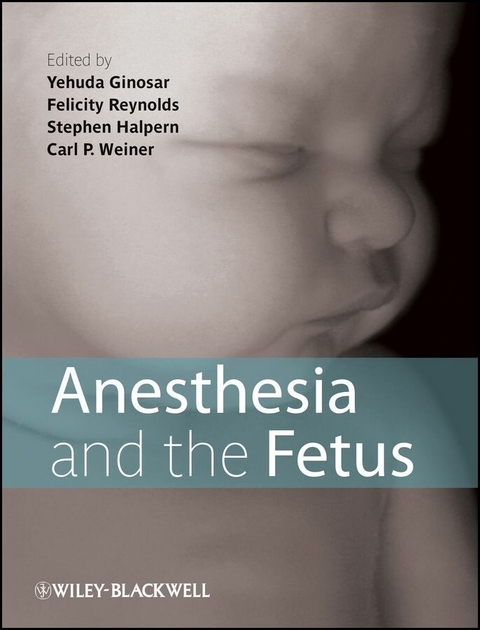
Anesthesia and the Fetus (eBook)
John Wiley & Sons (Verlag)
978-1-118-47706-9 (ISBN)
Anesthesia and the Fetus integrates into one volume the multidisciplinary components of:
- fetal development
- fetal pharmacology
- assessments of fetal and neonatal outcome
- anesthesia and analgesia during pregnancy
- anesthesia and analgesia during labor
- ethics and law
Written by an internationally renowned group of clinicians and scientists, Anesthesia and the Fetus provides a contemporary guide and reference to the role of anesthesia, and the anesthesiologist, in protecting the mother and her unborn child during pregnancy.
Yehuda Ginosar, BSc, MBBS, Hadassah Hebrew University Medical Center, Jerusalem, Israel
Felicity Reynolds, MD, FRCA, FRCOG, one time St Thomas' Hospital, London, UK
Stephen Halpern, MD, MSc, University of Toronto , Toronto, Canada
Carl P. Weiner, MD, MBA, FACOG, University of Kansas, School of Medicine, Kansas City, USA
Anesthesia and the Fetus integrates into one volume the multidisciplinary components of: fetal development fetal pharmacology assessments of fetal and neonatal outcome anesthesia and analgesia during pregnancy anesthesia and analgesia during labor ethics and law Written by an internationally renowned group of clinicians and scientists, Anesthesia and the Fetus provides a contemporary guide and reference to the role of anesthesia, and the anesthesiologist, in protecting the mother and her unborn child during pregnancy.
Yehuda Ginosar, BSc, MBBS, Hadassah Hebrew University Medical Center, Jerusalem, Israel Felicity Reynolds, MD, FRCA, FRCOG, one time St Thomas' Hospital, London, UK Stephen Halpern, MD, MSc, University of Toronto , Toronto, Canada Carl P. Weiner, MD, MBA, FACOG, University of Kansas, School of Medicine, Kansas City, USA
Title page 5
Copyright page 6
Contents 7
Contributors 11
Preface 18
Acknowledgments 20
SECTION 1: Basic Principles 21
1: Intrauterine growth and development 23
Introduction 23
Early development and placentation 23
Organogenesis 27
Congenital abnormalities amendable to fetal intervention 27
Congenital diaphragmatic hernia (CDH) 27
Fetal hydronephrosis 27
Sacrococcygeal teratoma 28
Neural tube defects 28
Amniotic bands 29
Twin–twin transfusion 29
Fetal growth and development 29
Fetal growth restriction 30
Symmetric vs. asymmetric IUGR 30
Determinants of fetal growth 32
Maternal factors affecting fetal growth 32
Placental factors affecting fetal growth 34
Fetal factors affecting growth 34
Macrosomia 35
Long-term programming effects of altered fetal growth 35
References 36
2: Maternal physiological adaptations to pregnancy 39
Cardiovascular changes in the mother 39
Overview 39
Cardiac output 39
Structural changes in the heart: sonographic, electrocardiographic, and radiographic consequences 40
Peripheral resistance and arterial blood pressure 40
Changes in venous structure and function 41
Plasma volume expansion 41
Hematologic system 42
Parturition 42
The kidneys and the uterus: examples of regional gestational vascular adaptation 42
The renal circulation 42
The uteroplacental circulation 43
Maternal respiratory changes and their effect on oxygen delivery to the fetus 43
References 44
3: Placental respiratory gas exchange 45
Introduction 45
The affinity of fetal and maternal blood for respiratory gases 45
Placental blood flow 47
Uterine artery blood flow 47
Umbilical blood flow 47
Fetal oxygen uptake 47
Effect of changes in uterine blood flow upon fetal oxygenation 47
Effect of umbilical blood flow restriction on fetal oxygenation 48
Effects of blood pressure on uterine and umbilical blood flow 49
Effect of supplemental maternal oxygen on fetal oxygenation 49
Summary 50
References 50
4: The fetal circulation 52
Introduction 52
Mechanisms of fetal shunt closure 54
Ductus venosus 54
Foramen ovale 54
Ductus arteriosus 54
Blood flow regulation of fetal organs 55
Fetal hepatic circulation 55
Fetal pulmonary circulation 55
Fetal brain circulation 56
Doppler ultrasound evaluation of the fetal circulation 56
References 57
5: Fetal responses to hypoxia 59
Introduction 59
Normal physiology 59
Milestones in fetal behavioral development 62
Amniotic fluid dynamics 63
Abnormalities of the maternal–fetal–placental unit affecting fetal oxygenation 63
Fetal responses to abnormal oxygenation 64
Acute fetal hypoxemia 64
Fetal heart rate 64
Fetal Doppler 65
Fetal biophysical profile 67
Chronic fetal hypoxia 68
Clinical monitoring 69
References 70
6: Pharmacokinetics in pregnancy 73
Introduction 73
Physiological changes during pregnancy and maternal pharmacokinetics 73
Drug absorption 73
Distribution 74
Drug metabolism and elimination 74
Placental transfer of drugs 75
Metabolism and binding by the placenta 75
Maternal and fetal protein binding 76
Acid-base equilibrium effect 76
Fetal drug distribution, metabolism, and elimination 78
Considerations in studying placental drug transfer and fetal drug exposure 78
Summary 79
Acknowledgments 80
References 80
7: The first few breaths: normal transition from intra- to extra-uterine life 83
Introduction 83
Respiratory system 83
Lung fluid 83
Establishing functional residual capacity 84
What triggers the initiation of breathing? 85
Characteristics of postpartum breathing 86
Neonatal respiratory reflexes 86
Laryngeal reflex 86
Carotid body reflex 86
Respiratory reflexes arising from pulmonary stretch receptors 87
Hering-Breuer reflex 87
The paradoxic reflex of Head 87
Cardiovascular adaptation after birth 87
Immediate neonatal cardio-respiratory assessment 88
Heart rate 88
Respiration 88
Color and oxygen saturation 88
Summary 89
References 89
SECTION 2: Endpoint Variables: Assessments of Fetal Wellbeing and Neonatal Outcome 93
8: Validity of endpoint measurement 95
Introduction 95
Approaches to measurement 95
Direct measurement and clinimetric tools 95
Indirect measurement and psychometric tools 96
Reliability and validity 96
Effects of error 97
Reliability estimates 97
Internal consistency reliability 98
Validity 98
Types of validity 99
Surrogate endpoints 100
Definition 100
Choosing surrogate endpoints 100
Prognostic markers, surrogate endpoints, and the fetus 102
Umbilical artery pH 102
Intrapartum fetal monitoring 102
Prolongation of gestation using tocolytic therapy 102
Uteroplacental blood flow 103
Summary 103
References 104
SECTION 2.1: Antenatal and Intrapartum Assessment of the Fetus 107
9: Imaging of the fetus and the uteroplacental blood supply: ultrasound 109
Introduction 109
Early screening for aneuploidy 109
Nuchal translucency thickness 110
Additional first trimester sonographic markers 110
Screening in twin pregnancy 110
Early diagnosis of fetal abnormalities 111
“Always detectable” abnormalities 111
Undetectable abnormalities 111
Potentially detectable abnormalities 112
Major cardiac defects 112
Open spina bifida 113
Early screening for impaired placentation 113
Uterine artery pulsatility index 113
Early screening for preeclampsia and fetal growth restriction 113
Conclusions 114
References 114
10: Imaging of the fetus and the uteroplacental blood supply: MRI 117
Introduction 117
Fetal anomalies 117
Central nervous system 117
Thorax 119
Abdomen and pelvis 119
Other anomalies 119
Fetal and neonatal surgery 119
Fetal organ volumetry 119
Alternative fetal MRI techniques 120
Diffusion-weighted imaging 120
Diffusion tensor imaging 120
MR spectroscopy 120
Blood-oxygen-level-dependent functional MRI 121
Placental MRI 121
Safety of MRI in pregnancy 122
Conclusions 122
References 122
11: Fetal heart rate monitoring 124
Introduction 124
How the fetal heart rate is monitored 124
Fetal heart rate monitoring characteristics and definitions 125
Baseline heart rate 125
FHR variability 125
Accelerations 126
Decelerations 126
Fetal heart rate classification 126
Uterine activity monitoring (tocodynamometry) 129
Pathophysiology of fetal heart rate characteristics and patterns 129
Baseline heart rate 129
Bradycardia 129
Tachycardia 129
Variability 130
Accelerations 130
Decelerations 130
Sinusoidal and pseudosinusoidal patterns 131
Clinical management based on FHR interpretation 131
Interventions 132
Fetal testing 132
Limitations of continuous fetal monitoring 133
References 133
12: Fetal acid-base monitoring 134
Physiology of fetal acid-base balance and respiratory gas exchange 134
Fetal respiratory and metabolic acidemia 134
Assessment of fetal hypoxia 135
Lactate determination 135
Base deficit and the strong ion difference 136
Acid-base balance during normal labor 136
Fetal surveillance during labor 136
Fetal scalp blood sampling 138
Causes of fetal hypoxia/acidemia 138
Maternal hypotension 138
Pyrexia 138
Cord compression 138
Placental insufficiency 138
Prediction of abnormal fetal outcome 139
Intrapartum prevention 139
Postnatal prediction 139
Clinical interpretation of umbilical blood acid-base and lactate values 140
Routine analysis of cord blood acid-base balance and lactate at delivery 141
References 141
13: Fetal pulse oximetry 143
Introduction 143
Physiological considerations 143
SpO2 instrumentation 144
FSpO2 instrumentation 144
Accuracy and critical threshold 145
Factors affecting fetal oxygen saturation measurements 145
Caput succedaneum 145
Fetal hair 145
Uterine contractions 145
Maternal position 146
Maternal oxygen administration 146
Intravenous fluids 146
Analgesia during labor 146
Clinical trials 146
Conclusion 147
Note 147
References 147
14: Neonatal assessment and prediction of neonatal outcome 149
Introduction 149
Adverse neurological outcomes 149
Hypoxic ischemic encephalopathy (HIE) and outcome 149
Cerebral palsy 149
Neonatal assessments and prediction of outcome 149
Acid-base balance 149
Apgar score 151
Illness severity scores 151
Clinic risk index for babies 151
Score for neonatal acute physiology 151
Neurological and neurobehavioral assessments 153
Assessment of specific problems 154
Neonatal pain assessment 154
Assessment of neonatal abstinence syndrome (NAS) 154
References 155
SECTION 3 Interventions: Anesthesia, Analgesia, and Their Effects on the Fetus 159
15: Environmental exposure to anesthetic agents 161
Introduction 161
Occupational exposure to inhalation anesthetics: general considerations 161
Occupational exposure to inhalational anesthetics during pregnancy 162
Spontaneous abortions 162
Other complications of pregnancy 162
Nitrous oxide 162
Developmental outcome 163
Sterilizing agents 164
Ethylene oxide 164
Animal studies 164
Conclusions 164
References 165
16: Anesthesia and analgesia for assisted reproduction techniques and other procedures during the first trimester 167
Introduction 167
Assisted reproduction techniques and early pregnancy interventions 167
Surgery in early pregnancy 167
Anesthetic and analgesic drug exposure 168
General considerations 168
Specific considerations for the first trimester 169
Local anesthetic agents 169
Opioids, benzodiazepines, and ketamine 171
Propofol and thiopental 172
Nitrous oxide 172
Non-steroidal anti-inflammatory agents 172
Volatile halogenated agents 172
Antiemetic agents 173
Summary 173
References 173
17: The effect of anesthetic drugs on the developing fetus: considerations in non-obstetric surgery 176
Introduction 176
Teratogenisis 176
Risk classification for drugs during pregnancy 177
Apoptosis in the newborn brain and anesthetic agents 178
Effects on the baby of individual anesthetic drugs 179
Nitrous oxide 179
Volatile anesthetic agents 179
Intravenous anesthetic agents and adjuncts 179
Thiopental 179
Propofol 180
Etomidate 180
Ketamine 180
Dexmedetomidine 181
Sedatives/hypnotics 181
Opioids 181
Neuromuscular blocking agents 181
Local anesthetics 181
Summary 182
References 182
18: Substance abuse and pregnancy 185
Introduction 185
Opioids 185
Amphetamines 189
Marijuana (cannabis) 189
Tobacco 189
Solvents 189
Ethanol 190
Cocaine 190
Anesthetic management of the substance-abusing parturient 190
References 190
19: Intrauterine fetal procedures for congenital anomalies 193
Introduction 193
Anesthesia for fetal surgery 194
Fetal pain 194
Congenital diaphragmatic hernia 195
Urinary tract obstruction 196
Disorders of monochorionic twins 197
Twin–twin transfusion syndrome 197
Twin reversed arterial perfusion/acardiac twin 197
Myelomeningocele 198
Congenital cystic adenomatoid malformations 198
Sacrococcygeal teratoma 198
Congenital disorders of the heart 199
The future of fetal surgery 199
References 199
20: The EXIT procedure 203
Introduction 203
Physiology of the EXIT procedure 203
Preoperative evaluation 204
Preoperative preparation 204
Maternal anesthesia 205
Surgical incision 206
Fetal monitoring and management 207
Postpartum maternal management 207
Complications 209
Future directions 209
References 209
21: Mechanisms and consequences of anesthetic-induced neuroapoptosis in the developing brain 212
Introduction 212
Neurodevelopment: synaptogenesis and apoptosis 212
Anesthetic-induced neuronal cell death 213
The mechanism of activation of apoptosis 213
Prevention of neuronal apoptosis 214
Animal behavioral studies 215
Extrapolation of animal findings to humans 216
The future 216
References 217
22: Relevance to clinical anesthesia of anesthetic-induced neurotoxicity in developing animals 220
Introduction 220
Evidence from animal studies that anesthetic drugs can damage the developing brain and cause long-term neurobehavioral disturbances 220
The window of vulnerability 221
Fundamentals of drug-induced developmental neuroapoptosis 221
How does drug-induced neuroapoptosis relate to natural programmed cell death? 222
How does anesthesia-induced neuroapoptosis relate to other forms of drug-induced neuroapoptosis? 222
Augmentation by drug combinations 223
Evidence for anesthesia-induced neuroapoptosis in non-human primates 224
Can we extrapolate animal data to humans? 225
Human epidemiological studies 225
Summary and conclusions 226
References 226
23: External cephalic version 230
Introduction 230
Benefit of ECV for the fetus 230
Predictors of ECV success 230
Timing of ECV 231
Increasing the ECV success rate 231
Neuraxial analgesia 231
Dose 231
Spinal versus epidural 231
Repeat ECV 231
Pain 232
Safety of ECV (fetal and maternal considerations) 232
Summary 232
References 232
SECTION 3.1: Anesthesia for Cesarean Delivery 235
24: Effects on the fetus of general versus regional anesthesia 237
Introduction 237
Effects of cesarean delivery on the fetus and neonate 237
Uterine incision 237
Reduced expulsion of fetal lung water 237
Effects of general anesthesia on fetus and newborn 238
Direct effects 238
Intravenous induction agents 238
Inhalational anesthetics 238
Fetal response to asphyxia 239
Potential neurotoxic effects of anesthetic drugs on the developing brain 239
Indirect effects 239
Effects of anesthesia drugs on uteroplacental blood flow 239
Effects of ventilation on uteroplacental blood flow 239
Effects of regional anesthesia on fetus and neonate 239
Direct effects 240
Spinal local anesthetics and opioids 240
Epidural local anesthetics 240
Epidural opioids 240
Indirect effects 240
Maternal hypotension and vasopressors 240
Patchy neuraxial anesthesia 240
Potentially beneficial effects of anesthesia on the fetus and neonate 240
General anesthesia 241
Regional anesthesia 241
Comparing effects on the fetus and neonate of general versus regional anesthesia 241
Mortality and severe morbidity 241
Accurate identification of general or regional anesthesia 241
Non-comparable demographic and maternal–fetal risk factors 241
Other fetal and neonatal outcomes 242
Apgar score 242
Need for neonatal resuscitation 249
Neurobehavioral scores 250
Breastfeeding 250
Acid-base status 250
Special populations 251
References 251
25: Anesthesia for cesarean delivery: effects on the fetus of maternal blood pressure control 255
Introduction 255
Physiologic considerations 255
Regional anesthesia 256
Spinal and epidural anesthesia versus general anesthesia 256
Risks of hypotension to the fetus 256
Intravenous fluids 257
Vasopressors 257
Blood pressure versus cardiac output 258
Elective versus emergency cesarean delivery 258
Preeclampsia 259
General anesthesia 259
Implications of light anesthesia 259
Hypotension during general anesthesia 260
Pharmacological attenuation of the stress response to laryngoscopy and tracheal intubation 260
Maternal resuscitation 261
References 261
26: Effects on the fetus of maternal oxygen administration 264
Introduction 264
Means of administering oxygen to the mother 264
Transfer of oxygen to the fetus 265
Effect of increased fetal PO2 on neonatal condition 266
Potential adverse fetal effects of high maternal FiO2 266
Maternal considerations 268
Conclusions 269
References 269
27: Effects on the fetus of maternal position during cesarean delivery 271
Introduction 271
Posture and aortocaval compression 272
Neuraxial anesthesia and maternal position 272
Positioning during spinal anesthesia 273
Position with anesthetic technique 273
Position with onset of spinal anesthesia 276
Positioning during epidural anesthesia 277
Conclusions 277
References 277
SECTION 3.2: Analgesia for Labor 281
28: Effects on the fetus of systemic vs. neuraxial analgesia 283
Introduction 283
Placental drug transfer 283
Direct effects on the fetus 284
Fetal heart rate 284
Fetal blood flow 285
Other fetal effects 285
Indirect effects on the fetus 285
Systemic vs. neuraxial analgesia – clinical effects on the fetus 286
Fetal bradycardia 286
Fetal distress 286
Immediate neonatal effects 286
Neurobehavioral scores and breastfeeding 287
Summary 288
References 288
29: The effects on the fetus of early versus late regional analgesia 290
Introduction 290
Initiation of analgesia in early vs. late labor 290
Maternal fever 290
Fetal effects 292
Fetal heart rate 292
Fetal position 292
Neonatal outcomes 294
Apgar scores 294
Umbilical cord blood gases 294
Breastfeeding 295
Summary 295
References 295
30: Regional analgesia, maternal fever, and its effect on the fetus and neonate 297
Introduction 297
Evidence linking epidural analgesia to maternal hyperthermia 297
Fetal consequences of maternal hyperthermia 298
Proposed mechanisms for epidural related fever 300
Imbalance of heat production versus heat loss 300
Involvement of the hypothalamus 300
Inflammation and chorioamnionitis 301
Preventing fetal harm due to temperature rise 301
References 303
31: Effects on the fetus of major maternal anesthetic complications 305
Introduction 305
Fetal responses to hypoxia 306
Anesthetic catastrophes 307
Maternal death 308
Inadequate airway management in general anesthesia 308
Anaphylaxis 309
Malignant hyperthermia 309
Regional anesthesia 310
Local anesthetic toxicity 310
High or total spinal 310
Drug errors 311
Summary 311
References 311
SECTION 4: Confounding Variables: The Compromised Fetus, the Compromised Mother 315
32: Multiple pregnancy 317
Introduction 317
Incidence of twins 317
Types of twins 317
Maternal physiology 318
Antenatal maternal complications 318
Maternal complications during parturition 318
Fetal complications 318
Prematurity 318
Intrauterine growth restriction 319
Fetal and placental malformation 319
Complications unique to monochorionic twins 319
Monoamniotic twins 319
Conjoined twins 319
Twin–twin transfusion syndrome 319
Delivery 320
Timing of delivery 320
Route of delivery 320
Effect of presentation on the route of delivery 320
Intrapartum management 321
References 321
33: Preeclampsia: the compromised fetus, the compromised mother 323
Introduction 323
Hemodynamic changes in preeclampsia 323
Treatment of hypertension 324
Gastrointestinal complications 325
Cardiopulmonary complications and their management 326
Neurologic complications 327
Renal complications 327
Placental abruption and disseminated intravascular coagulopathy 328
Intrauterine growth restriction (IUGR) 328
Eclampsia 329
Maternal and fetal effects of anesthesia 329
Regional analgesia 329
Regional anesthesia for cesarean delivery 330
General anesthesia 331
Conclusion 331
References 331
34: Fetal distress 335
Introduction 335
Physiological changes in uteroplacental circulation relevant to the anesthetist 336
Assessment of neonatal outcome 336
The degree of urgency of cesarean section 336
Assessing the degree of urgency 337
Fetal resuscitation 337
Choice of method of anesthesia: safety and timing 337
Effects of anesthesia 338
Animal studies 338
Clinical studies 338
References 341
SECTION 5: Trauma and Resuscitation 345
35: Maternal trauma 347
Introduction 347
Epidemiology 347
Maternal and fetal outcome 348
Mechanism and etiology of injury 348
Prevention 348
Basic principles 349
Maternal physiology and the response to trauma 349
Uterine and fetal physiology and response to trauma 349
Clinical practice 350
Pre-hospital 350
Initial hospital assessment 350
Intubation and ventilation 350
Hemodynamics: monitoring, fluids, vasopressors, and tocolytics 351
Cesarean section in trauma 351
Emergency cesarean section 351
Perimortem cesarean section 352
Diagnostic imaging and radiation exposure in pregnancy 352
Summary 353
References 353
36: Maternal resuscitation and perimortem cesarean delivery 355
Introduction 355
Resuscitation guidelines 355
Basic life support 355
Positioning 355
Airway clearance and non-invasive bag-mask ventilation 356
Chest compressions 356
Defibrillation 357
Advanced life support 358
Advanced airway management 358
Intravenous medication 358
Treatment after return of spontaneous circulation 359
Perimortem cesarean delivery 359
Perimortem cesarean delivery for maternal survival 360
Perimortem cesarean delivery for fetal salvage 360
Technique 361
Brief summary and conclusion 361
References 362
37: Intrauterine fetal resuscitation 365
Introduction 365
Oxygen delivery to the fetal vital organs 365
Indications for fetal resuscitation 366
Factors reducing oxygen delivery 366
Reversible causes 366
Sentinel events 367
Measures to restore oxygen delivery 367
Maternal position 368
Tocolysis 368
Maternal oxygen administration 369
Intravenous fluid 369
Other measures 369
Application of fetal resuscitation 369
References 370
38: Neonatal resuscitation and immediate neonatal emergencies 372
Introduction 372
Neonatal resuscitation algorithm 372
Resources and personnel 372
Initial steps in resuscitation 372
A: Airway 374
Bag and mask 374
Tracheal intubation 374
The laryngeal mask airway (LMA) 374
B: Breathing 374
Positive pressure ventilation 375
Oxygen delivery 375
C: Circulation 375
Chest compressions 375
Volume expansion 376
D: Drugs 376
Epinephrine 376
Resuscitation in special circumstances 376
The non-vigorous infant with meconium-stained amniotic fluid (MSAF) 376
Resuscitation of the premature neonate 377
Congenital anomalies 377
Pierre-Robin sequence 377
Choanal atresia 378
Pleural effusion 378
Diaphragmatic hernia 378
Congenital heart disease 378
Abdominal wall defects 379
Spinal cord defects 379
Neonatal complications 379
Pneumothorax 379
Intracranial hemorrhage 379
Hypoxic-ischemic encephalopathy 380
Discontinuing resuscitation 380
Use of simulation in preparing for neonatal emergencies 380
Summary 380
Acknowledgment 380
References 380
SECTION 6: Medicine, Ethics, and the Law 383
39: Fetal beneficence and maternal autonomy: ethics and the law 385
Introduction 385
Forced intervention: the law 386
UK 386
USA 386
Canada 386
Europe and Israel 387
Ethical and legal challenges 387
Duty of care to the fetus 389
Competency 389
Conclusion 392
References 392
40: Maternal-fetal research in pregnancy 394
Introduction 394
Key definitions 394
Medical ethics 394
The ethical principle of beneficence 394
The ethical principle of respect for autonomy 395
The ethical concept of the fetus as a patient 395
Research ethics 396
Three components of research ethics 396
Maternal-fetal research ethics 397
Ethical criteria in randomized trials 398
Making the transition from research to clinical practice 398
Conclusion 399
References 399
Index 401
Supplemental Images 427
"The book would be a valuable addition to most obstetric
anaesthetic departments as well as informing paediatric
anaesthetists, paediatricians and obstetricians of the current
controversies regarding anaesthetic influences on foetal
development and outcomes." (Anaesthesia and
Intensive Care Journal, 1 November 2013)
"I must commend the editors for their success in bringing
together such an enviable international list of expert clinicians
from such diverse backgrounds as anaesthesia, obstetric medicine,
neonatology and human development in order to share their
knowledge. This is definitely a reference book that all anaesthetic
department libraries should possess."
(Anaesthesia, 15 October 2013)
"Clearly this book will be ideal for reference in
departmental and hospital libraries and I will be recommending this
to ours." (The Obstetrician & Gynaecologist,
12 July 2013)
"I have thoroughly enjoyed reading this book, and I would
highly recommend it to every clinician involved in the care of the
mother and her unborn child during pregnancy." (Acta
Paediatrica, 1 August 2013)
| Erscheint lt. Verlag | 20.11.2012 |
|---|---|
| Sprache | englisch |
| Themenwelt | Medizin / Pharmazie ► Allgemeines / Lexika |
| Medizin / Pharmazie ► Medizinische Fachgebiete ► Anästhesie | |
| Medizin / Pharmazie ► Medizinische Fachgebiete ► Gynäkologie / Geburtshilfe | |
| Medizin / Pharmazie ► Pflege | |
| Schlagworte | Anästhesie • Anästhesie • anesthesia • Fötus • Fetal Medicine • Fötus • Medical Science • Medizin • neonatal anesthesia, neonatal analgesia, neonatal outcomes, anesthetic interventions, fetal outcomes, OBGYN, fetal development, obstetricians, gyecologists • Pränatalmedizin • Pränatalmedizin |
| ISBN-10 | 1-118-47706-5 / 1118477065 |
| ISBN-13 | 978-1-118-47706-9 / 9781118477069 |
| Informationen gemäß Produktsicherheitsverordnung (GPSR) | |
| Haben Sie eine Frage zum Produkt? |
 PDF (Adobe DRM)
Kopierschutz: Adobe-DRM
Adobe-DRM ist ein Kopierschutz, der das eBook vor Mißbrauch schützen soll. Dabei wird das eBook bereits beim Download auf Ihre persönliche Adobe-ID autorisiert. Lesen können Sie das eBook dann nur auf den Geräten, welche ebenfalls auf Ihre Adobe-ID registriert sind.
Details zum Adobe-DRM
Dateiformat: PDF (Portable Document Format)
Mit einem festen Seitenlayout eignet sich die PDF besonders für Fachbücher mit Spalten, Tabellen und Abbildungen. Eine PDF kann auf fast allen Geräten angezeigt werden, ist aber für kleine Displays (Smartphone, eReader) nur eingeschränkt geeignet.
Systemvoraussetzungen:
PC/Mac: Mit einem PC oder Mac können Sie dieses eBook lesen. Sie benötigen eine
eReader: Dieses eBook kann mit (fast) allen eBook-Readern gelesen werden. Mit dem amazon-Kindle ist es aber nicht kompatibel.
Smartphone/Tablet: Egal ob Apple oder Android, dieses eBook können Sie lesen. Sie benötigen eine
Geräteliste und zusätzliche Hinweise
Buying eBooks from abroad
For tax law reasons we can sell eBooks just within Germany and Switzerland. Regrettably we cannot fulfill eBook-orders from other countries.
aus dem Bereich