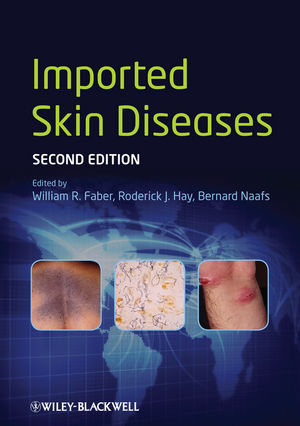
Imported Skin Diseases (eBook)
John Wiley & Sons (Verlag)
978-1-118-47265-1 (ISBN)
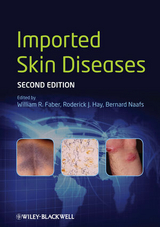
Global movement of people leads to the global movement of disease
International travel enables skin diseases to move around the world with increasing ease. Skin diseases transmitted through casual contact with people, animal vectors and a foreign environment are particularly prone to transport. Dermatologists need to recognize the signs and symptoms of disease not native to their environment to enable proper diagnosis and care.
Imported Skin Diseases provides a clinical guide to the foreign diseases increasingly seen in 'Western' clinics. With a focus on accurate diagnosis and effective therapy, the book covers:
- Differences between pigmented and non-pigmented skin
- Viral, bacterial and fungal Infections
- Parasitic infestations
- Sexually transmitted diseases
- Aquatic diseases
Written by an international team of experts, with practical tips throughout, Imported Skin Diseases prepares you for the unusual skin diseases you are increasingly likely to see in your clinic.
Professor William R. Faber, MD, PhD, Dermatovenereologist Studied Medicine at the?University of Leiden, thereafter medical officer in Uganda, and general practitioner in the Netherlands. Trained as a dermatovenereologist at the Binnengasthuis Amsterdam and thereafter consultant dermatologist at the Meander Medisch Centrum Amersfoort, and the Academic Medical Center (AMC) Amsterdam. At present Professor in Tropical Dermatology at the University of Amsterdam.
Professor Roderick J. Hay, DM FRCP FRCPATH, Professor Roderick Hay trained in dermatology at Guys Hospital, the St John's Institute of Dermatology, London and The London School of Hygiene and Tropical Medicine. He has been a consultant since 1979 working in St John's Hospital, Guys and St Thomas Hospitals, the Belfast Hospitals Trust and is currently based at Kings College Hospital.
He has been an honorary consultant to the Public Health Laboratory Service (HPA) and University College Hospital. He has also worked in the Centers for Disease Control, Atlanta, USA and in a number of other different countries overseas.
He chairs the International Foundation for Dermatology which provides a global network for skin health and has written books, scientific papers and chapters particularly on the subject of skin infection, nail disease, fungal infection, eczema and international health.
His clinical interests include general dermatology, infectious and tropical skin disease, fungal infections and related areas such as nail disorde.
Dr Bernard Naafs, MD PhD Dipl. TM&H Dermatovenereologist; Studied Medicine at the University of Utrecht, and Tropical Medicine and Hygiene at Royal Tropical Institute (KIT) Amsterdam, and trained as a dermatovenereologist at the Binnengasthuis, Amsterdam. His other appointments have?included: Head,?Clinical Research, All Africa Leprosy Rehabilitation and Training Centre (ALERT), Addis Ababa Ethiopia; Head, Leprosy Control Zimbabwe; Head OPD Department of Dermatology Dijkzigt Hospital Erasmus University Rotterdam;?and consultant dermatologist, IJsselmeerziekenhuizen Emmeloord/ Lelystad. At present he is a Consultant in Tropical Dermatology at the Leiden University Medical Center (LUMC) in the Netherlands and visiting professor at the Regional Dermatology Training Centre (RDTC) Moshi Tanzania and at the Instituto Lauro de Souza Lima (ILSL) Bauru SP Brazil.
Global movement of people leads to the global movement of disease International travel enables skin diseases to move around the world with increasing ease. Skin diseases transmitted through casual contact with people, animal vectors and a foreign environment are particularly prone to transport. Dermatologists need to recognize the signs and symptoms of disease not native to their environment to enable proper diagnosis and care. Imported Skin Diseases provides a clinical guide to the foreign diseases increasingly seen in Western clinics. With a focus on accurate diagnosis and effective therapy, the book covers: Differences between pigmented and non-pigmented skin Viral, bacterial and fungal Infections Parasitic infestations Sexually transmitted diseases Aquatic diseases Written by an international team of experts, with practical tips throughout, Imported Skin Diseases prepares you for the unusual skin diseases you are increasingly likely to see in your clinic.
Professor William R. Faber, MD, PhD, Dermatovenereologist Studied Medicine at the?University of Leiden, thereafter medical officer in Uganda, and general practitioner in the Netherlands. Trained as a dermatovenereologist at the Binnengasthuis Amsterdam and thereafter consultant dermatologist at the Meander Medisch Centrum Amersfoort, and the Academic Medical Center (AMC) Amsterdam. At present Professor in Tropical Dermatology at the University of Amsterdam. Professor Roderick J. Hay, DM FRCP FRCPATH, Professor Roderick Hay trained in dermatology at Guys Hospital, the St John's Institute of Dermatology, London and The London School of Hygiene and Tropical Medicine. He has been a consultant since 1979 working in St John's Hospital, Guys and St Thomas Hospitals, the Belfast Hospitals Trust and is currently based at Kings College Hospital. He has been an honorary consultant to the Public Health Laboratory Service (HPA) and University College Hospital. He has also worked in the Centers for Disease Control, Atlanta, USA and in a number of other different countries overseas. He chairs the International Foundation for Dermatology which provides a global network for skin health and has written books, scientific papers and chapters particularly on the subject of skin infection, nail disease, fungal infection, eczema and international health. His clinical interests include general dermatology, infectious and tropical skin disease, fungal infections and related areas such as nail disorde. Dr Bernard Naafs, MD PhD Dipl. TM&H Dermatovenereologist; Studied Medicine at the University of Utrecht, and Tropical Medicine and Hygiene at Royal Tropical Institute (KIT) Amsterdam, and trained as a dermatovenereologist at the Binnengasthuis, Amsterdam. His other appointments have?included: Head,?Clinical Research, All Africa Leprosy Rehabilitation and Training Centre (ALERT), Addis Ababa Ethiopia; Head, Leprosy Control Zimbabwe; Head OPD Department of Dermatology Dijkzigt Hospital Erasmus University Rotterdam;?and consultant dermatologist, IJsselmeerziekenhuizen Emmeloord/ Lelystad. At present he is a Consultant in Tropical Dermatology at the Leiden University Medical Center (LUMC) in the Netherlands and visiting professor at the Regional Dermatology Training Centre (RDTC) Moshi Tanzania and at the Instituto Lauro de Souza Lima (ILSL) Bauru SP Brazil.
Imported Skin Diseases 3
Contents 9
Contributors 11
CHAPTER 1 Introduction 15
References 17
CHAPTER 2 Precautions and Protection 18
Introduction 18
Sun exposure 19
Insects 20
References 21
CHAPTER 3 Pigmentary Disorders in Black Skin 22
Introduction 22
Normal variations in ethnic skin 23
Voigt’s or Futcher’s lines 23
Hyperpigmentation at the extensor side of the joints 23
Nail pigmentation 23
Familial periorbital hyperpigmentation 23
Oral pigmentation 24
Palmar and plantar hyperpigmentation 24
Mongolian spot 24
Abnormal hyper- and hypopigmentations 25
Nevus of Ota, nevus of Ito, and Hori nevus 25
Transient neonatal pustular melanosis 26
Ashy dermatosis 26
Dermatosis papulosa nigra 27
Pityriasis versicolor 28
Melasma 28
Postinflammatory hyperpigmentation 28
Postinflammatory hypopigmentation 29
Pityriasis alba 29
Idiopathic guttate hypomelanosis 29
Vitiligo 30
Melanoma 30
Progressive macular hypomelanosis 31
References 31
CHAPTER 4 Difference Between Pigmented and Nonpigmented Skin 33
Introduction 33
Erythema 35
Pigment changes 35
Cohesion 37
Keloid formation 38
Pigmentation and skin cancer 39
Pigmentation and immunity 40
Other differences 41
Hair 41
References 42
CHAPTER 5 Influence of the New Environment on the Skin 45
Introduction 46
Environment, adaptation, and skin disorders 46
Skin disorders in immigrants 48
Skin diseases due to physical environmental factors 48
Skin diseases related to biological and immunological factors 52
Skin diseases related to chemical agents 53
Skin disorders related to social and cultural factors 54
Skin disorders in tourists 55
Miliaria 55
Sunburn (dermatitis solaris) 56
References 57
CHAPTER 6 Fungal Infections 59
Introduction 60
Superficial mycoses 61
Subcutaneous mycoses 63
Sporotrichosis 63
Mycetoma (Maduromycosis, madura foot) 65
Chromoblastomycosis (chromomycosis) 68
Phaeohyphomycosis (Phaeomycotic cyst, cystic chromomycosis) 70
Other subcutaneous infections 70
Systemic mycoses 71
Histoplasmosis 71
References 76
CHAPTER 7 Mycobacterial Infections 78
Introduction 78
Tuberculosis 79
Introduction 79
Epidemiology 79
Clinical picture 80
Treatment 85
M. marinum infection (swimming pool granuloma) [2,3,9–11] 85
Introduction 85
Epidemiology 85
Clinical picture 85
Diagnosis 86
Treatment 86
M. fortuitum infections [2, 3,12] 87
Epidemiology 87
Clinical picture 87
M. chelonae infections [2–4,12] 87
Epidemiology 87
Clinical picture 87
Treatment 87
M. abscessus infections [2, 3,12–14] 87
Epidemiology 87
Clinical picture 88
Treatment 88
M. avium-intracellulare infections [2, 6] 88
Epidemiology 88
Clinical picture 88
M. szulgai infections [2] 88
Epidemiology 88
Clinical picture 88
M. kansasii infections [2, 3] 88
Epidemiology 88
Clinical picture 89
Mycobacterium hemophilum infections [2] 89
Epidemiology 89
Clinical picture 89
Treatment 89
General comments 90
Cutaneous mycobacterial infections and immune suppression 90
References 91
CHAPTER 8 Leprosy 93
Introduction 93
Epidemiology 94
Clinical spectrum 96
Diagnosis and classification 99
Laboratory tests 101
Diagnosis of reactions 102
Antimycobacterial treatment 103
Treatment of reactions [20, 24,25] 104
Rehabilitation 105
References 106
CHAPTER 9 Buruli Ulcer 108
Introduction 108
Epidemiology 109
Clinical picture 111
Infection versus disease 111
The disease 111
Scarring 115
Diagnosis 115
Clinical differential and diagnosis 115
Collection of clinical specimens for laboratory testing 115
Laboratory confirmation 116
Treatment 116
Prevention 117
Conclusion 118
References 118
CHAPTER 10 Ulcerating Pyodermas 121
Introduction 121
Epidemiology 122
Clinical aspect 123
Diagnosis 126
Treatment 126
References 127
CHAPTER 11 Rickettsioses 128
Introduction 128
The organism 129
Clinical manifestations 129
Diagnosis 129
Treatment 130
Prevention 130
Rickettsioses in travelers 130
Specific diseases 131
Typhus group 132
Epidemic, louse-borne typhus 132
Murine, endemic typhus 132
Spotted fever group 132
African tick bite fever 132
Mediterranean spotted fever 133
Rocky Mountain spotted fever 134
Scrub typhus 134
References 135
CHAPTER 12 Viral Diseases 137
Introduction 137
Chikungunya virus 138
Epidemiology 138
Clinical features 138
Diagnosis 138
Treatment 139
Dengue fever 139
Epidemiology 139
Clinical features 139
Diagnosis 139
Treatment 139
Yellow fever 141
Epidemiology 141
Clinical features 141
Diagnosis 141
Treatment 141
West Nile virus 142
Epidemiology 142
Clinical features 142
Diagnosis 142
Treatment 142
Hemorrhagic fevers 142
Ebola and Marburg 142
Lassa fever and the South American hemorrhagic fevers 143
Crimean-Congo hemorrhagic fever 144
Rift valley fever (RVF) 144
Hepatitis 145
Epidemiology 145
Herpes virus 149
Herpes simplex virus 1 and 2 149
Varicella zoster virus (VZV) 150
Epstein Barr virus (EBV) 151
Cytomegalovirus (CMV) 151
Human herpesvirus 6 (HHV-6) 152
Human herpesvirus 7 (HHV-7) 152
Human herpesvirus 8 (HHV-8) 152
Human immunodeficiency virus (HIV) 153
Epidemiology 153
Clinical features 153
Diagnosis 153
Treatment 154
Human T-cell lymphotrophic virus 154
Epidemiology 154
Clinical features 154
Diagnosis/treatment 154
Human papilloma virus (HPV) 154
Epidemiology 154
Clinical features 155
Diagnosis 155
Treatment 155
Measles 155
Epidemiology 155
Clinical features 157
Diagnosis/treatment 157
Parvovirus B19 157
Clinical features 157
Diagnosis 157
Treatment 157
Pox virus 157
Smallpox 158
Vaccinia/cowpox/monkeypox 158
Orf Disease 159
Rubella 159
Epidemiology 159
Clinical features 159
Diagnosis 160
Treatment 160
References 160
CHAPTER 13 Sexually Transmitted Infections 163
Introduction 164
Historical allusions 164
Human immunodeficiency virus (HIV) epidemic 164
Men who have sex with men (MSM) 164
The importance of STIs in visitors 165
Publicity 165
Prophylaxis 165
Risky groups 165
Practicalities of managing STIs as imported skin disease 166
Reasons 166
Key section advice for clinicians 167
Who should be screened? 167
Recent trends 170
Africa 170
Antimicrobial resistance in N. gonorrhoeae [27] 171
LGV and MSM [31,32] 171
Chlamydia among backpackers 172
World Health Organization STI Diagnostic Initiative (SDI) 172
Take-home message 173
References 173
CHAPTER 14 Endemic Treponematoses 176
Introduction 176
Clinical picture 177
Yaws 178
Endemic syphilis 179
Pinta 179
Laboratory tests 181
Treatment 182
Conclusion 182
References 183
CHAPTER 15 American Tegumentary Leishmaniasis 185
Introduction 185
Epidemiology 186
Etiology and pathogenesis 186
Immunological response 188
Clinical features 190
Localized cutaneous leishmaniasis 190
Mucocutaneous leishmaniasis 192
Anergic diffuse cutaneous leishmaniasis 193
Disseminated cutaneous leishmaniasis 194
American tegumentary leishmaniasis and HIV coinfection 195
Differential diagnosis 196
Diagnosis 197
Prophylaxis 198
Treatment 199
Further reading 200
CHAPTER 16 Leishmaniasis: Old World 203
Introduction 203
L. major 204
L. tropica 205
L. aethiopica 205
L. d. donovani and L. d. infantum 206
PKDL 207
Epidemiology, geographic distribution, etiology, and mode of infection in OWCL 208
Localized cutaneous simple leishmaniasis 210
Disseminated and complex cutaneous leishmaniasis 211
Lupoid or recidivans leishmaniasis 212
Diffuse cutaneous anergic leishmaniasis 212
PKDL 213
Differential clinical diagnosis 213
Diagnostic procedures 213
Treatment 215
Prevention 217
References 217
CHAPTER 17 Onchocerciasis/Filariasis 219
General 219
Introduction 219
Epidemiology 221
Mode of infection 222
Clinical picture 223
Onchocerciasis 223
Clinical picture 223
Diagnostic procedures 227
Treatment 229
Prevention 230
Lymphatic filariasis 231
Introduction 231
Clinical picture 231
Diagnostic procedures 232
Treatment 233
Prevention 234
Loiasis 235
Clinical picture 235
Diagnostic procedures 236
Treatment 236
Prevention 237
Mansonelliasis 237
Clinical picture 237
Diagnostic procedures 237
Treatment 237
References 237
CHAPTER 18 Schistosomiasis 240
Introduction 240
Life cycle and epidemiology 241
Clinical features 241
Diagnosis 242
Skin manifestations 242
Cercarial dermatitis 242
Urticarial reactions during the Katayama syndrome 244
Ectopic schistosomiasis 244
Genital schistosomiasis 245
Treatment 246
References 247
CHAPTER 19 Tungiasis 248
Introduction 248
Epidemiology: geographic distribution, mode of infection 249
Clinical picture 250
Diagnosis 253
Treatment and prevention 255
Key features 255
References 255
CHAPTER 20 Cutaneous Larva Migrans 257
Introduction 257
Epidemiology: geographic distribution, mode of transmission 258
Clinical picture 259
Diagnosis 262
Treatment and prevention 263
References 264
CHAPTER 21 Myiasis 266
Introduction 266
Pathogenesis 267
Calliphoridae (metallic flies) 267
Other genera 268
Sarcophagidae (flesh flies) 268
Oestridae 269
Muscidae 272
Clinical features 272
Diagnosis 273
Treatment 273
References 276
CHAPTER 22 Persistent Insect Bites 278
Introduction 278
Epidemiology 279
Pathogenesis 279
Clinical picture 281
Histopathology 283
Treatment and prevention 284
References 285
CHAPTER 23 Beetle Dermatitis 287
Introduction 287
Epidemiology and geographic distribution of beetles inducing skin reactions 289
Meloidae 289
Oedemeridae 289
Staphylinidae 289
Adephagan beetles 290
Pathomechanisms and clinical appearance of beetle dermatitis 291
Meloidae, Oedemeridae 292
Staphylinidae 293
Diagnostic procedures 294
Differential diagnosis 294
Prevention and treatment 294
References 295
CHAPTER 24 Aquatic Skin Disorders 297
Introduction 297
Cnidarian envenomations 298
Systemic reactions 300
Treatment 300
Sponge dermatitis 301
Seaweed dermatitis 302
Primary infections 302
Cercarial dermatitis (“swimmer’s itch”) 302
Sea bather’s eruption 302
Secondary infections 303
Venomous and nonvenomous fish stings and wounds 304
Sting rays 304
Barracudas (Sphyraena spp.) and moray eels 304
Echinoderm (sea urchins, star fish) injuries 304
References 306
Further reading 306
CHAPTER 25 Geographic Distribution 307
CHAPTER 26 Clinical Problems 310
Index 313
| Erscheint lt. Verlag | 20.11.2012 |
|---|---|
| Sprache | englisch |
| Themenwelt | Medizin / Pharmazie ► Medizinische Fachgebiete ► Dermatologie |
| Schlagworte | Casual • Center • College • Contact • De • Dermatologie • Dermatology • Disease • Diseases • diseases transmitted • DM • enables • global movement • Hay • infectious disease • Infektionskrankheiten • instituto • international • Lauro • Leads • Lima • MD • Medical Science • Medizin • Netherlands • People • rdtc • regional • Reise- u. Tropenmedizin • Roderick • Skin • Training • Travel • Travel / Tropical Medicine |
| ISBN-10 | 1-118-47265-9 / 1118472659 |
| ISBN-13 | 978-1-118-47265-1 / 9781118472651 |
| Informationen gemäß Produktsicherheitsverordnung (GPSR) | |
| Haben Sie eine Frage zum Produkt? |
 PDF (Adobe DRM)
Kopierschutz: Adobe-DRM
Adobe-DRM ist ein Kopierschutz, der das eBook vor Mißbrauch schützen soll. Dabei wird das eBook bereits beim Download auf Ihre persönliche Adobe-ID autorisiert. Lesen können Sie das eBook dann nur auf den Geräten, welche ebenfalls auf Ihre Adobe-ID registriert sind.
Details zum Adobe-DRM
Dateiformat: PDF (Portable Document Format)
Mit einem festen Seitenlayout eignet sich die PDF besonders für Fachbücher mit Spalten, Tabellen und Abbildungen. Eine PDF kann auf fast allen Geräten angezeigt werden, ist aber für kleine Displays (Smartphone, eReader) nur eingeschränkt geeignet.
Systemvoraussetzungen:
PC/Mac: Mit einem PC oder Mac können Sie dieses eBook lesen. Sie benötigen eine
eReader: Dieses eBook kann mit (fast) allen eBook-Readern gelesen werden. Mit dem amazon-Kindle ist es aber nicht kompatibel.
Smartphone/Tablet: Egal ob Apple oder Android, dieses eBook können Sie lesen. Sie benötigen eine
Geräteliste und zusätzliche Hinweise
Buying eBooks from abroad
For tax law reasons we can sell eBooks just within Germany and Switzerland. Regrettably we cannot fulfill eBook-orders from other countries.
aus dem Bereich