Clinical Endocrinology of Companion Animals (eBook)
John Wiley & Sons (Verlag)
978-1-118-44489-4 (ISBN)
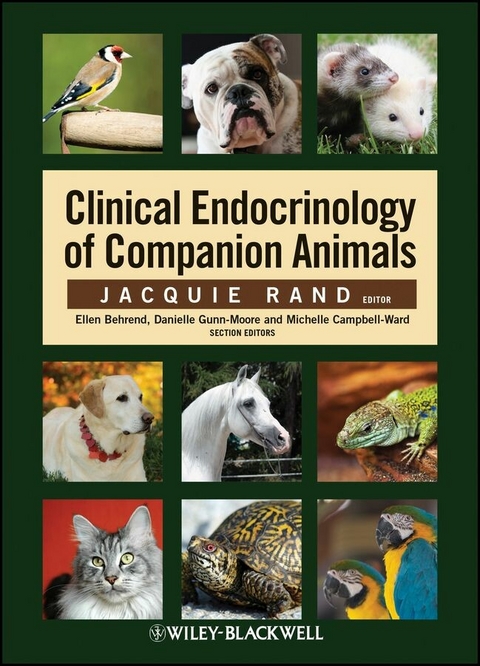
Clinical Endocrinology of Companion Animals offers fast access to clinically relevant information on managing the patient with endocrine disease. Written by leading experts in veterinary endocrinology, each chapter takes the same structure to aid in the rapid retrieval of information, offering information on pathogenesis, signalment, clinical signs, diagnosis, differential diagnosis, treatment, prognosis, and prevention for a broad list of endocrine disorders. Chapters begin with brief summaries for quick reference, then delve into greater detail.
With complete coverage of the most common endocrine diseases, the book includes chapters on conditions in dogs, cats, horses, ferrets, reptiles, and other species. Clinical Endocrinology of Companion Animals is a highly practical resource for any veterinarian treating these common diseases.
Jacquie Rand, BSVc, DVSc, MACVS, DACVIM, is Professor of Companion Animal Health at the University of Queensland, Australia. She is also Director of the Centre for Companion Animal Health.
Ellen Behrend, VMD, PhD, DACVIM, is Joezy Griffin Professor in Internal Medicine at Auburn University College of Veterinary Medicine.
Danielle Gunn-Moore, BSc, BVM&S, PhD, FHEA, MACVSc, MRCVS, RCVS Specialist in Feline Medicine, is Professor of Feline Medicine and Head of Companion Animal Sciences at the University of Edinburgh.
Michelle Campbell-Ward, BSc, BVSc(Hons I), DZooMed(Mammalian), MRCVS, RCVS Specialist in Zoo and Wildlife Medicine, is Veterinarian at Taronga Western Plains Zoo, Australia.
Clinical Endocrinology of Companion Animals offers fast access to clinically relevant information on managing the patient with endocrine disease. Written by leading experts in veterinary endocrinology, each chapter takes the same structure to aid in the rapid retrieval of information, offering information on pathogenesis, signalment, clinical signs, diagnosis, differential diagnosis, treatment, prognosis, and prevention for a broad list of endocrine disorders. Chapters begin with brief summaries for quick reference, then delve into greater detail. With complete coverage of the most common endocrine diseases, the book includes chapters on conditions in dogs, cats, horses, ferrets, reptiles, and other species. Clinical Endocrinology of Companion Animals is a highly practical resource for any veterinarian treating these common diseases.
Jacquie Rand, BSVc, DVSc, MACVS, DACVIM, is Professor of Companion Animal Health at the University of Queensland, Australia. She is also Director of the Centre for Companion Animal Health. Ellen Behrend, VMD, PhD, DACVIM, is Joezy Griffin Professor in Internal Medicine at Auburn University College of Veterinary Medicine. Danielle Gunn-Moore, BSc, BVM&S, PhD, FHEA, MACVSc, MRCVS, RCVS Specialist in Feline Medicine, is Professor of Feline Medicine and Head of Companion Animal Sciences at the University of Edinburgh. Michelle Campbell-Ward, BSc, BVSc(Hons I), DZooMed(Mammalian), MRCVS, RCVS Specialist in Zoo and Wildlife Medicine, is Veterinarian at Taronga Western Plains Zoo, Australia.
Clinical Endocrinology of Companion Animals 5
Copyright 6
Contents 9
Contributors 12
Preface 17
1 Hypoadrenocorticism in Dogs 19
I. Pathogenesis 19
II. Signalment 22
III. Clinical Signs 23
IV. Diagnosis 25
V. Differential Diagnoses 32
VI. Treatment 34
VII. Prognosis 38
VIII. Prevention 38
2 Hypoadrenocorticism in Cats 40
I. Pathogenesis 40
II. Signalment 42
III. Clinical Signs 42
IV. Diagnosis 42
V. Differential Diagnosis 44
VI. Treatment 44
VII. Prognosis 44
VIII. Prevention 44
3 Hypoadrenocorticism in Other Species 46
Hypoadrenocorticism in Horses 46
I. Pathogenesis 46
II. Signalment 48
III. Clinical Signs 48
IV. Diagnosis 48
V. Differential Diagnosis 49
VI. Treatment 49
VII. Prognosis 49
VIII. Prevention 49
Hypoadrenocorticism in Ferrets 50
I. Pathogenesis 50
II. Signalment 50
III. Clinical Signs 50
IV. Diagnosis 50
V. Differential Diagnosis 50
VI. Treatment 50
VII. Prognosis 51
VIII. Prevention 51
Hypoadrenocorticism in Pet Birds 51
I. Pathogenesis 51
II. Signalment 51
III. Clinical Signs 51
IV. Diagnosis 51
V. Differential Diagnosis 52
VI. Treatment 52
VII. Prognosis 52
VIII. Prevention 52
4 Critical Illness-Related Corticosteroid Insufficiency (Previously Known as Relative Adrenal Insufficiency) 54
I. Pathogenesis 55
II. Signalment 56
III. Clinical Signs 56
IV. Diagnosis 56
V. Differential Diagnosis 58
VI. Treatment 59
VII. Prognosis 59
VIII. Prevention 60
5 Hyperadrenocorticism in Dogs 61
I. Pathogenesis 62
II. Signalment 62
III. Clinical Signs 63
IV. Diagnosis 66
V. Differential Diagnoses 71
VI. Treatment 71
VII. Prognosis 81
VIII. Prevention 82
6 Primary Functioning Adrenal Tumors Producing Signs Similar to Hyperadrenocorticism Including Atypical Syndromes in Dogs 83
I. Pathogenesis 84
II. Signalment 85
III. Clinical Signs 85
IV. Diagnosis 85
V. Differential Diagnosis 86
VI. Treatment 86
VII. Prognosis 87
VIII. Prevention 87
7 Hyperadrenocorticism in Cats 89
I. Pathogenesis 89
II. Signalment 90
III. Clinical Signs 90
IV. Diagnosis 91
V. Differential Diagnoses 94
VI. Treatment 94
VII. Prognosis 95
VIII. Prevention 96
8 Primary Functioning Adrenal Tumors Producing Signs Similar to Hyperadrenocorticism Including Atypical Syndromes in Cats 98
I. Pathogenesis 98
II. Signalment 101
III. Clinical Signs 101
IV. Diagnosis 101
V. Differential Diagnoses 102
VI. Treatment 102
VII. Prognosis 103
VIII. Prevention 103
9 Hyperadrenocorticism in Ferrets 104
I. Pathogenesis 104
II. Signalment 106
III. Clinical Signs 106
IV. Diagnosis 107
V. Differential Diagnoses 108
VI. Treatment 109
VII. Prognosis 111
VIII. Prevention 112
10 Hyperadrenocorticism and Primary Functioning Adrenal Tumors in Other Species (Excluding Horses and Ferrets) 113
I. Pathogenesis 114
II. Signalment 114
III. Clinical Signs 114
IV. Diagnosis 115
V. Differential Diagnoses 116
VI. Treatment 116
VII. Prognosis 116
VIII. Prevention 116
11 Hyperadrenocorticism (Pituitary Pars Intermedia Dysfunction) in Horses 118
I. Pathogenesis 119
II. Signalment 121
III. Clinical Signs 122
IV. Diagnosis 125
V. Differential Diagnoses 127
VI. Treatment 127
VII. Prognosis 129
VIII. Prevention 130
12 Primary Hyperaldosteronism 133
Hyperaldosteronism 133
I. Pathogenesis 134
II. Signalment 135
III. Clinical Signs 135
IV. Diagnosis—Laboratory Assessment and Diagnostic Imaging 137
V. Differential Diagnoses 141
VI. Treatment 143
VII. Prognosis 144
VIII. Prevention 144
Hyperaldosteronism in Other Species 144
13 Pheochromocytoma in Dogs 146
I. Pathogenesis 146
II. Signalment 147
III. Clinical Signs 147
IV. Diagnosis 149
V. Differential Diagnoses 152
VI. Treatment 153
VII. Prognosis 153
VIII. Prevention 153
14 Pheochromocytoma in Cats 155
I. Pathogenesis 155
II. Signalment 156
III. Clinical Signs 157
IV. Diagnosis 157
V. Differential Diagnosis 159
VI. Treatment 159
VII. Prognosis 159
VIII. Prevention 160
15 Canine Diabetes Mellitus 161
I. Pathogenesis 162
II. Signalment 163
III. Clinical Signs 163
IV. Diagnosis 164
V. Differential Diagnoses 165
VI. Treatment 165
VII. Prognosis 183
VIII. Prevention 186
16 Feline Diabetes Mellitus 187
I. Pathogenesis 187
II. Signalment 191
III. Clinical Signs 191
IV. Diagnosis 192
V. Differential Diagnoses 192
VI. Treatment 193
VII. Prognosis 207
VIII. Prevention 207
17 Diabetes Mellitus in Other Species 209
Diabetes Mellitus in Horses 209
I. Pathogenesis 209
II. Signalment 210
III. Clinical Signs 210
IV. Diagnosis 210
V. Differential Diagnoses 211
VI. Treatment 211
VII. Prognosis 211
VIII. Prevention 211
Diabetes Mellitus in Ferrets, Rabbits, and Rodents 212
I. Pathogenesis 212
II. Signalment 212
III. Clinical Signs 213
IV. Diagnosis 213
V. Differential Diagnoses 214
VI. Treatment 214
VII. Prognosis 215
VIII. Prevention 215
Diabetes Mellitus in Pet Birds and Reptiles 215
I. Pathogenesis 215
II. Signalment 216
III. Clinical Signs 216
IV. Diagnosis 216
V. Differential Diagnoses 216
VI. Treatment 217
VII. Prognosis 218
VIII. Prevention 218
18 Canine Diabetic Emergencies 219
I. Pathogenesis 220
II. Signalment 221
III. Clinical Signs 221
IV. Diagnosis 221
V. Differential Diagnoses 223
VI. Treatment 223
VII. Prognosis and Prevention 225
19 Feline Diabetic Ketoacidosis 227
I. Pathogenesis 227
II. Signalment 229
III. Clinical Signs 229
IV. Diagnosis 229
V. Differential Diagnoses 230
VI. Treatment 230
VII. Prognosis 233
VIII. Prevention 233
20 Equine Metabolic Syndrome/Insulin Resistance Syndrome in Horses 235
I. Pathogenesis 236
II. Signalment 238
III. Clinical Signs 238
IV. Diagnosis 240
V. Differential Diagnoses 243
VI. Treatment 243
VII. Prognosis 245
VIII. Prevention 245
21 Insulinoma in Dogs 247
I. Pathogenesis 248
II. Signalment 249
III. Clinical Signs 249
IV. Diagnosis 250
V. Differential Diagnoses 252
VI. Treatment 254
VII. Prognosis 256
VIII. Prevention 256
22 Insulinoma in Cats 258
I. Pathogenesis 258
II. Signalment 259
III. Clinical Signs 259
IV. Diagnosis 259
V. Differential Diagnoses 260
VI. Treatment 261
VII. Prognosis 262
VIII. Prevention 262
23 Insulinomas in Other Species 263
I. Pathogenesis 264
II. Signalment 264
III. Clinical Signs 264
IV. Diagnosis 264
V. Differential Diagnoses 265
VI. Treatment 266
VII. Prognosis 269
VIII. Prevention 269
24 Gastrinoma, Glucagonoma, and Other APUDomas 271
I. Pathogenesis 272
II. Signalment 275
III. Clinical Signs 275
IV. Diagnosis 276
V. Differential Diagnoses 277
VI. Treatment 278
VII. Prognosis 279
VIII. Prevention 279
25 Hypothyroidism in Dogs 281
I. Pathogenesis 281
II. Signalment 282
III. Clinical Signs 282
IV. Differential Diagnoses 285
V. Diagnosis 286
VI. Treatment 288
VII. Prognosis 290
VIII. Prevention 290
26 Hypothyroidism in Cats 291
I. Pathogenesis 291
II. Signalment 292
III. Clinical Signs 292
IV. Diagnosis 293
V. Differential Diagnoses 294
VI. Treatment 294
VII. Prognosis 294
VIII. Prevention 294
27 Hypothyroidism in Other Species 296
Hypothyroidism in Foals 296
I. Pathogenesis 296
II. Signalment 297
III. Clinical Signs 297
IV. Diagnosis 297
V. Differential Diagnoses 298
VI. Treatment 298
VII. Prognosis 298
VIII. Prevention 298
Hypothyroidism in Adult Horses 299
I. Pathogenesis 299
II. Signalment 300
III. Clinical Signs 300
IV. Diagnosis 300
V. Differential Diagnoses 301
VI. Treatment 302
VII. Prognosis 302
VIII. Prevention 303
Hypothyroidism in Ferrets, Rabbits, and Rodents 303
I. Pathogenesis 303
II. Signalment 303
III. Clinical Signs 303
IV. Diagnosis 303
V. Differential Diagnoses 304
VI. Treatment 304
VII. Prognosis 304
VIII. Prevention 304
Hypothyroidism in Pet Birds 305
I. Pathogenesis 305
II. Signalment 305
III. Clinical Signs 305
IV. Diagnosis 305
V. Differential Diagnoses 306
VI. Treatment 306
VII. Prognosis 306
VIII. Prevention 306
Hypothyroidism in Pet Reptiles 306
I. Pathogenesis 307
II. Signalment 307
III. Clinical Signs 307
IV. Diagnosis 307
V. Differential Diagnoses 307
VI. Treatment 308
VII. Prognosis 308
VIII. Prevention 308
28 Hyperthyroidism in Dogs 309
I. Pathogenesis 309
II. Signalment 310
III. Clinical Signs 310
IV. Diagnosis 310
V. Differential Diagnoses 311
VI. Treatment 311
VII. Prognosis 312
VIII. Prevention 312
29 Hyperthyroidism in Cats 313
I. Pathogenesis 313
II. Signalment 314
III. Clinical Signs 314
IV. Diagnosis 316
V. Differential Diagnoses 320
VI. Treatment 320
VII. Prognosis 328
VIII. Prevention 328
30 Hyperthyroidism/Thyroid Neoplasia in Other Species 329
I. Pathogenesis 329
II. Signalment 330
III. Clinical Signs 330
IV. Diagnosis 331
V. Differential Diagnoses 331
VI. Treatment 331
VII. Prognosis 331
VIII. Prevention 331
31 Hypocalcemia in Dogs 333
I. Pathogenesis 334
II. Signalment 336
III. Clinical Signs 336
IV. Diagnosis 337
V. Differential Diagnosis 340
VI. Treatment 340
VII. Prognosis 342
VIII. Prevention 343
32 Hypocalcemia in Cats 344
I. Pathogenesis 345
II. Signalment 346
III. Clinical Signs 346
IV. Diagnosis 347
V. Differential Diagnosis 350
VI. Treatment 350
VII. Prognosis 351
VIII. Prevention 352
33 Hypocalcemia in Other Species 353
Hypocalcemia in Horses 353
I. Pathogenesis 353
II. Signalment 355
III. Clinical Signs 355
IV. Diagnosis 356
V. Differential Diagnoses 356
VI. Treatment 356
VII. Prognosis 357
VIII. Prevention 357
Hypocalcemia in Ferrets, Rabbits, and Rodents 357
I. Pathogenesis 357
II. Signalment 357
III. Clinical Signs 357
IV. Diagnosis 358
V. Differential Diagnoses 358
VI. Treatment 358
VII. Prognosis 358
VIII. Prevention 358
Hypocalcemia in Pet Birds 359
I. Pathogenesis 359
II. Signalment 363
III. Clinical Signs 365
IV. Diagnosis 365
V. Differential Diagnoses 367
VI. Treatment 368
VII. Prognosis 368
VIII. Prevention 368
Hypocalcemia in Pet Reptiles 369
I. Pathogenesis 369
II. Signalment 369
III. Clinical Signs 369
IV. Diagnosis 369
V. Differential Diagnoses 369
VI. Treatment 370
VII. Prognosis 370
VIII. Prevention 370
34 Hypercalcemia in Dogs 374
I. Pathogenesis 375
II. Signalment 379
III. Clinical Signs 379
IV. Diagnosis 379
V. Differential Diagnoses 381
VI. Treatment 385
VII. Prognosis 389
VIII. Prevention 389
35 Hypercalcemia in Cats 391
I. Pathogenesis 392
II. Signalment 394
III. Clinical Signs 394
IV. Diagnosis 395
V. Differential Diagnoses 395
VI. Treatment 398
VII. Prognosis 402
VIII. Prevention 402
36 Hypercalcemia in Other Species 403
Hypercalcemia in Horses 403
I. Pathogenesis 403
II. Signalment 405
III. Clinical Signs 405
IV. Diagnosis 405
V. Differential Diagnoses 407
VI. Treatment 407
VII. Prognosis 408
VIII. Prevention 408
Hypercalcemia in Rabbits 408
I. Pathogenesis 408
II. Signalment 409
III. Clinical Signs 409
IV. Diagnosis 409
V. Differential Diagnoses 409
VI. Treatment 409
VII. Prognosis 410
VIII. Prevention 410
Hypercalcemia in Pet Birds and Reptiles 410
I. Pathogenesis 410
II. Signalment 411
III. Clinical Signs 411
IV. Diagnosis 411
V. Differential Diagnoses 411
VI. Treatment 411
VII. Prognosis 411
VIII. Prevention 411
37 Nutritional Secondary Hyperparathyroidism in Reptiles 414
I. Pathogenesis 415
II. Signalment 415
III. Clinical Signs 415
IV. Diagnosis 416
V. Differential Diagnoses 418
VI. Treatment 418
VII. Prognosis 421
VIII. Prevention 421
38 Hyposomatotropism in Dogs 422
I. Pathogenesis 423
II. Signalment 423
III. Clinical Signs 424
IV. Diagnosis 425
V. Differential Diagnoses 430
VI. Treatment 430
VII. Prognosis 432
VIII. Prevention 432
39 Hyposomatotropism in Cats 434
I. Pathogenesis 434
II. Signalment 435
III. Clinical Signs 435
IV. Diagnosis 436
V. Differential Diagnoses 436
VI. Treatment 437
VII. Prognosis 437
VIII. Prevention 437
40 Acromegaly in Dogs 439
I. Pathogenesis 440
II. Signalment 441
III. Clinical Signs 441
IV. Diagnosis 441
V. Differential Diagnoses 442
VI. Treatment 442
VII. Prognosis 443
VIII. Prevention 443
41 Acromegaly in Cats 445
I. Pathogenesis 445
II. Signalment 446
III. Clinical Signs 447
IV. Diagnosis 449
V. Differential Diagnoses 449
VI. Treatment 450
VII. Prognosis 453
VIII. Prevention 453
42 Diabetes Insipidus and Polyuria/Polydipsia in Dogs 454
I. Pathogenesis 455
II. Signalment 456
III. Clinical Signs 456
IV. Diagnosis 459
V. Differential Diagnoses 464
VI. Treatment 465
VII. Prognosis 466
VIII. Prevention 466
43 Diabetes Insipidus in Cats 468
I. Pathogenesis 469
II. Signalment 470
III. Clinical Signs 470
IV. Diagnosis 470
V. Differential Diagnoses 473
VI. Treatment 474
VII. Prognosis 474
VIII. Prevention 474
44 Hyponatremia, SIADH, and Renal Salt Wasting 476
I. Pathogenesis 477
II. Signalment 480
III. Clinical Signs 480
IV. Diagnosis 480
V. Differential Diagnoses 482
VI. Treatment 482
VII. Prognosis 484
VIII. Prevention 484
45 Estrogen- and Androgen-Related Disorders 485
Unique Considerations for Correct Assessment of Sex Hormone Excess or Deficiency 485
Estrogen-Related Disorders 486
I. Pathogenesis (General) 486
Hyperestrogenism 487
I. Pathogenesis 487
II. Signalment 488
III. Clinical Signs 488
IV. Diagnosis 489
V. Differential Diagnoses 490
VI. Treatment 491
VII. Prognosis 491
VIII. Prevention 492
Vaginal Hyperplasia-Prolapse 492
I. Pathogenesis 492
II. Signalment 493
III. Clinical Signs 493
IV. Diagnosis 493
V. Differential Diagnoses 493
VI. Treatment 494
VII. Prognosis 494
VIII. Prevention 494
Mammary Neoplasia 494
I. Pathogenesis 494
II. Signalment 495
III. Clinical Signs 495
IV. Diagnosis 495
V. Differential Diagnoses 495
VI. Treatment 495
VII. Prognosis 496
VIII. Prevention 496
Androgen-Related Disorders 496
I. Pathogenesis (General) 496
Benign Prostatic Hyperplasia (BPH) 496
I. Pathogenesis 497
II. Signalment 497
III. Clinical Signs 497
IV. Diagnosis 497
V. Differential Diagnoses 498
VI. Treatment 498
VII. Prognosis 498
VIII. Prevention 498
Perineal Hernia 499
I. Pathogenesis 499
II. Signalment 499
III. Clinical Signs 499
IV. Diagnosis 499
V. Differential Diagnoses 499
VI. Treatment 499
VII. Prognosis 500
VIII. Prevention 500
Perineal Adenomas 500
I. Pathogenesis 500
II. Signalment 500
III. Clinical Signs 500
IV. Diagnosis 500
V. Differential Diagnoses 500
VI. Treatment 500
VII. Prognosis 501
VIII. Prevention 501
Relative Deficiency Of Estrogen And Other Sex Hormones 501
I. Pathogenesis 501
II. Signalment 502
III. Clinical Signs 502
IV. Diagnosis 503
V. Differential Diagnoses 503
VI. Treatment 503
VII. Prognosis 504
VIII. Prevention 504
46 Progesterone and Prolactin-Related Disorders Adrenal Dysfunction and Sex Hormones
Progesterone-Related Disorders 505
I. Pathogenesis (General) 505
II. Diagnosis (General) 506
Undue Response to Progesterone 506
Pyometra 506
I. Pathogenesis 507
II. Signalment 508
III. Clinical Signs 508
IV. Diagnosis 508
V. Differential Diagnoses 509
VI. Treatment 509
VII. Prognosis 510
VIII. Prevention 511
Mammary Hyperplasia in Cats 511
I. Pathogenesis 512
II. Signalment 512
III. Clinical Signs 512
IV. Diagnosis 512
V. Differential Diagnoses 512
VI. Treatment 514
VII. Prognosis 514
VIII. Prevention 514
Other Undue Responses to Progesterone 514
Progesterone Deficiency 515
I. Pathogenesis 515
II. Signalment 516
III. Clinical Signs 516
IV. Diagnosis 516
V. Differential Diagnoses 516
VI. Treatment 516
VII. Prognosis 517
VIII. Prevention 517
Prolactin 517
I. Pathogenesis (General) 517
Galactorrhea (or so-called False Pregnancy) 518
I. Pathogenesis 518
II. Signalment 518
III. Clinical Signs 519
IV. Diagnosis 519
V. Differential Diagnoses 519
VI. Treatment 519
VII. Prognosis 519
VIII. Prevention 519
Sex Hormones and Adrenal Hyperplasia or Neoplasia 519
I. Pathophysiology 519
47 Pathologic Reproductive Endocrinology in Other Species 522
Granulosa-Theca Cell Tumor in the Mare (GTCT) 522
I. Pathogenesis 522
II. Signalment 522
III. Clinical Signs 523
IV. Diagnosis 523
V. Differential Diagnoses 524
VI. Treatment 524
VII. Prognosis 524
VIII. Prevention 524
Cystic Ovarian Disease in Rodents 524
I. Pathogenesis 525
II. Signalment 525
III. Clinical Signs 525
IV. Diagnosis 525
V. Differential Diagnoses 525
VI. Treatment 526
VII. Prognosis 526
VIII. Prevention 526
Follicular Stasis in Pet Reptiles 526
I. Pathogenesis 527
II. Signalment 527
III. Clinical Signs 527
IV. Diagnosis 527
V. Differential Diagnoses 527
VI. Treatment 527
VII. Prognosis 528
VIII. Prevention 528
Index 530
"The chapters have been written by a panel of
internationally renowned authors, presenting the latest knowledge
and treatment guidelines. It is therefore not only designed for the
general practitioner needing help in the busy daily practice, but
also for specialists in internal medicine."
(Veterinary Record, 10 August 2013)
"A practical tool for the busy practitioner."
(Vets Today, 1 June 2013)
| Erscheint lt. Verlag | 5.11.2012 |
|---|---|
| Sprache | englisch |
| Themenwelt | Medizin / Pharmazie |
| Veterinärmedizin | |
| Schlagworte | ACCESS • animals • Clinical • clinically • Companion • Disease • endocrine • endocrinology • Endokrinologie • Experts • Fast • Information • leading • Offers • pathogenesis • Patient • rapid retrieval • relevant • Structure • Veterinärmedizin • Veterinärmedizin f. Kleintiere • Veterinärmedizin f. Pferde • Veterinärmedizin / Innere Medizin • Veterinärmedizin • Veterinärmedizin f. Kleintiere • Veterinärmedizin f. Pferde • Veterinärmedizin / Innere Medizin • Veterinary • Veterinary Internal Medicine • Veterinary Medicine • Veterinary Medicine - Equine • Veterinary Medicine - Small Animal General |
| ISBN-10 | 1-118-44489-2 / 1118444892 |
| ISBN-13 | 978-1-118-44489-4 / 9781118444894 |
| Informationen gemäß Produktsicherheitsverordnung (GPSR) | |
| Haben Sie eine Frage zum Produkt? |
 PDF (Adobe DRM)
Kopierschutz: Adobe-DRM
Adobe-DRM ist ein Kopierschutz, der das eBook vor Mißbrauch schützen soll. Dabei wird das eBook bereits beim Download auf Ihre persönliche Adobe-ID autorisiert. Lesen können Sie das eBook dann nur auf den Geräten, welche ebenfalls auf Ihre Adobe-ID registriert sind.
Details zum Adobe-DRM
Dateiformat: PDF (Portable Document Format)
Mit einem festen Seitenlayout eignet sich die PDF besonders für Fachbücher mit Spalten, Tabellen und Abbildungen. Eine PDF kann auf fast allen Geräten angezeigt werden, ist aber für kleine Displays (Smartphone, eReader) nur eingeschränkt geeignet.
Systemvoraussetzungen:
PC/Mac: Mit einem PC oder Mac können Sie dieses eBook lesen. Sie benötigen eine
eReader: Dieses eBook kann mit (fast) allen eBook-Readern gelesen werden. Mit dem amazon-Kindle ist es aber nicht kompatibel.
Smartphone/Tablet: Egal ob Apple oder Android, dieses eBook können Sie lesen. Sie benötigen eine
Geräteliste und zusätzliche Hinweise
Buying eBooks from abroad
For tax law reasons we can sell eBooks just within Germany and Switzerland. Regrettably we cannot fulfill eBook-orders from other countries.
aus dem Bereich