Editor James Segars, MD, Head, Unit on Reproductive Endocrinology and Infertility, NICHD, NIH, Bethesda, MD, USA.
Series Editor Aydin Arici, MD, Yale University School of Medicine, New Haven, CT, USA.
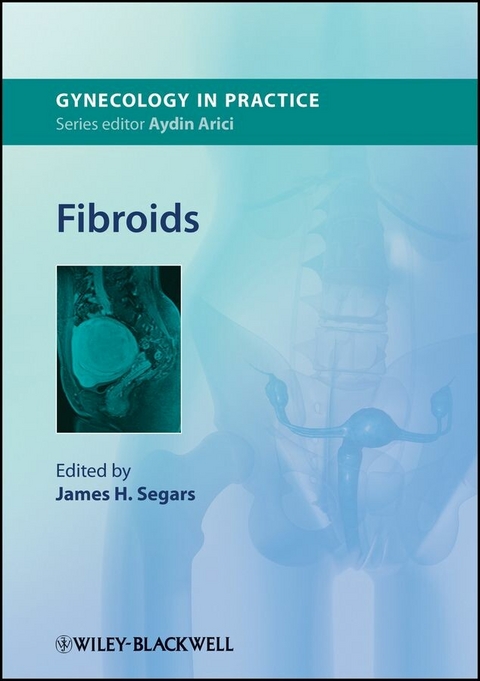
Fibroids are benign growths of the uterus. They are the most common tumours found in women (20-30% of women), usually in later reproductive years. This book covers evidence-based indications for treatment of uterine fibroids in gynecology, the management of fibroids in pregnancy, surgical treatments and outcomes, rare fibroid syndromes, and more.
Editor James Segars, MD, Head, Unit on Reproductive Endocrinology and Infertility, NICHD, NIH, Bethesda, MD, USA. Series Editor Aydin Arici, MD, Yale University School of Medicine, New Haven, CT, USA.
Fibroids 5
Copyright 6
Contents 7
Contributors 9
Series Foreword 11
Preface 13
1 Understanding Uterine Fibroids 15
Introduction 15
Fibroid etiology and pathophysiology 15
Genetics 16
Growth factors 16
The role of sex steroids 17
Myometrial hyperplasia: a possible precursor to fibroids 18
Fibroid growth 18
Classification of fibroids 18
Pathology of uterine fibroids 19
Extracellular matrix of fibroids 20
Effects of uterine fibroids on reproductive tissues 21
The economic burden of fibroids 22
Conclusion 23
Bibliography 23
2 The Clinical Spectrum of Fibroid Disease 25
Introduction 25
Symptoms 25
Abnormal uterine bleeding 25
Pelvic pain/pressure 26
Bulk symptoms 26
Fibroids and sexual function 26
Infertility 27
Diagnosis 27
Ultrasound 29
Magnetic resonance imaging 29
Epidemiology 30
Nationally 30
Internationally 30
Growth of uterine fibroids 31
Growth rates 31
Growth spurt 31
Hormones and growth 31
Regression 32
Fibroids and ethnicity 33
Risk factors for uterine fibroids 33
Obesity 34
Hormones 34
Age 34
Alcohol 34
Vitamin D 34
Other 35
Conclusion 35
References 35
3 Evidence-Based Indications for Treatment of Uterine Fibroids in Gynecology 38
Introduction 38
The gynecological patient 38
Bleeding in patients with fibroids 38
Evaluation of abnormal uterine bleeding 39
Management of bleeding 40
Pelvic pressure in patients with fibroids 41
Evaluation of pelvic pressure 41
Management of pelvic pressure 41
Pain in patients with fibroids 42
Evaluation of pelvic pain 42
Management of pain 42
Sexual problems in patients with fibroids 42
Evaluation of sexual problems 43
Management of sexual problems 43
Genitourinary symptoms in patients with fibroids 43
Evaluation of genitourinary symptoms 44
Management of genitourinary symptoms 44
Gastrointestinal symptoms in patients with fibroids 44
Evaluation of gastrointestinal symptoms 44
Management of gastrointestinal symptoms 44
Other symptoms in patients with fibroids 45
Fibroids in the patient considering pregnancy 45
Obstetric outcomes and uterine fibroids 45
Fibroids in the infertile patient 46
Fibroids in the assisted reproduction patient 47
Conclusion 48
References 48
4 Management of Fibroids in Pregnancy 50
Introduction 50
General management 50
Pregnancy and fibroids 52
Response to pregnancy 52
First trimester 54
Miscarriage 54
Management 55
Myomectomy in the first trimester 55
Second trimester fibroid management 57
Third trimester fibroid management 58
Puerperal complications and management of fibroids at time of delivery 59
Recurrence of myomas post surgical resection 63
Conclusion 63
Acknowledgments 65
References 65
Bibliography 67
5 Management of Uterine Fibroids in the Older Woman 68
Fibroids in the perimenopausal woman 68
Acute presentation with shock 69
Fibroid associated with perimenopausal bleeding 70
The perimenopausal patient with fibroid-associated pain 70
Patient in mid forties with a large fibroid uterus wishing to conceive 71
Fibroids in the postmenopausal woman 73
Menopausal women with fibroids requesting hormone replacement therapy 74
Conclusion 74
References 74
6 Medical Management of Women with Symptomatic Uterine Fibroids 75
Introduction 75
Medical management of symptomatic uterine fibroids (not followed by surgery) 75
Antifibrinolytic drugs 79
Combination oral contraceptives 79
Levonorgestrel intrauterine system 80
Progestins 82
Progesterone receptor modulators 82
Gonadotropin-releasing hormone agonists and antagonists 84
Aromatase inhibitors and selective estrogen receptor modulators 85
Other medical treatments 86
Emerging medical therapies 87
Preoperative medical treatment of uterine fibroids 87
Preoperative outcomes 88
Intraoperative and postoperative outcomes 88
Conclusion 88
Bibliography 89
7 Nonsurgical Option for Fibroid Treatment: Uterine Fibroid Embolization 90
Introduction 90
Patient selection 90
Indications 91
Contraindications 91
Preprocedural evaluation 92
Preprocedure care 92
Technique 94
Postprocedure care 94
Outcomes 95
Complications 95
Uterine fibroid embolization and fertility 96
Conclusion 97
Bibliography 97
8 Magnetic Resonance-Guided Focused Ultrasound Surgery Treatment for Uterine Fibroids 99
Image-guided therapy 99
Fundamental principles of magnetic resonance-guided high focused ultrasound surgery 99
Patient selection for treatment 100
Challenging candidates 101
Magnetic resonance-guided focused ultrasound procedure 103
Preprocedure preparation 103
Treatment planning 103
Magnetic resonance-guided focused ultrasound treatment 104
Side-effects of treatment 107
Symptom improvement 107
Magnetic resonance-guided focused ultrasound and fertility 107
Conclusion 107
Bibliography 107
9 Minimally Invasive Treatment Options for Uterine Fibroids 109
Introduction 109
Hysteroscopy 109
Rigid hysteroscopes 109
Flexible hysteroscopes 109
Office hysteroscopy 110
Preoperative preparation 111
Hysteroscopic myomectomy 111
Endometrial ablation for fibroid disease 112
Laparoscopic myomectomy 113
Procedure 114
Uterine artery ligation 116
Pregnancy after laparoscopic myomectomy 116
Laparoscopic hysterectomy 117
Procedure 117
Robotic surgery 119
Laparoscopic single-site surgery and natural orifice surgery 120
Conclusion 120
References 121
10 Surgical Treatments and Outcomes 123
Introduction 123
Myomectomy 124
Patient selection 124
Expected outcome 125
Minor complications 125
Major complications 125
Postoperative adhesions 126
Obstetric considerations following myomectomy 128
Recurrence 128
Hysterectomy 128
Abdominal hysterectomy 129
Outcomes 129
Intraoperative and immediate postoperative complications 129
Long-term complications 131
Approach to extrauterine fibroids 131
Conclusion 132
References 132
11 Rare Fibroid Syndromes 134
Management considerations in patients with rare fibroid syndromes 134
Hereditary leiomyomatosis and renal cell cancer 134
Clinical considerations 135
Recommended treatment and follow-up guidelines 136
Benign metastasizing leiomyoma 136
Clinical considerations 137
Recommended treatment and follow-up guidelines 138
Leiomyomatosis peritonealis disseminata 139
Clinical considerations 139
Recommended treatment and follow-up guidelines 140
Uterine smooth muscle tumors of uncertain malignant potential 141
Clinical considerations 141
Recommended treatment and follow-up guidelines 142
Tuberous sclerosis complex 143
Birt–Hogg–Dubé syndrome 143
Von Hippel–Lindau disease 144
Fibroids and malignancy 144
Clinical considerations 145
Recommended treatment and follow-up guidelines 146
Conclusion 146
Acknowledgments 146
References 147
12 Counseling the Patient with Uterine Fibroids 148
Introduction 148
Long-term management of the patient with fibroids 148
Assessing patient desires and extent of fibroid disease 148
Long-term medical management for the patient with fibroids 149
Role of new procedures and surgery in the long-term management of the patient with fibroids 150
Pregnancy after treatment for fibroids 151
Is it safe to have a vaginal delivery after a myomectomy? 151
Is it safe to have children after procedural-based therapies? 151
New insights into the pathogenesis of leiomyomas 151
Answering patients’ question of how and why fibroids develop 151
The role of estrogen and progesterone 151
New therapies on the horizon 152
Can fibroids be prevented? 152
Modifying known risk factors 152
Advice on dietary changes for patients with uterine leiomyomas 153
Vitamin D 153
Vitamin A/carotenoids 153
Lycopene 155
Polyphenols/bioflavonoids 156
Dietary fiber 156
Advice regarding alcohol and caffeine 157
Diet “bottom line” summary 157
Resources for patients with uterine fibroids 157
Advocacy and support groups 157
Books on fibroids and other resources 158
Disclosure 158
Reference 158
Bibliography 158
Index 159
Supplemental Images 166
"This book provides a lot of information on multiple
topics in fibroid management, perhaps contradicting its goal of
providing easily accessible information for busy clinicians.
However, the evidence is sound and the book interesting, making it
a nice addition to a library." (Doody's,
16 August 2013)
| Erscheint lt. Verlag | 15.11.2012 |
|---|---|
| Reihe/Serie | GIP - Gynaecology in Practice | GIP - Gynaecology in Practice |
| Sprache | englisch |
| Themenwelt | Medizin / Pharmazie ► Medizinische Fachgebiete ► Gynäkologie / Geburtshilfe |
| Schlagworte | Clinical • contributors • evidencebased indications • fibroid disease • FIBROIDS • Gynäkologie • Gynäkologie u. Geburtshilfe • Gynäkologie • Gynäkologie u. Geburtshilfe • gynecology • Ix • James • Johnson • joshua younger • leppert • Medical Science • Medizin • Obstetrics & Gynecology • Phyllis • pregnancy natalie • Segars • series • Treatment • uterine • VII |
| ISBN-10 | 1-118-45705-6 / 1118457056 |
| ISBN-13 | 978-1-118-45705-4 / 9781118457054 |
| Informationen gemäß Produktsicherheitsverordnung (GPSR) | |
| Haben Sie eine Frage zum Produkt? |
 PDF (Adobe DRM)
Kopierschutz: Adobe-DRM
Adobe-DRM ist ein Kopierschutz, der das eBook vor Mißbrauch schützen soll. Dabei wird das eBook bereits beim Download auf Ihre persönliche Adobe-ID autorisiert. Lesen können Sie das eBook dann nur auf den Geräten, welche ebenfalls auf Ihre Adobe-ID registriert sind.
Details zum Adobe-DRM
Dateiformat: PDF (Portable Document Format)
Mit einem festen Seitenlayout eignet sich die PDF besonders für Fachbücher mit Spalten, Tabellen und Abbildungen. Eine PDF kann auf fast allen Geräten angezeigt werden, ist aber für kleine Displays (Smartphone, eReader) nur eingeschränkt geeignet.
Systemvoraussetzungen:
PC/Mac: Mit einem PC oder Mac können Sie dieses eBook lesen. Sie benötigen eine
eReader: Dieses eBook kann mit (fast) allen eBook-Readern gelesen werden. Mit dem amazon-Kindle ist es aber nicht kompatibel.
Smartphone/Tablet: Egal ob Apple oder Android, dieses eBook können Sie lesen. Sie benötigen eine
Geräteliste und zusätzliche Hinweise
Buying eBooks from abroad
For tax law reasons we can sell eBooks just within Germany and Switzerland. Regrettably we cannot fulfill eBook-orders from other countries.
aus dem Bereich