G Protein-coupled Receptors (eBook)
John Wiley & Sons (Verlag)
978-0-470-51664-5 (ISBN)
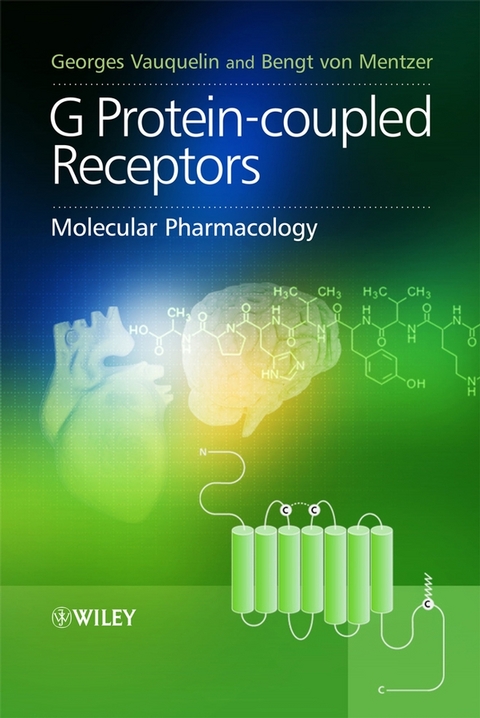
G Protein-coupled Receptors: Molecular Pharmacology provides a clear summary of the current knowledge in this fast-evolving field. The book sets out with an introduction to signalling molecules and their receptors, and an overview of the technical approaches used to investigate these interactions. Structural, functional and especially pharmacological aspects of GPCRs are then discussed in more detail and much attention is devoted to the analysis and interpretation of experimental data. The now widespread use of recombinant cell lies, receptor mutants and related artifices in drug research is critically evaluated. Special attention is also devoted to topical but often poorly understood concepts, such as insurmountable antagonism, inverse agonism and allosteric interactions.
By combining general information with the major state-of-the-art concepts in GPCR-research, this outstanding book equips the reader with the necessary background for understanding and critically evaluating the current literature.
Written by two experts from academia and industry, G Protein-coupled Receptors: Molecular Pharmacology offers a unique view of academic and applied approaches aiming to reveal new ideas in pharmaceutical research.
The book is of interest to anyone involved in drug development and preclinical research and those who need to function within multi-disciplinary teams in the pharmaceutical industry: from investigators to product managers or clinicians who seek to have a broad mechanistic understanding of drug-receptor interactions. It is also an invaluable resource for final year undergraduate and postgraduate students in pharmacology and cell and molecular biology.
Georges Vauquelin. Department of Molecular and Biochemical Pharmacology, Free University Brussels (VUB), Belgium
Bengt von Mentzer. Department of Molecular Pharmacology, AstraZeneca Inc, Sweden
G protein-coupled receptors (GPCRs) are membrane proteins that transduce a vast array of extracellular signals into intracellular reactions ranging from cell-cell communication processes to physiological responses. They play an important role in a variety of diseases from cancer and diabetes, to neurodegenerative, inflammatory and respiratory disorders. GPCRs are therefore of utmost interest in drug development: over half of all prescription drugs currently on the market act by targeting these receptors directly or indirectly. G Protein-coupled Receptors: Molecular Pharmacology provides a clear summary of the current knowledge in this fast-evolving field. The book sets out with an introduction to signalling molecules and their receptors, and an overview of the technical approaches used to investigate these interactions. Structural, functional and especially pharmacological aspects of GPCRs are then discussed in more detail and much attention is devoted to the analysis and interpretation of experimental data. The now widespread use of recombinant cell lies, receptor mutants and related artifices in drug research is critically evaluated. Special attention is also devoted to topical but often poorly understood concepts, such as insurmountable antagonism, inverse agonism and allosteric interactions. By combining general information with the major state-of-the-art concepts in GPCR-research, this outstanding book equips the reader with the necessary background for understanding and critically evaluating the current literature. Written by two experts from academia and industry, G Protein-coupled Receptors: Molecular Pharmacology offers a unique view of academic and applied approaches aiming to reveal new ideas in pharmaceutical research. The book is of interest to anyone involved in drug development and preclinical research and those who need to function within multi-disciplinary teams in the pharmaceutical industry: from investigators to product managers or clinicians who seek to have a broad mechanistic understanding of drug-receptor interactions. It is also an invaluable resource for final year undergraduate and postgraduate students in pharmacology and cell and molecular biology.
Georges Vauquelin. Department of Molecular and Biochemical Pharmacology, Free University Brussels (VUB), Belgium Bengt von Mentzer. Department of Molecular Pharmacology, AstraZeneca Inc, Sweden
| Erscheint lt. Verlag | 11.3.2008 |
|---|---|
| Sprache | englisch |
| Themenwelt | Medizin / Pharmazie ► Gesundheitsfachberufe |
| Medizin / Pharmazie ► Medizinische Fachgebiete ► Pharmakologie / Pharmakotherapie | |
| Naturwissenschaften ► Biologie ► Mikrobiologie / Immunologie | |
| Schlagworte | Array • Biowissenschaften • Cancer • Cell & Molecular Biology • Chemie • Chemistry • currently • Diseases • Drug • Drugs • extracellular • GPCRs • Half • important • Interest • intracellular reactions • Life Sciences • market act • Medical Science • Medizin • Membrane • Molekularbiologie • Pharmaceutical & Medicinal Chemistry • Pharmacology & Pharmaceutical Medicine • Pharmakologie • Pharmakologie u. Pharmazeutische Medizin • Pharmazeutische u. Medizinische Chemie • prescription • proteincoupled • proteins • Ranging • receptors • Role • Signals • Utmost • variety • vast • Zell- u. Molekularbiologie |
| ISBN-10 | 0-470-51664-X / 047051664X |
| ISBN-13 | 978-0-470-51664-5 / 9780470516645 |
| Informationen gemäß Produktsicherheitsverordnung (GPSR) | |
| Haben Sie eine Frage zum Produkt? |
 PDF (Adobe DRM)
Kopierschutz: Adobe-DRM
Adobe-DRM ist ein Kopierschutz, der das eBook vor Mißbrauch schützen soll. Dabei wird das eBook bereits beim Download auf Ihre persönliche Adobe-ID autorisiert. Lesen können Sie das eBook dann nur auf den Geräten, welche ebenfalls auf Ihre Adobe-ID registriert sind.
Details zum Adobe-DRM
Dateiformat: PDF (Portable Document Format)
Mit einem festen Seitenlayout eignet sich die PDF besonders für Fachbücher mit Spalten, Tabellen und Abbildungen. Eine PDF kann auf fast allen Geräten angezeigt werden, ist aber für kleine Displays (Smartphone, eReader) nur eingeschränkt geeignet.
Systemvoraussetzungen:
PC/Mac: Mit einem PC oder Mac können Sie dieses eBook lesen. Sie benötigen eine
eReader: Dieses eBook kann mit (fast) allen eBook-Readern gelesen werden. Mit dem amazon-Kindle ist es aber nicht kompatibel.
Smartphone/Tablet: Egal ob Apple oder Android, dieses eBook können Sie lesen. Sie benötigen eine
Geräteliste und zusätzliche Hinweise
Buying eBooks from abroad
For tax law reasons we can sell eBooks just within Germany and Switzerland. Regrettably we cannot fulfill eBook-orders from other countries.
aus dem Bereich