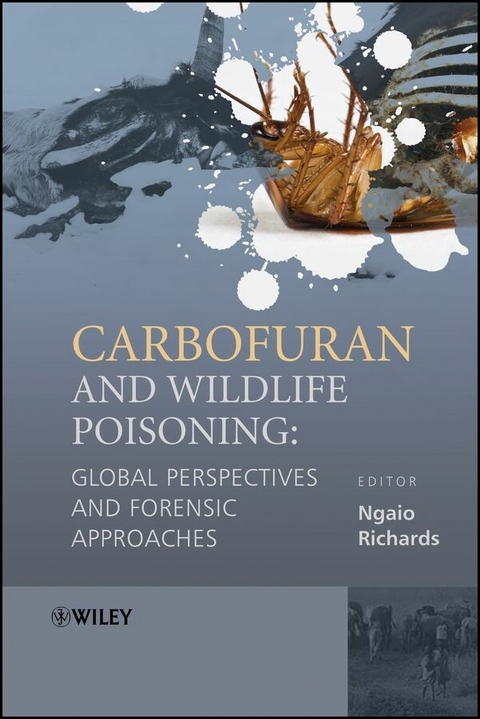
Carbofuran and Wildlife Poisoning (eBook)
John Wiley & Sons (Verlag)
978-1-119-95110-0 (ISBN)
The subject of carbofuran is very timely because of recent parallel discussions to withdraw and reinstate the insecticide in different parts of the world. Incidences of intentional and unintentional wildlife poisonings using carbofuran are undeniably on the rise, especially in Africa and India and gatherings of stakeholders are being organized and convened on a global basis. There is still a need to consolidate information on the different experiences and approaches taken by stakeholders. Carbofuran and Wildlife Poisoning is a comprehensive overview of global wildlife mortality, forensic developments and monitoring techniques and is a definitive reference on the subject.
It comprises of historical and current perspectives, contributions from key stakeholders in the issue of global wildlife poisonings with carbofuran, people on the ground who deal with the immediate and long-term ramifications to wildlife, those who have proposed or are working towards mitigative measures and solutions, those in contact with intentional or unintentional 'offenders', those who have adapted and developed forensic methodology and are gathering evidence.
'Carbofuran and Wildlife Poisoning is a collection of meticulously researched papers from all around the world that provide shocking facts about the effects of a deadly insecticide on wildlife. The book discusses the hundreds of thousands of animals, from elephants to fish, that are poisoned each year, the efforts to rehabilitate those which have been rescued, and the often heroic efforts to ban or reduce the use of the deadly chemical. This book is a must for all those concerned with the problem.'
—Jane Goodall, PhD, DBE, Founder - the Jane Goodall Institute & UN Messenger of Peace, October 2011
This cutting-edge title is one of the first devoted entirely to the issue of carbofuran and wildlife mortality. It features a compilation of international contributions from policy-makers, researchers, conservationists and forensic practitioners and provides a summary of the history and mode of action of carbofuran, and its current global use. It covers wildlife mortality stemming from legal and illegal uses to this point, outlines wildlife rehabilitation, forensic and conservation approaches, and discuss global trends in responding to the wildlife mortality. The subject of carbofuran is very timely because of recent parallel discussions to withdraw and reinstate the insecticide in different parts of the world. Incidences of intentional and unintentional wildlife poisonings using carbofuran are undeniably on the rise, especially in Africa and India and gatherings of stakeholders are being organized and convened on a global basis. There is still a need to consolidate information on the different experiences and approaches taken by stakeholders. Carbofuran and Wildlife Poisoning is a comprehensive overview of global wildlife mortality, forensic developments and monitoring techniques and is a definitive reference on the subject. It comprises of historical and current perspectives, contributions from key stakeholders in the issue of global wildlife poisonings with carbofuran, people on the ground who deal with the immediate and long-term ramifications to wildlife, those who have proposed or are working towards mitigative measures and solutions, those in contact with intentional or unintentional 'offenders', those who have adapted and developed forensic methodology and are gathering evidence. "e;Carbofuran and Wildlife Poisoning is a collection of meticulously researched papers from all around the world that provide shocking facts about the effects of a deadly insecticide on wildlife. The book discusses the hundreds of thousands of animals, from elephants to fish, that are poisoned each year, the efforts to rehabilitate those which have been rescued, and the often heroic efforts to ban or reduce the use of the deadly chemical. This book is a must for all those concerned with the problem."e; Jane Goodall, PhD, DBE, Founder - the Jane Goodall Institute & UN Messenger of Peace, October 2011
Ngaio Richards is editor of Carbofuran and Wildlife Poisoning: Global Perspectives and Forensic Approaches, published by Wiley. Ngaio ran a session on Wildlife Forensics at the Environmental Forensics Conference in Bournemouth in 2007 which attracted widespread interest.
"The book provides a compelling read to nonscientists as
well as scientists in the area of ecology and wildlife
conservation, and its integration of the toxic effects of
carbofuran to a country's resources and ecological
system." (International Journal of Toxicology,
11 October 2012)
"This comprehensive, timely volume deals
spe-cifically with use of the insecticide carbofuran and the
global wildlife mortality and morbidity it has caused . . .
Overall, this book is generally well-written, organized, and
edited. Clearly, this book emerges as the definitive reference on
this particular subject. This book will be very useful for wildlife
toxicologists, field biologists and other field researchers, NGOs
and other conservation organiza-tions, wildlife veterinarians
and reha-bilitators, and wildlife law enforcement
agencies." (Journal of Wildlife Rehabilitation,
2012)
"Carbofuran and Wildlife Poisoning: Global Perspectives and
Forensic Approaches is useful for anyone who wishes to gain insight
into the complexities of current global envi-ronmental problems and
control as well as those interested in the nar-rower area of
Carbofuran use and abuse." (Environmental Chemistry Group Bulletin,
1 January 2012)
"Carbofuran and Wildlife Poisoning is a collection of
meticulously researched papers from all around the world that
provide shocking facts about the effects of a deadly insecticide on
wildlife. The book discusses the hundreds of thousands of
animals, from elephants to fish, that are poisoned each year, the
efforts to rehabilitate those which have been rescued, and the
often heroic efforts to ban or reduce the use of the deadly
chemical. This book is a must for all those concerned with the
problem. "
Jane Goodall, PhD, DBE
Founder - the Jane Goodall Institute &
UN Messenger of Peace
October 2011
"This thoroughly informative work brings together a wide
range of reports by experts and dramatically underscores the very
real threat that pesticides pose to our world of nature. It
is a "must have" work for reference and knowledge." from
Richard Leakey, Chairman of Wildlife Direct, September 2011
Contributor Biographies
Ngaio L. Richards
Ngaio Richards is a forensic ecologist and conservationist. Her multidisciplinary background includes a BSc (Hons) in Environmental Science from Acadia University (Nova Scotia, Canada) and an MSc in Natural Resource Sciences with emphasis on applied wildlife biology and ecotoxicology from McGill University (Québec, Canada). Her MSc research, conducted under the direction of Pierre Mineau and David Bird, examined the relative risks posed by habitat loss and pesticide exposure to eastern screech-owls in apple orchards of southern Québec. In autumn 2010, she obtained a PhD in Forensic Science from Anglia Ruskin University (UK) for a study titled: Detection of nonsteroidal anti-inflammatory drugs in hair, nails and feathers using GC-MS, with emphasis on diclofenac, a forensic tool for wildlife conservation. Her interests lie in small-scale community-based conservation initiatives and facilitating the development of collaborative environmental monitoring networks. She also has a great fondness for vultures, owls, bears, hyenas and wolves, and is a champion for uncharismatic wildlife. Ngaio is the Canine Field Specialist for Working Dogs for Conservation, a non-profit organisation based in Montana (USA).
CHAPTER 1
Stephen Donovan
Stephen Donovan has been a principal research chemist in the Agrichemical Industry for over 25 years, working for American Cyanamid, BASF and FMC. He obtained a PhD in Organic Chemistry from the University of California and conducted his post-doctoral research at Cornell University. Dr Donovan is the author of numerous publications and patents relating to pesticides. He is proficient with a variety of modern analytical tools such as: LC/MS, LC/MS/MS, GC/MS, ICP/MS and LC/ICP/MS. He also has expertise in organic synthesis, compound purification, compound identification, physical property measurements, quantitative structure activity relationships (QSAR), pharmacokinetics and ADMET (absorption, distribution, metabolism, excretion, and toxicity). He is currently serving as an analytical chemist at the Pennsylvania Department of Health in the Chemical Terrorism Preparedness Section (affiliated with the Centre for Disease Control (CDC)), where he measures toxins in human fluids via LC-MS/MS and LC-ICP/MS.
Mark Taggart
Mark Taggart is an experienced environmental chemist and ecotoxicologist currently working as a research fellow at the Environmental Research Institute in the Highlands of Scotland. He studied as an undergraduate in Liverpool, undertaking a BSc in Earth Science and Countryside Management, and then turned more toward chemistry, carrying out an MSc in Geochemistry at Leeds. He then worked in industry, in flue gas desulphurisation in the two largest coal-fired power stations in the UK, before spending four years with the Environment Agency in London as a Monitoring and Investigations Officer. In 2000, he returned to academia to undertake a PhD in arsenic biogeochemistry at Aberdeen in Scotland, studying the effects of one of Europe’s largest ever acid mine spills at Aznalcóllar in Spain. Since this point, he has undertaken a very wide range of research related to the fate, behaviour and toxicology of organic/inorganic pollutants in the environment in the UK, Spain and India. He has published well over 40-peer reviewed articles and book chapters in this field, many of which are related to the ecotoxicology of heavy metals and metalloids, and the impact of diclofenac (a non-steroidal anti-inflammatory drug) on vultures in India. He has worked extensively within the field of avian ecotoxicology in particular.
CHAPTER 2
Pierre Mineau
Pierre Mineau is a Senior Research Scientist in the Science and Technology Branch of Environment Canada. He is also an Adjunct Professor in the Department of Biology at Carleton University and in the Department of Veterinary Biomedical Sciences at the University of Saskatchewan. He obtained his BSc from McGill University (Québec, Canada) and his MSc and PhD from Queens University (Ontario, Canada). His doctoral research focused on the effects of forestry insecticides on food-caching memory in birds.
For a 15-year period, Dr Mineau was responsible for the wildlife risk assessment of pesticides for the Canadian regulatory system. As part of these responsibilities, he led the scientific review of carbofuran which culminated in the removal of most of its uses from Canada. He received formal commendation for this work. Following a restructuring of this system, he turned to full-time research. With the help of many collaborators, he spans various scales of biological organisation-from the use of sub-cellular biomarkers of pesticide exposure, to analyses of bird population trends in response to pesticide use patterns. By extension, he also studies risk assessment methodology, how agricultural practices affect wildlife and the environment more generally, how to objectively measure and communicate the ‘environmental footprint’ of pest control practices, as well as the ecological ‘value’ of birds in cropland. Dr Mineau has authored over 100 peer-reviewed publications and given over 200 presentations. He has served as a consultant in the area of pesticide impacts to several international agencies as well as governmental and non-governmental organisations in Canada and abroad.
Carol Uphoff Meteyer
Carol Meteyer has been a wildlife pathologist at the USGS National Wildlife Health Center (NWHC) in Madison, Wisconsin (USA) since 1992. She received a BSc in Biology and Chemistry at the University of Iowa and worked as a research assistant in Costa Rica on a study of the ecology and feeding habits of Atta cephalotes (leaf-cutter ant) in Guanacaste National Forest. She completed a Doctorate in Veterinary Medicine at Iowa State University in 1983. Starting in 1984, Carol conducted a three-year residency in comparative pathology in association with the University of Southern California and the Los Angeles County Medical and Veterinary Service. From 1987 to 1991, she was on the faculty of the UC Davis College of Veterinary Medicine as a diagnostic pathologist with the California Veterinary Diagnostic Laboratory System. She received board certification by the American College of Veterinary Pathologists in 1988.
Carol’s duties at the NWHC have both a forensic and diagnostic component. In her capacity as a forensic pathologist, she provides pathology support for legal cases within the US Fish and Wildlife Service Division of Law Enforcement. She has also investigated numerous incidences of animal poisoning, including carbamate and organophosphate poisoning cases. As a diagnostic pathologist, she is involved in determining the cause of morbidity and mortality in wildlife. Carol has participated in special investigations on migratory birds, endangered species and species of concern, including assessing causes of: southern sea otter (Enhydra lutris nereis) population declines, amphibian malformations, vulture (Gyps sp.) population declines in Pakistan due to secondary poisoning with the nonsteroidal anti-inflammatory drug diclofenac, the pathology of monkey pox in rodents, pathogenesis of plague in prairie dogs, and the highly pathogenic avian influenza H5N1 in kestrels and shorebirds. Carol has also been part of a team to define pathologic changes associated with diseases in coral and she has served as the lead pathologist at the NWHC investigating white-nose syndrome in bats.
Stuart Porter
Stuart Porter is a Professor of Veterinary Technology at Blue Ridge Community College in Weyers Cave, Virginia (USA). His background includes a BSc in Biology from Washington and Lee University (Virginia) and a VMD from the University of Pennsylvania (Philadelphia). He has worked as a resident veterinarian at the Memphis, Tennessee and Gladys Porter Zoos. In 1982, he co-founded the Wildlife Centre of Virginia (WCV), where he went on to serve as the Director of Veterinary Services for 12 years. It was at the WCV that he documented intoxication in a number of wild birds from carbamates (including carbofuran) and organophosphates, lead and chlorinated hydrocarbons. As a result, he initiated the measurement of cholinesterase levels in various raptors to determine in-house reference ranges. In the process, he discovered that many hawks and eagles admitted as ‘car strikes’ also tested positive for poisoning. He was able to confirm his findings and gather more data by networking with other wildlife professionals across the country. Dr Porter has served on the board of directors of the National Wildlife Rehabilitators Association, the Rachel Carson Council, and the Virginia Veterinary Medical Association. He has given presentations to veterinary students, veterinarians, wildlife rehabilitators and wildlife biologists throughout the US and as far away as Australia to increase awareness of the many man-made toxins and how they affect native wildlife. He has also contributed many articles and book chapters centring on various wildlife-related issues.
CHAPTER 3: KENYA
Joseph O. Lalah
Professor Joseph Lalah has a BSc (Hons) in Chemistry and Biochemistry from the University of Nairobi, an MSc in Energy from the University of Leeds and a PhD in Chemistry from the University of Nairobi. He has worked in various sectors, including government, industry and university. He was a senior lecturer in the Department of Chemistry, Maseno University, before joining the Kenya Polytechnic University College as an Associate Professor in March 2010. Professor Lalah lectures in analytical, inorganic and environmental chemistry. His research area is environmental chemistry and ecotoxicology and he has published several...
| Erscheint lt. Verlag | 11.11.2011 |
|---|---|
| Sprache | englisch |
| Themenwelt | Medizin / Pharmazie |
| Naturwissenschaften ► Biologie ► Ökologie / Naturschutz | |
| Naturwissenschaften ► Chemie | |
| Schlagworte | Analytische Chemie / Forensik • APPROACHES • Biowissenschaften • Carbofuran • CASE • Chemie • Chemistry • Compilation • contributors • definitive reference • devoting • entirely • Environmental Science • Environmental Studies • Forensic • Forensics • Forensic Science • Forensik • Global • Historical • international • Issue • legal • Life Sciences • numerous • Perspectives • policymakers • Researchers • Studies • Subject • Umweltforschung • Umweltwissenschaften |
| ISBN-10 | 1-119-95110-0 / 1119951100 |
| ISBN-13 | 978-1-119-95110-0 / 9781119951100 |
| Informationen gemäß Produktsicherheitsverordnung (GPSR) | |
| Haben Sie eine Frage zum Produkt? |
 EPUB (Adobe DRM)
Kopierschutz: Adobe-DRM
Adobe-DRM ist ein Kopierschutz, der das eBook vor Mißbrauch schützen soll. Dabei wird das eBook bereits beim Download auf Ihre persönliche Adobe-ID autorisiert. Lesen können Sie das eBook dann nur auf den Geräten, welche ebenfalls auf Ihre Adobe-ID registriert sind.
Details zum Adobe-DRM
Dateiformat: EPUB (Electronic Publication)
EPUB ist ein offener Standard für eBooks und eignet sich besonders zur Darstellung von Belletristik und Sachbüchern. Der Fließtext wird dynamisch an die Display- und Schriftgröße angepasst. Auch für mobile Lesegeräte ist EPUB daher gut geeignet.
Systemvoraussetzungen:
PC/Mac: Mit einem PC oder Mac können Sie dieses eBook lesen. Sie benötigen eine
eReader: Dieses eBook kann mit (fast) allen eBook-Readern gelesen werden. Mit dem amazon-Kindle ist es aber nicht kompatibel.
Smartphone/Tablet: Egal ob Apple oder Android, dieses eBook können Sie lesen. Sie benötigen eine
Geräteliste und zusätzliche Hinweise
Buying eBooks from abroad
For tax law reasons we can sell eBooks just within Germany and Switzerland. Regrettably we cannot fulfill eBook-orders from other countries.
aus dem Bereich