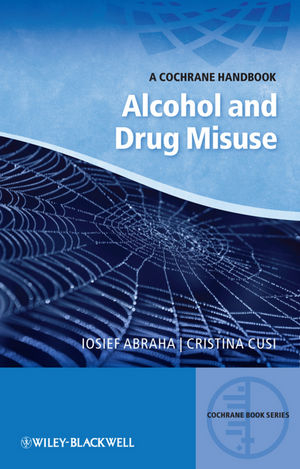
Alcohol and Drug Misuse (eBook)
John Wiley & Sons (Verlag)
978-1-118-45447-3 (ISBN)
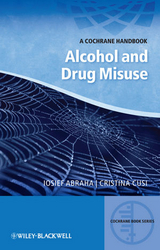
There is constant pressure for clinicians to practise evidence-based medicine. Cochrane Reviews are an important source of the evidence which informs clinical decisions but can still require considerable time to read and digest. This Cochrane Handbook of Alcohol and Drug Misuse serves as a concise guide to the evidence base for relevant interventions, highlighting the key points of Cochrane reviews for the busy practitioner.
Each review is analysed in a structured format, starting with the question, a brief background and a summary answer, followed by the results presented in comprehensive and concise way. The authors then illustrate the value that the review adds to the current knowledge, the main methodological limitations of the included studies and finally the implications of the review's conclusions for future research.
Addiction to drugs and alcohol is an increasing problem that all clinicians have to deal with. This is especially true for medical and family specialists but more so for those dealing with psychiatric, psychological and social problems. The benefit of having the evidence underpinning the clinical approach to all aspects of this topic cannot be underestimated.
The book's comprehensive coverage of interventions provides an authoritative reference for all physicians working with these patients, from family practitioners to clinical specialists and psychiatric specialists. With addiction to drugs and alcohol an increasingly serious morbidity and public health issue, this book from the Cochrane Collaboration will find a wide audience.
This title is also available as a mobile App from MedHand Mobile Libraries. Buy it now from iTunes, Google Play or the MedHand Store.
Iosief Abraha MD and Cristina Cusi MD are reviewers in the Cochrane Neurological Network based in Italy. They have carried out Cochrane reviews in a wide range of areas within the Cochrane review groups and specialised in reviewing drug and alcohol withdrawal treatments
There is constant pressure for clinicians to practise evidence-based medicine. Cochrane Reviews are an important source of the evidence which informs clinical decisions but can still require considerable time to read and digest. This Cochrane Handbook of Alcohol and Drug Misuse serves as a concise guide to the evidence base for relevant interventions, highlighting the key points of Cochrane reviews for the busy practitioner. Each review is analysed in a structured format, starting with the question, a brief background and a summary answer, followed by the results presented in comprehensive and concise way. The authors then illustrate the value that the review adds to the current knowledge, the main methodological limitations of the included studies and finally the implications of the review s conclusions for future research. Addiction to drugs and alcohol is an increasing problem that all clinicians have to deal with. This is especially true for medical and family specialists but more so for those dealing with psychiatric, psychological and social problems. The benefit of having the evidence underpinning the clinical approach to all aspects of this topic cannot be underestimated. The book s comprehensive coverage of interventions provides an authoritative reference for all physicians working with these patients, from family practitioners to clinical specialists and psychiatric specialists. With addiction to drugs and alcohol an increasingly serious morbidity and public health issue, this book from the Cochrane Collaboration will find a wide audience. This title is also available as a mobile App from MedHand Mobile Libraries. Buy it now from iTunes, Google Play or the MedHand Store.
Iosief Abraha MD and Cristina Cusi MD are reviewers in the Cochrane Neurological Network based in Italy. They have carried out Cochrane reviews in a wide range of areas within the Cochrane review groups and specialised in reviewing drug and alcohol withdrawal treatments
Alcohol and Drug Misuse: A Cochrane Handbook 5
Contents 7
Foreword 11
Preface 13
Acknowledgements 14
Part 1: Alcohol 15
Psychosocial interventions 15
Chapter 1: Effectiveness of brief alcohol interventions in primary care populations 15
Chapter 2: Brief interventions for heavy alcohol users admitted to general hospital wards 19
Chapter 3: Alcoholics Anonymous and other 12-step programmes for alcohol dependence 22
Chapter 4: Mentoring adolescents to prevent substance use disorders 24
Chapter 5: Universal school-based prevention programmes for alcohol misuse in young people 26
Chapter 6: Universal multicomponent prevention programmes for alcohol misuse in young people 29
Chapter 7: Universal family-based prevention programmes for alcohol misuse in young people 31
Chapter 8: Social norms interventions to reduce alcohol misuse in university or college students 33
Chapter 9: Psychosocial interventions for women enrolled in alcohol treatment during pregnancy 36
Pharmacological interventions 38
Chapter 10: Benzodiazepines for alcohol withdrawal 38
Chapter 11: Anticonvulsants for alcohol withdrawal 41
Chapter 12: Acamprosate for alcohol dependence 45
Chapter 13: Baclofen for alcohol withdrawal 48
Chapter 14: Gamma-hydroxybutyrate for treatment of alcohol withdrawal and prevention of relapse 50
Chapter 15: Psychotropic analgesic nitrous oxide for alcohol withdrawal 54
Chapter 16: Efficacy and safety of pharmacological interventions for the treatment of alcohol withdrawal 57
Chapter 17: Opioid antagonists for alcohol dependence 60
Chapter 18: Pharmacologic interventions for pregnant women enrolled in alcohol treatment 63
Part 2: Drugs 65
Psychosocial interventions 65
Chapter 19: School-based prevention for illicit substance use disorders 65
Chapter 20: Interventions for prevention of substance use disorders by young people delivered in non-school settings 68
Chapter 21: Case management for persons with substance use disorders 70
Chapter 22: Motivational interviewing for substance use disorders 73
Chapter 23: Therapeutic communities for substance use disorders 76
Chapter 24: Interventions for drugusing offenders in the courts, secure establishments and the community 78
Chapter 25: Psychosocial interventions for pregnant women in outpatient illicit drug treatment programmes compared to other interventions 81
Cocaine dependence 83
Chapter 26: Psychosocial interventions for cocaine and psychostimulant amphetamine related disorders 83
Chapter 27: Antidepressants for cocaine dependence 85
Chapter 28: Antipsychotic medications for cocaine dependence 88
Chapter 29: Anticonvulsants for cocaine dependence 90
Chapter 30: Dopamine agonists for cocaine dependence 92
Chapter 31: Disulfiram for the treatment of cocaine dependence 96
Chapter 32: Efficacy of psychostimulant drugs for cocaine dependence 98
Chapter 33: Auricular acupuncture for cocaine dependence 101
Opioid dependence 103
Chapter 34: Psychosocial treatment for opiate dependence 103
Chapter 35: Psychosocial and pharmacological treatments versus pharmacological treatments for opioid detoxification 105
Chapter 36: Psychosocial combined with agonist maintenance treatments versus agonist maintenance treatments alone for treatment of opioid dependence 108
Chapter 37: Alpha2-adrenergic agonists for the management of opioid withdrawal 110
Chapter 38: Buprenorphine for the management of opioid withdrawal 113
Chapter 39: Buprenorphine maintenance versus placebo or methadone maintenance for opioid dependence 116
Chapter 40: Methadone at tapered doses for the management of opioid withdrawal 119
Chapter 41: Methadone maintenance at different dosages for opioid dependence 122
Chapter 42: Methadone maintenance therapy versus no opioid replacement therapy for opioid dependence 124
Chapter 43: Opioid antagonists under heavy sedation or anaesthesia for opioid withdrawal 127
Chapter 44: Opioid antagonists with minimal sedation for opioid withdrawal 129
Chapter 45: Oral naltrexone maintenance treatment for opioid dependence 132
Chapter 46: Sustained-release naltrexone for opioid dependence 135
Chapter 47: Heroin maintenance for chronic heroin-dependent individuals 137
Chapter 48: LAAM maintenance versus methadone maintenance for heroin dependence 140
Chapter 49: Detoxification treatments for opiate-dependent adolescents 143
Chapter 50: Maintenance treatments for opiate-dependent adolescents 145
Chapter 51: Maintenance agonist treatments for opiate-dependent pregnant women 147
Chapter 52: Pharmacological treatment for depression during opioid agonist treatment for opioid dependence 149
Chapter 53: Inpatient versus other settings for detoxification for opioid dependence 152
Other drugs 154
Chapter 54: Psychotherapeutic interventions for cannabis use or dependence in outpatient settings 154
Chapter 55: Pharmacological interventions for benzodiazepine mono-dependence management in outpatient settings 156
Chapter 56: Treatment for amphetamine dependence 159
Chapter 57: Treatment for amphetamine withdrawal 161
Chapter 58: Treatment for amphetamine psychosis 163
Chapter 59: Treatment for methaqualone dependence in adults 165
Index 167
"Overall the book is a well written, engaging, comprehensive guide
to Psychiatry. It is a good beginner's guide to the practice
of psychiatric medicine because it packs relevant information into
a tightly condensed bundle." (Asian Journal of Psychiatry,
2013)
| Erscheint lt. Verlag | 30.7.2012 |
|---|---|
| Reihe/Serie | CBS - Cochrane Book Series | CBS- Cochrane Book Series |
| Sprache | englisch |
| Themenwelt | Medizin / Pharmazie ► Allgemeines / Lexika |
| Medizin / Pharmazie ► Medizinische Fachgebiete ► Suchtkrankheiten | |
| Schlagworte | Addictions • Alcohol • Base • Clinical • Clinicians • Cochrane • concise • considerable • constant • Decisions • Drug • Evidence • evidencebased • Evidence-based Health Care • Evidenzbasierte Forschung im Gesundheitswesen • Evidenzbasierte Medizin • Guide • Handbook • important • informs • Interventions • Medical Science • Medizin • practise • Pressure • Psychiatrie • Psychiatry • Psychologie • Psychology • relevant • require • source • Sucht • Time |
| ISBN-10 | 1-118-45447-2 / 1118454472 |
| ISBN-13 | 978-1-118-45447-3 / 9781118454473 |
| Informationen gemäß Produktsicherheitsverordnung (GPSR) | |
| Haben Sie eine Frage zum Produkt? |
 PDF (Adobe DRM)
Kopierschutz: Adobe-DRM
Adobe-DRM ist ein Kopierschutz, der das eBook vor Mißbrauch schützen soll. Dabei wird das eBook bereits beim Download auf Ihre persönliche Adobe-ID autorisiert. Lesen können Sie das eBook dann nur auf den Geräten, welche ebenfalls auf Ihre Adobe-ID registriert sind.
Details zum Adobe-DRM
Dateiformat: PDF (Portable Document Format)
Mit einem festen Seitenlayout eignet sich die PDF besonders für Fachbücher mit Spalten, Tabellen und Abbildungen. Eine PDF kann auf fast allen Geräten angezeigt werden, ist aber für kleine Displays (Smartphone, eReader) nur eingeschränkt geeignet.
Systemvoraussetzungen:
PC/Mac: Mit einem PC oder Mac können Sie dieses eBook lesen. Sie benötigen eine
eReader: Dieses eBook kann mit (fast) allen eBook-Readern gelesen werden. Mit dem amazon-Kindle ist es aber nicht kompatibel.
Smartphone/Tablet: Egal ob Apple oder Android, dieses eBook können Sie lesen. Sie benötigen eine
Geräteliste und zusätzliche Hinweise
Buying eBooks from abroad
For tax law reasons we can sell eBooks just within Germany and Switzerland. Regrettably we cannot fulfill eBook-orders from other countries.
aus dem Bereich