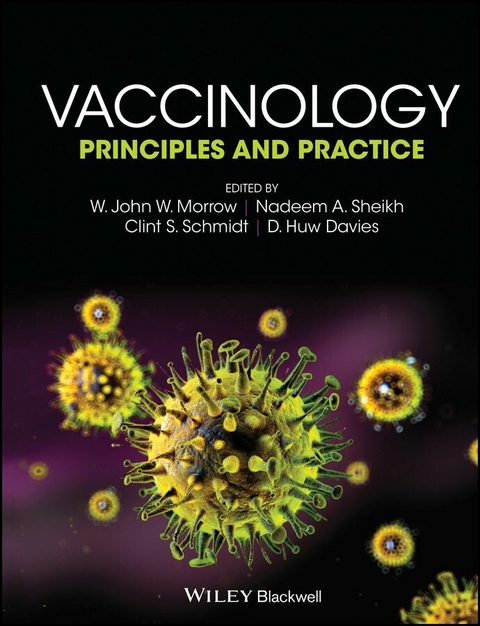
Vaccinology (eBook)
John Wiley & Sons (Verlag)
978-1-118-34533-7 (ISBN)
Covering all aspects of vaccine research and development in one volume, this authoritative resource takes a comprehensive and systematic approach to the science of vaccinology focusing not only on basic science, but also on the many stages required to commercialize and navigate the regulatory requirements for human application, both in the United States and Europe.
- Reviews in detail the process of designing a vaccine, from the initial stages of antigen discovery to human application
- Includes evaluation of vaccine efficacy and safety
- Details clinical trial design, including regulatory requirements
- Discusses the emerging field of active cellular immunotherapy
Vaccinology: Principles and Practice provides an invaluable resource for clinicians, scientific and medical researchers, lecturers and postdoctoral fellows working in the field of vaccines.
W. John W. Morrow, Seattle, Washington, USA
Nadeem A. Sheikh, Dendreon, Inc., Seattle, Washington, USA
Clint S. Schmidt, NovaDigm Therapeutics, Inc., Grand Forks, North Dakota, USA
D. Huw Davies, University of California at Irvine, USA
Covering all aspects of vaccine research and development in one volume, this authoritative resource takes a comprehensive and systematic approach to the science of vaccinology focusing not only on basic science, but also on the many stages required to commercialize and navigate the regulatory requirements for human application, both in the United States and Europe. Reviews in detail the process of designing a vaccine, from the initial stages of antigen discovery to human application Includes evaluation of vaccine efficacy and safety Details clinical trial design, including regulatory requirements Discusses the emerging field of active cellular immunotherapy Vaccinology: Principles and Practice provides an invaluable resource for clinicians, scientific and medical researchers, lecturers and postdoctoral fellows working in the field of vaccines.
W. John W. Morrow, Seattle, Washington, USA Nadeem A. Sheikh, Dendreon, Inc., Seattle, Washington, USA Clint S. Schmidt, NovaDigm Therapeutics, Inc., Grand Forks, North Dakota, USA D. Huw Davies, University of California at Irvine, USA
Vaccinology: Principles and Practice 3
Contents 7
List of Contributors 10
Preface 14
PART 1 Introduction 15
CHAPTER 1 Concept and Scope of Modern Vaccines 17
Introduction 17
Triumphs and limitations of current vaccination 18
Modern approaches that impact vaccine design 21
Genomics 21
Improved delivery systems and adjuvants 21
Therapeutic vaccination 22
A return to attenuated organisms? 22
Improve existing vaccines and vaccine uptake 23
Hurdles and challenges for the future 24
Non-infectious diseases as targets for modern vaccines 24
Transition from research to trial 24
References 24
PART 2 Principles of Vaccine Design 27
CHAPTER 2 Strategies to Stimulate Innate Immunity for Designing Effective Vaccine Adjuvants 29
Principles of vaccine design: stimulation of innate immunity 29
Innate immune stimulators 33
Toll-like receptors 33
Non-Toll-like receptors 35
Practical applications for adjuvants 37
Action 37
Safety 37
Summary 38
Acknowledgements 38
References 38
CHAPTER 3 Antigen Processing and Presentation by MHC Class I, II, and Nonclassical Molecules 43
MHC class I and II structure 43
Structural composition 43
The peptide-binding grooves 45
Nonclassical MHC class I molecules 45
MHC molecule assembly 45
Pre-peptide loading complex stage of MHC class I folding 47
The peptide-loading complex and export to the cell surface 48
MHC class II molecules and the invariant chain 51
The MHC class II peptide loading complex 52
Peptide generation 52
Peptide generation in the MHC class I pathway 52
Peptide generation in the MHC class II pathway 54
Cross- and criss-cross presentation 54
Summary 55
Acknowledgments 56
References 56
CHAPTER 4 Understanding the Mucosal Immune System for Better Mucosal Vaccine Design 61
Introduction 61
Anatomy of the mucosal immune system 61
Players of the mucosal immune system 62
Mucosal epithelium 62
Mucosal-associated lymphoreticular tissue 64
Mucosal draining lymph nodes 67
Lamina propria 68
Mucosal vaccines: current strategies and ongoing challenges 68
Mucosal vaccines for human use 69
Final word 70
References 71
CHAPTER 5 Immunologic Memory: T Cells in Humans 75
Introduction 75
Generation of memory T cells 75
Different types of memory T cells in humans 75
Parameters influencing the induction of a T-cell response 78
Induction of T-cell memory with a vaccine 82
Major obstacles 82
Manipulating the immune response with a vaccine 85
Examples of vaccine-induced memory T-cell responses 87
Concluding remarks 88
Acknowledgments 88
References 88
CHAPTER 6 Immunologic Memory: B Cells 93
Introduction 93
Human evaluation of B-cell vaccine responses 93
Variability in antibody maintenance is dependent on the type of vaccine 94
Primary B-cell immune response 94
Secondary B-cell immune responses 96
Factors important for long-lived plasma cell generation 96
Heterogeneity of the circulating newly formed ASCs 97
Models of long-lived plasma cells maintenance 98
Heterogeneity of human memory B-cell subsets 99
Current schemes of classification of human memory B-cell populations 100
Measuring memory B-cell responses to vaccines 100
Antibody maintenance is dependent on the age of the host 101
Location of memory B cells and plasma cells may play a role in protection 101
Biomarkers of long-lived humoral immunity during vaccine priming 102
References 102
CHAPTER 7 Utility of Mouse Models in Vaccine Design and Development 108
Why the Mouse? 108
Why mouse models for vaccine development 108
Experimental mouse models of human pathogens 110
Vaccinia 111
Influenza 112
Listeria monocytogenes 114
Salmonella typhimurium 114
Mice as models for lethal human pathogens 115
Tularemia 115
Ebola 117
Tuberculosis 117
Concluding remarks 118
References 118
CHAPTER 8 Utility of Nonhuman Primate Models for Vaccines 124
Introduction 124
SIVs and SIV/HIV hybrid viruses (SHIV) used for vaccine studies 126
SIVmac group: SIVmac251, SIVmac239, and vaccine challenge viruses 126
SIVB670/H4/H9 group and vaccine challenge viruses 128
SHIV group 129
HIV infection of chimpanzees 129
HIV-1 infection of pig-tailed macaques 130
Challenge routes of infection for testing vaccine efficacy 130
AIDS vaccine models 130
Killed-virus vaccines 131
Subunit protein vaccines 131
Replication-competent vaccines 131
Single-cycle vaccine vectors 134
Replicons 134
Bacteria-based vaccines 134
Attenuated live virus vaccines 135
Acknowledgments 136
References 136
PART 3 Antigen Discovery 145
CHAPTER 9 Sequence-Based Computational Approaches to Vaccine Discovery and Design 147
Introduction 147
Designing vaccines based on alignments 147
Applications 147
Algorithms 148
Implementation 150
Designing vaccines using epitope prediction 154
Applications 154
Algorithms 154
Implementation 156
Creating the artificial neural net program 159
Conclusions 162
References 162
CHAPTER 10 Antigen Discovery for Vaccines Using High-throughput Proteomic Screening Technologies 164
Introduction 164
“Synthetic” proteomes 164
Protein expression: cell-based versus cell-free 166
Protein purification 167
HT antibody screening 168
2D gel electrophoresis and peptide mass fingerprinting 168
ELISA 169
Bead arrays 169
Protein microarrays 169
Conformation issues 171
T-cell screening platforms 171
Peptide libraries and predictive algorithms 172
MHC-peptide elution 172
ORFeome expression libraries 173
Strategies for identification of protective antigens 173
DNA vaccination 174
Discovery of protective antigens 174
Translation of HT screening into protective vaccines 174
Neisseria meningitides 175
Treponema pallidum 175
Streptococcus pneumoniae 175
Chlamydia trachomatis 175
Bacillus anthracis 176
Dengue virus 176
Future challenges 176
References 177
CHAPTER 11 Phage Libraries 182
Introduction 182
Peptide mimotopes 182
Infectious disease mimotopes 182
Cancer mimotopes 186
Other mimotope applications 187
Phage vaccines 188
Antigen discovery and epitope mapping 189
Conclusion and future direction 189
References 190
PART 4 Antigen Engineering 193
CHAPTER 12 Attenuated Bacterial Vaccines 195
Introduction 195
Live attenuated, killed, or subunit vaccines? 195
Existing live attenuated vaccines 196
S. enterica serovar Typhi 196
M. bovis BCG 197
Y. pestis EV76 197
B. abortus S19 197
F. tularensis LVS 198
Rationally attenuated live vaccines 198
Auxotrophs 198
Shikimate pathway auxotrophs 198
Purine biosynthetic pathway auxotrophs 199
Branched-chain amino acid biosynthesis auxotrophs 201
Regulatory mutants 201
Adenylate cyclase (cya) and camp receptor protein (crp) mutants 201
PhoP/Q mutants 201
Immune responses to live attenuated vaccines 202
Safety of live attenuated vaccines 202
Live attenuated vaccines as vaccine carriers 203
Stable antigen expression 203
Immunogenicity 204
Conclusions 204
References 205
CHAPTER 13 Virus-like Particles as Antigen Scaffolds 210
Virus-like particles, a new class of vaccines 210
Properties of VLPs that promote immune responses 211
Interactions with antigen-presenting cells 211
Interactions with B cells 212
Commercial VLP-based vaccines 212
Exploiting VLPs as platform for antigenic display of heterologous target molecules 213
Recombinant VLPs 215
Hepadnavirus core VLPs 215
RNA bacteriophage 216
Display of target antigens by chemical conjugation 216
An anti-smoking vaccine 216
A vaccine for hypertension 217
A vaccine for Alzheimer’s disease 218
Recombinant virosomes 218
Synthetic multivalent platforms 218
Conclusions 218
Features of VLP-based vaccines 219
Acknowledgments 219
References 219
CHAPTER 14 Recombinant MVA vaccines: Optimization, Preclinical, and Product Development 223
Aims of the chapter 223
Introduction to MVA 223
MVA molecular biology and replication 224
Life cycle and gene expression 224
Host range restriction 225
Construction and use of recombinant MVA 226
Background 226
Selection markers 226
Vaccinia promoter selection for optimal expression 227
Insertion site 228
Effects of pre-existing immunity 228
rMVA development 228
Basic research 228
Optimizing the efficacy of rMVA vaccines 228
Developing rMVA for clinical use: GMP manufacture 230
Development of validated assays to support clinical development of rMVA 232
Manufacture of MVA-based vaccines 233
Freedom to operate and intellectual property considerations 233
Summary 233
Acknowledgments 233
References 233
CHAPTER 15 Recombinant Adenoviruses for Vaccination 238
Adenovirus vectors for vaccination: advantages and problems 238
Neutralizing anti-Ad5 antibodies 239
Acute toxicity 240
Transduction of dendritic cells by Ad5 vectors 241
Anti-Ad5 T-cell responses 241
Basic concepts of Ad vaccination 242
Route of administration of Ad-based vaccines 242
Heterologous vaccines involving Ads: prime-boost regimens 242
Ad vaccines in combination with adjuvants 242
Depletion of regulatory T cells (Tregs) 243
Peptide incorporation into the Ad capsid 243
Ad vaccines against multiple antigens 243
Specific examples for Ad-based vaccination 243
Ad vaccines for viral pathogens 243
Ad vaccines for bacterial infections 245
Ad vaccines for parasitic infections 245
Ad vaccines for cancer 246
Conclusions and future directions 246
References 246
CHAPTER 16 Recombinant Avipoxviruses 251
Introduction 251
Avipoxvirus phylogeny 251
Disease control: vaccination and transmission control 252
Recombinant vector strains 254
Fowlpox virus vectors 254
Canarypox virus vectors 255
Biosafety and environmental safety 255
Genome sequences 255
Promoters 256
Insertion sites 256
Recombination strategies 257
Recombinant selection and screening 258
Propagation of rFWPV 258
Poultry vaccines 258
Mammalian vaccines: background and introduction 259
Mammalian vaccines: veterinary 260
Preclinical and clinical human vaccine trials 260
Immune responses induced by avipoxvirus vectors 261
Enhanced avipoxvirus vectors 261
Acknowledgments 263
References 263
CHAPTER 17 Intracellular Facultative Bacterial Vectors for Cancer Immunotherapy 269
Patho-biotechnology and the challenge of tumor immunotherapy 269
The biology of intracellular bacterial vectors 270
Bacille Calmette-Guérin 273
Shigella flexneri 274
Salmonella enterica 274
Listeria monocytogenes 276
Listeria-based immunotherapy for breast cancer 278
The use of Listeria to target tumor vasculature 278
Listeria as a vector for cDNA and mRNA delivery 281
Moving Listeria-based tumor immunotherapy into the clinic 282
Discussion 282
References 283
CHAPTER 18 Nucleic Acid Vaccination 289
Background 289
Modifications of genes and gene expression 291
Mosaic and consensus envelope fragments 291
Cytokines as adjuvants 292
Possible role of CpG motifs 292
Prime-boost 292
Infectious diseases 293
Cancer 294
Allergy and autoimmune diseases 294
Licensed DNA vaccines 295
Delivery 295
Production 296
References 296
CHAPTER 19 Artificial Antigen-presenting Cells: Large Multivalent Immunogens 300
Introduction 300
CD8 T-cell activation and memory development 300
Dendritic cells activate T cells 300
Signals required for activation of naïve CD8 T cells for expansion, effector functions, and memory 301
Activation of CD8 T cells for tumor immunotherapy 302
Artificial APC for ex vivo activation and adoptive transfer of T cells 303
Artificial APC for in vivo T-cell activation: large multivalent immunogen 304
LMI development and preclinical studies 304
Clinical trials using LMI immunotherapy 306
Future directions 309
Acknowledgments 310
References 310
PART 5 Delivery Systems 315
CHAPTER 20 Transcutaneous Immunization via Vaccine Patch Delivery System 317
Introduction 317
Skin immunology system and TCI mechanism 318
General TCI principles learned from preclinical studies 326
Clinical studies involving TCI using early-stage, “wet” patch format 327
Measles-virus vaccine patch 327
Flu vaccine patch 327
Melanoma vaccine patch 328
Vaccine enhancement patch for flu vaccine for elderly 328
Vaccine patch for travelers’ diarrhea 328
Technical advances: dry vaccine patch delivery system 328
Simple, easy-to-use skin preparation system 328
Patch formulation science: high-throughput screening method 329
Disc matrix-assisted drying and patch assembly 330
Stability of antigens in dry patches 330
Recent clinical applications with LT dry patches 331
Dry vaccine patch for travelers’ diarrhea 331
LT as VEP for injected H5N1 vaccine 332
Commentary and future direction 333
Acknowledgments 334
References 334
CHAPTER 21 Needle-free Jet Injection for Vaccine Administration 338
Introduction 338
Liquid jet injectors 339
Devices and mechanism 339
Applications 340
Safety and limitations 341
Solid jet injectors 342
Devices and mechanism 342
Applications 342
Safety and limitations 344
Conclusion 344
References 344
CHAPTER 22 Oral Vaccines: An Old Need and Some New Possibilities 350
Introduction 350
Polio vaccine 351
Cholera vaccine 352
Typhoid vaccine 352
Rotavirus vaccine 353
Plant-derived vaccines: current status and challenges ahead 353
Stably integrated nuclear transgene 354
Chloroplast-derived vaccine antigens 354
Plant-based vaccine trials 355
Enterotoxigenic Escherichia coli 356
Norwalk virus 356
Hepatitis B virus 357
Acknowledgments 358
References 358
CHAPTER 23 Adjuvants: From Serendipity to Rational Discovery 362
What are adjuvants and why do we need them? 362
Safety safety safety 365
Mechanisms of adjuvanticity: the target cells 365
Mechanisms of adjuvanticity: the target molecules 367
Outlook: what will the adjuvants of the future look like? 369
Conclusions 370
References 371
CHAPTER 24 Immunostimulatory Properties of Biodegradable Microparticles 375
Introduction 375
Particulate vaccine adjuvants 376
Mineral salts 376
Lipid-based particulates 377
Biodegradable microparticles 378
Combination vaccine adjuvants 380
How do particulate vaccine adjuvants work? 382
References 384
CHAPTER 25 Co-administration of Co-stimulatory Moieties 389
Introduction 389
Negative regulatory members of the CD28 superfamily 391
Cytotoxic T lymphocyte-associated molecule 4 (CTLA4, CD152) 391
Programmed cell death 1 (PD1, CD279) 392
B- and T lymphocyte attenuator (BTLA, CD272) 393
Negative regulatory pathways and enhancement of tumor immunity 394
CTLA4: from mouse to clinic 394
PD1 pathway: next generation in anti-tumor therapy 398
Negative pathways and viral infections 399
PD1: new player in viral therapy 399
Blocking positive co-stimulation signals in autoimmunity 401
CTLA4Ig: the good one 401
Anti-CD28: the bad one 402
Conclusion 402
References 402
CHAPTER 26 Toll Receptors in Relation to Adjuvant Effects 407
Toll-like receptors 407
TLR signaling 408
TLRs in immunity 408
Phagocytosis 408
Cytokine production 409
MHC and co-stimulatory molecule upregulation 409
Antigen presentation and memory response 410
TLR agonists as vaccine adjuvant 410
TLR1/2/4/6 agonists 410
TLR5 agonists 411
TLR3/7/8/9 agonists 411
Safety issues and open questions 412
Future directions 412
Acknowledgments 412
References 412
PART 6 Regulatory Considerations 415
CHAPTER 27 Regulatory Issues (FDA and EMA) 417
Vaccines: an overview 417
DNA vaccines and monoclonal antibody vaccines 418
Herceptin® 418
Cervarix® 419
Provenge® 419
YervoyTM (ipilimumab) 419
Swine flu vaccine 420
Use of transgenic animals in vaccine development 420
EU licensing system 421
Centralized procedure 421
Decentralized procedure 423
Mutual recognition procedure 424
Post-licensing 424
UK licensing system 424
US licensing system 425
Investigational New Drug (IND) process 425
Biologics License Application (BLA) 425
Post-approval surveillance 427
Reforms within the EMA and FDA 428
Conclusion 428
Acknowledgment 428
References 428
PART 7 Evaluating Vaccine Efficacy 431
CHAPTER 28 Immune Monitoring Design within the Developmental Pipeline for an Immunotherapeutic or Preventive Vaccine 433
Introduction 433
Challenges for immune monitoring 434
Immune monitoring design along the vaccine pipeline 436
Example of an imaginary cancer vaccine: LSPs + CpGs + ?CTLA4 administered in nanoparticles 436
Sample logistics 437
Blood collection tubes 437
PBMC isolation 437
Cryopreservation and thawing of cells 438
Multicenter trials and shipping of cells 438
Current established assays 439
Screening assays 439
Cytotoxicity assays 439
Antibody-dependent cell-mediated cytotoxicity assays 440
Antibody neutralization assay 440
ELISA 440
ELISpot 441
Multimer assay 442
”Few (3–4) color” ICS assays 443
Other assays 444
Complex assays 445
Proliferation assay (CFSE) 446
Polyfunctional assays 446
Multiplex bead arrays 446
New technologies 446
Qualification and validation of immune monitoring assays 447
Response definition 448
Summary 449
References 450
CHAPTER 29 Clinical Development Strategy: Nuts and Bolts 455
Introduction 455
Rotavirus 455
Background 455
Biomarkers 456
Clinical development 457
Post-approval clinical trials 458
Human papillomavirus 459
Background 459
Biomarkers 459
Clinical development 460
Summary 462
Acknowledgment 462
References 462
CHAPTER 30 Current Approaches to Identify and Evaluate Cancer Biomarkers for Patient Stratification 466
General overview 466
Breast cancer: developmental risk 467
Molecular heterogeneity of breast cancer 467
Prediction of outcome based on clinicopathological features 468
Nottingham Prognostics Index (NPI) 468
Adjuvant! Online 469
Prediction of outcome based on molecular features and profiling 469
MammaPrint® 470
Oncotype DX® 470
Prediction of response to therapy 471
Toward personalized medicine for breast cancer patients 472
Omic technologies 472
Patient modeling based on genomic and proteomic data 473
Perspective on biomarkers in personalized medicine 474
Acknowledgments 475
References 475
PART 8 Implementing Immunizations/Therapies 479
CHAPTER 31 Mass Immunization Strategies 481
Mass immunization: history and concept 481
Smallpox eradication 482
Routine and mass immunization as complementary strategies 482
The Expanded Programme on Immunization (EPI) 482
Preventing and responding to emerging outbreaks 483
Meningitis 484
Yellow fever 484
Influenza 485
Emergency settings: displaced populations 485
Responding to threats of deliberately caused outbreaks 486
Accelerated disease control 486
Mass immunization against measles 487
Maternal and neonatal tetanus elimination 487
Introduction of new vaccines 488
Mass immunization for disease eradication: example polio eradication 488
Mass immunization campaigns: programmatic issues 490
Campaign planning committee 490
Engaging and obtaining local government support 490
Detailed “microplanning” process 490
Identification of “high-risk” groups and areas 491
Communication and social mobilization 491
Strengthening routine immunizations 491
Implementation: team selection, training, supervision, and monitoring 491
Technical support from partner agencies 491
Mass immunization: future outlook 491
References 492
CHAPTER 32 The Role of Mathematical Models in Vaccine Development and Public Health Decision Making 494
Introduction 494
Key concepts of infectious disease spread and control 495
Spread of infection 495
Elimination and eradication 498
Post-vaccination dynamics 502
More realistic assumptions 505
Implementation 511
Cost-effectiveness analysis 512
Discounting 512
Herd immunity externalities 514
The application of mathematical models at different stages of vaccine development 514
Discussion 517
References 518
CHAPTER 33 Vaccine Safety 523
Overview of post-licensure monitoring 525
Overview of methodology and systems used to study vaccine safety 526
Clinical vaccine safety research and practice 529
Case studies 530
Approach to vaccine safety controversies 531
Summary 532
References 534
Index 539
"Vaccinology provides an invaluable and authoritative
resource for clinicians, scientific and medical researchers,
lecturers and postdoctoral fellows working in the field of
vaccines." (Sir Read A lot, 10 May 2012)
| Erscheint lt. Verlag | 4.6.2012 |
|---|---|
| Sprache | englisch |
| Themenwelt | Medizin / Pharmazie ► Allgemeines / Lexika |
| Medizin / Pharmazie ► Medizinische Fachgebiete | |
| Studium ► Querschnittsbereiche ► Infektiologie / Immunologie | |
| Studium ► Querschnittsbereiche ► Prävention / Gesundheitsförderung | |
| Schlagworte | Immunologie • infectious disease • Infektionskrankheit • Infektionskrankheiten • Medical Science • Medizin • vaccine research, vaccine efficacy, therapeutic vaccines, vaccine development, clinical trial design, vaccine clinical trials, vaccine safety, disease prevention, biotechnology • Vakzinologie |
| ISBN-10 | 1-118-34533-9 / 1118345339 |
| ISBN-13 | 978-1-118-34533-7 / 9781118345337 |
| Informationen gemäß Produktsicherheitsverordnung (GPSR) | |
| Haben Sie eine Frage zum Produkt? |
 PDF (Adobe DRM)
Kopierschutz: Adobe-DRM
Adobe-DRM ist ein Kopierschutz, der das eBook vor Mißbrauch schützen soll. Dabei wird das eBook bereits beim Download auf Ihre persönliche Adobe-ID autorisiert. Lesen können Sie das eBook dann nur auf den Geräten, welche ebenfalls auf Ihre Adobe-ID registriert sind.
Details zum Adobe-DRM
Dateiformat: PDF (Portable Document Format)
Mit einem festen Seitenlayout eignet sich die PDF besonders für Fachbücher mit Spalten, Tabellen und Abbildungen. Eine PDF kann auf fast allen Geräten angezeigt werden, ist aber für kleine Displays (Smartphone, eReader) nur eingeschränkt geeignet.
Systemvoraussetzungen:
PC/Mac: Mit einem PC oder Mac können Sie dieses eBook lesen. Sie benötigen eine
eReader: Dieses eBook kann mit (fast) allen eBook-Readern gelesen werden. Mit dem amazon-Kindle ist es aber nicht kompatibel.
Smartphone/Tablet: Egal ob Apple oder Android, dieses eBook können Sie lesen. Sie benötigen eine
Geräteliste und zusätzliche Hinweise
Buying eBooks from abroad
For tax law reasons we can sell eBooks just within Germany and Switzerland. Regrettably we cannot fulfill eBook-orders from other countries.
aus dem Bereich