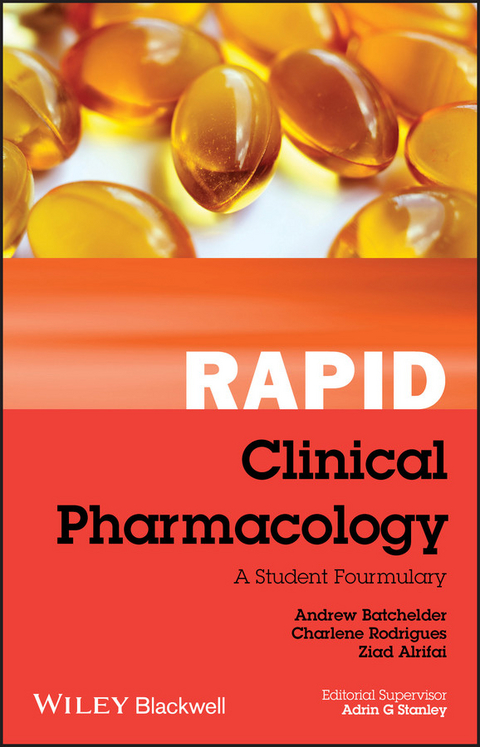
Rapid Clinical Pharmacology (eBook)
John Wiley & Sons (Verlag)
978-1-118-29306-5 (ISBN)
In light of the growing pressures on those who prescribe drugs to patients, increasing emphasis has been placed on the importance of pharmacology in the undergraduate medical curriculum. Rapid Clinical Pharmacology, with its concise, easy-to-use approach, offers an appealing format for students to use in both clinical practice and exam preparation and its 'one-page per drug/class' layout easily facilitates the generation of a personal student formulary.
Each chapter of the book mirrors each section of the BNF to allow easy cross-referencing and then each chapter is divided into consistent sections as per other books in the Rapid series.
Rapid Clinical Pharmacology will also be available as a mobile application for iPhone, iPod Touch, iPad and Blackberry. See wiley.com/go/mededapps for further details.
Andrew Batchelder is Core Trainee in Surgery University Hospitals of Leicester NHS Trust
Charlene Rodrigues is Academic Clinical Fellow in Paediatric Infectious Diseases, Imperial College, London
Ziad Alrifai is Core Trainee in Anaesthetics, University Hospitals of Nottingham NHS Trust
Adrian Stanley is Consultant Physician in Cardiovascular Medicine and Honorary Senior Lecturer (Medical Education) at University Hospitals of Leicester NHS Trust
This pocket reference guide is a must for all medical students and junior doctors preparing for exams in pharmacology or needing a rapid reminder during a clinical attachment. In light of the growing pressures on those who prescribe drugs to patients, increasing emphasis has been placed on the importance of pharmacology in the undergraduate medical curriculum. Rapid Clinical Pharmacology, with its concise, easy-to-use approach, offers an appealing format for students to use in both clinical practice and exam preparation and its one-page per drug/class' layout easily facilitates the generation of a personal student formulary. Each chapter of the book mirrors each section of the BNF to allow easy cross-referencing and then each chapter is divided into consistent sections as per other books in the Rapid series. Rapid Clinical Pharmacology will also be available as a mobile application for iPhone, iPod Touch, iPad and Blackberry. See wiley.com/go/mededapps for further details.
Andrew Batchelder is an Academic doctor at University Hospitals of Leicester (UHL). Charlene Rodrigues is an Academic doctor at the London Deanery. Ziad Alrifai is an Academic doctor at University Hospitals of Leicester (UHL). Adrian Stanley is a Consultant Physician in Cardiovascular Medicine and Honorary Senior Lecturer (Medical Education), UHL.
Preface, ix
List of abbreviations, xi
Basic pharmacokinetic concepts
Gastrointestinal system
Histamine type 2 receptor antagonists, 5
Laxatives, 6
Proton pump inhibitors (PPIs), 7
Cardiovascular system
a-adrenoceptor antagonists (a blockers), 8
Adenosine, 9
Aldosterone antagonists, 10
Amiodarone, 11
Angiotensin-converting enzyme inhibitors (ACEIs), 12
Angiotensin II receptor blockers (ARBs), 13
Antimuscarinics, 14
Aspirin, 15
b-adrenoceptor antagonists (b blockers), 16
Calcium channel blockers (CCBs), 18
Cardiac glycosides, 19
Clopidogrel, 20
Dipyridamole, 21
Fibrates, 22
Fibrinolytics, 23
Flecainide, 24
Glycoprotein IIb/IIIa inhibitors, 25
Inotropic sympathomimetics, 26
Loop diuretics, 27
Low molecular weight heparins (LMWH), 28
Nitrates, 29
Potassium channel activators, 30
Statins, 31
Thiazide diuretics, 32
Tranexamic acid, 33
Vasoconstrictor sympathomimetics, 34
Warfarin, 35
Respiratory system
b2 adrenoceptor agonists, 36
Histamine type 1 receptor antagonists, 37
Inhaled antimuscarinics, 38
Leukotriene receptor antagonists, 39
Oxygen, 40
Theophylline, 41
Central nervous system
5-HT1 agonists (triptans), 42
5-HT3 antagonists, 43
Antihistamine anti-emetics, 44
Antipsychotics - atypical, 45
Antipsychotics - typical, 46
Benzodiazepines, 47
Carbamazepine, 48
Dopamine antagonist anti-emetics, 49
Drugs for dementia, 50
Gabapentin and pregabalin, 51
Levodopa (L-dopa), 52
Lithium, 53
Monoamine oxidase inhibitors (MAOIs), 54
Non-steroidal anti-inflammatory drugs (NSAIDs), 55
Opioid analgesia, 56
Other antiepileptics, 57
Other antiparkinsonian drugs, 58
Paracetamol, 59
Phenothiazine anti-emetics, 60
Phenytoin, 61
Selective serotonin reuptake inhibitors (SSRIs), 62
Sodium valproate, 63
Tricyclic antidepressants (TCAs), 64
Infections
Aciclovir, 65
Aminoglycosides, 66
Antifungals, 67
Antiretroviral agents, 68
Antituberculosis drugs, 69
Cephalosporins and other b lactams, 70
Penicillins, 71
Glycopeptide antibiotics, 72
Macrolides, 73
Metronidazole, 74
Nitrofurantoin, 75
Quinolones, 76
Tetracyclines, 77
Trimethoprim, 78
Endocrine system
5a-reductase inhibitors, 79
Antidiuretic hormone (ADH) analogues, 80
Biguanides, 81
Bisphosphonates, 82
Carbimazole, 83
Corticosteroids, 84
Dipeptidylpeptidase-4 (DDP-4) inhibitors, 85
Gonadotrophin-releasing hormone (GnRH) agonists, 86
Hormone replacement therapy (HRT), 87
Incretin mimetics, 88
Insulins, 89
Levothyroxine, 90
Propylthiouracil, 91
Sulfonylureas, 92
Thiazolidinediones, 93
Obstetrics, gynaecology and urinary tract disorders
Contraceptives, 94
Mifepristone, 96
Oxybutynin, 97
Oxytocin, 98
Phosphodiesterase type 5 inhibitors, 99
Malignant disease and immunosuppression
Alkylating agents, 100
Anthracyclines, 101
Anti-androgens, 102
Antimetabolites, 103
Antiproliferative immunosuppressants, 104
Calcineurin inhibitors, 105
Other antineoplastic drugs, 106
Selective oestrogen receptor modulators (SERMs), 107
Trastuzumab (Herceptin), 108
Vinca alkaloids, 109
Musculoskeletal and joint diseases
Allopurinol, 110
Aminosalicylic acid compounds (ASAs), 111
Colchicine, 112
Methotrexate, 113
Contents vii
Eye
Antiglaucoma drugs, 114
Anaesthesia
Depolarising neuromuscular blocking agents, 115
Etomidate, 116
Inhalational anaesthetics, 117
Lidocaine, 118
Non-depolarising blocking agents, 119
Propofol, 120
Thiopental sodium, 121
Intravenous fluids
Blood and transfusion medicine
Index of drugs, 127
"This is an excellent pocket manual on core drugs for medical
practitioners, especially those practicing in a British-oriented
healthcare system." (Doody's, 13 January 2012)
"The book is practical and made more so by its availability for
mobile electronic devices such as iPhones, iPad, and so on. This
book represents an important step in application of medical
knowledge and technology by the bed side." (Journal of Tropical
Pediatrics, 1 November 2011)
List of abbreviations
| 5-HT | 5-hydroxytryptamine (serotonin) |
| ACEIs | Angiotensin-converting enzyme inhibitors |
| ACh | Acetylcholine |
| ACS | Acute coronary syndrome |
| ADH | Antidiuretic hormone |
| ADP | Adenosine diphosphate |
| AF | Atrial fibrillation |
| AIDS | Acquired immunodeficiency syndrome |
| APTT | Activated partial thromboplastin time |
| ARBs | Angiotensin receptor blockers |
| ASA | Aminosalicylic acid |
| ATP | Adenosine triphosphate |
| AV | Atrioventricular |
| AVNRT | AV nodal re-entry tachycardia |
| BM | Boehringer Mannheim (finger-prick blood glucose) |
| BP | Blood pressure |
| BTS | British Thoracic Society |
| Ca2+ | Calcium ion |
| cAMP | Cyclic adenosine monophosphate |
| CCBs | Calcium channel blockers |
| CCF | Congestive cardiac failure |
| CD4+ | Cluster of differentiation 4 |
| cGMP | Cyclic guanosine monophosphate |
| Cl- | Chloride ion |
| CMV | Cytomegalovirus |
| CNS | Central nervous system |
| CO2 | Carbon dioxide |
| COCP | Combined oral contraceptive pill |
| COMT | Catechol-O-methyl transferase |
| COPD | Chronic obstructive pulmonary disease |
| COX | Cyclo-oxygenase |
| CSF | Cerebrospinal fluid |
| CT | Computed tomography |
| CTG | Cardiotocography |
| CTZ | Chemoreceptor trigger zone |
| CVP | Central venous pressure |
| DIC | Disseminated intravascular coagulation |
| DKA | Diabetic ketoacidosis |
| DNA | Deoxyribonucleic acid |
| DVT | Deep vein thrombosis |
| EBV | Epstein Barr virus |
| ECG | Electrocardiography |
| ESR | Erythrocyte sedimentation rate |
| FBC | Full blood count |
| FFP | Fresh frozen plasma |
| FSH | Follicule-stimulating hormone |
| G6PD | Glucose-6-phosphate dehydrogenase deficiency |
| GABA | Gamma aminobutyric acid |
| GFR | Glomerular filtration rate |
| GI | Gastrointestinal |
| GLUT | Glucose transporters |
| GnRH | Gonadotrophin-releasing hormone |
| GPIIb/IIIa | Glycoprotein IIb/IIIa |
| GTN | Glyceryl trinitrat |
| GTP | Guanosine triphosphate |
| GU | Genito-urinary |
| H+ | Hydrogen ion |
| H1 | Histamine type 1 receptor |
| H2 | Histamine type 2 receptor |
| HDL | High density lipoproteins |
| HER2 | Human epidermal growth factor receptor 2 |
| HIV | Human immunodeficiency virus |
| HMG CoA | 3-hydroxy-3-methylglutaryl coenzyme A |
| HONK | Hyperosmolar non-ketotic state |
| HRT | Hormone replacement therapy |
| IHD | Ischaemic heart disease |
| IN | Intranasal |
| INR | International normalised ratio |
| ISMN | Isosorbide mononitrate |
| JVP | Jugular venous pressure |
| K+ | Potassium ion |
| L-dopa | Levodopa |
| LDL | Low-density lipoproteins |
| LFTs | Liver function tests |
| LH | Luteinising hormone |
| LMWH | Low molecular weight heparin |
| LRTI | Lower respiratory tract infection |
| LV | Left ventricular |
| LVF | Left ventricular failure |
| M2 | Muscarinic type 2 receptors |
| M3 | Muscarinic type 3 receptors |
| MAO | Monoamine oxidase |
| MAOIs | Monoamine oxidase inhibitors |
| MI | Myocardial infarction |
| MMSE | Mini-mental state examination |
| mRNA | Messenger ribonucleic acid |
| N2O | Nitrous oxide |
| Na+ | Sodium ion |
| NICE | National Institute for Health and Clinical Excellence |
| NMDA | N-methyl-D-aspartic acid |
| NNRTIs | Non-nucleoside reverse transcriptase inhibitors |
| NRTIs | Nucleoside reverse transcriptase inhibitors |
| NSAID | Non-steroidal anti-inflammatory drugs |
| O2 | Oxygen |
| OCP | Oral contraceptive pill |
| PCA | Patient-controlled analgesia |
| PCOS | Polycystic ovarian syndrome |
| PE | Pulmonary embolism |
| PGs | Prostaglandins |
| PIs | Protease inhibitors |
| PO | By mouth (per os) |
| POP | Progesterone-only pill |
| PONV | Post-operative nausea and vomiting |
| PPAR | Peroxisome proliferator-activated receptors |
| PPI | Proton pump inhibitor |
| PR | Per rectum |
| PSA | Prostate-specific antigen |
| QTc | Corrected QT interval |
| RNA | Ribonucleic acid |
| SA | Sino-atrial |
| SERM | Selective oestrogen receptor modulator |
| SLE | Systemic lupus erythematosus |
| SNRIs | Serotonin and noradrenaline reuptake inhibitors |
| SSRIs | Selective serotonin reuptake inhibitors |
| SVT | Supraventricular tachycardia |
| t½ | Half-life |
| T3 | Tri-iodothyronine |
| T4 | Tetra-iodothyronine |
| TCAs | Tricyclic antidepressants |
| TFTs | Thyroid function tests |
| TIA | Transient ischaemic attack |
| TPR | Total peripheral resistance |
| tRNA | Transfer ribonucleic acid |
| TSH | Thyroid-stimulating hormone |
| U&Es | Urea and electrolytes |
| UTI | Urinary tract infection |
| VF | Ventricular fibrillation |
| VLDL | Very low-density lipoproteins |
| VT | Ventricular tachycardia |
| VTE | Venous thromboembolism |
Abbreviations of routes of...
| Erscheint lt. Verlag | 28.11.2011 |
|---|---|
| Reihe/Serie | Rapid |
| Rapid | Rapid |
| Mitarbeit |
Koordination: Adrian Stanley |
| Sprache | englisch |
| Themenwelt | Medizin / Pharmazie ► Gesundheitsfachberufe |
| Medizin / Pharmazie ► Medizinische Fachgebiete ► Pharmakologie / Pharmakotherapie | |
| Schlagworte | Clinical • concise • doctors • Drug • Drugs • emphasis • Exams • Format • growing • Guide • importance • Junior • Layout • light • Medical • medical curriculum • Medical Science • Medizin • patients • pharmacology • Pharmacology & Pharmaceutical Medicine • Pharmakologie • Pharmakologie u. Pharmazeutische Medizin • pocket • pressures • Reference • Student • students • undergraduate |
| ISBN-10 | 1-118-29306-1 / 1118293061 |
| ISBN-13 | 978-1-118-29306-5 / 9781118293065 |
| Informationen gemäß Produktsicherheitsverordnung (GPSR) | |
| Haben Sie eine Frage zum Produkt? |
 EPUB (Adobe DRM)
Kopierschutz: Adobe-DRM
Adobe-DRM ist ein Kopierschutz, der das eBook vor Mißbrauch schützen soll. Dabei wird das eBook bereits beim Download auf Ihre persönliche Adobe-ID autorisiert. Lesen können Sie das eBook dann nur auf den Geräten, welche ebenfalls auf Ihre Adobe-ID registriert sind.
Details zum Adobe-DRM
Dateiformat: EPUB (Electronic Publication)
EPUB ist ein offener Standard für eBooks und eignet sich besonders zur Darstellung von Belletristik und Sachbüchern. Der Fließtext wird dynamisch an die Display- und Schriftgröße angepasst. Auch für mobile Lesegeräte ist EPUB daher gut geeignet.
Systemvoraussetzungen:
PC/Mac: Mit einem PC oder Mac können Sie dieses eBook lesen. Sie benötigen eine
eReader: Dieses eBook kann mit (fast) allen eBook-Readern gelesen werden. Mit dem amazon-Kindle ist es aber nicht kompatibel.
Smartphone/Tablet: Egal ob Apple oder Android, dieses eBook können Sie lesen. Sie benötigen eine
Geräteliste und zusätzliche Hinweise
Buying eBooks from abroad
For tax law reasons we can sell eBooks just within Germany and Switzerland. Regrettably we cannot fulfill eBook-orders from other countries.
aus dem Bereich