Traumatic Dental Injuries (eBook)
John Wiley & Sons (Verlag)
978-1-118-25015-0 (ISBN)
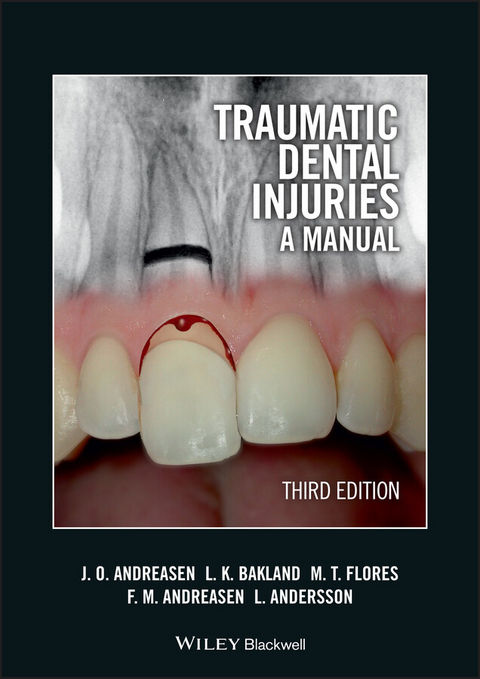
The third edition of Traumatic Dental Injuries: A Manual builds on the widespread success of the previous two editions. The ultimate guide to dental trauma, the manual preserves its uniquely usable and reader-friendly format, demonstrating step-by-step treatment protocols for commonly occurring traumatic injuries. Several new sections have been added to expand the number of clinical scenarios, describing soft tissue injuries associated with dental trauma, showing how decoronation of ankylosed anterior teeth in adolescents can preserve the alveolar process for later implant placement, and identifying predictors for pulpal and periodontal ligament healing complications as well as for tooth loss.
A unique feature of the new edition is the accompanying DVD which presents computer animations of all trauma scenarios, as well as links to the internet-based interactive Dental Trauma Guide to predict healing complications for individual trauma scenarios.
KEY FEATURES
- Written by international authorities on dental trauma
- Demonstrates treatment protocols in a clear step-by-step format
- Illustrated throughout with high-quality color images and diagrams
- Includes more sections to expand number of clinical scenarios
- Accompanied by a new DVD of trauma scenario animations
REVIEWS OF PREVIOUS EDITIONS
The text is clear and well written and well referenced ... The chapters on diagnosis of periodontal and pulpal complications are particularly helpful as this is a difficult area for many clinicians. The manual will serve as an excellent reference for practitioners and dental students who have a good working knowledge of dental traumatology.
Journal of Orthodontics
Overall, this book is excellent and I believe would be an essential member of a dentist's library. It is the sort of book that can be quickly read, and information and guidance can be located easily when the need arises. The price makes the book very affordable and I wholeheartedly recommend it as an essential reference source for the general dentist and dental student.
Australian Endodontic Journal
BY THE SAME AUTHORS
Textbook and Color Atlas of Traumatic Injuries to the Teeth
Fourth Edition
Edited by J.O. Andreasen, F.M. Andreasen and L. Andersson
ISBN 9781405129541
Oral and Maxillofacial Surgery
Edited by L. Andersson, K.E. Kahnberg and M.A. Pogrel
ISBN 9781405171199
DVD animations can be found by entering the ISBN at Booksupport.wiley.com
Jens O. Andreasen, University Hospital (Rigshospitalet), Copenhagen, Denmark.
Leif K. Bakland, Loma Linda University, California, US.
Maria Teresa Flores, Faculty of Dentistry, University of Valparaiso, Chile.
Frances M. Andreasen, University Hospital (Rigshospitalet), Copenhagen, Denmark.
Lars Andersson, Kuwait University, Safat, Kuwait.
TRAUMATIC DENTAL INJURIES: A MANUAL The third edition of Traumatic Dental Injuries: A Manual builds on the widespread success of the previous two editions. The ultimate guide to dental trauma, the manual preserves its uniquely usable and reader-friendly format, demonstrating step-by-step treatment protocols for commonly occurring traumatic injuries. Several new sections have been added to expand the number of clinical scenarios, describing soft tissue injuries associated with dental trauma, showing how decoronation of ankylosed anterior teeth in adolescents can preserve the alveolar process for later implant placement, and identifying predictors for pulpal and periodontal ligament healing complications as well as for tooth loss. A unique feature of the new edition is the accompanying DVD which presents computer animations of all trauma scenarios, as well as links to the internet-based interactive Dental Trauma Guide to predict healing complications for individual trauma scenarios. KEY FEATURES Written by international authorities on dental trauma Demonstrates treatment protocols in a clear step-by-step format Illustrated throughout with high-quality color images and diagrams Includes more sections to expand number of clinical scenarios Accompanied by a new DVD of trauma scenario animations REVIEWS OF PREVIOUS EDITIONS The text is clear and well written and well referenced The chapters on diagnosis of periodontal and pulpal complications are particularly helpful as this is a difficult area for many clinicians. The manual will serve as an excellent reference for practitioners and dental students who have a good working knowledge of dental traumatology. Journal of Orthodontics Overall, this book is excellent and I believe would be an essential member of a dentist s library. It is the sort of book that can be quickly read, and information and guidance can be located easily when the need arises. The price makes the book very affordable and I wholeheartedly recommend it as an essential reference source for the general dentist and dental student. Australian Endodontic Journal BY THE SAME AUTHORS Textbook and Color Atlas of Traumatic Injuries to the TeethFourth EditionEdited by J.O. Andreasen, F.M. Andreasen and L. AnderssonISBN 9781405129541 Oral and Maxillofacial SurgeryEdited by L. Andersson, K.E. Kahnberg and M.A. PogrelISBN 9781405171199 DVD animations can be found by entering the ISBN at Booksupport.wiley.com
Jens O. Andreasen, University Hospital (Rigshospitalet), Copenhagen, Denmark. Leif K. Bakland, Loma Linda University, California, US. Maria Teresa Flores, Faculty of Dentistry, University of Valparaiso, Chile. Frances M. Andreasen, University Hospital (Rigshospitalet), Copenhagen, Denmark. Lars Andersson, Kuwait University, Safat, Kuwait.
Epidemiology of Traumatic Dental Injuries 8
Pathophysiology and Consequences of Dental Trauma 10
Classification of Dental Injuries 16
Examination and Diagnosis 18
Diagnosis of Pulpal Healing Complications 22
Diagnosis of Periodontal Healing Complications 24
Treatment Priorities after Dental Trauma 26
Crown Fracture without Pulp Exposure 28
Crown Fracture with Pulp Exposure 30
Crown-Root Fracture 32
Root Fracture 34
Alveolar Process Fracture 36
Concussion 38
Subluxation 40
Extrusive Luxation 42
Lateral Luxation 44
Intrusive Luxation 46
Avulsion 48
Injuries to the Primary Dentition 54
Soft Tissue Injuries 58
Splinting 62
Endodontic Considerations in Dental Trauma 64
Decoronation of Ankylosed Teeth in Adolescents 68
Predictors for Healing Complications 70
Tooth Survival in the Permanent Dentition 74
Information for the Patient about Dental Trauma 76
Information for the Public about Dental Trauma 78
Prevention of Traumatic Dental Injuries 80
Appendices 84
References 88
Index 97
"The text is easy to read and minimalist in style ... If you are looking for a trauma textbook for your surgery, this is probably the one you should buy." (Primary Dental Care, 1 January 2012)
"The book's target audience is best summaried in the preface to the first edition: "We present the highlights of dental traumatology in a format which will be a ready reference for general (dental) practitioners and aid dental students in their studies." (British Dental Association, 1 November 2011)
Reviews of the Previous Edition:
"The text is clear and well written and well referenced ... The chapters on diagnosis of periodontal and pulpal complications are particularly helpful as this is a difficult area for many clinicians. The manual will serve as an excellent reference for practitioners and dental students who have a good working knowledge of dental traumatology." (Journal of Orthodontics)
"In the second edition the authors build on their success and explore the research that has led to an improvement in the prognosis of traumatised teeth...a prominent change in the second edition is the inclusion of a brief description of the processes involved in wound healing in the first chapter. It is this emphasis on the importance of facilitating the natural healing of tissues that makes this book stand out." (British Dental Journal)
"The book is beautifully laid out for easy reference...illustrated with high quality photographs, radiographs, and illustrations." (British Journal of Oral and Maxillofacial Surgery)
Pathophysiology and Consequences of Dental Trauma
OBJECTIVES
1 Describe the pathophysiology and effect of trauma.
2 Describe healing events after uncomplicated (separation) injuries to the pulp and periodontium.
3 Describe healing events after complicated (crushing) injuries to the pulp and periodontium.
PATHOPHYSIOLOGY OF TRAUMA: SEPARATION INJURY
A traumatic dental injury represents acute transmission of energy to a tooth and its supporting structures, which results in fracture and/or displacement of the tooth and/or separation or crushing of the supporting tissues (gingival, periodontal ligament [PDL] and bone).5,6 In cases of separation injury (e.g. extrusive luxation), the major part of the injury to the supporting tissues consists of cleavage of intercellular structures (collagen and intercellular substance), with limited damage to the cells in the area of trauma. This implies that wound healing can arise from existing cellular systems with minimal delay.
PATHOPHYSIOLOGY OF TRAUMA: CRUSHING INJURY
In contrast to separation injury, in a crushing injury (e.g. lateral luxation and intrusive luxation), there is extensive damage to both cellular and intercellular systems; consequently, damaged tissue must be removed by macrophages and/or osteoclasts before the traumatized tissue can be repaired. In this type of injury, several weeks are added to the healing process and this is reflected in the recommended splinting period.
EARLY WOUND HEALING EVENTS
The immediate events following trauma include bleeding from ruptured vessels followed by coagulation.5,6 In the Figure, components of the pathophysiologic response are described. Platelets (p) in the coagulum play a significant role, not only in transformation of fibrinogen to fibrin (f), but also due to their content of growth factors (e.g. platelet-derived growth factor [PGDF] and transforming growth factors [TGF]-β), which initiate the wound healing process. Thereafter, an influx of neutrophilic leukocytes (n) and macrophages (m) occurs. The first cell type is concerned with infection, while the latter clean the area of damaged tissue and foreign bodies, assisting the neutrophilic leukocytes in defending against or combating microbial colonization, and finally in taking over the platelets’ role in directing wound healing events.5,6
LATER WOUND HEALING EVENTS
Wound healing events comprise revascularization of ischemic tissue and formation of new tissue in case of tissue loss (Figure A). In both instances, wound healing takes place by a coordinated movement of cells into the traumatized area, where macrophages (m) form the healing front, followed by endothelial cells (e) and fibroblasts (f). Vascular loops are formed in a stroma of tissue dominated by immature collagen (Type III) and proliferating fibroblasts. These cells are synchronized via chemical signals released by the involved cells and the surrounding tissue.5 This phenomenon has been termed the wound healing module (Figure B), and appears to advance in the pulp and periodontium with a speed of approximately 0.5 mm a day.6
Below, wound-healing responses will be described as they appear in cases of uncomplicated luxation injuries, with only separation injuries of the PDL and the pulp, and complicated luxation injuries with crushing injuries.6
The few experiments carried out on uncomplicated luxation injuries indicate the following about the type and chronology of healing:
PDL: After 1 week, new collagen formation starts to unite the severed PDL fibers which leads to initial consolidation of a luxated or a replanted tooth. After 2 weeks, repair of the principal fibers is so advanced that approximately two-thirds of the mechanical strength of the PDL has been restored.6
Pulp: In luxated teeth with a severed vascular supply, ingrowth of new vessels into the pulp starts 4 days after injury and proceeds with a speed of approximately 0.5 mm per day in teeth with open apices. Revascularization is markedly influenced by the size of the pulpo-periodontal interface (i.e. diameter of the apical foramen), being complete and predictable in teeth with open apices (≥1.0 mm), and rare in teeth with a narrow apical foramen (<0.5 mm).6
The most significant factor that can arrest the revascularization process appears to be colonization of bacteria in the ischemic pulp tissue. The origin of these bacteria can be invasion from dentinal tubules via a crown fracture, or invasion along the blood clot in a severed PDL. Finally, bacteria can be carried to the area via the blood stream (anachoresis). Thus, it has been found that the revascularization process with its endothelial sprouts is often incontinent, allowing corpuscular elements, like erythrocytes and bacteria, to leave the blood stream.6
In complicated luxation injuries, with crushing or other damage of the PDL (e.g. desiccation after avulsion), complicating sequelae may occur which result in root resorption.6 These processes occur due to the loss of the protecting cemento-blast layer and the epithelial rests of Malassez along the root surface, caused by the traumatic events. When these cell layers disappear, there is free access for osteoclasts and macrophages to remove damaged PDL and cementum on the root surface.
Further events are subsequently determined by three factors:
- Eventual exposure of dentinal tubules.
- Content of the pulp, whether it is ischemic and sterile or necrotic and infected.
- Presence of adjacent vital cementoblasts.
The combination of these factors may lead to the healing complications shown on the following pages as the wound healing module involves the injury site.6–8
REPAIR-RELATED (SURFACE) RESORPTION
In cases of damage to the layer of the PDL closest to cementum (Figure A), the site will be resorbed by macrophages and osteoclasts, and results in a saucer-shaped cavity on the root surface (Figure B). If this cavity is not in contact with dentinal tubules and the adjacent cementoblast layer is intact, this resorption cavity is repaired by new cementum and insertion of new Sharpey’s fibers (Figure C). The ligament width is normal and follows the contours of the defect.7,8
INFECTION-RELATED (INFLAMMATORY) RESORPTION
In the event that the initial resorption penetrates the cementum and exposes dentinal tubules (Figures A and B), toxins from bacteria present in the dentinal tubules and/or the infected root canal can diffuse via the exposed tubules to the PDL. This results in continuation of the osteoclastic process and an associated inflammation in the PDL leading to resorption of the lamina dura and adjacent bone (Figure B) along with resorption of tooth structure. This process is usually progressive until the root canal is exposed. If bacteria are eliminated from the root canal and/or dentinal tubules by proper endodontic therapy, the resorptive process will be arrested. The resorption cavity will then be filled in with cementum (Figure C) or bone, according to the type of vital tissue found next to the resorption site (PDL or bone marrow-derived tissue).7,8
ANKYLOSIS-RELATED (REPLACEMENT) RESORPTION
In cases of extensive damage to the innermost layer of the PDL, competitive healing events will take place whereby healing from the socket wall (creating bone via bone marrow-derived cells) and healing from adjacent PDL next to the root surface (creating cementum and Sharpey’s fibers) will take place simultaneously.7,8
With cases of moderate injuries (1–4 mm2), an initial ankylosis is formed (Figures A–C). This can later be replaced with new cementum and PDL, if allowed functional mobility by the use of a semi-rigid splint, or no splinting (transient ankylosis). In this way resorption of the initial ankylosis site may occur.7
With larger injuries (> 4 mm2) transient or progressive ankylosis occurs. This leads to the tooth becoming an integral part of the bone remodeling system. The entire process includes osteoclastic resorption dependent on bone remodeling processes, parathyroid hormone-induced resorption, remodeling due to function and resorption due to bacteria present in the gingival area and/or the root canal. All of these processes are very active in children and lead to gradual infraocclusion and arrested development of the alveolar process. In children, this combination of resorption processes leads to loss of ankylosed teeth within 1–5 years. In older individuals, replacement resorption is significantly slower and often allows the tooth to function for longer periods of time (i.e. 5–20 years).
TRANSIENT MARGINAL AND APICAL BREAKDOWN OF BONE
In situations where compression of the PDL has occurred (e.g. lateral luxation and intrusion), macrophage/osteoclast removal of traumatized tissue prior to periodontal healing often results in a transient marginal breakdown that is manifested by formation of gingival granulation tissue at the site of compression and a transient radiographic breakdown of the lamina dura at the site involved. After 2–3 months the periodontium will usually be reformed. Likewise, in the apical region a transient apical breakdown may occur in teeth with closed apices in cases where pulp healing takes place after luxation injuries (i.e. extrusion, lateral luxation). In these instances a transient radiographic radiolucency is seen as a response to ingrowth of new tissue into the pulp canal (see page 23).7,8
PERMANENT MARGINAL BREAKDOWN
The causes of permanent marginal breakdown are the same as described for transient marginal breakdown. However, possibly due to...
| Erscheint lt. Verlag | 7.10.2011 |
|---|---|
| Sprache | englisch |
| Themenwelt | Medizin / Pharmazie ► Gesundheitsfachberufe |
| Medizin / Pharmazie ► Medizinische Fachgebiete | |
| Medizin / Pharmazie ► Zahnmedizin | |
| Schlagworte | Dental Traumatology • dentistry • Traumatologie • Traumatologie i. d. Zahnheilkunde • Zahnheilkunde • Zahnmedizin |
| ISBN-10 | 1-118-25015-X / 111825015X |
| ISBN-13 | 978-1-118-25015-0 / 9781118250150 |
| Informationen gemäß Produktsicherheitsverordnung (GPSR) | |
| Haben Sie eine Frage zum Produkt? |
 EPUB (Adobe DRM)
Kopierschutz: Adobe-DRM
Adobe-DRM ist ein Kopierschutz, der das eBook vor Mißbrauch schützen soll. Dabei wird das eBook bereits beim Download auf Ihre persönliche Adobe-ID autorisiert. Lesen können Sie das eBook dann nur auf den Geräten, welche ebenfalls auf Ihre Adobe-ID registriert sind.
Details zum Adobe-DRM
Dateiformat: EPUB (Electronic Publication)
EPUB ist ein offener Standard für eBooks und eignet sich besonders zur Darstellung von Belletristik und Sachbüchern. Der Fließtext wird dynamisch an die Display- und Schriftgröße angepasst. Auch für mobile Lesegeräte ist EPUB daher gut geeignet.
Systemvoraussetzungen:
PC/Mac: Mit einem PC oder Mac können Sie dieses eBook lesen. Sie benötigen eine
eReader: Dieses eBook kann mit (fast) allen eBook-Readern gelesen werden. Mit dem amazon-Kindle ist es aber nicht kompatibel.
Smartphone/Tablet: Egal ob Apple oder Android, dieses eBook können Sie lesen. Sie benötigen eine
Geräteliste und zusätzliche Hinweise
Buying eBooks from abroad
For tax law reasons we can sell eBooks just within Germany and Switzerland. Regrettably we cannot fulfill eBook-orders from other countries.
aus dem Bereich