Practical Guide to Equine Colic (eBook)
John Wiley & Sons (Verlag)
978-1-118-40465-2 (ISBN)
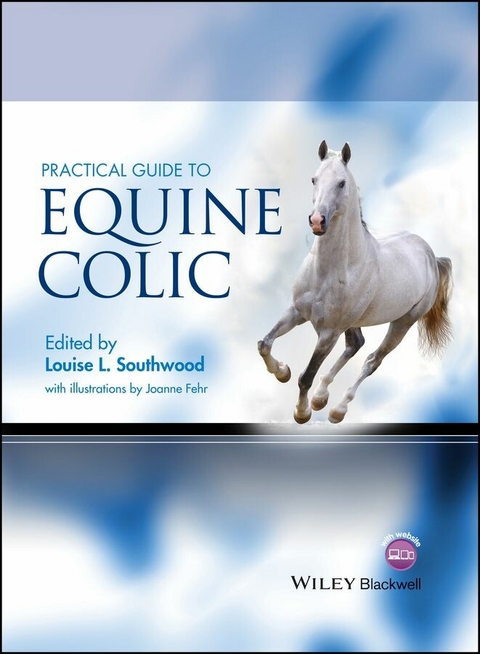
Practical Guide to Equine Colic takes a step-by-step clinical approach to the medical management of this common condition. Covering colic management and treatment from the veterinarian's first involvement through referral, surgical intervention, and long-term recovery, the book offers practical advice on managing a colic case. Designed for easy navigation, chapters are brief and fully cross-referenced, allowing the reader to quickly find and apply information in the practice setting.
The book incorporates key points, checklists, clinical tips, step-by-step illustrations, and case examples, emphasizing clinically relevant information throughout and referencing the most applicable and up-to-date literature. A companion website offers clinical cases, quizzes, and videos at www.wiley.com/go/southwood. Practical Guide to Equine Colic is an ideal resource for daily use in treating horses with colic, appealing to students, equine practitioners, and specialists alike.
THE EDITOR
Louise L. Southwood, BVSc, PhD, DACVS, DACVECC, is an Associate Professor of Emergency Medicine and Critical Care at New Bolton Center, University of Pennsylvania.
Practical Guide to Equine Colic takes a step-by-step clinical approach to the medical management of this common condition. Covering colic management and treatment from the veterinarian s first involvement through referral, surgical intervention, and long-term recovery, the book offers practical advice on managing a colic case. Designed for easy navigation, chapters are brief and fully cross-referenced, allowing the reader to quickly find and apply information in the practice setting. The book incorporates key points, checklists, clinical tips, step-by-step illustrations, and case examples, emphasizing clinically relevant information throughout and referencing the most applicable and up-to-date literature. A companion website offers clinical cases, quizzes, and videos at www.wiley.com/go/southwood. Practical Guide to Equine Colic is an ideal resource for daily use in treating horses with colic, appealing to students, equine practitioners, and specialists alike.
THE EDITOR Louise L. Southwood, BVSc, PhD, DACVS, DACVECC, is an Associate Professor of Emergency Medicine and Critical Care at New Bolton Center, University of Pennsylvania.
Practical Guide to Equine Colic 5
Copyright 6
Contents 9
Contributors 11
Preface 13
Overview of Practical Guide to Equine Colic 14
1 Patient Signalment and History 19
Importance of the patient’s history 19
Signalment 22
Obtaining the patient’s history 22
Initial history 23
Obtaining a more detailed history 24
Application of the patient’s history 28
References 28
2 Physical Examination 30
Importance of the physical examination 30
Initial patient observation 32
Physical examination 33
Rapid assessment of cardiovascular status 33
Evaluation of the gastrointestinal tract 37
Rectal temperature 37
Respiratory rate and evaluation of the respiratory system 37
Digital pulses 38
Applications of the physical examination 39
References 39
3 Abdominal Palpation per Rectum 40
Indications 40
Preparation 41
Restraint 41
Rectal sleeve 41
Lubrication 41
Relaxation of the rectum 41
Sedation 42
Procedure 42
Normal anatomy 42
Abnormal findings 44
Complications 54
Rectal tear 54
References 55
4 Nasogastric Intubation 56
Indications 56
Preparation 56
Nasogastric tube 57
Buckets and water 57
Stomach pump or dose syringe 57
Medications 57
Procedure 57
Nasogastric intubation1 58
Assessing for reflux 60
Information gained by nasogastric intubation 61
Complications 61
Hemorrhage 61
Tracheal intubation 62
Pharyngeal and esophageal trauma 62
Problems with the nasogastric tube 62
References 62
5 Management of Mild Colic 63
Practical perspective of colic 63
Clinical indications of mild colic 63
Management of mild colic 64
Analgesia 64
Spasmolytic drugs 65
Fluid therapy 65
Laxatives 65
Nutrition 66
Monitoring 66
Management changes and prevention 66
When colic is no longer considered mild 67
References 67
6 Analgesia 69
Indications 69
Nonsteroidal anti-inflammatory drugs 70
Mechanism of action 70
Clinical use 70
Adverse effects and contraindications 71
Alpha-2 adrenergic agonists 72
Mechanism of action 72
Clinical use 72
Adverse effects and contraindication 73
Opioids 73
Mechanism of action 73
Clinical use 74
Adverse effects and contraindications 74
Intravenous lidocaine 75
Mechanism of action 75
Clinical use 75
Adverse effects and contraindications 76
Hyoscine-N-butylbromide 76
Mechanism of action 76
Clinical use 76
Adverse effects and contraindications 77
References 77
7 Enteral Fluid Therapy 80
Indications 80
Transit and absorption of fluids and electrolytes 80
Indications 81
Contraindications 82
Preparation 82
Composition of enteral fluids 82
Technique 84
Intermittent boluses 84
Continuous infusion 84
Complications 85
Colic 85
Electrolyte disturbances 86
Diarrhea 86
Nasogastric tube-associated problems 86
References 87
8 Referral of the Horse with Colic 89
Importance of early referral 89
Indications 90
Signs of abdominal pain 90
Shock 91
Tachycardia or increasing heart rate 91
Nasogastric reflux 91
Evidence of intestinal obstruction or poor intestinal motility 91
Preparation 92
Patient 92
Client 93
References 95
9 Clinical Laboratory Data 96
Indications 96
Hematology 97
Erythrogram 97
Leukogram 97
Clinical chemistry 98
Acid-base evaluation 98
Electrolytes 99
Hepatobiliary assessment 100
Renal parameters 101
Metabolic indicators 101
Coagulation 101
Platelets 101
Secondary hemostasis 102
Coagulation inhibitors 102
Application of clinical pathology findings 103
References 103
10 Abdominocentesis and Peritoneal Fluid Analysis 105
Indications 105
Preparation 106
Procedure 106
Needle technique 107
Teat cannula technique 107
Complications 107
Peritoneal fluid analysis 108
Nonrepresentative sampling 108
Gross characteristics 108
Biochemical evaluation 109
Cells and cell counts 110
Interpretation of findings 113
Application of peritoneal fluid analysis 115
References 115
11 Intravenous Catheterization and Fluid Therapy 117
Basics of fluid distribution throughout the body 117
Oxygen delivery to the cells 119
IV catheterization 121
Indications 121
Preparation 121
Procedure 123
Complications 125
IV fluid therapy 127
Isotonic crystalloids 127
Hypertonic saline solution (HSS) 129
Colloids 130
References 132
12 Abdominal Sonographic Evaluation 134
Indications 135
Preparation 135
Patient 135
Transducer selection 135
Procedure 136
Fast localized abdominal sonography of horses (FLASH) 136
Complete abdominal examination 136
Transrectal examination 138
Application of abdominal sonography to the colic patient 138
Large colon displacements 138
Large intestinal impactions 141
Right dorsal colitis 143
Intussusceptions 145
Small intestinal lesions 146
Peritoneal fluid, peritonitis, and gastrointestinal rupture 151
Hemoperitoneum 152
Hernias 154
Masses 156
Other 161
References 164
13 Abdominal Radiographic Examination 167
Indications 167
Preparation 168
Equipment 168
Patient 170
Procedure 170
Adult horse 171
Foals 173
Application of abdominal radiography to the colic patient 173
Enterolithiasis 173
Sand accumulation 174
Metallic foreign material 175
Diaphragmatic hernia 175
Foal 175
References 177
14 Trocharization 178
Indications 178
Preparation 179
Procedure 179
Paralumbar approach 179
Transrectal approach 180
Complications 180
15 Medical versus Surgical Treatment of the Horse with Colic 182
General indications for surgery 182
Persistent or severe abdominal pain 183
Lack of response to medical management 183
Signs of complete or partial intestinal obstruction 183
Ancillary tests 184
Indications for specific lesions 184
Small intestinal lesions 184
Large colon impaction 185
Cecal impaction 186
Small colon impaction 186
Colitis 187
Peritonitis 187
Postpartum hemorrhage 188
The decision for euthanasia without surgical treatment 188
Prognostic indices 188
Gastrointestinal tract perforation 189
References 189
16 Colic Surgery 191
Indications 192
Preparation 192
Cardiovascular stabilization 192
Analgesic drugs 192
Antimicrobial drugs 193
General anesthesia 193
Surgical site preparation 194
Exploratory procedures 194
Ventral approaches 195
Lateral approaches 203
Laparoscopy 205
Selected surgical procedures 207
Needle decompression 207
Overview of enterotomy procedure 208
Partial typhlectomy 209
Overview of the resection and anastomosis procedure 210
Colopexy 220
Diagnosis and correction of selected specific conditions 220
References 220
17 Specific Causes of Colic 222
Gastric diseases 223
Small intestinal disease 225
Inflammatory disease 225
Simple obstruction 226
Functional obstruction 227
Strangulating obstruction 227
Cecal disease 232
Large (ascending) colon disease 233
Inflammatory disease 233
Simple obstruction 235
Small (descending) colon disease 239
Neoplasia 241
References 241
18 Postoperative Patient Care 248
Monitoring 249
Patient assessment 249
Physical examination 250
Laboratory data 251
Central venous pressure 252
Arterial blood pressure 252
Treatment 253
Fluid therapy 253
Anti-inflammatory and analgesic drugs 256
Feeding 259
References 259
19 Postoperative Complications 262
Fever 262
Ischemia-reperfusion injury 264
Endotoxemia and SIRS 264
Prevention 264
Treatment 265
Diarrhea 266
Prevention 266
Treatment 266
Recurrent colic 267
Treatment 268
Postoperative ileus 269
Prevention 269
Treatment 270
Septic peritonitis 271
Treatment 271
Postoperative intraperitoneal adhesions 273
Prevention 273
Treatment 274
Incisional complications 274
Treatment 276
References 276
20 Biosecurity 280
Importance of biosecurity 280
Purpose of this chapter 280
Components of a biosecurity program 282
Preventive measures 283
Biosecurity for the hospitalized equine colic patient 286
Specific concerns 286
Patient management 287
Biosecurity for the equine colic patient at home 288
General recommendations for isolating a horse at home 288
Recommendations for cleaning and disinfection 289
Salmonella 290
MRSA 291
References 291
21 Special Considerations 296
Foals 296
Causes of colic 297
Management considerations and complications 299
Pregnant mares 300
Causes of colic 300
Management considerations and complications 301
Postpartum mares 302
Causes of colic 302
Management considerations 303
Colts and stallions 303
Causes of colic 303
Management considerations and complications 304
Geriatric horses 304
Causes of colic 304
Management considerations and complications 305
Miniature horses, ponies, and donkeys 305
Causes of colic 305
Management considerations and complications 306
References 307
22 Long-term Recovery and Prevention 310
Long-term recovery 310
Postoperative management following hospital discharge 310
Long-term complications following colic surgery 312
Long-term survival following colic surgery 312
Return to use 313
Prevention 313
References 316
23 Nutrition 319
Feeding the postoperative colic patient 320
General considerations 320
How much to feed 320
Enteral or parenteral nutrition 321
Enteral nutrition 321
Parenteral nutrition 324
Long-term nutritional management of the postcolic patient 329
General considerations 329
Postsurgical colic long-term concerns 331
Postoperative weight gain 332
References 333
24 Gastrointestinal Parasitology and Anthelmintics 334
Gastrointestinal parasitology 334
Anoplocephala perfoliata 336
Definition 336
Life cycle 336
Pathology and clinical disease 336
Diagnosis and management 337
Cyathostomes 338
Definition 338
Life cycle 338
Pathology and clinical disease 338
Diagnosis and management 338
Parascaris equorum 339
Definition 339
Life cycle 339
Pathology and clinical disease 340
Diagnosis and management 340
Strongylus vulgaris 340
Definition 340
Life cycle 340
Pathology and clinical disease 341
Diagnosis and management 341
Anthelmintics 341
References 341
Appendix A Clinical Scenarios 343
Clinical scenario 1 343
Clinical scenario 2 343
Clinical scenario 3 344
Clinical scenario 4 344
Clinical scenario 5 345
Clinical scenario 6 345
Clinical scenario 7 345
Clinical scenario 8 346
Clinical scenario 9 346
Clinical scenario 10 347
Appendix B Drug Dosages used in the Equine Colic Patient 348
References 356
Appendix C Normal Ranges for Hematology and Palsma Chemistry and Conversion Table for Units 357
References 359
Index 361
"I would suggest that this book and its online resources
serve as an excellent learning tool for all those students and
practitioners interested in equine colic."
(Veterinary Record, 16 March 2013)
| Erscheint lt. Verlag | 6.9.2012 |
|---|---|
| Illustrationen | Joanne Fehr |
| Sprache | englisch |
| Themenwelt | Medizin / Pharmazie |
| Veterinärmedizin ► Pferd | |
| Schlagworte | abdominal palpation per rectum • cause of colic in horses • colic in horses • equine acute abdomen • equine biosecurity • equine clinical reference • equine colic patient • equine colic surgery • equine fluid therapy • equine gastroenterology • equine sonograph • horse colic • horse gastroenterology • louise southwood • managing colic in horses • Pferdekrankheit • Veterinärmedizin • Veterinärmedizin / Chirurgie, Orthopädie, Trauma • Veterinärmedizin f. Pferde • Veterinärmedizin / Innere Medizin • Veterinärmedizin • Veterinärmedizin / Chirurgie, Orthopädie, Trauma • Veterinärmedizin f. Pferde • Veterinärmedizin / Innere Medizin • Veterinary Internal Medicine • Veterinary Medicine • Veterinary Medicine - Equine • Veterinary Surgery, Orthopedics & Trauma |
| ISBN-10 | 1-118-40465-3 / 1118404653 |
| ISBN-13 | 978-1-118-40465-2 / 9781118404652 |
| Informationen gemäß Produktsicherheitsverordnung (GPSR) | |
| Haben Sie eine Frage zum Produkt? |
 PDF (Adobe DRM)
Kopierschutz: Adobe-DRM
Adobe-DRM ist ein Kopierschutz, der das eBook vor Mißbrauch schützen soll. Dabei wird das eBook bereits beim Download auf Ihre persönliche Adobe-ID autorisiert. Lesen können Sie das eBook dann nur auf den Geräten, welche ebenfalls auf Ihre Adobe-ID registriert sind.
Details zum Adobe-DRM
Dateiformat: PDF (Portable Document Format)
Mit einem festen Seitenlayout eignet sich die PDF besonders für Fachbücher mit Spalten, Tabellen und Abbildungen. Eine PDF kann auf fast allen Geräten angezeigt werden, ist aber für kleine Displays (Smartphone, eReader) nur eingeschränkt geeignet.
Systemvoraussetzungen:
PC/Mac: Mit einem PC oder Mac können Sie dieses eBook lesen. Sie benötigen eine
eReader: Dieses eBook kann mit (fast) allen eBook-Readern gelesen werden. Mit dem amazon-Kindle ist es aber nicht kompatibel.
Smartphone/Tablet: Egal ob Apple oder Android, dieses eBook können Sie lesen. Sie benötigen eine
Geräteliste und zusätzliche Hinweise
Buying eBooks from abroad
For tax law reasons we can sell eBooks just within Germany and Switzerland. Regrettably we cannot fulfill eBook-orders from other countries.
aus dem Bereich