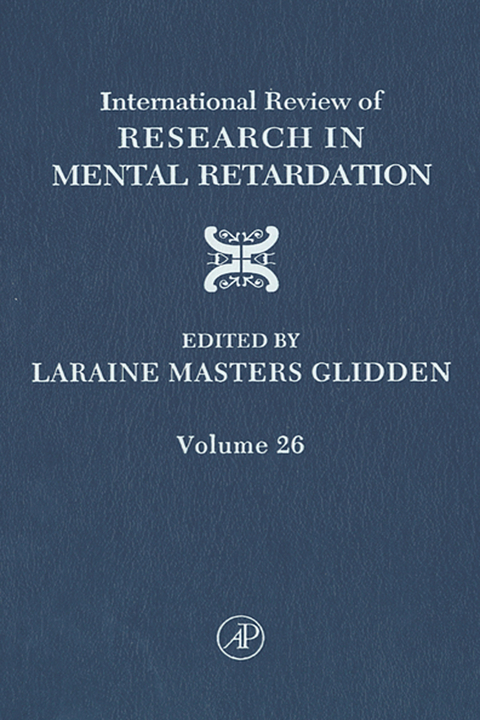
International Review of Research in Mental Retardation (eBook)
334 Seiten
Elsevier Science (Verlag)
9780080495705 (ISBN)
International Review of Research in Mental Retardation is an ongoing scholarly look at research into the causes, effects, classification systems, syndromes, etc. of mental retardation. Contributors come from wide-ranging perspectives, including genetics, psychology, education, and other health and behavioral sciences.
Cover 1
Contents 6
Contributors 10
Preface 12
Chapter 1. A History of Psychological Theory and Research in Mental Retardation since World War II 14
I. Introduction 14
II. General Discussion 58
References 60
Chapter 2. Psychopathology and Intellectual Disability: The Australian Child to Adult Longitudinal Study 74
I. The Added Burden of Behavioral and Emotional Problems in Intellectual Disability 74
II. The Phenomenology of Behavioral and Emotional Disturbances in Intellectual Disability 75
III. Etiology of Dual Disability 76
IV. The Australian Child to Adult Longitudinal Study 77
V. Longitudinal Study Measures 80
VI. Prevalence of Psychopathology 82
VII. Biological Risk Factors 83
VIII. Psychological Factors 94
IX. Social and Family Factors 94
X. Prediction of Psychopathology in Young People with Intellectual Disability 96
XI. Conclusions 99
References 101
Chapter 3. Psychopathology in Children and Adolescents with Intellectual Disability: Measurement, Prevalence, Course, and Risk 106
I. Definition and Assessment of Psychopathology 107
II. Instruments for Assessing Psychopathology 111
III. Prevalence of Psychopathology 120
IV. Course and Development 127
V. Factors Associated with Psychopathology 135
VI. Conclusions and Recommendations 137
References 142
Chapter 4. Resilience, Family Care, and People with Intellectual Disabilities 148
I. Introduction 148
II. Theorizing Resilience 149
III. Resilience in the Lives of People with Intellectual Disabilities 156
IV. Families with Children with Intellectual Disabilities 162
V. Summary and Conclusion 174
References 178
Chapter 5. Prevalence and Correlates of Psychotropic Medication Use among Adults with Developmental Disabilities: 1970–2000 188
I. Legal History of the Use of Psychotropic Medication with Adults with Developmental Disabilities. 189
II. Brief Overview of Psychotropic Medication 191
III. Prevalence Studies 195
IV. Conclusion and Future Recommendations 215
References 223
Chapter 6. Integration as Acculturation: Developmental Disability, Deinstitutionalization, and Service Delivery Implications 234
I. The Theory Basis for Looking at Integration as Acculturation 234
II. A Practice Example Applying Integration as Acculturation 254
Appendix 266
References 271
Chapter 7. Cognitive Aging and Down Syndrome: An Interpretation 274
I. Introduction 274
II. Assessment of Cognitive Functions: PASS Theory and Tests 278
III. Cognitive Consequences of Aging Related to Down Syndrome: A Brief Review 286
IV. Selected Studies in the Developmental Disabilities Center 290
V. Conceptualizing Cognitive Aging: A Binding Model 300
VI. Summary and Conclusions 306
Appendix 310
References 314
Index 320
Contents of Previous Volumes 338
| Erscheint lt. Verlag | 3.5.2003 |
|---|---|
| Sprache | englisch |
| Themenwelt | Geisteswissenschaften ► Psychologie ► Allgemeine Psychologie |
| Geisteswissenschaften ► Psychologie ► Biopsychologie / Neurowissenschaften | |
| Geisteswissenschaften ► Psychologie ► Entwicklungspsychologie | |
| Geisteswissenschaften ► Psychologie ► Klinische Psychologie | |
| Geisteswissenschaften ► Psychologie ► Pädagogische Psychologie | |
| Geisteswissenschaften ► Psychologie ► Verhaltenstherapie | |
| Medizin / Pharmazie ► Medizinische Fachgebiete ► Neurologie | |
| ISBN-13 | 9780080495705 / 9780080495705 |
| Informationen gemäß Produktsicherheitsverordnung (GPSR) | |
| Haben Sie eine Frage zum Produkt? |
 PDF (Adobe DRM)
Kopierschutz: Adobe-DRM
Adobe-DRM ist ein Kopierschutz, der das eBook vor Mißbrauch schützen soll. Dabei wird das eBook bereits beim Download auf Ihre persönliche Adobe-ID autorisiert. Lesen können Sie das eBook dann nur auf den Geräten, welche ebenfalls auf Ihre Adobe-ID registriert sind.
Details zum Adobe-DRM
Dateiformat: PDF (Portable Document Format)
Mit einem festen Seitenlayout eignet sich die PDF besonders für Fachbücher mit Spalten, Tabellen und Abbildungen. Eine PDF kann auf fast allen Geräten angezeigt werden, ist aber für kleine Displays (Smartphone, eReader) nur eingeschränkt geeignet.
Systemvoraussetzungen:
PC/Mac: Mit einem PC oder Mac können Sie dieses eBook lesen. Sie benötigen eine
eReader: Dieses eBook kann mit (fast) allen eBook-Readern gelesen werden. Mit dem amazon-Kindle ist es aber nicht kompatibel.
Smartphone/Tablet: Egal ob Apple oder Android, dieses eBook können Sie lesen. Sie benötigen eine
Geräteliste und zusätzliche Hinweise
Buying eBooks from abroad
For tax law reasons we can sell eBooks just within Germany and Switzerland. Regrettably we cannot fulfill eBook-orders from other countries.
aus dem Bereich