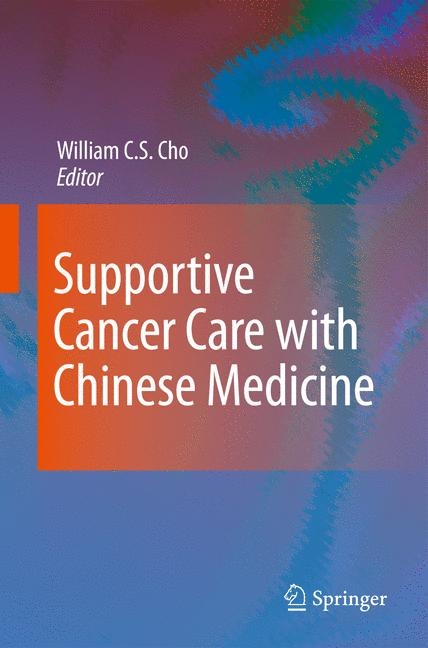
Supportive Cancer Care with Chinese Medicine (eBook)
389 Seiten
Springer Netherland (Verlag)
978-90-481-3555-4 (ISBN)
Cancer is a chronic disease. There are increasing cancer survivors after curative cancer treatment and this makes supportive cancer care an important area that more attention is needed. Chinese medicine has a long history of practice; it has aroused much interest from both Oriental and Western countries. A number of laboratory evidences and clinical trials demonstrated the effectiveness and ef?cacies of Chinese medicine for supportive cancer care. This book attempts to take a comprehensive approach to overview the different areas of Chinese medicine for supportive cancer care. This book not only serves as an introduction to novices to the area and a useful reference for those already involved, but also serves as a stimulus to these and others to employ alternative approaches to current cancer care. Hong Kong William C. S. Cho December 2009 v Contents 1 Supportive Cancer Care Using Chinese Medicine . . . . . . . . . . 1 Raimond Wong and Stephen M. Sagar 2 Supportive Cancer Care with Acupuncture . . . . . . . . . . . . . 39 Jaung-Geng Lin and Yi-Hung Chen 3 Chinese Medicinal Herbs Use in Managing Cancer . . . . . . . . . 55 Peter Dorsher and Zengfu Peng 4 Supportive Cancer Care with Qigong . . . . . . . . . . . . . . . . . 77 Myeong Soo Lee, Kevin W. Chen and Edzard Ernst 5 Traditional Chinese Medicine in the Reduction of Discomfort and Side-Effects of Surgery . . . . . . . . . . . . . . . . 95 Kok-Yang Tan, Xiaoxiu Wu and Francis Seow-Choen 6 Increasing Therapeutic Gain and Controlling Radiation-Induced Injuries with Asian Botanicals and Acupuncture 109 Stephen M. Sagar and Raimond K. Wong 7 Controlling Chemotherapy-Related Side Effects with Chinese Medicine . . . . . . . . . . . . . . . . . . . . . . . . . . . .
Preface 5
Contents 6
Contributors 8
1 Supportive Cancer Care Using Chinese Medicine 10
1.1 Introduction 10
1.2 Cancer: Traditional Chinese Medicine and Conventional Perspective 11
1.3 Traditional Chinese Medicine and Surgery 12
1.3.1 Herbal 13
1.3.1.1 Preoperative Nutritional and General Status Improvement 13
1.3.2 Acupuncture and Other Approaches 14
1.3.2.1 Reduction of Acute Postoperative Nausea and Pain 14
1.3.2.2 Reduction of Analgesia Requirement 15
1.3.2.3 Acute Postoperative Pain Control 15
1.3.2.4 Improvement of Postoperative Urinary Dysfunction 16
1.4 Traditional Chinese Medicine and Radiotherapy 16
1.4.1 Herbal 17
1.4.1.1 Enhancement of Radiotherapy Response 17
1.4.1.2 Improvement of Symptoms in Radiation Enteritis 19
1.4.1.3 Prevention and Treatment of Radiation Pneumonitis 19
1.4.1.4 Other Symptoms 20
1.4.2 Acupuncture and Other Related Techniques 20
1.4.2.1 Reduction of Symptoms in Radiation-induced Xerostomia 21
1.4.2.2 Reduction of Radiation Proctitis Symptoms 22
1.5 Traditional Chinese Medicine and Chemotherapy and/or Biological Modifiers 22
1.5.1 Herbal 22
1.5.1.1 Synergistic Actions Against Cancer Cells 22
1.5.1.2 Reduction of Chemotherapy Side Effects 23
1.5.1.3 Prevention and Reduction of Myelosuppression 24
1.5.1.4 Nausea and Vomiting Control and Better Quality of Life 26
1.5.1.5 Vasomotor Symptoms Reduction 27
1.5.1.6 Potential for Chemotherapy Cognitive Dysfunction 28
1.5.2 Acupuncture and Related Techniques 29
1.5.2.1 Reduction of Vasomotor Symptoms 29
1.5.2.2 Chemotherapy-induced Peripheral Neuropathy 30
1.5.2.3 Reduction of Chemotherapy-induced Nausea and Vomiting 31
1.5.2.4 Chemotherapy-induced Cognitive Dysfunction 32
1.6 Miscellaneous Symptoms 32
1.6.1 Pain 32
1.6.2 Anxiety, Depression, Cognitive Impairment 33
1.6.3 Fatigue 33
1.6.4 Hiccups and Yawning 34
1.7 Qigong Exercise 34
1.8 Nutritional Therapy 35
1.9 Chinese Massage Therapy, Tuina 36
1.10 Conclusion 36
References 36
2 Supportive Cancer Care with Acupuncture 47
2.1 Introduction 47
2.2 Mechanism of Acupuncture 48
2.3 Evaluation of Acupunctures Curative Effect in the Treatment of Cancer Patients and the Side Effects of Chemotherapy and Radiotherapy 50
2.3.1 Cancer Pain 50
2.3.2 Nausea and Vomiting 51
2.3.3 Xerostomia 52
2.3.4 Nervousness and Insomnia 53
2.3.5 Others 53
2.4 Clinical Practice 54
2.4.1 Pain 54
2.4.2 Vomiting, Nausea 55
2.4.3 Xerostomia 56
2.4.4 Nervousness and Insomnia 56
2.4.5 Others 58
2.4.5.1 Side Effects of Acupuncture 58
2.4.5.2 Precautions When Conducting Acupuncture 59
References 60
3 Chinese Medicinal Herbs Use in Managing Cancer 63
3.1 Introduction 63
3.2 Principles of Herbal Treatments 64
3.3 Individual Herbs Commonly Used to Treat Cancer 66
3.4 Individual Herbs 71
3.5 Issues with Cancer Research Using Chinese Herbal Medicine 77
3.5.1 Purity 77
3.5.2 Herb-Drug Interactions 77
3.5.3 Herb Toxicity 78
3.5.4 Evidence-Based Medicine Reviews 78
3.6 Summary 80
References 81
4 Supportive Cancer Care with Qigong 84
4.1 Introduction 84
4.2 Methods 85
4.2.1 Data Sources 85
4.2.2 Study Selection 86
4.2.3 Data Extraction 86
4.2.4 Assessment of Risk of Bias 86
4.3 Results 86
4.3.1 Study Description 86
4.3.2 Risk of Bias 93
4.3.3 Detailed of Included Studies 93
4.3.3.1 Randomized Clinical Trials 93
4.3.3.2 Non-randomized Controlled Trial 95
4.3.4 Safety 96
4.4 Discussion 96
4.4.1 Limitation of This Review 98
4.4.2 Recommendations for Future Research 99
4.4.3 Perspectives 99
References 99
5 Traditional Chinese Medicine in the Reduction of Discomfort and Side-Effects of Surgery 102
5.1 Introduction 102
5.2 Pathogenesis of Cancer According to Traditional Chinese Medicine 103
5.3 Rationale of Using Herbal Therapy in Cancer Surgery Treatment 105
5.4 Role of Herbal Therapy At the Preoperative Phase of Treatment 105
5.4.1 Treatment of Complications Arising from the Primary Pathology 106
5.4.2 Improving the Overall Condition to Facilitate Surgery 106
5.4.3 Improving the Overall Mental State Prior to Surgery 107
5.5 Role of Herbal Therapy in the Postoperative Phase of Treatment 107
5.5.1 Reducing Postoperative Intestinal Ileus 108
5.5.2 Reducing Postoperative Adhesion Formation 108
5.5.3 Inflammatory Response and Immunity Associated with Surgery 108
5.5.4 Reducing Urinary Dysfunction 110
5.5.5 Reducing Chronic Pain After Surgery 110
5.6 Potential Toxicities 110
5.7 Discussion on Current Evidence of Traditional Chinese Medicine 111
5.8 Future Directions 113
References 113
6 Increasing Therapeutic Gain and Controlling Radiation-Induced Injuries with Asian Botanicals and Acupuncture 115
6.1 Introduction 115
6.2 Botanical Radiosensitizers and Radioprotectors that Modulate Reactive Oxygen Intermediates (ROIs) and Associated Genes 117
6.3 Antiangiogenic Botanicals 124
6.4 Immunogenic Botanicals 128
6.5 Future Clinical Research 131
6.6 Acupuncture as a Biological Response Modifier of Cell Proliferation 132
6.7 Conclusion 133
References 134
7 Controlling Chemotherapy-Related Side Effects withChinese Medicine 146
7.1 Introduction 146
7.1.1 Cancer 147
7.2 Cancer Chemotherapy 147
7.3 Side Effects of Cancer Chemotherapy 149
7.3.1 Types of Side Effects 149
7.3.1.1 Gastrointestinal Side Effects 149
7.3.1.2 Myelosuppression 149
7.3.1.3 Alopecia 150
7.3.1.4 Sexual Side Effects 150
7.3.1.5 Constitutional Side Effects 150
7.3.1.6 Delayed Organ Toxicities 150
7.3.2 Drug-Specific Side Effects 150
7.3.3 Current Approaches to the Management of the Side Effects of Cancer Chemotherapy 151
7.3.3.1 Gastrointestinal Side Effects 151
7.3.3.2 Myelosuppression 151
7.4 Historical Use of Chinese Medicine for Cancer Treatment 151
7.4.1 Chinese Angelica Root 153
7.4.2 Astragalus Root 153
7.4.3 Ginseng 154
7.4.4 Ganoderma 155
7.5 Recent Developments in the Clinical Use of Chinese Medicines for Cancer Treatment in the United States 156
7.5.1 PC-SPES 156
7.5.2 Selected Vegetables and Herb Mix 158
7.5.3 PHY906 160
7.5.4 Clinical Studies in the United States with Other Botanical Preparations 163
7.6 Procedures and Challenges for the Development and Acceptance of Traditional Chinese Medicine in Non-Asian Countries: Development of PHY906 in the United States as an Example 165
7.6.1 Procedures for Traditional Chinese Medicine Development 165
7.6.1.1 Food and Drug Administration Guidance for Developing Botanical Drugs 165
7.6.1.2 Historical Usage and Preclinical Information 166
7.6.1.3 Chemistry, Manufacturing and Control 166
7.6.1.4 Clinical Studies 167
7.6.2 Challenges to Traditional Chinese Medicine Development 167
7.6.2.1 Quality Control 167
7.6.2.2 Combination Drug Regulations 168
References 169
8 Cancer Pain Control with Traditional Chinese Medicine 173
8.1 Introduction 173
8.2 Traditional Chinese Medicine 174
8.2.1 Acupuncture 175
8.2.1.1 Overview 175
8.2.1.2 Scientific Basis for Analgesic Effect 175
8.2.1.3 Review of Clinical Studies 175
8.2.1.4 Adverse Effects 180
8.2.1.5 Conclusion 180
8.2.2 Chinese Herbal Medicine for Cancer Pain Control 180
8.2.2.1 Introduction 180
8.2.2.2 Scientific Mechanism for Pain Relief 180
8.2.2.3 Review of Clinical Studies 181
8.2.2.4 Adverse Effects 222
8.2.2.5 Conclusion 222
8.2.3 Qigong 222
8.2.3.1 Overview 222
8.2.3.2 Scientific Basis for Analgesic Effect 223
8.2.3.3 Review of Clinical Studies 223
8.2.3.4 Adverse Effects 223
8.2.3.5 Conclusion 224
8.2.4 Dietary Intervention 224
8.2.5 Massage 224
8.2.5.1 Overview 224
8.2.5.2 Scientific Basis for Analgesic Effect 224
8.2.5.3 Review of Clinical Studies 224
8.2.5.4 Adverse Effects 225
8.2.5.5 Conclusion 225
8.3 Summary 225
References 226
9 Novel Developments on Artemisinin and Its Derivatives for Cancer Therapy 230
9.1 Introduction 230
9.1.1 Traditional Chinese Medicine 231
9.1.2 Botany of Sweet Wormwood Herb 231
9.1.3 History of Artemisinin 231
9.1.4 Chemical Structure of Artemisinin and Its Derivatives 232
9.2 Molecular Mode of Action in Cancer Cells 232
9.2.1 Chemical Structure of Artemisinin and Its Derivatives 233
9.2.2 Angiogenesis Inhibition 235
9.2.3 Metastasis 236
9.2.4 Transferrin Receptor 237
9.2.5 Estrogen Receptor 238
9.2.6 Signal Transduction 239
9.2.7 Cell Cycle Effects 239
9.2.8 Apoptosis 240
9.3 Hepatic Metabolism of Artemisinin 240
9.4 Effects of Artemisinin and Artesunate In Vivo 241
9.5 Toxicity 241
9.6 Clinical Oncology Cases 244
9.7 Biotechnological Production 245
References 247
10 Modern Cancer Research on Chinese Medicine: Acupuncture 255
10.1 Introduction 255
10.2 Acupuncture Inhibition of Emesis 257
10.3 Acupuncture Alleviation of Cancer Pain 259
10.4 Acupuncture Amelioration of Xerostomia 263
10.5 Effects of Acupuncture on Fatigue and Hot Flashes 264
10.6 Effects of Acupuncture on Depression, Insomnia and Anxiety 266
10.7 Effects of Acupuncture on Other Cancer-Caused Symptoms 267
References 268
11 Clinical Trials of Chinese Medicine for the Treatment of Cancer 273
11.1 Introduction 273
11.2 Adjuvant Treatment with Chinese Medicine for Cancers 274
11.2.1 Lung Cancer 274
11.2.2 Colorectal and Gastric Cancers 275
11.2.3 Liver cancer 276
11.2.4 Breast Cancer 276
11.2.5 Other Cancers 277
11.3 Chinese Medicine for Controlling Adverse Effects of Cancer Therapies 277
11.4 Chinese Medicine for Improving QoL of Cancer Patients 279
11.5 Chinese Medicine for Enhancing Immune Function of Cancer Patients 280
11.6 Chinese Medicine for Relieving Cancer-Related Symptoms 281
11.7 Palliative Care for Patients with Advanced Cancers 282
11.8 Conclusions 289
References 290
12 Toxicology, Safety and Herbdrug Interactions in Cancer Therapy 294
12.1 Introduction 294
12.2 Reported Clinical HerbAnticancer Drug Interactions 295
12.2.1 Irinotecan + Hypericum perforatum (St John's Wort) 296
12.2.2 Irinotecan + Silybum marianum (Milk Thistle) 298
12.2.3 Imatinib + St John's Wort 300
12.2.4 Erlotinib + Dietary/Herbal Supplements 302
12.2.5 Gefitinib + Dietary/Herbal Supplements 305
12.2.6 Docetaxel + Allium sativum (Garlic) 308
12.2.7 Etoposide + Grapefruit Juice 310
12.3 Do Chinese Herbal Medicines Reduce Chemotherapy-Induced Organ Toxicities? 312
12.3.1 TJ-14 313
12.3.2 Chinese Herbal Medicines 313
12.4 Mechanistic Considerations 314
12.4.1 Modulation of Phase I and II Enzyme Expression and Activity 314
12.4.2 Modulation of Drug Transporter Expression and Activity 317
12.4.3 Role of Pregnane X receptor in Herb--Anticancer Drug Interactions 323
12.5 Clinical Considerations 324
12.6 Conclusions and Future Perspectives 325
References 326
13 Integrating Chinese and Western Medicine in Cancer Treatment 342
13.1 Introduction 342
13.2 Western Cancer Fighting Modalities 345
13.2.1 Surgery 346
13.2.2 Chemotherapy 346
13.2.3 Radiotherapy 346
13.3 Traditional Chinese Medicine Cancer Fighting Modalities 346
13.3.1 Acupuncture 347
13.3.2 Herbal Therapy 347
13.3.3 Qigong 347
13.4 Using Traditional Chinese Medicine to Treat Side Effects of Western Treatments 348
13.4.1 Surgery 348
13.4.2 Chemotherapy 349
13.4.3 Radiation 350
13.5 Improving Prognosis 350
13.5.1 Increase Potency of Chemotherapy 350
13.5.2 Enhance Immune Function 350
13.5.3 Attack Cancer Directly 352
13.6 Improve Quality of Life 352
13.7 Cancer Prevention 353
13.8 Risks of Integrating Chinese and Western Medicine 353
13.9 Integration Is the Way of the Future 357
References 360
14 Traditional Chinese Medicine in the Prevention and Treatment of Cancer Disease: A Review of the Evidence 363
14.1 Introduction 363
14.2 Chinese Medicine Used for Prevention of Cancer 364
14.3 Information Resources of the Evidence Summary 365
14.4 Selection Criteria 365
14.5 Summary of Evidence 365
14.5.1 Primary Prophylaxis 365
14.5.2 Secondary Prophylaxis 366
14.5.3 Tertiary Prophylaxis 369
14.6 Conclusion 375
References 376
Index 380
| Erscheint lt. Verlag | 8.1.2010 |
|---|---|
| Zusatzinfo | X, 389 p. |
| Verlagsort | Dordrecht |
| Sprache | englisch |
| Themenwelt | Medizin / Pharmazie ► Medizinische Fachgebiete ► Onkologie |
| Medizin / Pharmazie ► Naturheilkunde | |
| Medizin / Pharmazie ► Studium | |
| Schlagworte | acupuncture • Chinese Medicine • Complementary • Qigong • Surgery • Traditional Chinese Medicine |
| ISBN-10 | 90-481-3555-9 / 9048135559 |
| ISBN-13 | 978-90-481-3555-4 / 9789048135554 |
| Informationen gemäß Produktsicherheitsverordnung (GPSR) | |
| Haben Sie eine Frage zum Produkt? |
 PDF (Wasserzeichen)
Größe: 4,3 MB
DRM: Digitales Wasserzeichen
Dieses eBook enthält ein digitales Wasserzeichen und ist damit für Sie personalisiert. Bei einer missbräuchlichen Weitergabe des eBooks an Dritte ist eine Rückverfolgung an die Quelle möglich.
Dateiformat: PDF (Portable Document Format)
Mit einem festen Seitenlayout eignet sich die PDF besonders für Fachbücher mit Spalten, Tabellen und Abbildungen. Eine PDF kann auf fast allen Geräten angezeigt werden, ist aber für kleine Displays (Smartphone, eReader) nur eingeschränkt geeignet.
Systemvoraussetzungen:
PC/Mac: Mit einem PC oder Mac können Sie dieses eBook lesen. Sie benötigen dafür einen PDF-Viewer - z.B. den Adobe Reader oder Adobe Digital Editions.
eReader: Dieses eBook kann mit (fast) allen eBook-Readern gelesen werden. Mit dem amazon-Kindle ist es aber nicht kompatibel.
Smartphone/Tablet: Egal ob Apple oder Android, dieses eBook können Sie lesen. Sie benötigen dafür einen PDF-Viewer - z.B. die kostenlose Adobe Digital Editions-App.
Zusätzliches Feature: Online Lesen
Dieses eBook können Sie zusätzlich zum Download auch online im Webbrowser lesen.
Buying eBooks from abroad
For tax law reasons we can sell eBooks just within Germany and Switzerland. Regrettably we cannot fulfill eBook-orders from other countries.
aus dem Bereich