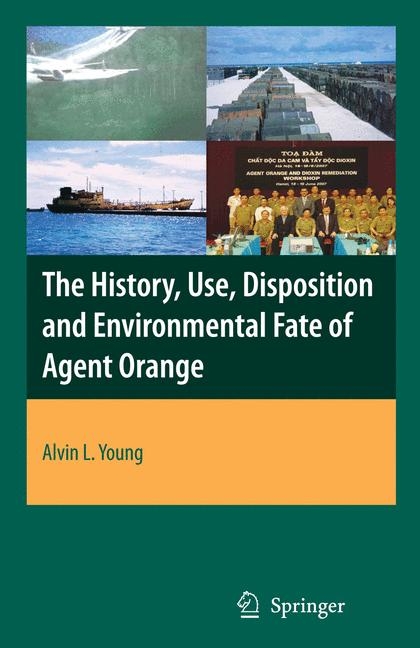
The History, Use, Disposition and Environmental Fate of Agent Orange (eBook)
XVIII, 339 Seiten
Springer New York (Verlag)
9780387874869 (ISBN)
For almost four decades, controversy has surrounded the tactical use of herbicides in Southeast Asia by the United States military. Few environmental or occupational health issues have received the sustained international attention that has been focused on Agent Orange, the major tactical herbicide deployed in Southern Vietnam. With the opening and establishment of normal relations between the United States and the Socialist Republic of Vietnam in 1995, the time has come for a thorough re-examination of the military use of Agent Orange and other 'tactical herbicides' in Southern Vietnam, and the subsequent actions that have been taking place since their use in Vietnam.
The United States Department of Defense has had the major role in all military operations involving the use of tactical herbicides, including that of Agent Orange. This included the Department's purchase, shipment and tactical use of herbicides in Vietnam, its role in the disposition of Agent Orange after Vietnam, its role in conducting long-term epidemiological investigations of the men of Operation RANCH HAND, and its sponsorship of ecological and environmental fate studies. This book was commissioned by The Office of the Deputy Under Secretary of Defense (Installations and Environment) with the intent of providing documentation of the knowledge on the history, use, disposition and environmental fate of Agent Orange and its associated dioxin.
For 40 years, Dr. Alvin L. Young has collected documents, reports, and photographs on the use, disposition, and environmental fate of Agent Orange and other tactical herbicides used in the Vietnam War. He has published or edited four books and more than 70 peer reviewed publications, commentaries, and editorials on the herbicides (and the associated dioxin contaminant) used in Vietnam. He completed his Ph.D. in Herbicide Physiology and Environmental Toxicology at Kansas State University in 1968. He began his Air Force career as a Project Scientist with the United States Air Force in 1968, evaluating both the dissemination characteristics of the Air Force aircraft and the fate of the herbicides used in South Vietnam. In his 21 years with the Air Force (obtaining the rank of Colonel), he was involved with all phases of the Agent Orange controversy, from test and evaluation of equipment to environmental fate and health impacts. During his years as Associate Professor at the United States Air Force Academy (1971-1977), Colorado Springs, Colorado, he conducted studies on the environmental fate of TCDD including studies on the biodegredation of massive quantities of Agent Orange.
From 1977-1983, Dr. Young was affiliated with the Epidemiology Division, The School of Aerospace Medicine, Brooks AFB, Texas, and the Environmental Epidemiology Unit of the Department of Veteran Affairs, Washington, D.C. His primary responsibilities were the documentation and establishment of exposure assessment protocols for the epidemiological studies of Vietnam Veterans. From 1983-87, Dr. Young was assigned to the Executive Office of the President, where he provided advice to the White House on the issues of Agent Orange and dioxins. From 1987-1997, he was a Science Advisor for the United States Department of Agriculture. From 1997-2001, he was the Director, Center for Risk Excellence, United States Department of Energy, Argonne, Illinois. From 2002 through 2007 he was a Visiting Professor and Senior Fellow with the Institute for Science and Public Policy, University of Oklahoma, Norman, Oklahoma. He currently is President, A.L. Young Consulting, Inc., Cheyenne, Wyoming. His scientific specialty is the use, toxicology, and human and environmental risks associated with the military herbicides used in South Vietnam, 1961-1972.
Dr. Young has traveled, lectured, attended and sponsored conferences and workshops in 32 countries speaking on issues related to Agent Orange and TCDD, ecological studies, environmental toxicology, and biotechnology. He has served as a co-editor for four different journals and has more than 300 publications in the scientific literature. He is currently the Editor-in-Chief of the International Journal Environmental Science and Pollution Research. He maintains a Special Collection on Agent Orange at the USDA's National Agricultural Library, Beltsville, Maryland, at http://www.nal.usda.gov/speccoll/findaids/agentorange/index.htm.
For almost four decades, controversy has surrounded the tactical use of herbicides in Southeast Asia by the United States military. Few environmental or occupational health issues have received the sustained international attention that has been focused on Agent Orange, the major tactical herbicide deployed in Southern Vietnam. With the opening and establishment of normal relations between the United States and the Socialist Republic of Vietnam in 1995, the time has come for a thorough re-examination of the military use of Agent Orange and other "e;tactical herbicides"e; in Southern Vietnam, and the subsequent actions that have been taking place since their use in Vietnam.The United States Department of Defense has had the major role in all military operations involving the use of tactical herbicides, including that of Agent Orange. This included the Department's purchase, shipment and tactical use of herbicides in Vietnam, its role in the disposition of Agent Orange after Vietnam, its role in conducting long-term epidemiological investigations of the men of Operation RANCH HAND, and its sponsorship of ecological and environmental fate studies. This book was commissioned by The Office of the Deputy Under Secretary of Defense (Installations and Environment) with the intent of providing documentation of the knowledge on the history, use, disposition and environmental fate of Agent Orange and its associated dioxin.
For 40 years, Dr. Alvin L. Young has collected documents, reports, and photographs on the use, disposition, and environmental fate of Agent Orange and other tactical herbicides used in the Vietnam War. He has published or edited four books and more than 70 peer reviewed publications, commentaries, and editorials on the herbicides (and the associated dioxin contaminant) used in Vietnam. He completed his Ph.D. in Herbicide Physiology and Environmental Toxicology at Kansas State University in 1968. He began his Air Force career as a Project Scientist with the United States Air Force in 1968, evaluating both the dissemination characteristics of the Air Force aircraft and the fate of the herbicides used in South Vietnam. In his 21 years with the Air Force (obtaining the rank of Colonel), he was involved with all phases of the Agent Orange controversy, from test and evaluation of equipment to environmental fate and health impacts. During his years as Associate Professor at the United States Air Force Academy (1971-1977), Colorado Springs, Colorado, he conducted studies on the environmental fate of TCDD including studies on the biodegredation of massive quantities of Agent Orange.From 1977-1983, Dr. Young was affiliated with the Epidemiology Division, The School of Aerospace Medicine, Brooks AFB, Texas, and the Environmental Epidemiology Unit of the Department of Veteran Affairs, Washington, D.C. His primary responsibilities were the documentation and establishment of exposure assessment protocols for the epidemiological studies of Vietnam Veterans. From 1983-87, Dr. Young was assigned to the Executive Office of the President, where he provided advice to the White House on the issues of Agent Orange and dioxins. From 1987-1997, he was a Science Advisor for the United States Department of Agriculture. From 1997-2001, he was the Director, Center for Risk Excellence, United States Department of Energy, Argonne, Illinois. From 2002 through 2007 he was a Visiting Professor and Senior Fellow with the Institute for Science and Public Policy, University of Oklahoma, Norman, Oklahoma. He currently is President, A.L. Young Consulting, Inc., Cheyenne, Wyoming. His scientific specialty is the use, toxicology, and human and environmental risks associated with the military herbicides used in South Vietnam, 1961-1972.Dr. Young has traveled, lectured, attended and sponsored conferences and workshops in 32 countries speaking on issues related to Agent Orange and TCDD, ecological studies, environmental toxicology, and biotechnology. He has served as a co-editor for four different journals and has more than 300 publications in the scientific literature. He is currently the Editor-in-Chief of the International Journal Environmental Science and Pollution Research. He maintains a Special Collection on Agent Orange at the USDA's National Agricultural Library, Beltsville, Maryland, at http://www.nal.usda.gov/speccoll/findaids/agentorange/index.htm.
The History, Use, Disposition and Environmental Fate of Agent Orange 2
Preface 5
Acknowledgments 7
Contents 10
Alvin L. Young Biographical Sketch, 2008 16
Vietnam and the Agent Orange Controversy Revisited 18
1.1 Background 18
1.2 The Use of Tactical Herbicides in the Vietnam War 20
1.3 The Disposal of Agent Orange 23
1.4 Finding a Resolution to Vietnam Veterans’ Health Concerns 24
1.5 The Return to Vietnam 28
1.6 Methodological Issues in Assessing Impacts 31
1.7 Overview of the Book 33
References 35
A History of the Development and Procurement of Tactical Herbicides 40
2.1 Background 40
2.2 The Initial Development of Tactical Herbicides 41
2.2.1 Previous Research Supporting the Initial Deployment of Tactical Herbicides in Vietnam 42
2.2.2 The Selection of the First Tactical Herbicides for Use in South Vietnam 43
2.3 The Defoliation Conferences 48
2.4 The Major Three Tactical Herbicides Used in Vietnam 54
2.5 Physical Properties, Handling and Safety Evaluations of the Tactical Herbicides 57
2.6 The Procurement and Management of Tactical Herbicides 58
2.6.1 Purchase Descriptions for the Tactical Herbicides 58
2.6.2 Quantities of Tactical Herbicides Procured 60
2.6.3 Ports of Embarkation 61
2.6.4 Management of the Tactical Herbicides 61
2.6.5 Summary of What Defined Tactical Herbicides 63
2.7 The Role of the Armed Forces Pest Control Board and Commercial Herbicides 63
2.7.1 Summary of the Use of Commercial Herbicides by the DOD 66
2.8 Implications of Tactical Versus Commercial Herbicides 66
References 66
The Military Use of Tactical Herbicides in Vietnam 73
3.1 Environmental Characteristics of South Vietnam 74
3.2 The Rationale for Herbicide Use in South Vietnam 76
3.3 Combat Tactical Zones 79
3.4 Historical Background on Early Spray Missions 81
3.5 Use Patterns of Individual Herbicides 82
3.6 Historical and Procedural Information on Operation RANCH HAND 84
3.6.1 Deployment of Aircraft 84
3.6.2 Development, Test, and Evaluation of Aerial Spray Systems for Vietnam 86
3.6.3 RANCH HAND Support Activities and Concepts 90
3.6.4 Accidental Spills 97
3.7 MACV Directive 525-1: Herbicide Procedures and Operations 98
3.8 Post Approval Procedures in Operation RANCH HAND 99
3.9 Coordinating RANCH HAND Spray Missions 102
3.10 Encountering a Hostile Environment 103
3.11 The Critical Role of the Forward Air Controller 105
3.12 Executing the Spray Mission 106
3.13 Preparation of the Daily Air Activity Report (DAAR) 108
3.14 Other Herbicide Requests 112
3.15 The Role of the Army Chemical Corps 113
3.16 Herbicide Operations in the Individual Combat Tactical Zones 116
3.17 The Preparation, Accuracy, and Use of the Military Records 121
3.18 Other Sources of Herbicide Consumption Data 123
3.19 The Accuracy of Geographic Data 126
3.20 Alternate Methods of Clearing Vegetation 127
3.21 Insecticides and Operation FLYSWATTER 128
3.22 Termination of Herbicide Use 130
References 131
Removal from Vietnam and Final Disposition of Agent Orange 136
4.1 Background 136
4.2 Operation PACER IVY 138
4.3 Storage and Maintenance of Agent Orange in the United States 149
4.4 Operation PACER HO 157
4.4.1 Selection of At-Sea Incineration and Discussion of Alternative Methods 157
4.4.2 Operation PACER HO 158
4.4.3 Description of Land-Based Operations 160
4.4.4 Operations at the Naval Construction Battalion Center 160
4.4.5 Operations at Johnston Island, Central Pacific Ocean 166
4.4.6 Land-Based and Shipboard Air Monitoring Programs 170
4.4.7 Brief Description of Shipboard Operations 170
4.4.8 The Termination of Operation PACER HO 171
References 173
Agent Orange and its Dioxin Contamination 176
5.1 The Significance of the Dioxin Contaminant in Agent Orange 176
5.2 Formation of the TCDD Contaminant 177
5.3 Establishing Agent Orange and its Contaminant as a Major Public Health Issue 180
5.4 Composition of Agent Orange and Associated Contaminants 184
5.5 Estimates of Quantities of Tactical Herbicides Procured by the Defense Supply Agency 187
5.6 The Initial Analysis of Dioxin Contamination in the Agent Orange Inventory 189
5.6.1 Sampling the NCBC and Johnston Island Inventories of Agent Orange 189
5.6.2 Air Force Results of Johnston Island Analyses for Dioxin 192
5.6.3 Results of the Naval Construction Battalion Center Analyses 193
5.7 A Re-analysis of TCDD in Agent Orange Stocks 194
5.7.1 A Re-evaluation of the NCBC and Johnston Island Agent Orange Inventories 194
5.7.2 Statistical Methodology for Air Force Data 195
5.7.3 Results for NCBC and Johnston Island Agent Orange Inventories 196
5.8 TCDD Data from the NIOSH Studies of 2,4,5-T Production 197
5.8.1 Statistical Analysis of Dioxin Levels in Production Samples of 2,4,5-T Formulations 197
5.8.2 Results and Discussion of NIOSH Data Sets 200
5.9 Conclusions as to the Amount of TCDD Disseminated in South Vietnam 200
References 201
The Testing of Aerial Spray Equipment, and Ecological Impacts of the Programs at Eglin Air Force Base, Florida 206
6.1 Introduction 206
6.2 Background 208
6.3 Test and Evaluations Projects on Test Area C-52A 214
6.4 Hardstand 7 Herbicide Loading and Storage Site 215
6.5 Herbicides/Chemicals Sprayed in the Test and Evaluation Programs 223
6.6 TCDD in Agent Orange and Purple Disseminated on the Test Area 224
6.7 The Military’s Response to the Herbicides Sprayed on Test Area C-52A 226
6.8 Chemical and Bioassay Studies of Soil Cores from Test Area C-52A 229
6.9 Studies of the Vegetation of Test Area C-52A 236
6.9.1 Synopsis of Vegetative Studies 236
6.9.2 Discussion of the Sampling Procedure, Results, and Photographic Records 238
6.9.3 Studies of the Mammals, Birds, Reptiles, and Amphibians 244
6.9.4 Aquatic Studies 248
6.9.5 Insect Studies 252
6.9.6 Summary of Ecological Surveys 253
6.10 Persistence of TCDD in the Soils of Test Area C-52A 253
6.11 Routes of TCDD Disappearance on Test Girds Receiving 2,4,5-T Herbicide 256
6.12 Animal Studies of TCDD Uptake 258
6.13 Long-term Field Studies of the Beachmouse, Peromyscus polionotus 261
6.14 Actions to Control the Movement of TCDD from Hardstand 7 and Test Area C-52A 268
6.15 Conclusions 269
References 271
Monitoring Studies of Former Agent Orange Storage Sites in Mississippi and Johnston Island 277
7.1 Requirements for Site Reclamation of NCBC and Johnston Island 278
7.2 Historical Background on the Naval Construction Battalion Center 280
7.2.1 The Issue of Defective and Damaged Drums 281
7.2.2 Results of the USAF Academy Monitoring Program, 1974-1976 283
7.2.3 Environmental Health Laboratory Monitoring Program, 1974-1976 285
7.3 Historical Background on Johnston Island 286
7.3.1 Results of Early Monitoring Programs on Johnston Island 287
7.3.2 Potential Water Contamination of Johnston Island 288
7.4 Design of the Protocol for Monitoring the Herbicide Storage Sites 290
7.4.1 Preliminary Evaluation of the Protocol at NCBC 291
7.4.2 Implementation of the Formal Protocol 293
7.4.3 Chemical Analyses of Samples 294
7.4.4 Microbial Analyses of Samples 295
7.5 Results and Discussion of Herbicide and Microbial Data 295
7.6 Aquatic System Monitoring for TCDD at NCBC, 1977-1979 301
7.7 Management Recommendations for the NCBC Herbicide Storage Site 304
7.8 Implementation of the AFESC Herbicide Orange Monitoring Program 306
7.9 Site Characterization Study of NCBC in Preparation for Reclamation 308
7.10 Final Reclamation Actions at the Naval Construction Battalion Center 309
7.11 The Reclamation of the Johnston Island Herbicide Storage Site 311
References 313
Agent Orange and Dioxin Remediation and the Return to Vietnam 317
8.1 The National Academy of Sciences Study, 1971-1974 317
8.2 The Period of Limited Access to Vietnam and Studies on Agent Orange, 1976-1995 319
8.3 Normalization Between the United and the Socialist Republic of Vietnam, 1995-Present 322
8.4 The Agent Orange Dioxin Remediation Workshops, 2005-2007 323
8.4.1 Background on the Workshops 323
8.4.2 The 1st Agent Orange and Dioxin Remediation Workshop, August 2005 324
8.4.3 The 2nd Agent Orange and Dioxin Remediation Workshop, June 2007 327
8.4.4 History and Maps of the Former Tactical Herbicide Storage and Loading Sites in Vietnam 328
8.4.4.1 Tactical Herbicide Mapping Project 328
8.4.4.2 Distribution of Tactical Herbicides 329
8.4.4.3 Construction of Air Field Maps 330
8.4.4.4 The Issue of Hot Spots 332
8.4.4.5 Follow-On Activities 334
References 334
PostludeCan There be a Satisfactory End to the AgentOrange Controversy? 339
The Resolution in Vietnam 339
The Resolution for Vietnam Veterans 341
References 341
Index 343
| Erscheint lt. Verlag | 21.4.2009 |
|---|---|
| Zusatzinfo | XVIII, 339 p. 125 illus. in color. |
| Verlagsort | New York |
| Sprache | englisch |
| Themenwelt | Geschichte ► Allgemeine Geschichte ► Zeitgeschichte |
| Studium ► Querschnittsbereiche ► Prävention / Gesundheitsförderung | |
| Naturwissenschaften ► Biologie ► Ökologie / Naturschutz | |
| Naturwissenschaften ► Chemie | |
| Sozialwissenschaften ► Politik / Verwaltung | |
| Technik ► Umwelttechnik / Biotechnologie | |
| Schlagworte | Contamination • currentlindy • Development • Dioxin • ecotoxicology • Environmental Sciences • tactical herbicides • U.S. military • veterans • Vietnam |
| ISBN-13 | 9780387874869 / 9780387874869 |
| Informationen gemäß Produktsicherheitsverordnung (GPSR) | |
| Haben Sie eine Frage zum Produkt? |
 PDF (Wasserzeichen)
DRM: Digitales Wasserzeichen
Dieses eBook enthält ein digitales Wasserzeichen und ist damit für Sie personalisiert. Bei einer missbräuchlichen Weitergabe des eBooks an Dritte ist eine Rückverfolgung an die Quelle möglich.
Dateiformat: PDF (Portable Document Format)
Mit einem festen Seitenlayout eignet sich die PDF besonders für Fachbücher mit Spalten, Tabellen und Abbildungen. Eine PDF kann auf fast allen Geräten angezeigt werden, ist aber für kleine Displays (Smartphone, eReader) nur eingeschränkt geeignet.
Systemvoraussetzungen:
PC/Mac: Mit einem PC oder Mac können Sie dieses eBook lesen. Sie benötigen dafür einen PDF-Viewer - z.B. den Adobe Reader oder Adobe Digital Editions.
eReader: Dieses eBook kann mit (fast) allen eBook-Readern gelesen werden. Mit dem amazon-Kindle ist es aber nicht kompatibel.
Smartphone/Tablet: Egal ob Apple oder Android, dieses eBook können Sie lesen. Sie benötigen dafür einen PDF-Viewer - z.B. die kostenlose Adobe Digital Editions-App.
Buying eBooks from abroad
For tax law reasons we can sell eBooks just within Germany and Switzerland. Regrettably we cannot fulfill eBook-orders from other countries.
aus dem Bereich