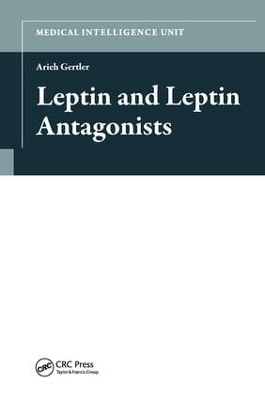
Leptin and Leptin Antagonists
CRC Press (Verlag)
978-1-58706-320-6 (ISBN)
- Titel nicht im Sortiment
- Artikel merken
Leptin’s involvement in early postnatal imprinting has led to new insight into developmental programming. This highly novel aspect of leptin’s action is reviewed extensively in the final chapter of this book by the Auckland group, Vickers, Krechowec, Gluckman and Breier. In the last five years, it has been shown that at least in rodents, leptin acts as an important neurotrophic factor promoting the early postnatal maturation of neural pathways within the hypothalamus. The authors review experimental evidence, originating largely from their own work, which shows that therapeutic intervention with leptin in the rodents’ early postnatal life can potentially reverse or substantially ameliorate the consequences of developmental malprogramming, and that this effect is highly influenced by both gender and postnatal diet.
Gertler, Prof. Arieh
Part I: Molecular Aspects of Leptin Action 1. Leptin Sign al Transduction—A 2009 Update . 2. Insights in the Activated L R C om p lex and the Rational Design of Antagonists 3. Study of Leptin: Leptin Receptor Interaction by F R E T and B R E T Part II: Leptin Involvement in Physiological and Pathological Processes4. Is Leptin a Pro- or Anti-Apoptotic Agent? 5. Leptin Action s in the Gastrointestinal Tract 6. Leptin as a Novel Marker in Breast and Colorectal Cancer 7. The Role of Leptin in Cardiac Physiology and Pathophysiology 8. The Role of Leptin in Bone Development and Growth 9. Involvement of Leptin in Arterial Hypertension 10. Involvement of Leptin in the Indometrial Function 11. The Use of Leptin for the Treatment of Lipodystrophy 12. Use of Anti-Leptin or Anti-Leptin Receptor Antibodies as B lockers of Immune Response 13. Use of Leptin Antagonists as Anti-Inflammatory and Anti-Fibrotic Reagents 14. The Role of Leptin during Early Life in Imprinting Later Metabolic Reponse
| Erscheint lt. Verlag | 6.3.2009 |
|---|---|
| Zusatzinfo | 35 Illustrations, black and white |
| Verlagsort | London |
| Sprache | englisch |
| Maße | 152 x 229 mm |
| Gewicht | 385 g |
| Themenwelt | Medizin / Pharmazie ► Gesundheitsfachberufe ► Diätassistenz / Ernährungsberatung |
| Medizinische Fachgebiete ► Innere Medizin ► Gastroenterologie | |
| Naturwissenschaften ► Biologie ► Biochemie | |
| Naturwissenschaften ► Biologie ► Zellbiologie | |
| ISBN-10 | 1-58706-320-4 / 1587063204 |
| ISBN-13 | 978-1-58706-320-6 / 9781587063206 |
| Zustand | Neuware |
| Informationen gemäß Produktsicherheitsverordnung (GPSR) | |
| Haben Sie eine Frage zum Produkt? |
aus dem Bereich