


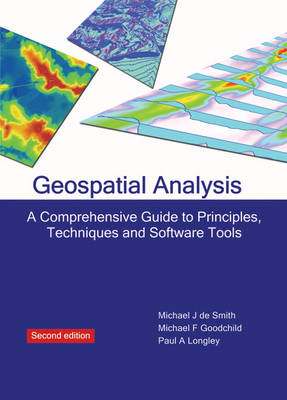
Geospatial Analysis
A Comprehensive Guide to Principles, Techniques and Software Tools
Seiten
2007
|
2nd Revised edition
Matador (Verlag)
978-1-906221-52-2 (ISBN)
Matador (Verlag)
978-1-906221-52-2 (ISBN)
- Titel ist leider vergriffen;
keine Neuauflage - Artikel merken
Includes a chapter on Geocomputational Methods. This book addresses the full spectrum of analytical techniques that are provided within modern Geographic Information Systems and related geospatial software products. It covers the principal concepts of geospatial analysis and their origins and methodological context.
his second edition of the widely acclaimed Geospatial Analysis guide has been updated and extended to include a major new chapter on Geocomputational Methods. It addresses the full spectrum of analytical techniques that are provided within modern Geographic Information Systems (GIS) and related geospatial software products. It is broad in its treatment of concepts and methods and representative in terms of the software that people actually use. Topics covered include: the principal concepts of geospatial analysis, their origins and methodological context; core components of geospatial analysis, including distance and directional analysis, geometrical processing, map algebra, and grid models; basic methods of exploratory spatial data analysis (ESDA) and spatial statistics, including spatial autocorrelation and spatial regression; surface analysis, including surface form analysis, gridding and interpolation methods; network and locational analysis, including shortest path calculation, travelling salesman problems, facility location and arc routing; Geocomputational methods, including Cellular automata, Agent Based Modelling, Neural Networks and Genetic Algorithms.
The Guide has been designed for everyone involved in geospatial analysis, from undergraduate and postgraduate to professional analyst, software engineer and GIS practitioner. It builds upon the spatial analysis topics included in the US National Academies 'Beyond Mapping' and 'Learning to think spatially' agendas, the UK 'Spatial Literacy in Teaching' programme, the NCGIA Core Curriculum and the AAAG/UCGIS Body of Knowledge. As such it provides a valuable reference guide and accompaniment to courses built around these programmes.
his second edition of the widely acclaimed Geospatial Analysis guide has been updated and extended to include a major new chapter on Geocomputational Methods. It addresses the full spectrum of analytical techniques that are provided within modern Geographic Information Systems (GIS) and related geospatial software products. It is broad in its treatment of concepts and methods and representative in terms of the software that people actually use. Topics covered include: the principal concepts of geospatial analysis, their origins and methodological context; core components of geospatial analysis, including distance and directional analysis, geometrical processing, map algebra, and grid models; basic methods of exploratory spatial data analysis (ESDA) and spatial statistics, including spatial autocorrelation and spatial regression; surface analysis, including surface form analysis, gridding and interpolation methods; network and locational analysis, including shortest path calculation, travelling salesman problems, facility location and arc routing; Geocomputational methods, including Cellular automata, Agent Based Modelling, Neural Networks and Genetic Algorithms.
The Guide has been designed for everyone involved in geospatial analysis, from undergraduate and postgraduate to professional analyst, software engineer and GIS practitioner. It builds upon the spatial analysis topics included in the US National Academies 'Beyond Mapping' and 'Learning to think spatially' agendas, the UK 'Spatial Literacy in Teaching' programme, the NCGIA Core Curriculum and the AAAG/UCGIS Body of Knowledge. As such it provides a valuable reference guide and accompaniment to courses built around these programmes.
| Zusatzinfo | black & white illustrations |
|---|---|
| Verlagsort | Market Harborough |
| Sprache | englisch |
| Maße | 178 x 254 mm |
| Gewicht | 1106 g |
| Themenwelt | Mathematik / Informatik ► Mathematik ► Geometrie / Topologie |
| Naturwissenschaften ► Geowissenschaften ► Geografie / Kartografie | |
| ISBN-10 | 1-906221-52-9 / 1906221529 |
| ISBN-13 | 978-1-906221-52-2 / 9781906221522 |
| Zustand | Neuware |
| Informationen gemäß Produktsicherheitsverordnung (GPSR) | |
| Haben Sie eine Frage zum Produkt? |
Mehr entdecken
aus dem Bereich

aus dem Bereich
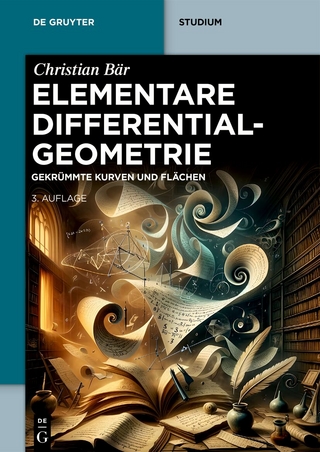
Gekrümmte Kurven und Flächen
Buch | Softcover (2024)
De Gruyter (Verlag)
CHF 76,90
a history of modern trigonometry
Buch | Softcover (2025)
Princeton University Press (Verlag)
CHF 34,90


