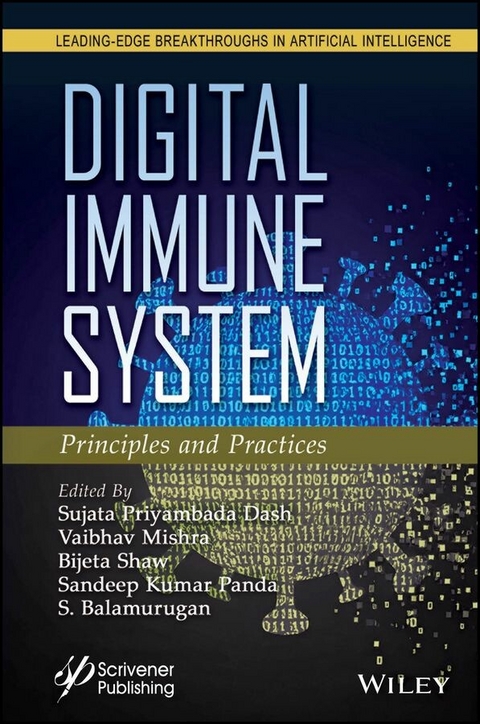
Digital Immune System (eBook)
557 Seiten
Wiley-Scrivener (Verlag)
978-1-394-38376-4 (ISBN)
Equip yourself with the knowledge to build a resilient digital infrastructure by understanding how the digital immune system leverages advanced technologies to proactively defend against cyber threats.
The concept of the digital immune system represents a significant advancement in cybersecurity, reflecting the industry's shift toward more intelligent and adaptive defense mechanisms. Drawing inspiration from biological immune systems, the digital immune system offers a solution that naturally adapts and responds to evolving threats. This book explores this evolving landscape, focusing on the integration of advanced technologies like artificial intelligence, machine learning, and automation to build resilient digital infrastructures. It delves into how these technologies can create a self-sustaining ecosystem that detects, responds to, and mitigates cyber threats in real-time and highlights the significance of predictive analytics and behavioral analysis in identifying potential threats before they materialize. Through case studies and real-world examples, the book demonstrates how organizations have successfully implemented digital immune systems to protect their assets and maintain operational integrity in an increasingly hostile digital environment. Additionally, the book addresses the challenges and ethical considerations involved in deploying a digital immune system. It discusses the balance between security and privacy, the potential for false positives, and the need for transparency in automated decision-making processes. By providing a comprehensive overview of the current state and prospects of digital immunity, the book serves as a crucial resource for cybersecurity professionals, IT leaders, and anyone interested in understanding the next-generation of digital defense mechanisms.
Readers will find the book: Introduces the emergence of the digital immune system; Discusses different applications of the digital immune system across various industries; Comprehensively covers the fundamentals of the digital immune system for different domains, presenting state-of the-art analysis and real-world case studies; Examines the importance of a proactive approach to cybersecurity, emphasizing the need for organizations to move beyond traditional reactive measures.
Audience
Research scholars in computer science and AI, IT professionals, network administrators, cybersecurity and blockchain technology experts, engineering students and government research agencies looking to the future of cybersecurity.
Sujata Priyambada Dash, PhD is an Assistant Professor in the Department of Management at the Birla Institute of Technology, Mesra, Ranchi, Jharkhand, India. She has published one edited book, several book chapters, and numerous articles in international journals and conferences.
Vaibhav Mishra, PhD is an Associate Professor at the ICFAI Business School Hyderabad, Telangana, India. He has published research articles in international journals of repute and edited books on blockchain, AI, and machine learning.
Bijeta Shaw, PhD is an Assistant Professor in the Operations and IT Department at ICFAI Business School Hyderabad, Telangana, India. She has authored numerous research articles in international journals and coordinated conferences.
Sandeep Kumar Panda, PhD is a Professor and the Associate Dean in the School of Science and Technology at the ICFAI Foundation for Higher Education Hyderabad, Telangana, India. He has published six edited books, several book chapters, and more than 80 articles in international journals and conferences.
S. Balamurugan, PhD is the Director of Research and Development at Intelligent Research Consultancy Services. He has published about 50 books, more than 300 articles in international journals and conferences, and 55 patents.
1
Digital Immune System Approach Toward the Impact of Gig Faculty on Organizational Learning Within Higher Education Institutes
Nimisha Singh1*, Sonam Gupta2 and Anshu Yadav2
1Department of Management Studies, Indian Institute of Information Technology – Allahabad, Prayagraj, India
2School of Business Management, CSJM University, Kanpur, India
Abstract
This chapter explores the growing impact of gig faculty on organizational learning in higher education institutions (HEIs). Based on a digital immune system (DIS) framework, the chapter describes how an increasing presence of contingent faculty affects the capacity and adaptability of HEIs in learning. The rise in the usage of gig faculty offers both opportunities and challenges; hence, careful assessment is required to understand whether they will provide an opportunity for continuous learning and innovation. This research is intended to understand how HEIs can effectively integrate this new academic labor model. A mixed-methods approach has been used, with a combination of data consisting of both quantitative details gathered from the survey in respect of the perceptions that HEIs have regarding the integration process, provision of resources, and effects on organizational learning, while qualitative data was obtained through focus groups both by gig faculty, as well as traditional faculty. Focus groups examine the lived experiences of these diverse faculty populations, specifically in terms of curriculum design, coaching, team-based learning, and institutional environment. Gig faculty engagement, support structures, and organizational learning are likely to be a complicated issue. Some of the advantages associated with the use of gig faculty include diversity in the skill base, efficient delivery of curriculum, and economies of scale. Other expected challenges comprise equitable workload allocation, pedagogical quality, and the imperative of robust support at the institution for gig faculty. The result will explain these interplays where the positive, as well as the negative implications of these forces, are established to impact organizational learning in HEIs amid the digital change. Ultimately, the research shall help, in return, to further add to the comprehension of the changing nature of the academic workforce and its implications on institutional learning, thus providing first-hand insights into how to engage higher education managers with the complexities surrounding this novel terrain.
Keywords: Gig faculty, digital immune system, higher education institute, organizational learning, academic workforce, digital transformation, hybrid learning, resource allocation
1.1 Introduction
The global higher education landscape is transforming profoundly due to accelerating technological advancements and changing student needs. This shift is characterized by the growing incorporation of gig faculty into the academic workforce. The gig faculty with flexible, part-time employment arrangements bring in a new approach to address the needs of staffing and teaching expertise diversification within higher education institutions (HEIs). It is an emerging trend with considerable opportunities and challenges, particularly on the organizational learning side, which is the backbone of institutional vitality and success. This research ventures into this largely unexplored territory by investigating the delicate dance between gig faculty, the institutional context of HEIs, and organizational learning, all within the context of a digital immune system (DIS) framework (Bennett, 2020) [2].
The DIS framework brings a new perspective on HEIs’ adaptive ability toward the entry of gig faculty. This framework draws similar parallels with an immune system; hence, in an organizational context, it metaphorically describes complex processes of learning and adaptation by an organization like how an immune system distinguishes and controls pathogens. Wherein the immunological system differentiates and defeats the pathogens, the HEI must produce effective internal “mechanisms” for appropriate knowledge sharing and resource allocation when dealing with fast-changing skill requirements and knowledge inputs through gig faculty. It aims to understand the mechanisms that currently exist for the efficacy of how gig faculty is integrated into this “immune system,” seeking its vulnerabilities. More importantly, this paper makes the point that it believes the good integration of gig faculty within the academic fabric is inextricably tied to the organizational learning capacity of the HEI. It allows the institution to be adaptive, creative, and better positioned to exploit the unique skills and perspectives that gig faculty brings to campus. A healthy learning environment will facilitate an easy acquisition of new knowledge and expertise and thus improve institutional effectiveness and teaching quality. On the other hand, a loosely designed or inefficacious learning system could lead to segmented learning experiences; increased workload in traditional faculty; and, more importantly, quality and overall impacts on the institution (Marginson, 2016) [8].
This research will examine how organizational learning works with gig faculty integration. Those are the main areas of focus: effective onboarding and training programs for gig faculty, well-defined channels and collaboration platforms between gig and traditional faculty, the designing of structured knowledge-sharing initiatives, and strong quality control measures to ensure high pedagogical standards prevail. However, the study also considers whether institutional culture influences organizational learning outcomes as shaped by using resource allocation strategies and leadership styles. In this regard, significant issues would be workload management and equity concerns. Integrating gig faculty should not unduly burden traditional faculty, nor should it structurally worsen inequalities in learning opportunities for students. The effectiveness of gig-faculty integration is at times best understood through awareness of subtle trade-offs between cost-effectiveness and quality. By doing so, it is expected that the study will reveal the kinds of conditions that are favorable to gig faculty’s positive contribution to organizational learning within HEIs. It can foster change in how administrators, faculty members, and policymakers understand the transformations sweeping the academic workforce, given the demands of the digital age. Ultimately, this research aims to provide a framework for HEIs to optimize the integration of gig faculty, ensuring they foster institutional growth and sustainability (Weller, 2011) [12].
1.2 Literature Review
The landscape of higher education is undergoing a profound transformation, driven by technological advancements, evolving student expectations, and shifting economic realities. This literature review aims to look through the intersection of several key themes that shape such evolution: the rise of gig faculty, the development of digital immunity, the imperative for organizational learning, and all the challenges, as well as the opportunities that derive from the current digital transformation HEIs provide (Brown, 1991; Senge, 1990) [18, 19]. We must discuss ideas regarding the implications of a teaching workforce: knowledge-sharing innovation, adaptability-hybrid resources, distribution-talent collaboration, and, above all, quality.
Adjunct and part-time instructors who are naturally contingent have, to a greater extent, relegated the traditional tenured faculty into being the norm, and such teachers are being called the “gig faculty” (Kezar, 2014; Kezar and Maxey, 2013) [10, 11]. These factors include the cost-containment pressures put on HEIs, increasing demands for specialized expertise, and academics’ desires for greater flexibility in the workplace (Flaherty, 2018; Rhoads and Rhoads, 2017; Alstete, 2015) [5, 7, 9]. The gig economy, on the one hand, provides benefits in terms of accessing diverse talent and greater institutional agility. On the other hand, the gig economy also brings along job insecurities, wage disparities, and denigration of collective governance due to the risks that it poses (Gappa, 2018) [6]. Consider knowledge sharing and organizational learning. For example, the precarious employment status of gig faculty impacts the integration of gig faculty into the academic community and restricts participation in collaborative projects and knowledge exchange activities (Trowler and Cooper, 2002) [16]. Higher educational institutions, with the rapidly advancing speed of technology and dependence on digital infrastructure, are more vulnerable to cyberattacks, data breaches, and system failures. The concept of a “digital immune system” has emerged as a framework for enhancing organizational resilience in the digital age (Gartner, 2022) [1]. A DIS involves a combination of technologies, processes, and practices designed to proactively identify, prevent, and respond to digital threats. For HEIs, an effective DIS plays a major role in safeguarding students’ sensitive data, ensuring the continuance of teaching and learning activities, and safeguarding the reputation of an institution (Alstete, 2019) [3]. Organizational learning and adaptation in the implementation of a DIS is important because HEIs need to acquire new skills and competencies associated with cybersecurity, data governance, and digital risk management (Nonaka, 1994) [17].
The digital transformation of...
| Erscheint lt. Verlag | 23.10.2025 |
|---|---|
| Sprache | englisch |
| Themenwelt | Mathematik / Informatik ► Informatik |
| ISBN-10 | 1-394-38376-2 / 1394383762 |
| ISBN-13 | 978-1-394-38376-4 / 9781394383764 |
| Informationen gemäß Produktsicherheitsverordnung (GPSR) | |
| Haben Sie eine Frage zum Produkt? |
 EPUB (Adobe DRM)
Kopierschutz: Adobe-DRM
Adobe-DRM ist ein Kopierschutz, der das eBook vor Mißbrauch schützen soll. Dabei wird das eBook bereits beim Download auf Ihre persönliche Adobe-ID autorisiert. Lesen können Sie das eBook dann nur auf den Geräten, welche ebenfalls auf Ihre Adobe-ID registriert sind.
Details zum Adobe-DRM
Dateiformat: EPUB (Electronic Publication)
EPUB ist ein offener Standard für eBooks und eignet sich besonders zur Darstellung von Belletristik und Sachbüchern. Der Fließtext wird dynamisch an die Display- und Schriftgröße angepasst. Auch für mobile Lesegeräte ist EPUB daher gut geeignet.
Systemvoraussetzungen:
PC/Mac: Mit einem PC oder Mac können Sie dieses eBook lesen. Sie benötigen eine
eReader: Dieses eBook kann mit (fast) allen eBook-Readern gelesen werden. Mit dem amazon-Kindle ist es aber nicht kompatibel.
Smartphone/Tablet: Egal ob Apple oder Android, dieses eBook können Sie lesen. Sie benötigen eine
Geräteliste und zusätzliche Hinweise
Buying eBooks from abroad
For tax law reasons we can sell eBooks just within Germany and Switzerland. Regrettably we cannot fulfill eBook-orders from other countries.
aus dem Bereich