Graph Theory for Computer Science (eBook)
566 Seiten
Wiley-Scrivener (Verlag)
978-1-394-30261-1 (ISBN)
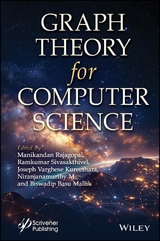
This book is a vital resource for anyone looking to understand the essential role of graph theory as the unifying thread that connects and provides innovative solutions across a wide spectrum of modern computer science disciplines.
Graph theory is a traditional mathematical discipline that has evolved as a basic tool for modeling and analyzing the complex relationships between different technological landscapes. Graph theory helps explain the semantic and syntactic relationships in natural language processing, a technology behind many businesses. Disciplinary and industry developments are seeing a major transition towards more interconnected and data-driven decision-making, and the application of graph theory will facilitate this transition. Disciplines such as parallel and distributive computing will gain insights into how graph theory can help with resource optimization and job scheduling, creating considerable change in the design and development of scalable systems. This book provides comprehensive coverage of how graph theory acts as the thread that connects different areas of computer science to create innovative solutions to modern technological problems. Using a multi-faceted approach, the book explores the fundamentals and role of graph theory in molding complex computational processes across a wide spectrum of computer science.
Manikandan Rajagopal, PhD is an Associate Professor at Christ University with more than a decade of research experience. He has published three textbooks, more than ten book chapters, and 15 journal articles in reputed journals and conferences. His areas of interest include data mining, optimization techniques, semantic mining, and intelligent agents.
Ramkumar Sivasakthivel, PhD is an Associate Professor at Christ University with more than 12 years of experience. He has published four textbooks, several papers in international journals and conferences, and has been granted two patents. His fields of interest are biosignal processing, artificial intelligence, human-computer interface, brain-computer interface, and machine vision.
Joseph Varghese Kureethara, PhD is a Professor of Mathematics at Christ University with more than 17 years of experience in research and teaching. He has published more than 230 articles in international journals and conferences, co-edited five books, and authored six books. He has also delivered invited talks at over fifty conferences and workshops and serves as a member of several institutions' boards.
Niranjanamurthy M., PhD is an Assistant Professor in the Department of Artificial Intelligence and Machine Learning at the BMS Institute of Technology and Management with more than 13 years of experience. He has published more than 95 articles in various national and international journals and conferences and filed 30 patents. His areas of interest are data science, machine learning, e-commerce, software testing, and software engineering.
Biswadip Basu Mallik, PhD is an Associate Professor of Mathematics in the Department of Basic Sciences and Humanities at the Institute of Engineering and Management with more than 22 years of experience. He has published five textbooks, thirteen edited books, five patents, and several research papers and book chapters in various scientific journals. His fields of research work include computational fluid dynamics, mathematical modelling, machine learning, and optimization.
This book is a vital resource for anyone looking to understand the essential role of graph theory as the unifying thread that connects and provides innovative solutions across a wide spectrum of modern computer science disciplines. Graph theory is a traditional mathematical discipline that has evolved as a basic tool for modeling and analyzing the complex relationships between different technological landscapes. Graph theory helps explain the semantic and syntactic relationships in natural language processing, a technology behind many businesses. Disciplinary and industry developments are seeing a major transition towards more interconnected and data-driven decision-making, and the application of graph theory will facilitate this transition. Disciplines such as parallel and distributive computing will gain insights into how graph theory can help with resource optimization and job scheduling, creating considerable change in the design and development of scalable systems. This book provides comprehensive coverage of how graph theory acts as the thread that connects different areas of computer science to create innovative solutions to modern technological problems. Using a multi-faceted approach, the book explores the fundamentals and role of graph theory in molding complex computational processes across a wide spectrum of computer science.
| Erscheint lt. Verlag | 24.10.2025 |
|---|---|
| Sprache | englisch |
| Themenwelt | Mathematik / Informatik ► Mathematik |
| Schlagworte | Artificial Neural Networks • Automata Theory • Big Data Analytics • Bioinformatics • Blockchain technology • Computer Science • computer vision • cryptography • Fuzzy Logic • graph theory • Image Processing • Natural Language Processing • Parallel and distributed • Quantum Computing • theory of computing |
| ISBN-10 | 1-394-30261-4 / 1394302614 |
| ISBN-13 | 978-1-394-30261-1 / 9781394302611 |
| Informationen gemäß Produktsicherheitsverordnung (GPSR) | |
| Haben Sie eine Frage zum Produkt? |
 PDF (Adobe DRM)
Kopierschutz: Adobe-DRM
Adobe-DRM ist ein Kopierschutz, der das eBook vor Mißbrauch schützen soll. Dabei wird das eBook bereits beim Download auf Ihre persönliche Adobe-ID autorisiert. Lesen können Sie das eBook dann nur auf den Geräten, welche ebenfalls auf Ihre Adobe-ID registriert sind.
Details zum Adobe-DRM
Dateiformat: PDF (Portable Document Format)
Mit einem festen Seitenlayout eignet sich die PDF besonders für Fachbücher mit Spalten, Tabellen und Abbildungen. Eine PDF kann auf fast allen Geräten angezeigt werden, ist aber für kleine Displays (Smartphone, eReader) nur eingeschränkt geeignet.
Systemvoraussetzungen:
PC/Mac: Mit einem PC oder Mac können Sie dieses eBook lesen. Sie benötigen eine
eReader: Dieses eBook kann mit (fast) allen eBook-Readern gelesen werden. Mit dem amazon-Kindle ist es aber nicht kompatibel.
Smartphone/Tablet: Egal ob Apple oder Android, dieses eBook können Sie lesen. Sie benötigen eine
Geräteliste und zusätzliche Hinweise
Buying eBooks from abroad
For tax law reasons we can sell eBooks just within Germany and Switzerland. Regrettably we cannot fulfill eBook-orders from other countries.
aus dem Bereich