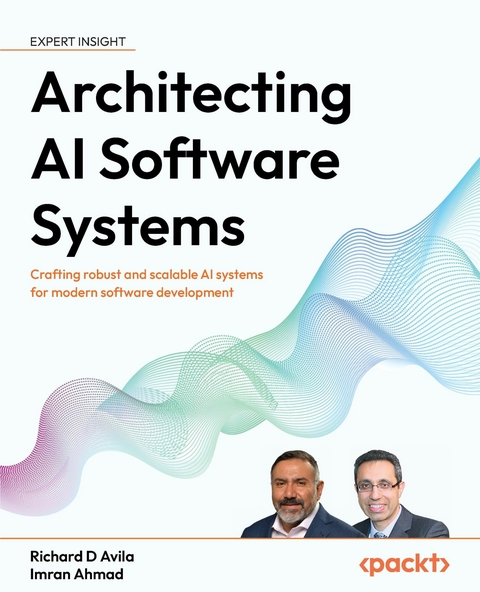
Architecting AI Software Systems (eBook)
212 Seiten
Packt Publishing (Verlag)
978-1-80461-946-9 (ISBN)
Architecting AI Software Systems provides a definitive guide to building AI-enabled systems, emphasizing the balance between AI's capabilities and traditional software architecture principles.
As AI technologies gain widespread acceptance and are increasingly expected in future applications, this book provides architects and developers with the essential knowledge to stay competitive. It introduces a structured approach to mastering the complexities of AI integration, covering key architectural concepts and processes critical to building scalable and robust AI systems while minimizing development and maintenance risks. The book guides readers on a progressive journey, using real-world examples and hands-on exercises to deepen comprehension. It also includes the architecture of a fictional AI-enabled system as a learning tool. You will engage with exercises designed to reinforce your understanding and apply practical insights, leading to the development of key architectural products that support AI systems. This is an essential resource for architects seeking to mitigate risks and master the complexities of AI-enabled system development.
By the end of the book, readers will be equipped with patterns, strategies and concepts necessary to architect AI-enabled systems across various domains.
Discover how to design intelligent software systems by balancing AI and traditional architecture. This guide offers a roadmap for robust, scalable AI-enabled systems, blending principles with practical insights.Key FeaturesLearn to integrate AI with traditional software architectures, enabling architects to design scalable, high-performance systemsExplore key tools and processes to mitigate risks in AI-driven system development, ensuring timely project delivery and budget controlGain hands-on experience through case studies and exercises, applying architectural concepts to real-world AI systemsBook DescriptionArchitecting AI Software Systems provides a definitive guide to building AI-enabled systems, emphasizing the balance between AI's capabilities and traditional software architecture principles. As AI technologies gain widespread acceptance and are increasingly expected in future applications, this book provides architects and developers with the essential knowledge to stay competitive. It introduces a structured approach to mastering the complexities of AI integration, covering key architectural concepts and processes critical to building scalable and robust AI systems while minimizing development and maintenance risks. The book guides readers on a progressive journey, using real-world examples and hands-on exercises to deepen comprehension. It also includes the architecture of a fictional AI-enabled system as a learning tool. You will engage with exercises designed to reinforce your understanding and apply practical insights, leading to the development of key architectural products that support AI systems. This is an essential resource for architects seeking to mitigate risks and master the complexities of AI-enabled system development. By the end of the book, readers will be equipped with patterns, strategies and concepts necessary to architect AI-enabled systems across various domains.What you will learnUnderstand the challenges of building AI-enabled systems and managing risks like underperformance and cost overrunsLearn architectural tools to design and integrate AI into traditional systemsMaster AI/ML concepts like inference and decision-making and their impact on architectureUse architectural models to ensure system cohesion and functionalitySimulate and optimize AI performance through prototyping and iterationDesign scalable AI systems using patterns and heuristicsIntegrate AI into large systems with a focus on user experience and performanceWho this book is forThis book is designed mainly for software and systems architects responsible for designing and integrating AI capabilities into existing and new systems. It also serves as a valuable resource for CTOs, VPs of Engineering, and aspiring architects seeking a comprehensive understanding of the holistic approach to AI system development. Additionally, AI/ML engineers and software developers will benefit from gaining deeper insights into the architectural principles that underpin AI systems, enabling them to align their work with broader architectural goals]]>
2
The Case for Architecture
What would the world look like without civic architecture? Buildings would be built at random, health and safety regulations may not be implemented, there would be no coordination with municipal entities, and the actual time to build would be longer since coordination among the builders would lack an underlying cohesion. The architect, equipped with vision, purpose, processes, tools, and direction, ensures that the right system is built. Rigorously architected systems also allow for a unity of effort and ensure that the whole project team understands what is to be built.
Architecture is also needed for complex systems development. A complex system has many different engineering domains that must come together to build a system that each domain could not do by itself. There are competing demands and incomplete knowledge among all the teams. Many times, there are basic challenges of even knowing how to communicate with each other. In a complex system, there are usually different stakeholders who have demands of the final system that are at odds with each other – an architect must broker these demands.
An architect’s role is to develop a unified vision, guide design that is technically achievable, and achieve system creation that meets budget goals and the development schedule.
The role of the architect has roots in antiquity and is pivotal to modern systems. The role of the architect in software systems is just as key as a civil architect. The software architect performs a critical function to ensure the correct system is built and acts as the principal advocate for the end user of the system. The architect is also responsible for ensuring that the system maintains cohesion. This is a tall order. Embracing the role and processes of architecture improves the quality and success of the end system.
Consequences of architectural failures
To start the discussion on architecture for complex software, let’s do a quick thought experiment.
Imagine your team is tasked to build an application to conduct queries on a networked data store and return the results to a remote user. Now, you have four software engineers on your team: one who works on the data store, one who works on the service layer, one who integrates the user interface with the data store application, and an engineer who works on the user interface.
Here are seven practices that compromise project success:
- Undirected communication and coordination among team members, since often there is not a common understanding or reference point to unify action
- Treating all engineering assumptions as equally valid without requirement validation
- Making design decisions through majority voting rather than technical expertise
- Limiting customer communication to user interface engineers only
- Treating integration and testing as optional activities
- Eliminating intermediate milestones and review checkpoints
- Recognizing only the final delivery date as a meaningful project milestone
In this scenario, usable software would not be delivered. Each list item not done would be considered a failure in architecture. This is a simple system – as the demands on the system grow or the domain becomes more challenging, the importance of architecture comes to the fore. AI-enabled software is exceptionally complex software.
This chapter will give some background on the concept of architecture, how it can be used to mitigate failures, and, more importantly, lay out the justification that architecture done right can allow one to deliver robust AI-enabled software.
We will cover the following main topics in this chapter:
- The origins of architecting
- The role of the architect
- The holder of the vision
- Architecting processes
- The language of architecture
The origins of architecting
The profession of architecture has roots in deep antiquity. The word architect comes from the Greek “arche,” which means first, and “techion,” which means builder. Thus, an architect is the person who brings forth a concept to a system that will serve a purpose. For the modern AI software architect, that means that they must grapple with making a system that can correctly make decisions or inferences in an algorithmic manner.
Ancient architects provided humanity with the pyramids of ancient Egypt, the beautiful structures to honor the Hellenistic gods, and the aqueducts of Rome, to name a few. Egyptian architects conceived and led the development of massive structures that have lasted thousands of years. They were key to the coordination of thousands of workers and the use of mathematics to guide workmanship and the dimensions of rocks, which needed to be cut and placed correctly, with amazing precision and symmetry, thus demonstrating mastery of mathematics and engineering coordination. The architects of the Hellenistic period developed techniques to build temples and structures with beautiful symmetry, utilizing design patterns and making decisions that, though usually not optimal, resulted in a beautiful yet still practical system.
They also coordinated and guided the workmanship and planning to assemble their vision. These structures were massive, and their soundness of structure and load balance have enabled them to last for thousands of years. The Roman architects built amazing coliseums and planned roadways, temples, and aqueducts. This demonstrated the capability to be flexible and have the engineering depth to guide the building of a complex system.
The aqueducts demonstrated a command not only of building structures but also of the use of hydrodynamic principles and advanced engineering to deliver water to many parts of their respective cities. This new type of structure had a transformative effect on cities. Water, as an essential liquid humans need not only for drinking but for cleansing and recreation, could be enjoyed and used by the population.
Figure 2.1: Timeline of architectural evolution
Quick tip: Need to see a high-resolution version of this image? Open this book in the next-gen Packt Reader or view it in the PDF/ePub copy.
The next-gen Packt Reader and a free PDF/ePub copy of this book are included with your purchase. Scan the QR code OR visit https://packtpub.com/unlock, then use the search bar to find this book by name. Double-check the edition shown to make sure you get the right one.
Historically, the architect was usually a single person who drove the vision of the end system to development. The architect is the integrating force that ensures the components that are built come together and realize system-level effects. The insight that architecture is both an ancient and modern art stems from ancient dictums that state that the best systems come from a single vision and that a system should exhibit certain key attributes and the use of design patterns.
With the modern age, specifically the Renaissance period of European history, the continual and accelerating development of technology exploded and has not abated. In the modern world, we have witnessed such breathtaking developments as railways, seafaring vessels, large-scale electricity, automotive vehicles, airplanes, radar, telecommunications, computers, nuclear energy, space flight, medical devices, satellites, the internet, and personal smartphones. A key system that is in its infancy in terms of being an engineering discipline is software. Before going any further, I want to clarify that this is a book on software architecture and AI-enabled systems. So, going forward, I will use the word system in the sense of a software system.
Systems architects bridge user needs and technological implementation, orchestrating complex projects through disciplinary coordination, requirement definition, and development oversight.
In AI-enabled systems, architects balance traditional software concerns with specialized challenges:
- Data pipeline management and model development workflows.
- System adaptability while maintaining output stability.
- Integration of algorithmic components with software infrastructure.
Unlike physical structures visualized through drawings, software architecture requires multiple perspectives:
- Logical models and functional specifications.
- Operational scenarios and use cases.
- Interface controls and service agreements.
- Prototypes, simulations, and analyses.
Modern complexity necessitates architectural teams collaborating with domain specialists, while maintaining clear decision authority with a single responsible architect – avoiding the pitfalls of committee-based design decisions.
The role of the architect
What is it that an architect delivers? A derogatory remark is that they are just document creators, since they deliver specifications, concept of operations documents, modeling diagrams, white papers, and technology evaluations. These are artifacts of the architecting process and communication tools that guide follow-on engineering activities. The thinking and collaboration must be done before relevant and impactful documentation is created.
For example, what would happen...
| Erscheint lt. Verlag | 20.10.2025 |
|---|---|
| Sprache | englisch |
| Themenwelt | Mathematik / Informatik ► Informatik ► Programmiersprachen / -werkzeuge |
| Informatik ► Theorie / Studium ► Künstliche Intelligenz / Robotik | |
| ISBN-10 | 1-80461-946-9 / 1804619469 |
| ISBN-13 | 978-1-80461-946-9 / 9781804619469 |
| Informationen gemäß Produktsicherheitsverordnung (GPSR) | |
| Haben Sie eine Frage zum Produkt? |
 EPUB (Ohne DRM)
Digital Rights Management: ohne DRM
Dieses eBook enthält kein DRM oder Kopierschutz. Eine Weitergabe an Dritte ist jedoch rechtlich nicht zulässig, weil Sie beim Kauf nur die Rechte an der persönlichen Nutzung erwerben.
Dateiformat: EPUB (Electronic Publication)
EPUB ist ein offener Standard für eBooks und eignet sich besonders zur Darstellung von Belletristik und Sachbüchern. Der Fließtext wird dynamisch an die Display- und Schriftgröße angepasst. Auch für mobile Lesegeräte ist EPUB daher gut geeignet.
Systemvoraussetzungen:
PC/Mac: Mit einem PC oder Mac können Sie dieses eBook lesen. Sie benötigen dafür die kostenlose Software Adobe Digital Editions.
eReader: Dieses eBook kann mit (fast) allen eBook-Readern gelesen werden. Mit dem amazon-Kindle ist es aber nicht kompatibel.
Smartphone/Tablet: Egal ob Apple oder Android, dieses eBook können Sie lesen. Sie benötigen dafür eine kostenlose App.
Geräteliste und zusätzliche Hinweise
Buying eBooks from abroad
For tax law reasons we can sell eBooks just within Germany and Switzerland. Regrettably we cannot fulfill eBook-orders from other countries.
aus dem Bereich