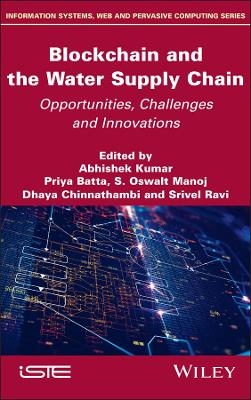
Blockchain and the Water Supply Chain
Iste Ltd (Verlag)
978-1-83669-039-9 (ISBN)
- Titel nicht im Sortiment
- Artikel merken
This book also delves into how blockchain can revolutionize the water supply chain through decentralized monitoring, smart contracts and immutable data records to reduce losses, enhance accountability and enable real-time decision making. It analyzes key challenges such as interoperability, scalability and regulatory hurdles, while also showcasing innovative use cases and pilot projects across the globe. With contributions from experts in water management, blockchain and environmental policy, this book bridges the gap between digital innovation and sustainable resource management, and is an essential guide for researchers, policymakers and technologists aiming to reshape the future of water systems.
Abhishek Kumar is Senior IEEE Member/Assistant Director at Chandigarh University, India. His expertise spans AI, Renewable Energy and Image Processing. Priya Batta is Associate Professor at Amity School of Engineering and Technology, Amity University, Punjab, India. She has over 11 years of experience and 15+ publications. Her expertise includes AI, blockchain and IoT. S. Oswalt Manoj is Professor at Alliance University, Bengaluru, India. His research encompasses AI, Big Data and Cloud Computing. Dhaya Chinnathambi is Professor and Head at Adhiparasakthi Engineering College, India. She specializes in Machine Learning, Data Science and Software Architecture. Srivel Ravi is Assistant Professor at Adhiparasakthi Engineering College, India. He specializes in AI-powered Drones, Healthcare Applications and Embedded Systems.
Preface xvii
Abhishek KUMAR, Priya BATTA, S. Oswalt MANOJ, Dhaya CHINNATHAMBI and Srivel RAVI
Chapter 1 Blockchain and Water Supply Chain: Opportunities, Challenges and Innovations 1
Priya BATTA, Vikas WASSON and Soumen SARDAR
1.1 Introduction 1
1.1.1 Challenges of blockchain in the water supply chain 3
1.1.2 Opportunities of blockchain in the water supply chain 4
1.1.3 Blockchain innovations in the water supply chain 6
1.2 Literature review 7
1.2.1 2018: basic pilot projects (permissioned blockchain) 7
1.2.2 2019: early adoption with small-scale sensor integration 8
1.2.3 2020: broader pilot integration of IoT and blockchain 8
1.2.4 2021: advanced consensus protocols for scalability 8
1.2.5 2022: hybrid blockchain solutions (public/private networks) 8
1.2.6 2023: widespread adoption and automated compliance via smart contracts 9
1.2.7 2024: AI-driven analytics on blockchain data 9
1.3 Methodology 11
1.4 Results 13
1.5 Conclusion 14
1.6 References 15
Chapter 2 Blockchain-enabled Water Supply Chain Management: A Decentralized Approach to Sustainability and Efficiency 19
N. KOUSIKA, Ramani P., Ramya V. and M. AKILANDEESWARI
2.1 A synopsis of the blockchain system 19
2.2 Introduction to blockchain for water resource management 21
2.3 Opportunities in the management of water resources 23
2.4 IoT and blockchain: risks and opportunities 23
2.5 Literature survey 24
2.6 Water supply chain optimization 27
2.6.1 Proposed working model 28
2.7 Blockchain framework for water resource management 29
2.8 Conclusion 30
2.9 References 31
Chapter 3 AI Blockchain Synergy Enhancing Predictive Water Management for Efficient Supply Chain Operations 35
Kavitha K., Thiagarajan A., Jeyakarthic M. and Suganya R
3.1 Background 35
3.2 Role of AI in predictive analytics and resource optimization 38
3.2.1 Blockchain technology for data security, transparency and decentralization 40
3.2.2 Existing approaches and limitations 41
3.3 AI-blockchain-optimized water supply chain algorithm 42
3.3.1 AI-driven predictive water demand estimation 43
3.3.2 Dynamic resource allocation using RL 43
3.3.3 Blockchain-based data integrity and smart contracts 44
3.3.4 Predictive maintenance using anomaly detection 44
3.3.5 AI-driven predictive maintenance and analytics 44
3.3.6 Blockchain-based data security and decentralized access 45
3.4 Hypothesis: AI-blockchain synergy for enhancing predictive water management in supply chain operations 46
3.4.1 Predictive water demand estimation using AI 46
3.4.2 AI-based predictive maintenance for infrastructure reliability 47
3.4.3 Blockchain-based data security and trust in water transactions 47
3.4.4 Efficiency gain hypothesis (performance improvement) 48
3.5 Study: AI-blockchain synergy enhancing predictive water management for efficient supply chain operations 48
3.5.1 Case study context: smart water management in city X 48
3.5.2 Implementation of AI-blockchain system 49
3.5.3 Results and impact 49
3.6 Predictive water management using AI 50
3.6.1 ML models for water usage prediction 50
3.6.2 Anomaly detection and system bias alerts 51
3.6.3 Dynamic time window-based resource distribution 52
3.6.4 Case study: AI-based prediction accuracy and efficiency gains 52
3.7 Experimental evaluation and results 53
3.8 Page layout 55
3.9 Challenges and future directions 55
3.9.1 Technical and implementation challenges 55
3.9.2 Scalability concerns in AI and blockchain integration 56
3.9.3 Potential enhancements and future research directions 56
3.9.4 Policy and regulatory considerations 56
3.10 Summary of key findings of chapter 57
3.10.1 Impact of AI-blockchain synergy on water supply chain efficiency 57
3.10.2 Final thoughts on sustainable water resource management 57
3.11 References 58
Chapter 4 Unleashing Blockchain’s Potential: Transforming Water Supply Chains with Transparency, Traceability and Decentralized Efficiency 61
K. THIAGARAJAN, Benazir F. BEGUM, G. SUPRAJA, K. SELVI, Dileep PULUGU and P. MALATHI
4.1 Introduction 61
4.1.1 Background 61
4.1.2 Objectives 63
4.1.3 Scope 64
4.2 Literature review 65
4.3 Methodology 67
4.3.1 Phase 1: integration of data and IoT deployment 67
4.3.2 Phase 2: smart contract design 69
4.3.3 Phase 3: stakeholder consensus and governance 70
4.3.4 Phase 4: traceability and transparency layer 72
4.3.5 Implementation and simulation 73
4.4 Results 73
4.4.1 Transparency outcomes 74
4.4.2 Traceability results 75
4.4.3 Efficiency outcomes 77
4.4.4 Fraud-reducing outcomes 77
4.4.5 Discussion of the results 79
4.5 Conclusion 79
4.6 References 80
Chapter 5 From Source to Tap: Enhancing Traceability and Provenance Tracking in Water Supply Chains with Blockchain Technology 83
N. ELAMATHI, Vaishnavi R., Annie T.A., Dileep PULUGU, P. REVATHY and B. Prameela RANI
5.1 Introduction 84
5.1.1 Background 84
5.1.2 Objectives 85
5.1.3 Scope 86
5.2 Literature review 86
5.3 Methodology 88
5.3.1 Phase 1: capturing provenance data 88
5.3.2 Phase 2: blockchain network installation 89
5.3.3 Phase 3: traceability workflow automation 91
5.3.4 Phase 4: integration of stakeholder access 92
5.4 Results 93
5.4.1 Traceability time 94
5.4.2 Provenance accuracy 96
5.4.3 Stakeholder engagement 97
5.4.4 Discussion 99
5.5 Conclusion 99
5.6 References 100
Chapter 6 Blockchain-Powered Route Tracking: Enhancing Data Integrity and Fraud Prevention 103
R. DHANALAKSHMI, J. RAJESHWAR, Syeda Ambareen RANA, Harika B., P. REVATHY and Poongulali E.
6.1 Introduction 104
6.1.1 Issues with traditional water route monitoring systems 104
6.1.2 Blockchain guarantees the integrity of water path tracking data 104
6.1.3 Anti-fraud through blockchain-based water route tracking 105
6.1.4 Real-time visibility and transparency of the water supply chain 105
6.1.5 Blockchain tracking of water routes and future supply chains 105
6.2 Literature review 106
6.3 Methodology 108
6.3.1 System architecture and blockchain choice 108
6.3.2 Data collection and integration with IoT devices 109
6.3.3 Smart contracts for automated compliance and fraud detection 110
6.3.4 Data security and immutable ledger for fraud prevention 111
6.3.5 Integration with existing logistics systems and stakeholder collaboration 112
6.3.6 Performance optimization and scalability considerations 112
6.3.7 Real-world implementation and case studies 113
6.3.8 Future trends and evolving innovations 113
6.4 Results 113
6.4.1 Data integrity improvement in route tracking 113
6.4.2 Fraud prevention effectiveness 114
6.4.3 Security enhancements in blockchain-based route tracking 115
6.4.4 Adoption rate of blockchain-powered tracking in logistics 116
6.5 Conclusion 117
6.6 References 118
Chapter 7 Securing Route Data with Blockchain: A Decentralized Approach to Fraud Detection 121
SEETARAM, S. GOPIKHA, Vaishnavi R., Dileep PULUGU, J. PRAVEEN KUMAR and B. Prameela RANI
7.1 Introduction 122
7.1.1 Water route data security and fraud threat introduction 122
7.1.2 Blockchain as a decentralized solution to water route data security 122
7.1.3 Use of smart contracts for fraud detection 123
7.1.4 Enabling transparency and trust for water route-based transactions 123
7.1.5 Advantages of blockchain-based water route data protection 123
7.1.6 Blockchain water route future and security challenges 124
7.2 Literature review 124
7.2.1 Blockchain supply chain and logistics 124
7.2.2 Blockchain and smart contracts for route safety 125
7.2.3 Machine learning for anomaly detection in blockchain systems 125
7.2.4 Cybersecurity and data privacy in blockchain-based route systems 125
7.2.5 Blockchain application in compliance reporting and regulatory compliance 126
7.2.6 Scalability and performance enhancement of blockchain 126
7.2.7 Blockchain applications for agriculture and IoT-based logistics 127
7.2.8 Summary of literature review 127
7.3 Methodology 127
7.3.1 Data procurement and preprocessing 128
7.3.2 Blockchain integration and decentralized storage 129
7.3.3 Smart contracts for fraud detection and anomaly detection 131
7.3.4 Implementation of real-time monitoring and auditing 132
7.4 Results 133
7.4.1 Fraud detection accuracy using blockchain and smart contracts 133
7.4.2 Blockchain-based transaction validation efficiency 134
7.4.3 Compliance reporting success rate 135
7.4.4 Improvements in system performance through blockchain 136
7.5 Conclusion 137
7.6 References 138
Chapter 8 Blockchain-powered DeFi: Transforming Water Project Financing for a Sustainable Future 141
R. SHYAMALA, D. PRABAKARAN, C. DHAYA, Chaarumathi S., Uma PERUMAL and V. Senthil KUMARAN
8.1 Introduction 142
8.1.1 Limitations of traditional financing models 144
8.2 Water project financing methods – an overview 146
8.2.1 Existing DeFi models 146
8.2.2 Existing DeFi models – advantages 148
8.2.3 DeFi model – challenges 149
8.3 Blockchain and DeFi – an understanding 150
8.4 Water project financing – DeFi-based solution 153
8.5 Case studies and real-time implementation 155
8.5.1 Challenges and future prospects 156
8.6 Challenges and performance discussion 157
8.6.1 Regulatory and legal challenges 158
8.6.2 Security risks and vulnerabilities 158
8.6.3 Scalability and transaction throughput 159
8.6.4 Liquidity constraints and market volatility 159
8.6.5 Integration with traditional financial systems 159
8.6.6 Performance evaluation and efficiency metrics 160
8.7 Conclusion 163
8.8 References 164
Chapter 9 Empowering Sustainable Water Management: Blockchain Innovations for Achieving the SDGs 167
M.K. VIDHYALAKSHMI, R. ANITHA, Aswathy K. CHERIAN, B. YAMINI, N. NITHIYANANDAM and Sundaravadivazhagn BALASUBARAMANIAN
9.1 Introduction: the urgency of sustainable water management 167
9.2 The global water crisis: challenges and opportunities 169
9.2.1 The role of technology in achieving Sustainable Development Goal 6 169
9.2.2 The role of blockchain in building a resilient water future 170
9.3 Blockchain applications in water quality monitoring 170
9.3.1 Real-time water quality tracking with blockchain 171
9.4 Case studies: blockchain-based water quality initiatives 171
9.5 Ensuring data integrity and public trust in water safety 172
9.5.1 Enhancing water access and distribution through blockchain 172
9.5.2 Decentralized water resource management 172
9.5.3 Peer-to-peer water trading and pricing transparency 173
9.5.4 Reducing corruption and inefficiencies in water distribution 173
9.6 Blockchain for water financing and investment 173
9.7 Smart contracts for water infrastructure funding 174
9.8 Crowdsourcing and decentralized finance in water projects 175
9.9 Microtransactions to work and fair prices for water 176
9.10 Case studies: real-world blockchain solutions for water sustainability 176
9.11 Regulatory challenges and compliance in blockchain implementations: a scrutiny 177
9.12 Public–private partnerships in the adoption of blockchain 178
9.13 Ethical considerations and data privacy in water management 179
9.14 The future of blockchain in sustainable water management 180
9.14.1 Role of blockchain in sustainable water management 181
9.14.2 IoT as the backbone of data collection 181
9.14.3 AI for advanced analytics 181
9.14.4 Challenges and future directions 182
9.14.5 Measuring success and scaling efforts 182
9.14.6 Vision for smarter and sustainable water solutions 183
9.15 Collaborative multi-stakeholder efforts 183
9.16 Conclusion 184
9.17 References 184
Chapter 10 Role of Blockchain in Transforming the Water Supply Chain 187
Gagandeep KAUR, Soumen SARDAR, Pardeep Singh TIWANA and Neha SHARMA
10.1 Introduction 187
10.1.1 Overview of water supply chain management 189
10.2 Key challenges in the water supply chain 190
10.3 Related studies 194
10.4 Role of digital trasformations in WSCM 196
10.4.1 Cloud-based water management 197
10.4.2 Blockchain for water transactions 197
10.4.3 Digital twin technology 197
10.4.4 Consumer engagement and smart invoicing 198
10.4.5 Sustainability and strategy agreement 198
10.5 BT adoption in water supply chain 198
10.6 Blockchain applications in water supply chain 200
10.7 Global examples of blockchain in water management 202
10.8 Future prospects and conclusion 203
10.9 References 204
Chapter 11 IoT-based Systems for Water Management Systems: A Comprehensive Bibliometric Analysis 209
Gagandeep SINGH, Manmeet KAUR and ARUNDHATI
11.1 Introduction 209
11.2 Literature review 212
11.3 Methodology 216
11.4 Results 217
11.5 Limitations 223
11.6 Conclusion 224
11.7 References 226
Chapter 12 Adaptive Water Supply Chain Management: A Hybrid Algorithm for Predictive Maintenance and Leak Detection 229
Suganya R. and Prakash B.
12.1 Introduction 229
12.2 Background and related work 230
12.2.1 Current approaches in water supply management 230
12.2.2 Role of AI, blockchain and quantum computing in water systems 231
12.2.3 Limitations of existing predictive maintenance and leak detection techniques 232
12.2.4 Review of recent advancements in smart water networks 233
12.3 The ABQWSO algorithms: a hybrid approach 233
12.3.1 Blockchain integration for secure data sharing 234
12.3.2 AI-based predictive maintenance 234
12.3.3 Quantum computing for water flow optimization 235
12.4 System architecture and implementation 236
12.4.1 Framework design 236
12.4.2 Computational model and algorithm workflow 238
12.4.3 Security and privacy considerations 240
12.5 Experimental results and performance evaluation 240
12.5.1 Simulation and testing environment 240
12.5.2 Evaluation metrics 241
12.5.3 Comparison with existing techniques 242
12.6 Conclusion 245
12.6.1 Summary of key findings 245
12.6.2 Future enhancements for ABQWSO 245
12.7 References 246
Chapter 13 Supporting Sustainable Development Goals 249
G. USHA, Vinoth N.A.S., THAMIZHAMUTHU, A. ANBARASI and S.P. MANIRAJ
13.1 Introduction 249
13.2 Role of blockchain in supporting SDGs 250
13.2.1 Enhancing transparency and accountability 250
13.2.2 Ensuring water quality and safety 251
13.3 Improving water resource management 253
13.4 Reducing corruption and fraud 254
13.5 Enabling decentralized water governance 256
13.6 Case studies and real-world applications 258
13.6.1 Blockchain-based water quality monitoring in India 258
13.6.2 Peer-to-peer water trading in Australia 260
13.6.3 Smart water management in Africa 263
13.7 Challenges and future prospects 266
13.7.1 Scalability and integration issues 266
13.7.2 Data privacy and security concerns 266
13.7.3 Policy and regulatory frameworks 267
13.8 Conclusion 268
13.9 References 269
Chapter 14 Fuzzy System for Environmental Monitoring 271
Ashwini S., Dhwarithaa R., R. Nithya PARANTHAMAN, Preethiya T., Ramya G. and Abinaya G.
14.1 Fuzzy logic-based environmental monitoring and control 271
14.2 Fundamentals of fuzzy systems in environmental monitoring 275
14.3 Case studies and applications of fuzzy systems 280
14.3.1 Air quality monitoring 280
14.3.2 Water pollution assessment 285
14.3.3 Climate change analysis 288
14.4 Hybrid fuzzy-AI models for environmental decision-making 290
14.4.1 Machine learning for fuzzy rule optimization 291
14.4.2 Deep learning for enhanced environmental prediction 291
14.4.3 Advantages of hybrid fuzzy-AI systems 292
14.4.4 Practical applications of fuzzy-AI models 292
14.5 Challenges and solutions in implementing fuzzy systems 294
14.5.1 Computational complexity 294
14.5.2 Parameter tuning issues 295
14.5.3 Interpretability of fuzzy rules 295
14.5.4 Scalability and real-time deployment 295
14.6 Future research directions 295
14.7 Conclusion 296
14.8 References 297
Chapter 15 Importance of the Water Supply Chain 299
Mamta
15.1 Introduction 299
15.1.1 Concept of water supply chain 299
15.1.2 Significance in modern infrastructure 300
15.2 Core components of the water supply chain 301
15.2.1 Source water systems 303
15.2.2 Distribution networks 304
15.2.3 End-user delivery systems 305
15.3 Critical aspects of the water supply chain 306
15.3.1 Infrastructure requirements 306
15.3.2 Quality control measures 307
15.3.3 Supply chain security 307
15.4 Key challenges in water management systems 308
15.4.1 Infrastructure maintenance 308
15.4.2 Resource management 309
15.4.3 Quality assurance 310
15.5 Technology integration in water supply chain management 311
15.5.1 Current technological solutions 311
15.5.2 Blockchain potential in the water supply chain 312
15.5.3 Future technology roadmap 313
15.6 Recommendations and future direction 314
15.6.1 Best practices 314
15.6.2 Implementation strategies 315
15.6.3 Future opportunities 315
15.7 References 316
Chapter 16 The Significance of Data Privacy in Water Supply Chain and Blockchain Technology 319
Krishna PRASAD KARANI and Anup PATNAIK
16.1 Introduction 319
16.2 Objectives 320
16.3 Scope of study 321
16.4 Literature review 321
16.4.1 Conceptual background 323
16.5 Research methodology 324
16.5.1 Secondary data 324
16.5.2 Primary data 325
16.6 Analysis 325
16.6.1 Analysis of secondary data 326
16.6.2 Analysis of primary data 327
16.6.3 Missing data imputation analysis 329
16.6.4 Blockchain implementation analysis 330
16.6.5 Expert interview analysis 333
16.6.6 Discussion 333
16.7 Conclusion 335
16.8 References 336
Chapter 17 Quenching Tomorrow: Innovations and Trends in Sustainable Water Management 339
Anushka BHATNAGAR, Pooja MAHAJAN and Gaganpreet KAUR
17.1 Introduction 339
17.2 Innovative technologies in water management 340
17.2.1 Smart water grids 342
17.2.2 Internet of Things (IoT) 342
17.2.3 Advanced water treatment technologies 343
17.2.4 Using big data 344
17.2.5 Intelligent systems and learning algorithms 345
17.3 Blockchain technology in water supply 346
17.3.1 Blockchain framework 347
17.4 Sustainable water management practices 350
17.4.1 Wastewater management 350
17.4.2 Green and eco-friendly nanotechnology 351
17.4.3 Graywater recycling systems 353
17.5 Integrated water resource management (IWRM) 355
17.5.1 Solar energy 355
17.5.2 Wind energy 355
17.5.3 Hydroelectric power 355
17.5.4 Biomass energy 355
17.5.5 Geothermal energy 356
17.6 Emerging research and future directions in water management 356
17.7 Conclusion 357
17.8 References 357
Chapter 18 Integrating Blockchain Technology in Water Supply Chain Management: Challenges and Opportunities 365
Mukul GARG, Mehak MALHOTRA, Pooja MAHAJAN and Gaganpreet KAUR
18.1 Introduction 365
18.2 Blockchain technology in water supply chain 367
18.2.1 Fundamentals of blockchain technology 367
18.2.2 Applications in water supply chains 369
18.2.3 Efficiency and accountability of blockchain 371
18.3 Challenges in blockchain adoption in water supply chains 373
18.3.1 Technological barriers 374
18.3.2 Economic and financial challenges 375
18.3.3 Regulatory and compliance issues 376
18.3.4 Infrastructural limitations 376
18.3.5 Organizational and governance constraints 377
18.3.6 Environmental concerns 379
18.3.7 Data security issues 379
18.4 Case studies and global perspectives 380
18.5 Methods for overcoming challenges 382
18.5.1 Advanced technological developments 383
18.5.2 Economic models 384
18.5.3 Supportive regulatory environment 384
18.5.4 Enhancing infrastructure 385
18.5.5 Enhanced governance frameworks 385
18.5.6 Models for sustainability adoption 386
18.5.7 Data governance frameworks 386
18.5.8 Promoting stakeholder awareness 387
18.6 Conclusion and implications 387
18.7 References 388
List of Authors 393
Index 401
| Erscheint lt. Verlag | 29.1.2026 |
|---|---|
| Reihe/Serie | ISTE Invoiced |
| Verlagsort | London |
| Sprache | englisch |
| Themenwelt | Mathematik / Informatik ► Informatik ► Theorie / Studium |
| ISBN-10 | 1-83669-039-8 / 1836690398 |
| ISBN-13 | 978-1-83669-039-9 / 9781836690399 |
| Zustand | Neuware |
| Informationen gemäß Produktsicherheitsverordnung (GPSR) | |
| Haben Sie eine Frage zum Produkt? |
aus dem Bereich