Grey Area (eBook)
807 Seiten
Wiley (Verlag)
978-1-394-35728-4 (ISBN)
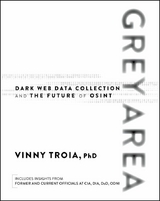
A compelling, first-hand account of the dark web, from its underground ecosystem, to the people responsible for committing data breaches and leaking data, 21st century's most consequential data breaches, the responses to those attacks, and the impact of dark web data and intelligence gathering and can have in the defense and security of our nation.
In Grey Area, veteran hacker and cybersecurity investigations expert Vinny Troia offers an unfiltered, first-person look into the evolving relationship between open-source intelligence (OSINT) and the dark web data ecosystem. Drawing from years of hands-on experience in digital forensics, dark web investigations, and adversarial engagement, Troia explores how publicly available and commercially available information-PAI and CAI-are rapidly becoming the backbone of modern intelligence operations, and how a human intelligence network of known cyber criminals helped identify and stop one of the largest data breaches in known history.
This book examines the legal, operational, and ethical dimensions of collecting and exploiting data from the darkest corners of the internet, including leaked databases, breached credentials, and hidden criminal networks. It breaks down how to discover, process, validate, and operationalize this data in real-world contexts-from attribution and threat actor profiling to national security use cases.
You'll explore the evolution of OSINT within the Department of Defense and the Intelligence Community through exclusive, first-hand accounts from senior officials who helped define its path. You'll also learn how AI and automation tools are being used to validate data at scale, detect disinformation, and supercharge open-source investigations. The book also covers how data is stolen and what happens to it after the theft. Through his direct account as Reddington, Troia provides actual unedited conversations with the cyber criminals responsible for a hack targeting more than 160 companies, including his own interactions leading to the hack, the extortion negotiation and responses with each of the effected organizations, and how the hackers were ultimately brought to justice.
From discussions of the legal grey areas of data collection, ransom negotiations, and a first-hand perspectives of his interaction with well-known hackers, Grey Area is a compelling and honest account of the realities of the dark web, data theft, and ways in which the intelligence community should be leveraging these methods to help strengthen our national security.
Inside the book:
- Blow-by-blow accounts of one of the largest data breaches in recorded history
- Interviews and commentary from high level officials at the CIA, ODNI, DIA, and DOD.
- Informed, insightful commentary on how cybersecurity professionals are using dark web open-source intelligence to strengthen national security, and our country's defenses against hackers and foreign adversaries.
- Revealing interviews with experienced hackers who explain a variety of approaches, philosophies, and strategies for combatting and recovering from data breaches
Grey Area is essential reading for cybersecurity professionals, intelligence analysts, investigators, and policy leaders navigating the complex intersection of dark web data, national security, and open-source intelligence. Through real-world case studies and insider accounts, it delivers actionable insight into the future of data-driven investigations, threat attribution, and the expanding role of OSINT in modern intelligence operations.
VINNY TROIA, PhD, is a lifelong hacker, ransomware negotiator, and dark web investigator. Troia's deep knowledge of the cybercriminal underground has placed him at the center of numerous high-profile investigations. He is the CEO of Shadow Nexus, a firm that delivers dark web data and intelligence to national security organizations.
A compelling, first-hand account of the dark web, from its underground ecosystem, to the people responsible for committing data breaches and leaking data, 21st century's most consequential data breaches, the responses to those attacks, and the impact of dark web data and intelligence gathering and can have in the defense and security of our nation. In Grey Area, veteran hacker and cybersecurity investigations expert Vinny Troia offers an unfiltered, first-person look into the evolving relationship between open-source intelligence (OSINT) and the dark web data ecosystem. Drawing from years of hands-on experience in digital forensics, dark web investigations, and adversarial engagement, Troia explores how publicly available and commercially available information PAI and CAI are rapidly becoming the backbone of modern intelligence operations, and how a human intelligence network of known cyber criminals helped identify and stop one of the largest data breaches in known history. This book examines the legal, operational, and ethical dimensions of collecting and exploiting data from the darkest corners of the internet, including leaked databases, breached credentials, and hidden criminal networks. It breaks down how to discover, process, validate, and operationalize this data in real-world contexts from attribution and threat actor profiling to national security use cases. You'll explore the evolution of OSINT within the Department of Defense and the Intelligence Community through exclusive, first-hand accounts from senior officials who helped define its path. You'll also learn how AI and automation tools are being used to validate data at scale, detect disinformation, and supercharge open-source investigations. The book also covers how data is stolen and what happens to it after the theft. Through his direct account as Reddington, Troia provides actual unedited conversations with the cyber criminals responsible for a hack targeting more than 160 companies, including his own interactions leading to the hack, the extortion negotiation and responses with each of the effected organizations, and how the hackers were ultimately brought to justice. From discussions of the legal grey areas of data collection, ransom negotiations, and a first-hand perspectives of his interaction with well-known hackers, Grey Area is a compelling and honest account of the realities of the dark web, data theft, and ways in which the intelligence community should be leveraging these methods to help strengthen our national security. Inside the book: Blow-by-blow accounts of one of the largest data breaches in recorded history Interviews and commentary from high level officials at the CIA, ODNI, DIA, and DOD. Informed, insightful commentary on how cybersecurity professionals are using dark web open-source intelligence to strengthen national security, and our country's defenses against hackers and foreign adversaries. Revealing interviews with experienced hackers who explain a variety of approaches, philosophies, and strategies for combatting and recovering from data breaches Grey Area is essential reading for cybersecurity professionals, intelligence analysts, investigators, and policy leaders navigating the complex intersection of dark web data, national security, and open-source intelligence. Through real-world case studies and insider accounts, it delivers actionable insight into the future of data-driven investigations, threat attribution, and the expanding role of OSINT in modern intelligence operations.
Introduction
Grey Area: Dark Web Data and the Future of OSINT explores the critical intelligence value of information found on the dark web—whether it comes from hacked, breached, or leaked (HBL) datasets, or is extracted directly from the criminals responsible for them. While the subject matter may carry a negative association, the purpose of this book is quite the opposite: to show how dark web–derived intelligence—especially publicly available (PAI) and commercially available information (CAI)—is rapidly becoming the backbone of modern intelligence operations.
It also tells the story of how a human intelligence (HUMINT) network built around known cybercriminals helped uncover and ultimately stop one of the largest data breaches in history. This book is about defining—and reframing—the boundaries of ethical and legal collection practices, and how that evolving grey area is reshaping the future of OSINT and national security.
This book is not theoretical. It’s meant to be practical, operational, and directly usable by professionals across the intelligence and cybersecurity fields. Whether you’re a government analyst, OSINT practitioner, or an independent investigator, the goal is the same—to give you the tools, context, and clarity needed to work effectively with dark web data—and use it for good.
What Does This Book Cover?
Part I provides the foundation—a field guide to navigating dark web forums, data markets, and legal grey zones. You’ll learn how these underground markets operate, how threat actors establish trust, and how to evaluate a potential deal—often with practical guidance informed by the U.S. Department of Justice.
This section explores where to acquire data, how to interact with threat actors safely, and how to stay within legal bounds. From pseudonym creation to operational compartmentalization, these chapters offers real-world practices for working in sensitive online environments.
It also brings clarity to the often-misunderstood concept of Publicly Available Information (PAI)—breaking down what’s considered “fair game” and what crosses the line from an intelligence collection standpoint. You’ll hear directly from senior voices in the intelligence community (IC) who define these boundaries and explain their operational implications.
To ground this theory in reality, I walk through real-world examples—data leaks from the Brazilian Nuclear Authority, Shanghai National Police, MBDA missile systems, and Russia’s Institute for Nuclear Research—each highlighting how hacked, breached, and leaked (HBL) data can inform OSINT operations and mission outcomes.
Part II is all about open-source intelligence (OSINT) and how the data discussed in Part I can be used to enhance real-world intelligence collection. I begin by examining the evolution of OSINT within the intelligence community (IC), tracing how the discipline has matured—and where it’s headed—through direct interviews with professionals across the Department of Defense (DoD) and broader IC. This section highlights the growing strategic role OSINT plays in reshaping how the IC approaches modern collection.
I also explore how dark web HBL data is actively leveraged in investigations. Through real-case studies, I show how disparate data points—such as leaked credentials, Telegram activity, and historical forum posts—can be assembled into cohesive profiles to identify known cybercriminals and uncover digital footprints.
Part II concludes with a topic too often overlooked: the use of OSINT in combating child sexual abuse material (CSAM) and human trafficking. Using live case examples, I examine how open-source tools and dark web intelligence can work together to support victim protection efforts and disrupt criminal networks in meaningful ways.
Part III is the most technical- and hands-on-section of this book, with every example grounded in real datasets sourced from the dark web. It opens with a look at disinformation risks and explores how to validate large datasets at scale, including how to use artificial intelligence (AI) to assess the integrity of a breached database containing Chinese national ID records.
This part also tackles the realities of data cleaning and transformation. You’ll learn how to normalize invalid or unstructured data from Iranian, Chinese, and Russian breaches—converting foreign-language, inconsistent formats into structured, ingestible intelligence products.
Next, I explore the practical integration of AI and large language models (LLMs) in OSINT workflows. Through a case study involving a breach of an Iranian ride-hailing platform, I demonstrate how AI can dramatically accelerate analysis—flagging anomalies, identifying baseline behaviors, and surfacing operational insights that would otherwise take days or weeks to uncover.
From there, I shift from systems-based data to people-based intelligence. The final chapter explores the fundamentals of human intelligence (HUMINT)—specifically, how to elicit valuable information from individuals without triggering suspicion. From calibrated questions and false prompts to ego manipulation and rapport-building, this chapter breaks down the psychological tradecraft behind successful digital elicitation, and introduces key concepts in persona development and OPSEC—including how to build and maintain credible online identities.
Finally, through the lens of operational intelligence and national security, Part IV unpacks what is arguably one of the most significant data breaches in recent memory—the Snowflake hack—and the role I played through its identification and investigation under the alias Reddington.
Reddington
For those unfamiliar, Raymond Reddington is a fictional character from The Blacklist, portrayed by James Spader—a top-tier criminal turned FBI informant who operates in the shadows while sitting at the top the agency’s most wanted list. The name felt fitting. In the cybercrime underground, many assume I work with the FBI. And in certain corners of the security community, many would argue that my methods are enough to put me on a target list of my own.
But the reality looks different.
Part IV follows my work under the alias Reddington—not as a criminal or an informant, but as an investigator—showing what modern HUMINT really looks like in practice, and how that intelligence led to the discovery of a data breach that impacted hundreds of organizations across industries and borders.
If not for my direct engagement with known cybercriminals, there’s no telling how many more Snowflake customers would have been breached—or which nation-state might have purchased the data that, according to the DOJ, posed a “substantial risk to national security and public safety.”
The discovery of what would become the only data breach in history delayed due to national security concerns wasn’t the result of passive scraping. It came from a live human intelligence network—relationships built through targeted, real-time interaction.
The Snowflake story begins with the earliest signals—how the breach came to light, including my direct communications with the hackers behind it. Anchored by official court records, this text weaves together chat logs, personal notes, and intrusion analysis to build a full picture of how the investigation unfolded from the inside out.
Next, I shift focus to Snowflake itself—how we traced the source of the stolen data, and how we identified additional victims. This is where the investigation pivots from isolated victim cases to a systemic compromise.
I also provide a full analysis of the breach mechanics: how the hackers maintained persistent access, the tooling they deployed, and how they operationalized infostealer logs at scale to target Snowflake customers. In some cases, I include excerpts from interactions with the victim organizations to illustrate the rapid timeline and how quickly events were unfolding in real time.
The section closes with the story of Connor Moucka—also known as Catist, Waifu, ellyel8, and several other aliases—including the details of his unmasking and arrest.
This is where the book shifts from theoretical warnings about why some people choose not to engage with threat actors, to real-world proof of the value these relationships can provide—when managed with intention, tradecraft, and a clear operational goal.
Now let’s turn the spotlight to the featured guests—whose insight and involvement were critical to bringing this story to life.
Introducing the Guest Experts
This book is shaped by the voices of some of the most respected figures in the national security and intelligence community. Their firsthand experiences, hard-won insights, and candid reflections are woven throughout the chapters that follow. Each guest has also contributed a short personal narrative—written in their own voice—capturing the professional journey and perspective they brought to our conversations.
The following narratives are in alphabetical order.
Jason Barrett
IC OSINT Executive, ODNI
The views and opinions provided herein are my own and do not necessarily represent the views of the Office of the Director of National Intelligence or of the United States. (See also 5 C.F.R. § 2635.807(b).)
I...
| Erscheint lt. Verlag | 9.9.2025 |
|---|---|
| Sprache | englisch |
| Themenwelt | Mathematik / Informatik ► Informatik ► Netzwerke |
| Schlagworte | CAI • commercially available information • dark web data • data breach communication • data breach defenses • Data breaches • data breach intelligence • data breach responses • data breach strategy • Data Markets • data privacy strategy • defense intelligence • dod • intelligence community • national security • national security, OSINT, intelligence community, DOD, defense intelligence, open source intelligence • Open Source Intelligence • open source intelligence gathering • OSINT • Pai • publicly available information |
| ISBN-10 | 1-394-35728-1 / 1394357281 |
| ISBN-13 | 978-1-394-35728-4 / 9781394357284 |
| Informationen gemäß Produktsicherheitsverordnung (GPSR) | |
| Haben Sie eine Frage zum Produkt? |
 EPUB (Adobe DRM)
Kopierschutz: Adobe-DRM
Adobe-DRM ist ein Kopierschutz, der das eBook vor Mißbrauch schützen soll. Dabei wird das eBook bereits beim Download auf Ihre persönliche Adobe-ID autorisiert. Lesen können Sie das eBook dann nur auf den Geräten, welche ebenfalls auf Ihre Adobe-ID registriert sind.
Details zum Adobe-DRM
Dateiformat: EPUB (Electronic Publication)
EPUB ist ein offener Standard für eBooks und eignet sich besonders zur Darstellung von Belletristik und Sachbüchern. Der Fließtext wird dynamisch an die Display- und Schriftgröße angepasst. Auch für mobile Lesegeräte ist EPUB daher gut geeignet.
Systemvoraussetzungen:
PC/Mac: Mit einem PC oder Mac können Sie dieses eBook lesen. Sie benötigen eine
eReader: Dieses eBook kann mit (fast) allen eBook-Readern gelesen werden. Mit dem amazon-Kindle ist es aber nicht kompatibel.
Smartphone/Tablet: Egal ob Apple oder Android, dieses eBook können Sie lesen. Sie benötigen eine
Geräteliste und zusätzliche Hinweise
Buying eBooks from abroad
For tax law reasons we can sell eBooks just within Germany and Switzerland. Regrettably we cannot fulfill eBook-orders from other countries.
aus dem Bereich