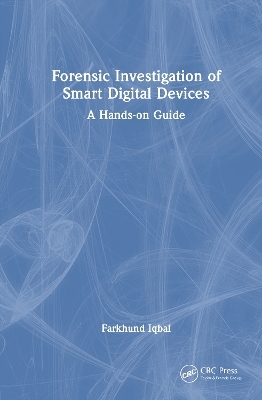
Forensic Investigation of Smart Digital Devices
CRC Press (Verlag)
978-1-041-07830-2 (ISBN)
- Lieferbar (Termin unbekannt)
- Versandkostenfrei
- Auch auf Rechnung
- Artikel merken
As digital ecosystems advance toward pervasive connectivity, smart devices have become embedded in the operational, social, and economic fabric of modern life. While this integration enhances productivity and accessibility, it generates unprecedented volumes of heterogeneous electronic data and expands the attack surface for cybercrime. The complexity, proprietary architectures, and distributed nature of these technologies simultaneously present profound challenges for contemporary forensic practice. Forensic Investigation of Smart Digital Devices: A Hands-On Guide offers a rigorous and comprehensive examination of these challenges. Across thirteen systematically structured chapters, the book provides an in-depth exploration of forensic methodologies for a wide spectrum of device classes, including IoT infrastructures, smartphones, embedded chips, unmanned aerial vehicles (UAVs), social robots, gaming consoles, smart wearables, mobile applications, and autonomous vehicles. Each chapter translates theory into actionable investigative workflows using validated tools, documented case studies, and reproducible techniques. Addressing both current technologies and emerging frontiers, the book integrates discussions on artificial intelligence (AI), machine learning (ML), computer vision (CV), and advanced computational paradigms, highlighting their transformative role in modern digital forensic analysis. This guide equips forensic investigators, cybersecurity specialists, law enforcement personnel, legal professionals, and academic researchers with the methodological rigor and applied skills required to conduct thorough and reliable forensic investigations. Through practical examples and hands-on exercises, it bridges the gap between theory and practice, offering a valuable resource for strengthening cybersecurity and combating cybercrime in the era of smart connected technologies.
Dr. Farkhund Iqbal is a Full Professor and Director of the Advanced Cyber Forensics Research Laboratory (ACFRL) at the College of Technological Innovation, Zayed University, United Arab Emirates. He holds a Master’s degree (2005) and a Ph.D. (2011) in Computer Science and Software Engineering from Concordia University, Montreal, Canada. He has over 15 years of teaching and research experience. Dr. Iqbal believes in a student-centered, engaging, and collaborative teaching and learning environment where students are equipped with the knowledge, skills, and competencies required to meet the emerging needs of society. His research focuses on the use of Artificial Intelligence, Machine Learning, Service Robotics, and Data Analytics techniques to meet the challenges in the domain of digital security, cybercrime investigation and digital forensics, healthcare, and smart city. He has over 200+ refereed publications and more than 5600 citations and h-index:39 (on Google Scholar). He is ranked among the top 2% of researchers worldwide in 2025, according to the Stanford and Elsevier global researcher ranking. He is the lead author of multiple books and a recipient of several prestigious awards. He has served as chair and co-chair for numerous IEEE/ACM conferences and workshops and has been a guest editor and reviewer for multiple high-ranking journals. Dr. Iqbal is an Adjunct Professor in the School of Information Studies at McGill University, Montreal, Canada, and an Associate Graduate Faculty member in the Faculty of Business and Information Technology at Ontario Tech University, Toronto, Canada.
Acknowledgements. AI Usage.
1. IoT Forensics. 1.1. Cybercrime Investigation and Digital Forensic Process. 1.2. Why IoT Forensics. 1.3. IoT Forensics Models. 1.4. IoT Forensics Methodologies. 1.5. Key Components of IoT Devices. 1.6. Key Challenges. 1.7. Opportunities in IoT Forensics. End of Chapter Questions. References.
2. Forensic Analysis Methods for IoT Devices. 2.1. Confiscation. 2.2. Acquisition. 2.3. Analysis and Examination. 2.4. Reporting and Presentation. 2.5. Digital Forensic Tools. End of Chapter Questions. References.
3. Smartphone Forensics. 3.1. Smartphone Forensics: An Overview. 3.2. Smartphone Components. 3.3. Evidence Extraction using Murphy's Model. 3.4. Smartphone Heterogeneity and the Forensics Process. 3.5. Challenges in Smartphone Forensics. 3.6. Practical Forensic Acquisition of SmartPhones. End of Chapter Questions. References.
4. Embedded Chips. 4.1. Relevance in Digital Forensics. 4.2. Smart Card Forensics. 4.3. Thumb Drives (USB Drives). 4.4. TransFlash Cards Forensics. 4.5. Authentication Sticks Forensics. End of Chapter Questions. References.
5. Unmanned Aerial Vehicles (UAVs) Forensics. 5.1. UAV Components and Models. 5.2. Drone Forensics Analysis Methods. 5.3 Case study—DJI phantom 3. 5.4. Challenges in Drone Forensics. End of Chapter Questions. References.
6. Social Robot Forensics. 6.1. Robot Operating System. 6.2. Forensic Methodology. End of Chapter Questions. References.
7. Gaming Consoles Forensics. 7.1. Vulnerabilities in Gaming Consoles. 7.2. Gaming Console Forensics. 7.3. Digital Surveillance for Xbox Kit (XFT Device). 7.4. Forensic Acquisition of an Xbox One S Gaming Console Using FTK. 7.5. Digital Forensic Analysis of PS4 Gaming Console Using Save Wizard. End of Chapter Questions. References.
8. Smart Wearables' Forensics. 8.1. Smart Wearables. 8.2. Smart Wearables' Forensics. 8.3. Challenges in Smart Wearables Forensics. End of Chapter Questions. References.
9. Application Forensics. 9.1. Application Heterogeneity. 9.2. Data (Artifact) Localities. 9.3 State-of-the-Art. 9.4. Case Studies. End of Chapter Questions. References.
10. Autonomous Vehicle Forensics. 10.1. Autonomous Vehicle Components. 10.2. Digital Vehicle Forensics. End of Chapter Questions. References.
11. AI, ML, and Computer Vision in Modern Digital Forensic Workflows. 11.1. Artificial Intelligence. 11.2. Machine Learning (ML) in Digital Forensics. 11.3. Computer Vision in Digital Forensic. End of Chapter Questions. References.
12. Advanced Computational Paradigms in Digital Forensics: Big Data, NLP, and GenAI. 12.1. Big Data. 12.2. Natural Language Processing (NLP) in DF. 12.3. Generative AI in Digital Forensics. 12.4. Expert Systems in DF. End of Chapter Questions. References.
13. Futuristic Technologies and Digital Forensics. 13.1. Blockchain. 13.2. Explainable Artificial Intelligence (XAI) in Digital Forensics. 13.3. Emerging Tools and Frameworks in AI for DF. 13.4. Futuristic Challenges in Smart Connected Device Forensics. End of Chapter Questions. References.
Glossary of Key Terms.
| Erscheinungsdatum | 17.12.2025 |
|---|---|
| Zusatzinfo | 25 Tables, black and white; 22 Line drawings, black and white; 33 Halftones, black and white; 55 Illustrations, black and white |
| Verlagsort | London |
| Sprache | englisch |
| Maße | 156 x 234 mm |
| Themenwelt | Informatik ► Netzwerke ► Sicherheit / Firewall |
| Recht / Steuern ► Strafrecht ► Kriminologie | |
| ISBN-10 | 1-041-07830-7 / 1041078307 |
| ISBN-13 | 978-1-041-07830-2 / 9781041078302 |
| Zustand | Neuware |
| Informationen gemäß Produktsicherheitsverordnung (GPSR) | |
| Haben Sie eine Frage zum Produkt? |
aus dem Bereich