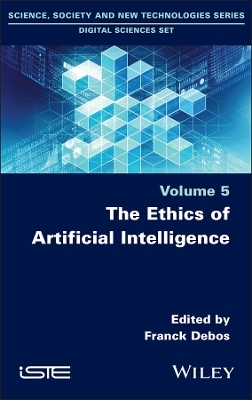
The Ethics of Artificial Intelligence
Iste Ltd (Verlag)
978-1-83669-015-3 (ISBN)
Artificial intelligence is profoundly restructuring our practices, creating new methods and significantly influencing the way we think and interact, at the level of individuals, organizations and societies, whether in our private, public or professional lives.
This book begins with a rather conceptual approach, particularly focusing on the possible future of AI. It then highlights the urgent need to establish an ethical framework for the uses associated with AI, illustrating two booming sectors of activity. Finally, it discusses the ethics of AI in professional sectors that are undergoing major changes because of the digitization of their activities.
Franck Debos is a lecturer in SIC at the Université de Nice Côte d'Azur, France. His research interests include issues associated with the ethics of AI, smart cities and digital uses.
Author Presentation xi
Introduction xv
Franck DEBOS
Part 1 A Theoretical and Imaginary Approach to AI 1
Chapter 1 Imaginary Fantasies of Robotic Humanities and AI in Fictional Contexts 3
Nicolas OLIVERI
1.1 Introduction 3
1.2 From Digital Humanities to Robotic Humanities 4
1.3 Transhumanism as evidence of a diminished humanity 5
1.4. Thinking of mecha as an artifact of human–machine fusion 18
1.5 Representations of artificial intelligence in Japanese anime 20
1.6 Conclusion 23
1.7 References 24
Chapter 2 The Boundaries of Technology and the Future of AI 27
Juan Antonio CARRASCO
2.1 Introduction 27
2.2 Generative AI and exponential technology 29
2.3 Technology as the culmination of metaphysics 31
2.4. The commodification of imagination in the technical world 34
2.5 Archive policy and future democracy 36
2.6 Conclusion 39
2.7 References 40
Chapter 3 Neuralink and the Birth of Homo Silicus 43
Alexandre CARBONNEAU
3.1 Introduction 43
3.2 Artificial intelligence 47
3.3 Human intelligence as a multiple, subjective and non-reducible element 49
3.4 Autopoiesis versus the mathematization of life 51
3.5 AI: a new aspect of heterotelia 55
3.6 Functionalism as the sole object of intellectual accomplishment 56
3.7 Conclusion 59
3.8 References 60
Part 2 Questioning Ethics at the Heart of AI 63
Chapter 4 The Influence of AI on Love: The Role of Dating Sites in Romantic Encounters 65
André BOYER and Faranak FARZANEH
4.1 Introduction 65
4.2. The evolution of human relations through social networks 66
4.2.1 A quasi-permanent interconnection 66
4.2.2 The significance of closed social networks 67
4.3 Modern love in the context of dating sites 69
4.3.1 The evolution of the couple 70
4.3.2 Exchanges on dating platforms 71
4.3.3 The online dating market 73
4.4 Analysis of the effects of dating sites on romantic relationships 74
4.4.1 The effects of digital platforms on the dimensions of relationships 75
4.4.2. The effects of dating platforms through a theory of love 76
4.5 Conclusion 77
4.6 References 78
Chapter 5 AI and Smart Cities, What is the Ethical Positioning? 81
Franck DEBOS
5.1 Introduction 81
5.2 The necessity and challenges for ethical AI 82
5.3 A truly smart city? 84
5.4 Directions and aspirations for smart cities 88
5.4.1 A digital business city: profit center 89
5.4.2 Ecotechnocity or ecolife city 91
5.4.3 Ethic and the human city 92
5.5 Conclusion 94
5.6 References 95
Chapter 6 The Smart City and AI: Opportunities, Challenges and Expectations for Businesses 99
Franck DEBOS and Maria Daniella LANCINI
6.1 Introduction 99
6.2 The sociotechnical context of the smart city 102
6.3 Smart cities and sustainable development 107
6.4 Methodology and results 110
6.5 Conclusion 114
6.6 References 115
Part 3 AI at the Service of the Community: A World to Build Towards 119
Chapter 7 Artificial Intelligence: A New Challenge for Information and Media Literacy 121
Loïc SUMIEN
7.1 Introduction 121
7.2 IML: challenges, issues and perspectives 123
7.2.1 The role of IML in the development of AI 124
7.2.2 IML for an ethical, reasoned and enlightened use of AI 125
7.2.3 AI and misinformation: critical thinking as the backbone of IML in France 128
7.3 AI and media literacy: taking a systems approach 130
7.4 AI, a necessary consideration in the educational field 130
7.5 References 132
Chapter 8 Agenda-Setting AI Algorithms, What is the Agenda? 135
Horea Mihai BADAU
8.1 Introduction 135
8.2 Research questions 136
8.3 Theoretical points of reference 137
8.3.1 Algorithmic thinking 139
8.3.2 “Pleasing the algorithms” 139
8.4 Methodology 140
8.4.1 First step: creating an AI algorithm 140
8.4.2 Second step: node analysis 141
8.4.3 Third step: identify semantic universes on TikTok 142
8.4.4 Fourth step: identify existing “rabbit holes” in TikTok’s semantic universes 143
8.5 Conclusion 143
8.5.1 Internalizing algorithmic logic 143
8.5.2 The effect of algorithmic thinking on the semantic universes of TikTok users 144
8.5.3 The “rabbit holes” hidden by AI algorithms in semantic universes on TikTok 145
8.6 References 145
Chapter 9 The Cultural and Creative Industries in the Age of AI: Ethics and Responses from Multilateral Organizations 149
Vanessa LANDAVERDE KASTBERG and Matina MAGKOU
9.1 Artificial intelligence: a constantly changing environment 149
9.2. AI and the technologies used by CCIs: what are the effects? 150
9.2.1 Between human and technological creativity: new challenges, new ways of working 152
9.2.2 A question of ethics 153
9.3 UNESCO, IA and CCI 154
9.3.1 EU, AI and CCI 156
9.3.2 Protecting creation and creativity: a question of ethics 157
9.3.3 New business models in CCI through the sensible use of AI 158
9.4 What response can we give to CCI professionals on the future of ethics in creativity? 158
9.5 References 159
List of Authors 163
Index 165
| Erscheinungsdatum | 27.09.2025 |
|---|---|
| Reihe/Serie | ISTE Invoiced |
| Verlagsort | London |
| Sprache | englisch |
| Themenwelt | Mathematik / Informatik ► Informatik ► Theorie / Studium |
| ISBN-10 | 1-83669-015-0 / 1836690150 |
| ISBN-13 | 978-1-83669-015-3 / 9781836690153 |
| Zustand | Neuware |
| Informationen gemäß Produktsicherheitsverordnung (GPSR) | |
| Haben Sie eine Frage zum Produkt? |
aus dem Bereich