


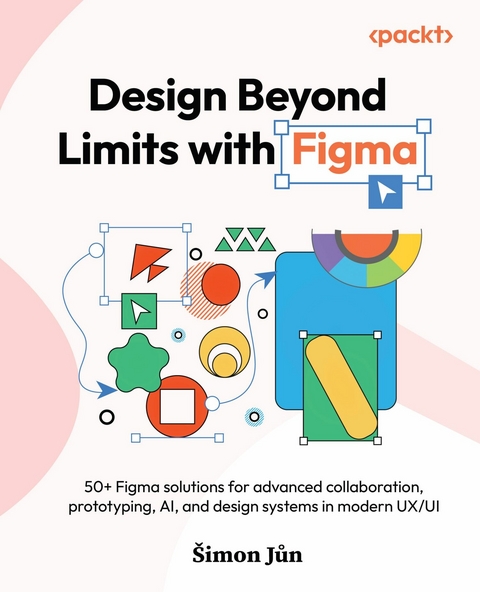
Design Beyond Limits with Figma (eBook)
282 Seiten
Packt Publishing (Verlag)
978-1-83620-770-2 (ISBN)
Figma isn't just a design tool; it's the modern designer's command center
Šimon Jun, COO at Dotidot, longtime Figma lecturer, and organizer of the Czech Friends of Figma community, built this book from the trenches of real product work. After years of untangling messy files, rescuing failing handoffs, and coaching teams at scale, he distilled what actually works into a practical, recipe-driven guide.
Over time, Šimon saw the same problems show up again and again: bloated files, broken handoffs, and design systems that couldn't scale. This book is his way of sharing the patterns, tools, and habits that helped teams move past those roadblocks and build stronger, more connected design processes in Figma.
Inside, you'll learn how to structure files for real collaboration, use design tokens without chaos, build accessible, scalable libraries, and hand off to developers with confidence. You'll see how to automate repetitive work with plugins and AI, run async reviews, and bake feedback loops into your process so projects keep moving, without losing polish.
Become a pro Figma user by learning advanced techniques, real-world workflows from experts, and Al tips that make collaboration and handoffs effortlessKey FeaturesLevel up into a highly sought-after designer through expert techniques and battle-tested workflowsLearn faster with a hands-on guide built around practical, recipe-based approach.Put Al to work in Figma with workflows that speed up content, assets, and cleanup while saving hoursPurchase of the print or Kindle book includes a free PDF eBookBook DescriptionFigma isn't just a design tool; it's the modern designer's command centerSimon Jun, COO at Dotidot, longtime Figma lecturer, and organizer of the Czech Friends of Figma community, built this book from the trenches of real product work. After years of untangling messy files, rescuing failing handoffs, and coaching teams at scale, he distilled what actually works into a practical, recipe-driven guide. Over time, Simon saw the same problems show up again and again: bloated files, broken handoffs, and design systems that couldn t scale. This book is his way of sharing the patterns, tools, and habits that helped teams move past those roadblocks and build stronger, more connected design processes in Figma. Inside, you ll learn how to structure files for real collaboration, use design tokens without chaos, build accessible, scalable libraries, and hand off to developers with confidence. You ll see how to automate repetitive work with plugins and AI, run async reviews, and bake feedback loops into your process so projects keep moving, without losing polish.What you will learnMaster advanced collaboration workflows to reduce rework and keep design projects moving.Build scalable design systems with tokens, variables, and accessible components.Deliver clean handoffs using specs, annotations, exports, and Dev Mode.Create accessible systems that meet WCAG standards and work at scale.Engage stakeholders effectively through clear reviews and interactive presentations.Leverage plugins and AI to automate tasks and accelerate design work.Who this book is forThis book is written for UX and UI designers who already have a basic understanding of Figma and want to advance beyond the fundamentals. Product managers and developers who work closely with design teams will also benefit from learning design practices, building scalable systems and better collaboration practices.]]>
1
Advanced Collaborative Design with Figma
The first time I used Figma in 2017, I was blown away by how seamlessly it supported collaboration. It was the first design tool truly built with teamwork at its core. While this approach might seem standard today, it was groundbreaking at the time. It shifted the mindset from isolated design work (“I’ll work on this until the deadline and then share it”) to a dynamic process of ongoing feedback and iteration. And as we all know, consistent feedback leads to better products. Figma excels at enabling this, but it’s essential to understand the full range of collaborative features it offers.
This chapter dives into eight crucial areas of collaboration that will empower your team to create outstanding products by improving communication, streamlining workflows, and ensuring alignment between design and development. Mastering these areas will help you avoid common pitfalls, reduce inefficiencies, and deliver high-quality products faster, with fewer roadblocks along the way.
In this chapter, we will walk through the following topics:
- Communication gaps between designers and developers
- Repetitive design meetings waste time and delay progress
- Designers may not anticipate technical limitations, leading to missing details for developers
- Constant changes in the design
- Streamlining version control and iterations
- Unlocking advanced sharing and permissions settings
- Real-time co-designing for maximum team productivity
- Facilitating feedback loops in collaborative designs
Getting the most out of this book – get to know your free benefits
Unlock exclusive free benefits that come with your purchase, thoughtfully crafted to supercharge your learning journey and help you learn without limits.
Here’s a quick overview of what you get with this book:
Next-gen reader
| Figure 1.1: Illustration of the next-gen Packt Reader’s features | Our web-based reader, designed to help you learn effectively, comes with the following features:
|
Interactive AI assistant (beta)
| Figure 1.2: Illustration of Packt’s AI assistant | Our interactive AI assistant has been trained on the content of this book, to maximize your learning experience. It comes with the following features:
Note: The AI assistant is part of next-gen Packt Reader and is still in beta. |
DRM-free PDF or ePub version
| Figure 1.3: Free PDF and ePub | Learn without limits with the following perks included with your purchase:
|
Unlock this book’s exclusive benefits nowScan this QR code or go to packtpub.com/unlock, then search for this book by name. Ensure it’s the correct edition. |
| Note: Keep your purchase invoice ready before you start. |
Communication gaps between designers and developers
One of the most persistent challenges in product development is the interaction between designers and developers. While both disciplines work toward the same goal—creating functional, user-friendly products—they often approach problems from entirely different perspectives, leading to friction and miscommunication.
What’s the problem?
Designers and developers are two essential forces in product development, but they often struggle to understand each other. As a designer, it’s important to remember that what you create in Figma isn’t the final product—the production code is. However, despite working toward the same goal, many teams face miscommunication that goes beyond just different terminologies and perspectives.
The challenges run much deeper than word choices. Designers and developers operate with fundamentally different mental models. Designers work with fluid, relational thinking, placing elements freely in space and considering visual hierarchy and flow—much like how Figma’s free-canvas approach works. Developers, on the other hand, operate within structured, hierarchical frameworks shaped by how code, databases, and systems are organized. They think in terms of top-to-bottom sequences, nested structures, and rigid organizational principles. This fundamental difference in spatial thinking creates natural tension when translating design to code.
Additionally, there’s often a knowledge gap around existing technical infrastructure. New designers, and even experienced ones joining a project, may lack the historical context of how current systems were built, what technical constraints exist, or what potential blockers might arise from legacy code. Understanding the production environment and existing technical architecture is crucial for creating designs that work within real-world constraints, not just in an ideal vacuum.
Here are some common terminology differences between Figma and code:
| Figma | Code |
| Auto layout | Flexbox |
| Corner radius | Border-radius |
| Frames | Divs |
| Variables/design tokens | CSS variables |
| Prototypes | Clickable mockups (via JS/HTML) |
Table 1.1 – Terminology difference between Figma and code
Understanding these differences is crucial to ensuring a smoother workflow and more effective collaboration between designers and developers.
How to fix it
To bridge this gap, designers and developers must actively work toward a common understanding:
- Involve developers early: Bringing developers into the design process from the start ensures technical feasibility and helps avoid late-stage surprises. Make sure everyone understands the purpose behind design decisions through clear design annotation. I highly recommend walking through the entire design with developers, explicitly describing each screen and interaction rather than assuming anything is “obvious.” This serves two crucial purposes: developers can challenge your solutions and gain a deep understanding of user flows and interactions, while you, as a designer, can catch hidden flaws you might have missed during the design phase or that went unnoticed during design critiques.
- Establish a shared vocabulary: Document and define key terms that designers and developers use differently. This makes communication clearer and reduces misunderstandings. Consider using tools such as Storybook or similar documentation platforms to create a shared reference point where both teams can see how design components translate to code, helping establish common terminology and understanding.
- Use Figma’s Dev Mode: Leverage Figma’s developer handoff features to provide precise specifications and make it...
| Erscheint lt. Verlag | 19.9.2025 |
|---|---|
| Sprache | englisch |
| Themenwelt | Mathematik / Informatik ► Informatik ► Grafik / Design |
| ISBN-10 | 1-83620-770-0 / 1836207700 |
| ISBN-13 | 978-1-83620-770-2 / 9781836207702 |
| Informationen gemäß Produktsicherheitsverordnung (GPSR) | |
| Haben Sie eine Frage zum Produkt? |
 EPUB (Ohne DRM)
Digital Rights Management: ohne DRM
Dieses eBook enthält kein DRM oder Kopierschutz. Eine Weitergabe an Dritte ist jedoch rechtlich nicht zulässig, weil Sie beim Kauf nur die Rechte an der persönlichen Nutzung erwerben.
Dateiformat: EPUB (Electronic Publication)
EPUB ist ein offener Standard für eBooks und eignet sich besonders zur Darstellung von Belletristik und Sachbüchern. Der Fließtext wird dynamisch an die Display- und Schriftgröße angepasst. Auch für mobile Lesegeräte ist EPUB daher gut geeignet.
Systemvoraussetzungen:
PC/Mac: Mit einem PC oder Mac können Sie dieses eBook lesen. Sie benötigen dafür die kostenlose Software Adobe Digital Editions.
eReader: Dieses eBook kann mit (fast) allen eBook-Readern gelesen werden. Mit dem amazon-Kindle ist es aber nicht kompatibel.
Smartphone/Tablet: Egal ob Apple oder Android, dieses eBook können Sie lesen. Sie benötigen dafür eine kostenlose App.
Geräteliste und zusätzliche Hinweise
Buying eBooks from abroad
For tax law reasons we can sell eBooks just within Germany and Switzerland. Regrettably we cannot fulfill eBook-orders from other countries.
aus dem Bereich


