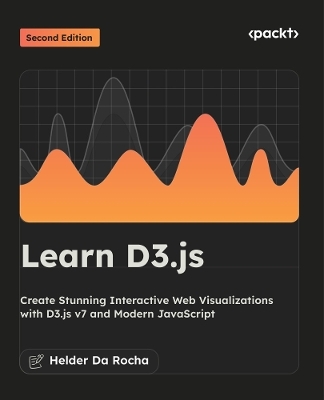
Learn D3.js
Packt Publishing Limited (Verlag)
9781837636860 (ISBN)
Key Features
Build dynamic, data-driven visualizations using D3.js v7 and ES2015+
Create bar, scatter, and network charts, geographic maps, and more
Learn through step-by-step tutorials backed by hundreds of downloadable examples
Purchase of the print or Kindle book includes a free PDF eBook
Book DescriptionLearn D3.js, Second Edition is a fully updated guide to building interactive, standards-compliant web visualizations using D3.js v7 and modern JavaScript. Whether you're a developer, designer, data journalist, or analyst, this book helps you master the core techniques for transforming data into compelling, meaningful visuals.
Beginning with fundamentals like selections, data binding, and SVG, the book progressively covers scales, axes, animations, hierarchical data, and geographical maps. Each chapter includes short examples and a full hands-on project with downloadable code you can run, modify, and use in your own work.
This new edition introduces improved chapter structure, updated code samples using ES2015 standards, and better formatting for readability. A dedicated chapter focuses on integrating D3 with modern frameworks like React and Vue, along with performance, accessibility, and deployment strategies. An appendix helps users migrate from older versions of D3.
With thoughtful pedagogy and a practical approach, this book remains one of the most thorough and respected resources for learning D3.js.What you will learn
Bind data to DOM elements and apply transitions and styles
Build bar, line, pie, scatter, tree, and network charts
Create animated, interactive behaviors with zoom, drag, and tooltips
Visualize hierarchical data, flows, and maps using D3 layouts and projections
Use D3 with HTML5 Canvas for high-performance rendering
Develop accessible and responsive D3 apps for all screen sizes
Integrate D3 with frameworks like React and Vue
Migrate older D3 codebases to version 7
Who this book is forThis book is for web developers, data journalists, designers, analysts, and anyone who wants to create interactive, web-based data visualizations. A basic understanding of HTML, CSS, and JavaScript is recommended. No prior knowledge of SVG or D3 is required.
Helder teaches, writes and develops applications with Java and Web technologies since 1995. In 1996 he wrote one of the first books in Portuguese about HTML and JavaScript, and since then he created hundreds of presentations, tutorials, and course materials on Java, Java EE, programming tools, patterns, techniques, methodologies, HTML, CSS, JavaScript, SVG, XML and related technologies, data visualization, Arduino and Internet of Things. He holds a masters degree in Computer Science. He also has a background in the visual arts and design and has some of his artwork in permanent museum exhibits. He lives in Brazil, where he works as an independent consultant, developer and instructor and a frequent speaker at technological events.
Table of Contents
Data-driven Documents
Essential SVG for D3
Essential Web Technologies for D3
Quick start
Selections and data binding
Loading and parsing data files
Data manipulation, generation and formatting
Axes
Scales
Colors
Shape and layout generators
Events and transitions
Interactive behaviors
Trees and other hierarchies
Interactive hierarchical visualizations
Flows and networks
Force-directed simulations
Geographical data
Interactive maps
D3 applications
Migrating
Observable notebooks
| Erscheinungsdatum | 14.08.2025 |
|---|---|
| Verlagsort | Birmingham |
| Sprache | englisch |
| Maße | 191 x 235 mm |
| Themenwelt | Informatik ► Software Entwicklung ► User Interfaces (HCI) |
| Informatik ► Web / Internet ► Web Design / Usability | |
| ISBN-13 | 9781837636860 / 9781837636860 |
| Zustand | Neuware |
| Informationen gemäß Produktsicherheitsverordnung (GPSR) | |
| Haben Sie eine Frage zum Produkt? |
aus dem Bereich