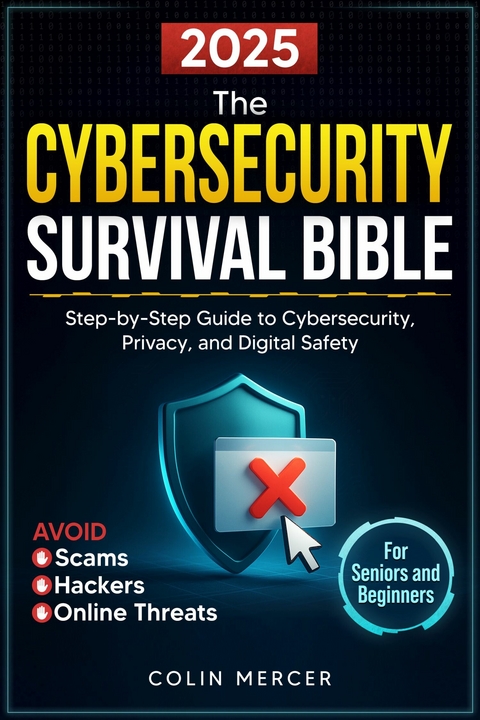
The Cybersecurity Survival Bible (eBook)
110 Seiten
Publishdrive (Verlag)
978-0-00-096621-6 (ISBN)
Take Control of Your Digital Life and Outsmart Cybercriminals-From Basic Safety to Bulletproof Security
Chapter 2
The Dark Side of the Internet
1. What Is the Dark Web?
The term “Dark Web” often sparks images of shadowy figures and secret online deals. While it does serve as a space for illegal activity, the reality is more nuanced. To understand its role in the digital world—and how it affects your security—it helps to know exactly what the Dark Web is and how it works.
The Dark Web is a hidden layer of the internet that isn’t indexed by regular search engines like Google or Bing. You can’t access it through your normal browser. Instead, it requires special software—most commonly, a tool called Tor (The Onion Router)—that anonymizes users by bouncing their internet traffic through a global network of encrypted servers.
Originally, the Dark Web was developed to support privacy and secure communication. Journalists, political dissidents, whistleblowers, and government agencies use it to protect sensitive exchanges. In repressive regimes, it can be a lifeline for free speech and access to censored information.
But the same anonymity that protects the innocent also shields the criminal. Hidden behind layers of encryption, many corners of the Dark Web host illicit markets and activities. Stolen credit cards, fake IDs, illegal drugs, unlicensed weapons, hacking tools, and leaked personal data are all traded in these underground forums.
A well-known example is Silk Road, an online black market launched in 2011. It operated like an illegal version of Amazon, mostly selling drugs. By the time the FBI shut it down in 2013, it had facilitated over $1.2 billion in transactions. Since then, dozens of copycats have emerged—some quickly dismantled, others still operating.
Law enforcement does actively target these sites, but shutting one down often leads to another taking its place. The design of the Dark Web makes tracking users extremely difficult, and many marketplaces rebuild with stronger anonymity features after each takedown.
Should you be concerned about the Dark Web? For most people, direct contact with it is unlikely. You won’t accidentally stumble onto it, and you can’t access it without deliberate steps. But its existence highlights an important point: the value of your personal information.
Much of what appears on the Dark Web comes from data breaches—passwords, account details, social security numbers, credit card info—leaked from poorly protected websites and companies. Once stolen, this data is sold or used to commit identity theft and fraud.
That’s why it's crucial to take everyday security seriously:
-
Use strong, unique passwords for every account
-
Turn on two-factor authentication wherever possible
-
Avoid clicking on suspicious links or email attachments
-
Regularly monitor your bank and credit card activity
-
Keep your software and devices updated to patch vulnerabilities
The Dark Web may be out of sight, but it’s a reminder that your information is valuable—and often targeted. The better you protect it, the less likely it is to end up in the wrong hands.
As we continue, you’ll learn more about how cybercriminals operate, how stolen data is used, and what you can do to safeguard your digital life. Awareness is the first step toward protection.
2. How Cybercriminals Make Money
Cybercrime isn’t random chaos—it’s big business. As more of our daily lives move online, criminals see endless opportunities to profit. Behind every scam or breach is a financial motive. To stay protected, it helps to understand how cybercriminals turn stolen data and digital disruption into income.
One of the most aggressive and profitable methods is the ransomware attack. In this scheme, cybercriminals infect a device or network with malware that locks access to files by encrypting them. Victims are then told they must pay a ransom—often in cryptocurrency—to regain access. These attacks target individuals, hospitals, schools, corporations, and even city governments. Demands can range from a few hundred dollars to several million, depending on the victim's size and desperation.
Another major revenue stream is identity theft. Criminals steal personal details like your name, Social Security number, bank credentials, or credit card data—and use them to open new accounts, take out loans, or make unauthorized purchases. In some cases, they file false tax returns to steal refunds or impersonate victims in government benefit programs.
Phishing scams are one of the most common gateways into identity theft and financial fraud. Cybercriminals send emails or texts designed to look like they come from legitimate companies or institutions. The goal is to trick recipients into clicking links or entering login details. Once they gain access, criminals can drain accounts, change passwords, or resell the stolen credentials.
There’s also a booming underground marketplace for stolen data, especially on the Dark Web. Hackers who steal databases full of usernames, passwords, credit card numbers, or private documents can sell this information to the highest bidder. Buyers use it to launch further attacks or commit fraud in bulk.
Botnets—networks of hijacked computers—are another tool criminals use for profit. These devices, often infected without their owners realizing it, can be used to:
-
Send out massive amounts of spam
-
Launch distributed denial-of-service (DDoS) attacks to shut down websites
-
Mine cryptocurrency using the victim’s computing power
-
Host illegal content or relay traffic to hide the attacker’s location
Botnets can also be rented out to other criminals, turning infected computers into passive money-makers for whoever controls the network.
Cybercriminal tactics evolve quickly. As new technologies emerge, so do new scams and attack strategies. That’s why staying alert and informed is critical.
Protecting yourself means practicing strong digital habits:
-
Use strong, unique passwords for every account
-
Enable two-factor authentication where available
-
Keep software and devices updated to fix vulnerabilities
-
Be cautious with emails and links, especially from unknown senders
-
Monitor financial and online accounts regularly for unusual activity
Cybercrime may be sophisticated, but most attacks rely on simple human mistakes. The more you understand the criminal playbook, the easier it becomes to spot and block their efforts.
In the chapters ahead, we’ll examine these schemes in greater detail and walk through the tools and techniques that can keep you safe. Knowledge is the first—and best—line of defense.
3. Identity Theft and Account Takeovers
Few cybercrimes are as disruptive—and personal—as identity theft and account takeovers. These attacks strike at the heart of your digital and financial life, often leading to lost money, emotional stress, and long-lasting complications. To protect yourself, it’s essential to understand how these crimes happen and what steps can reduce your risk.
Identity theft occurs when someone steals your personal information and uses it to impersonate you. The stolen data could include your full name, Social Security number, credit card details, date of birth, or bank account information. Once obtained, this data can be used to open new credit lines, take out loans, file false tax returns, or even commit crimes using your identity.
Account takeovers, meanwhile, involve a criminal gaining access to one or more of your existing accounts—such as email, online banking, or social media. Once inside, they may change passwords to lock you out, impersonate you to deceive others, steal your funds, or mine your accounts for more personal data.
These attacks often start with familiar tactics:
-
Phishing scams trick users into revealing usernames and passwords. Fake emails or messages direct you to bogus websites that capture your credentials.
-
Data breaches occur when companies are hacked and customer data is exposed. Your login details or personal records may end up for sale on the dark web, ready for exploitation.
-
Malware infections—downloaded from unsafe links or email attachments—can secretly record what you type, take screenshots, or give attackers access to your files.
-
Brute force attacks involve automated programs guessing passwords until they find the right one. Weak or reused passwords make this process faster and more successful.
Once an attacker has enough information, the damage can happen quickly. They may drain your accounts, impersonate you in messages, or use your stolen identity to open fraudulent accounts. Some victims don't discover they’ve been targeted until months later—when they’re denied a loan, receive unexpected bills, or notice unfamiliar charges.
Fortunately, you can take steps to make yourself a much harder target:
-
Use strong, unique passwords for every account. Never reuse the same password across sites.
-
Turn on two-factor authentication (2FA) wherever possible. This adds a second layer of verification, making it harder for intruders to gain access—even if they have your password.
-
Be cautious with links, attachments, or forms in emails—especially those...
| Erscheint lt. Verlag | 12.7.2025 |
|---|---|
| Sprache | englisch |
| Themenwelt | Informatik ► Netzwerke ► Sicherheit / Firewall |
| ISBN-10 | 0-00-096621-5 / 0000966215 |
| ISBN-13 | 978-0-00-096621-6 / 9780000966216 |
| Informationen gemäß Produktsicherheitsverordnung (GPSR) | |
| Haben Sie eine Frage zum Produkt? |
 EPUB (Adobe DRM)
Größe: 2,0 MB
Kopierschutz: Adobe-DRM
Adobe-DRM ist ein Kopierschutz, der das eBook vor Mißbrauch schützen soll. Dabei wird das eBook bereits beim Download auf Ihre persönliche Adobe-ID autorisiert. Lesen können Sie das eBook dann nur auf den Geräten, welche ebenfalls auf Ihre Adobe-ID registriert sind.
Details zum Adobe-DRM
Dateiformat: EPUB (Electronic Publication)
EPUB ist ein offener Standard für eBooks und eignet sich besonders zur Darstellung von Belletristik und Sachbüchern. Der Fließtext wird dynamisch an die Display- und Schriftgröße angepasst. Auch für mobile Lesegeräte ist EPUB daher gut geeignet.
Systemvoraussetzungen:
PC/Mac: Mit einem PC oder Mac können Sie dieses eBook lesen. Sie benötigen eine
eReader: Dieses eBook kann mit (fast) allen eBook-Readern gelesen werden. Mit dem amazon-Kindle ist es aber nicht kompatibel.
Smartphone/Tablet: Egal ob Apple oder Android, dieses eBook können Sie lesen. Sie benötigen eine
Geräteliste und zusätzliche Hinweise
Buying eBooks from abroad
For tax law reasons we can sell eBooks just within Germany and Switzerland. Regrettably we cannot fulfill eBook-orders from other countries.
aus dem Bereich