



Reaching for the Extreme
How the Quest for the Biggest, Fewest, and Weirdest Makes Math
Seiten
2026
Princeton University Press (Verlag)
978-0-691-26899-6 (ISBN)
Princeton University Press (Verlag)
978-0-691-26899-6 (ISBN)
- Noch nicht erschienen (ca. Februar 2026)
- Versandkostenfrei
- Auch auf Rechnung
- Artikel merken
From bestselling author and mathematician Ian Stewart, the fascinating story of the extreme problems that have driven math forward from antiquity to today
"Stewart has a genius for explanation."—New Scientist
Many of the deepest and most important areas of mathematics have emerged from questions about extremes—the shortest path between two points on a curved surface, the smallest area spanning a wire, or the fewest colors needed to make a map. Mathematicians have been pushing restlessly toward extremes for thousands of years. The isoperimetric problem, for example—which asks for the shortest route enclosing a given area—can be traced to ancient Carthage. By contrast, it was only in 2017 that the densest ways to pack identical spheres into a 24-dimensional space was proven. In Reaching for the Extreme, bestselling author Ian Stewart, one of the world’s most popular writers on mathematics, presents a dazzling, wide-ranging tour of math’s outer limits.
Stewart tells the stories of sixteen superlative problems—their history, the struggles to solve them, and the uses of some of the results. From the biggest number to the smallest, the fastest fall to the weirdest symmetry, and the best fold to the shortest proof, these questions are either pure thought experiments or are motivated by real-world challenges. The Plateau problem, about the geometry of soap bubbles, led to the notion of a minimal surface—now used in cosmology, biology, and other fields. Meanwhile, the 2023 discovery of a single tile shape that covers the infinite plane without repeating the same pattern has no application—yet.
Reaching for the Extreme illuminates how mathematicians drive knowledge forward by reaching for the edges and solving some of the world’s most fascinating problems.
"Stewart has a genius for explanation."—New Scientist
Many of the deepest and most important areas of mathematics have emerged from questions about extremes—the shortest path between two points on a curved surface, the smallest area spanning a wire, or the fewest colors needed to make a map. Mathematicians have been pushing restlessly toward extremes for thousands of years. The isoperimetric problem, for example—which asks for the shortest route enclosing a given area—can be traced to ancient Carthage. By contrast, it was only in 2017 that the densest ways to pack identical spheres into a 24-dimensional space was proven. In Reaching for the Extreme, bestselling author Ian Stewart, one of the world’s most popular writers on mathematics, presents a dazzling, wide-ranging tour of math’s outer limits.
Stewart tells the stories of sixteen superlative problems—their history, the struggles to solve them, and the uses of some of the results. From the biggest number to the smallest, the fastest fall to the weirdest symmetry, and the best fold to the shortest proof, these questions are either pure thought experiments or are motivated by real-world challenges. The Plateau problem, about the geometry of soap bubbles, led to the notion of a minimal surface—now used in cosmology, biology, and other fields. Meanwhile, the 2023 discovery of a single tile shape that covers the infinite plane without repeating the same pattern has no application—yet.
Reaching for the Extreme illuminates how mathematicians drive knowledge forward by reaching for the edges and solving some of the world’s most fascinating problems.
Ian Stewart is an award-winning mathematician and bestselling author of many popular math books, including Professor Stewart’s Cabinet of Mathematical Curiosities, Do Dice Play God?, Significant Figures, Calculating the Cosmos, In Pursuit of the Unknown, and Professor Stewart’s Casebook of Mathematical Mysteries. He is professor emeritus of mathematics at the University of Warwick and a fellow of the Royal Society.
| Erscheint lt. Verlag | 17.2.2026 |
|---|---|
| Zusatzinfo | 20 b/w illus. |
| Verlagsort | New Jersey |
| Sprache | englisch |
| Maße | 156 x 235 mm |
| Themenwelt | Mathematik / Informatik ► Mathematik ► Geschichte der Mathematik |
| ISBN-10 | 0-691-26899-1 / 0691268991 |
| ISBN-13 | 978-0-691-26899-6 / 9780691268996 |
| Zustand | Neuware |
| Informationen gemäß Produktsicherheitsverordnung (GPSR) | |
| Haben Sie eine Frage zum Produkt? |
Mehr entdecken
aus dem Bereich
aus dem Bereich
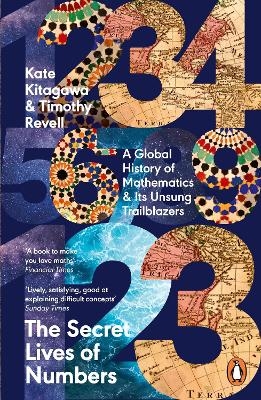
a global history of Mathematics & its Unsung Trailblazers
Buch | Softcover (2024)
Penguin Books Ltd (Verlag)
CHF 22,65
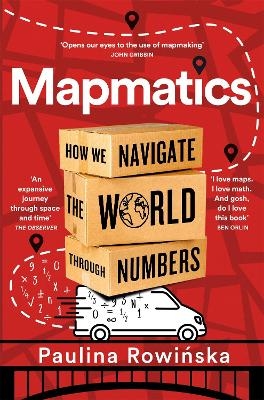
How We Navigate the World Through Numbers
Buch | Softcover (2025)
Picador (Verlag)
CHF 22,65


