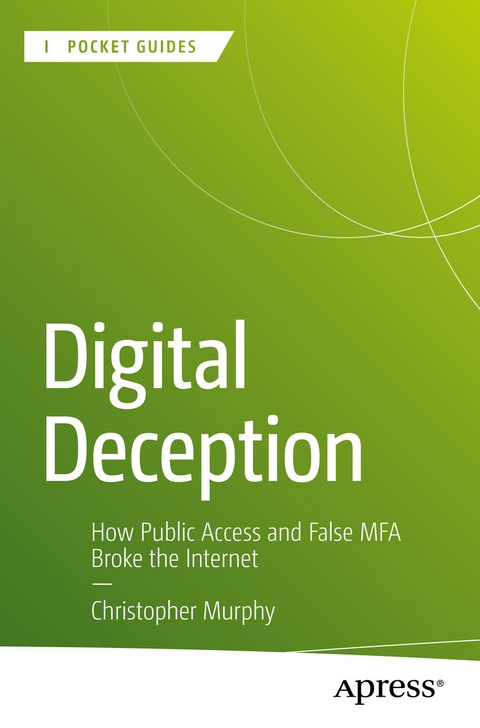
A critical examination of the foundational flaws that have led to the current cybersecurity crisis. This book takes a historical approach to understanding how short-term decision-making, driven by convenience and profit, compromised the long-term security of the internet. From the introduction of public access to secure networks to the widespread deception associated with Multi-Factor Authentication (MFA), this book uncovers the decisions, both intentional and negligent, that have allowed cybersecurity vulnerabilities to proliferate.
Divided into well-structured chapters that trace the evolution of these issues, Digital Deception provides a clear and fact-based narrative that highlights where the system went wrong and why. It also shines a light on the complicity of various actors (vendors, auditors, corporate leaders, and even educational institutions) in perpetuating a broken system. More than just a critique, 'Digital Deception' offers a path forward, rooted in real computer science, to restore trust and security in our digital world.
The book is especially relevant now, as cyber threats continue to grow in scale and sophistication. The facts presented here are not only essential for cybersecurity professionals but also for corporate leaders, policymakers, and anyone interested in the integrity of the digital economy.
What You Will Learn:
- Gain a deep understanding of the fundamental flaw in cybersecurity, particularly the impact of public access to secure networks and the deception inherent in current MFA practices.
- Recognize how various actors, knowingly or unknowingly, have contributed to the current cybersecurity crisis.
- Implement real solutions with actionable strategies based on real computer science to address and correct these vulnerabilities, paving the way for a more secure digital future.
- A revolutionary concept of Direct User Interaction and Digital IDs, as opposed to more traditional cybersecurity approaches like Zero Trust or perimeter security.
Who This Book Is for:
This book is primarily written for cybersecurity professionals, corporate leaders, lawyers and policymakers. It is also relevant to educators in the field of cybersecurity, and anyone interested in the integrity of the internet.
The typical reader will have a basic understanding of cybersecurity but will be introduced to new concepts and facts that challenge conventional wisdom and encourage a rethinking of current practices.
A critical examination of the foundational flaws that have led to the current cybersecurity crisis. This book takes a historical approach to understanding how short-term decision-making, driven by convenience and profit, compromised the long-term security of the internet. From the introduction of public access to secure networks to the widespread deception associated with Multi-Factor Authentication (MFA), this book uncovers the decisions, both intentional and negligent, that have allowed cybersecurity vulnerabilities to proliferate.Divided into well-structured chapters that trace the evolution of these issues, Digital Deception provides a clear and fact-based narrative that highlights where the system went wrong and why. It also shines a light on the complicity of various actors (vendors, auditors, corporate leaders, and even educational institutions) in perpetuating a broken system. More than just a critique, "e;Digital Deception"e; offers a path forward, rooted in real computer science, to restore trust and security in our digital world.The book is especially relevant now, as cyber threats continue to grow in scale and sophistication. The facts presented here are not only essential for cybersecurity professionals but also for corporate leaders, policymakers, and anyone interested in the integrity of the digital economy.What You Will Learn: Gain a deep understanding of the fundamental flaw in cybersecurity, particularly the impact of public access to secure networks and the deception inherent in current MFA practices. Recognize how various actors, knowingly or unknowingly, have contributed to the current cybersecurity crisis. Implement real solutions with actionable strategies based on real computer science to address and correct these vulnerabilities, paving the way for a more secure digital future. A revolutionary concept of Direct User Interaction and Digital IDs, as opposed to more traditional cybersecurity approaches like Zero Trust or perimeter security.Who This Book Is for:This book is primarily written for cybersecurity professionals, corporate leaders, lawyers and policymakers. It is also relevant to educators in the field of cybersecurity, and anyone interested in the integrity of the internet.The typical reader will have a basic understanding of cybersecurity but will be introduced to new concepts and facts that challenge conventional wisdom and encourage a rethinking of current practices.
| Erscheint lt. Verlag | 8.7.2025 |
|---|---|
| Sprache | englisch |
| Themenwelt | Informatik ► Netzwerke ► Sicherheit / Firewall |
| Mathematik / Informatik ► Informatik ► Web / Internet | |
| ISBN-13 | 979-8-8688-1227-9 / 9798868812279 |
| Informationen gemäß Produktsicherheitsverordnung (GPSR) | |
| Haben Sie eine Frage zum Produkt? |
 PDF (Wasserzeichen)
Größe: 2,2 MB
DRM: Digitales Wasserzeichen
Dieses eBook enthält ein digitales Wasserzeichen und ist damit für Sie personalisiert. Bei einer missbräuchlichen Weitergabe des eBooks an Dritte ist eine Rückverfolgung an die Quelle möglich.
Dateiformat: PDF (Portable Document Format)
Mit einem festen Seitenlayout eignet sich die PDF besonders für Fachbücher mit Spalten, Tabellen und Abbildungen. Eine PDF kann auf fast allen Geräten angezeigt werden, ist aber für kleine Displays (Smartphone, eReader) nur eingeschränkt geeignet.
Systemvoraussetzungen:
PC/Mac: Mit einem PC oder Mac können Sie dieses eBook lesen. Sie benötigen dafür einen PDF-Viewer - z.B. den Adobe Reader oder Adobe Digital Editions.
eReader: Dieses eBook kann mit (fast) allen eBook-Readern gelesen werden. Mit dem amazon-Kindle ist es aber nicht kompatibel.
Smartphone/Tablet: Egal ob Apple oder Android, dieses eBook können Sie lesen. Sie benötigen dafür einen PDF-Viewer - z.B. die kostenlose Adobe Digital Editions-App.
Buying eBooks from abroad
For tax law reasons we can sell eBooks just within Germany and Switzerland. Regrettably we cannot fulfill eBook-orders from other countries.
 EPUB (Adobe DRM)
Kopierschutz: Adobe-DRM
Adobe-DRM ist ein Kopierschutz, der das eBook vor Mißbrauch schützen soll. Dabei wird das eBook bereits beim Download auf Ihre persönliche Adobe-ID autorisiert. Lesen können Sie das eBook dann nur auf den Geräten, welche ebenfalls auf Ihre Adobe-ID registriert sind.
Details zum Adobe-DRM
Dateiformat: EPUB (Electronic Publication)
EPUB ist ein offener Standard für eBooks und eignet sich besonders zur Darstellung von Belletristik und Sachbüchern. Der Fließtext wird dynamisch an die Display- und Schriftgröße angepasst. Auch für mobile Lesegeräte ist EPUB daher gut geeignet.
Systemvoraussetzungen:
PC/Mac: Mit einem PC oder Mac können Sie dieses eBook lesen. Sie benötigen eine
eReader: Dieses eBook kann mit (fast) allen eBook-Readern gelesen werden. Mit dem amazon-Kindle ist es aber nicht kompatibel.
Smartphone/Tablet: Egal ob Apple oder Android, dieses eBook können Sie lesen. Sie benötigen eine
Geräteliste und zusätzliche Hinweise
Buying eBooks from abroad
For tax law reasons we can sell eBooks just within Germany and Switzerland. Regrettably we cannot fulfill eBook-orders from other countries.
aus dem Bereich