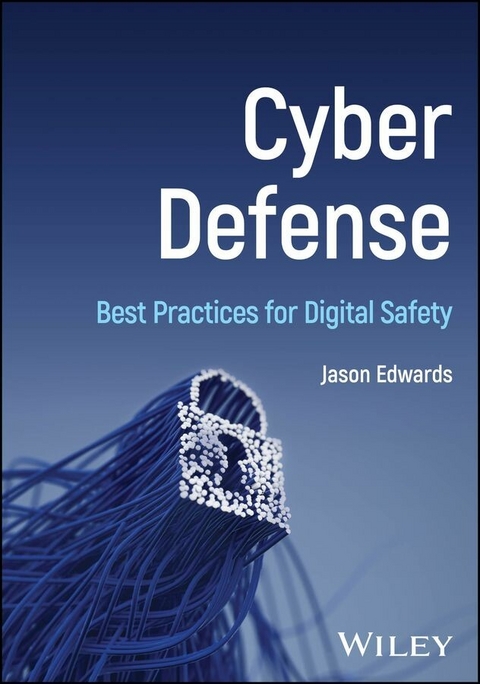

Practical and theoretical guide to understanding cyber hygiene, equipping readers with the tools to implement and maintain digital security practices
Cyber Defense is a comprehensive guide that provides an in-depth exploration of essential practices to secure one's digital life. The book begins with an introduction to cyber hygiene, emphasizing its importance and the foundational concepts necessary for maintaining digital security. It then dives into financial security, detailing methods for protecting financial accounts, monitoring transactions, and compartmentalizing accounts to minimize risks. Password management and multifactor authentication are covered, offering strategies for creating strong passwords, using password managers, and enabling multifactor authentication.
With a discussion on secure internet browsing practices, techniques to avoid phishing attacks, and safe web browsing, this book provides email security guidelines for recognizing scams and securing email accounts. Protecting personal devices is discussed, focusing on smartphones, tablets, laptops, IoT devices, and app store security issues. Home network security is explored, with advice on securing home networks, firewalls, and Wi-Fi settings. Each chapter includes recommendations for success, offering practical steps to mitigate risks.
Topics covered in Cyber Defense include:
- Data protection and privacy, providing insights into encrypting information and managing personal data
- Backup and recovery strategies, including using personal cloud storage services
- Social media safety, highlighting best practices, and the challenges of AI voice and video
- Actionable recommendations on protecting your finances from criminals
- Endpoint protection, ransomware, and malware protection strategies, alongside legal and ethical considerations, including when and how to report cyber incidents to law enforcement
Cyber Defense is an essential guide for anyone, including business owners and managers of small and medium-sized enterprises, IT staff and support teams, and students studying cybersecurity, information technology, or related fields.
Jason Edwards, DM, CISSP, is an accomplished cybersecurity leader with extensive experience in the technology, finance, insurance, and energy sectors. Holding a Doctorate in Management, Information Systems, and Technology, Jason specializes in guiding large public and private companies through complex cybersecurity challenges. His career includes leadership roles across the military, insurance, finance, energy, and technology industries. He is a husband, father, former military cyber officer, adjunct professor, avid reader, dog dad, and a popular voice on LinkedIn.
Practical and theoretical guide to understanding cyber hygiene, equipping readers with the tools to implement and maintain digital security practices Cyber Defense is a comprehensive guide that provides an in-depth exploration of essential practices to secure one s digital life. The book begins with an introduction to cyber hygiene, emphasizing its importance and the foundational concepts necessary for maintaining digital security. It then dives into financial security, detailing methods for protecting financial accounts, monitoring transactions, and compartmentalizing accounts to minimize risks. Password management and multifactor authentication are covered, offering strategies for creating strong passwords, using password managers, and enabling multifactor authentication. With a discussion on secure internet browsing practices, techniques to avoid phishing attacks, and safe web browsing, this book provides email security guidelines for recognizing scams and securing email accounts. Protecting personal devices is discussed, focusing on smartphones, tablets, laptops, IoT devices, and app store security issues. Home network security is explored, with advice on securing home networks, firewalls, and Wi-Fi settings. Each chapter includes recommendations for success, offering practical steps to mitigate risks. Topics covered in Cyber Defense include: Data protection and privacy, providing insights into encrypting information and managing personal dataBackup and recovery strategies, including using personal cloud storage servicesSocial media safety, highlighting best practices, and the challenges of AI voice and videoActionable recommendations on protecting your finances from criminalsEndpoint protection, ransomware, and malware protection strategies, alongside legal and ethical considerations, including when and how to report cyber incidents to law enforcement Cyber Defense is an essential guide for anyone, including business owners and managers of small and medium-sized enterprises, IT staff and support teams, and students studying cybersecurity, information technology, or related fields.
Chapter 1
Why Cyber Safety Matters Today
The rapid expansion of digital technologies, coupled with an increasing reliance on the internet for personal, professional, and commercial activities, has made us more vulnerable to cyber threats than ever. Every digital interaction—shopping online, conducting business transactions, or simply browsing social media—presents a potential entry point for cybercriminals. As our digital presence grows, so does the complexity and scale of the threats we face, making it crucial to understand the risks and take proactive measures to protect ourselves.
The digital transformation of our world has led to an unprecedented increase in connectivity. Smartphones, the Internet of Things (IoT), and social media platforms now play a central role in our daily lives. While offering unparalleled convenience, this connectivity also opens the door to a wide range of cyberattacks, from simple phishing scams to highly sophisticated ransomware campaigns. These attacks are not limited to large corporations or government institutions—they target individuals, small businesses, and organizations of all sizes, with devastating consequences.
As we continue to embrace new technologies, we also witness a shift in the tactics employed by cybercriminals. Today’s cyber threats are increasingly advanced and multifaceted, making traditional security measures insufficient. The emergence of complex attack vectors like advanced persistent threats (APTs), state-sponsored cyberattacks, and malware designed to exploit specific vulnerabilities requires a more nuanced and proactive approach to cybersecurity. Cybercriminals have evolved alongside technology, often leveraging artificial intelligence and machine learning to enhance the effectiveness of their attacks, making it more critical than ever to stay ahead of these threats.
The implications of cyber insecurity are profound and far-reaching. Financial losses due to fraud and identity theft, privacy violations, emotional stress, and damage to one’s professional reputation can result from a single breach. Yet, the consequences extend beyond the personal—cyberattacks can disrupt entire industries, cause national security threats, and undermine trust in the digital ecosystem. Whether you are an individual or part of an organization, understanding the potential risks and adopting a proactive approach to cybersecurity is essential to safeguarding your personal information, assets, and privacy in this interconnected world.
Cyber safety is not just about the tools and technologies used to defend against attacks but also about cultivating a mindset of vigilance and awareness. By learning about the evolving threat landscape and understanding the importance of secure practices, you empower yourself to recognize potential threats before they can cause harm. This chapter will cover the various aspects of cyber safety, outlining the most common threats and their potential impact and providing practical strategies to mitigate risks and enhance your digital security. The goal is to equip you with the knowledge and tools necessary to defend your digital life and help create a safer online environment for yourself and those around you. The history of digital connectivity and grown exponentially as shown in Figure 1.1.
Figure 1.1 The growth of digital connectivity over time.
The Rise of Digital Connectivity
The internet has evolved profoundly since its early days of dial-up connections and rudimentary websites. What was once a niche technology reserved for academics and government agencies has blossomed into an omnipresent force that powers nearly every aspect of modern life. The development of broadband internet, high-speed connections, and cloud computing has allowed vast amounts of data to be transferred and processed in real time. This has led to a world where information flows effortlessly across borders, enabling unprecedented connectivity and resource access. As more and more devices are linked to the internet, we find ourselves in an era where digital connectivity is no longer just a convenience but a necessity.
One of the most significant shifts in recent years has been the ubiquity of smartphones and mobile devices. The rise of these devices has revolutionized not only how we communicate but also how we live, work, and play. Smartphones have become our personal assistants, entertainment hubs, and gateways to the world. With apps for everything from banking and shopping to transportation and health tracking, mobile devices have become an extension of ourselves. However, this convenience comes at a cost. The more we rely on these devices, the more we expose ourselves to cyber threats. Every app we download, every service we use, and every piece of data we share add to the digital footprint we leave behind. As mobile devices become more powerful and feature-rich, they become more attractive targets for cybercriminals seeking to exploit their vulnerabilities.
The IoT has further compounded the complexity of our digital landscape. IoT refers to the network of everyday objects—refrigerators to security cameras, fitness trackers to thermostats—connected to the internet and capable of sharing data. These devices have enhanced the functionality of our homes, businesses, and personal lives, offering automation, efficiency, and convenience. However, many IoT devices were not originally designed with security in mind, and their proliferation has created a vast surface area for potential cyberattacks. From unsecured smart home devices to compromised industrial sensors, the IoT presents unique challenges for maintaining digital safety. As the number of connected devices grows, securing this expanding ecosystem becomes increasingly difficult for manufacturers and consumers alike.
Ask the AI
“What are the most common social engineering tactics cybercriminals use?”
“How has the Internet of Things (IoT) expanded the attack surface for cybersecurity?”
“How does the shift toward remote work impact cybersecurity risks, and what are common mitigations?”
Social media platforms and online communities have become central to daily personal and professional interactions. Platforms like Facebook, Twitter, LinkedIn, and Instagram have fundamentally changed how we communicate, share information, and perceive the world. Social media has allowed individuals to broadcast their thoughts, ideas, and experiences to a global audience. It has enabled businesses to reach their customers in new and innovative ways, and it has created virtual communities that transcend geographic boundaries. However, the rapid rise of social media has also raised significant concerns about privacy, data security, and the spread of misinformation. The very platforms that connect us also expose us to a range of cyber risks, from identity theft and phishing to cyberbullying and online harassment.
The shift toward remote work and virtual collaboration has further transformed the digital landscape, particularly during the COVID-19 pandemic. With businesses and organizations embracing flexible work arrangements, the reliance on digital tools and platforms has surged. Video conferencing apps like Zoom, cloud storage solutions like Google Drive, and project management software like Slack have become integral to daily operations. This transition to a more digitally interconnected workforce has highlighted the vulnerabilities inherent in remote work. Organizations face new challenges in protecting their digital assets, from unsecured home networks to inadequate employee cybersecurity training. Recognizing these gaps, cybercriminals have increasingly targeted remote workers with sophisticated phishing attacks, malware, and other forms of exploitation.
Globalization has also played a critical role in the rise of digital connectivity. The interconnectedness of the world’s economies, industries, and cultures has been made possible by the internet, enabling instant communication and information access. Businesses operate globally, with teams and clients across continents, time zones, and cultures. This global reach has opened up new economic growth and innovation opportunities and introduced new cybersecurity challenges. Cyberattacks no longer have to come from a local source; they can originate anywhere. The ability for cybercriminals to operate anonymously and easily cross international borders has made it more difficult for law enforcement and cybersecurity professionals to track and neutralize threats.
The Expanding Threat Landscape
The digital landscape and the threat landscape accompanying it have evolved quickly. Modern cyber threats have grown in sophistication and frequency, affecting individuals, businesses, and even entire governments. Malware, once a simple annoyance, has become a highly effective weapon used by cybercriminals to steal data, disrupt operations, or hold systems hostage. The days when viruses and Trojans were the main concerns have passed; today’s malware can be far more stealthy and targeted. Often, it operates in the background without the user’s knowledge, quietly infiltrating systems to steal sensitive information or gain control of an environment. Table 1.1 shows an overview of the key risks and vulnerabilities shaping our digital landscape.
Table 1.1 Cybersecurity threats.
| Cyber threat | Description | Common targets | Typical impact | Mitigation |
|---|
| Phishing | Fraudulent attempts to obtain sensitive... |
| Erscheint lt. Verlag | 16.6.2025 |
|---|---|
| Sprache | englisch |
| Themenwelt | Mathematik / Informatik ► Informatik ► Netzwerke |
| Schlagworte | application security • business cyber security • business data protection • Cyber Incidents • data privacy • Digital Security • encrypt information • Malware protection • Personal Data • Ransomware • social media safety • Software Security |
| ISBN-13 | 9781394337026 / 9781394337026 |
| Informationen gemäß Produktsicherheitsverordnung (GPSR) | |
| Haben Sie eine Frage zum Produkt? |
 EPUB (Adobe DRM)
Kopierschutz: Adobe-DRM
Adobe-DRM ist ein Kopierschutz, der das eBook vor Mißbrauch schützen soll. Dabei wird das eBook bereits beim Download auf Ihre persönliche Adobe-ID autorisiert. Lesen können Sie das eBook dann nur auf den Geräten, welche ebenfalls auf Ihre Adobe-ID registriert sind.
Details zum Adobe-DRM
Dateiformat: EPUB (Electronic Publication)
EPUB ist ein offener Standard für eBooks und eignet sich besonders zur Darstellung von Belletristik und Sachbüchern. Der Fließtext wird dynamisch an die Display- und Schriftgröße angepasst. Auch für mobile Lesegeräte ist EPUB daher gut geeignet.
Systemvoraussetzungen:
PC/Mac: Mit einem PC oder Mac können Sie dieses eBook lesen. Sie benötigen eine
eReader: Dieses eBook kann mit (fast) allen eBook-Readern gelesen werden. Mit dem amazon-Kindle ist es aber nicht kompatibel.
Smartphone/Tablet: Egal ob Apple oder Android, dieses eBook können Sie lesen. Sie benötigen eine
Geräteliste und zusätzliche Hinweise
Buying eBooks from abroad
For tax law reasons we can sell eBooks just within Germany and Switzerland. Regrettably we cannot fulfill eBook-orders from other countries.
aus dem Bereich