Artificial Intelligence and Machine Learning for Industry 4.0 (eBook)
475 Seiten
Wiley-Scrivener (Verlag)
978-1-394-27505-2 (ISBN)
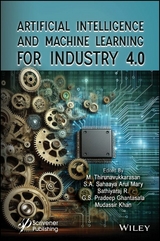
This book is essential for any leader seeking to understand how to leverage intelligent automation and predictive maintenance to drive innovation, enhance productivity, and minimize downtime in their manufacturing processes.
Intelligent automation is widely considered to have the greatest potential for Industry 4.0 innovations for corporations. Industrial machinery is increasingly being upgraded to intelligent machines that can perceive, act, evolve, and interact in an industrial environment. The innovative technologies featured in this machinery include the Internet of Things, cyber-physical systems, and artificial intelligence. Artificial intelligence enables computer systems to learn from experience, adapt to new input data, and perform intelligent tasks. The significance of AI is not found in its computational models, but in how humans can use them. Consistently observing equipment to keep it from malfunctioning is the procedure of predictive maintenance. Predictive maintenance includes a periodic maintenance schedule and anticipates equipment failure rather than responding to equipment problems. Currently, the industry is struggling to adopt a viable and trustworthy predictive maintenance plan for machinery. The goal of predictive maintenance is to reduce the amount of unanticipated downtime that a machine experiences due to a failure in a highly automated manufacturing line. In recent years, manufacturing across the globe has increasingly embraced the Industry 4.0 concept. Greater solutions than those offered by conventional maintenance are promised by machine learning, revealing precisely how AI and machine learning-based models are growing more prevalent in numerous industries for intelligent performance and greater productivity. This book emphasizes technological developments that could have great influence on an industrial revolution and introduces the fundamental technologies responsible for directing the development of innovative firms.
Decision-making requires a vast intake of data and customization in the manufacturing process, which managers and machines both deal with on a regular basis. One of the biggest issues in this field is the capacity to foresee when maintenance of assets is necessary. Leaders in the sector will have to make careful decisions about how, when, and where to employ these technologies. Artificial Intelligence and Machine Learning for Industry 4.0offers contemporary technological advancements in AI and machine learning from an Industry 4.0 perspective, looking at their prospects, obstacles, and potential applications.
M. Thirunavukkarasan, PhD is an assistant professor in the School of Computer Science and Engineering at the Vellore Institute of Technology with over 15 years of research and teaching experience. He has published papers in several international conferences and journals and given keynote speeches at many international conferences. His research interests include Internet of Things (IoT), wireless sensor networks, wireless communication, cloud computing, artificial intelligence, and machine learning.
S.A. Sahaaya Arul Mary, PhD is a professor in the School of Computer Science and Engineering, Vellore Institute of Technology with over 29 years of teaching and over 15 years of research experience. She has over 70 publications in various reputed journals and conferences and reviewed over 35 papers in addition to mentoring aspiring PhD students. Her research includes software engineering, data mining, machine learning, and artificial intelligence.
Sathiyaraj R., PhD is an assistant professor in the Department of Computer Science and Engineering at Gandhi Institute of Technology and Management University in Bangalore, India. He has contributed to two books, served as lead editor for an additional two books, and published five patents and over 20 articles in various international journals and conferences. His research interests include machine learning, big data analytics, and intelligent systems.
G.S. Pradeep Ghantasala, PhD is a professor in the Department of Computer Science and Engineering, at Alliance University with over 16 years of academic experience. He has contributed to internationally published books, chapters, patents, and numerous papers in journals and conferences. He also serves as an editor and reviewer for several journals. His research interests include machine learning, deep learning, healthcare applications, and software engineering applications.
Mudassir Khan, PhD is an assistant professor in the Department of Computer Science at King Khalid University with over ten years of teaching experience. He has published over 25 papers in international journals and conferences and one patent. He is a member of various technical and professional societies including the Institute for Electrical and Electronics Engineers and Computer Science Teachers Association. His research interests include big data, deep learning, machine learning, eLearning, fuzzy logic, image processing, and cyber security.
This book is essential for any leader seeking to understand how to leverage intelligent automation and predictive maintenance to drive innovation, enhance productivity, and minimize downtime in their manufacturing processes. Intelligent automation is widely considered to have the greatest potential for Industry 4.0 innovations for corporations. Industrial machinery is increasingly being upgraded to intelligent machines that can perceive, act, evolve, and interact in an industrial environment. The innovative technologies featured in this machinery include the Internet of Things, cyber-physical systems, and artificial intelligence. Artificial intelligence enables computer systems to learn from experience, adapt to new input data, and perform intelligent tasks. The significance of AI is not found in its computational models, but in how humans can use them. Consistently observing equipment to keep it from malfunctioning is the procedure of predictive maintenance. Predictive maintenance includes a periodic maintenance schedule and anticipates equipment failure rather than responding to equipment problems. Currently, the industry is struggling to adopt a viable and trustworthy predictive maintenance plan for machinery. The goal of predictive maintenance is to reduce the amount of unanticipated downtime that a machine experiences due to a failure in a highly automated manufacturing line. In recent years, manufacturing across the globe has increasingly embraced the Industry 4.0 concept. Greater solutions than those offered by conventional maintenance are promised by machine learning, revealing precisely how AI and machine learning-based models are growing more prevalent in numerous industries for intelligent performance and greater productivity. This book emphasizes technological developments that could have great influence on an industrial revolution and introduces the fundamental technologies responsible for directing the development of innovative firms. Decision-making requires a vast intake of data and customization in the manufacturing process, which managers and machines both deal with on a regular basis. One of the biggest issues in this field is the capacity to foresee when maintenance of assets is necessary. Leaders in the sector will have to make careful decisions about how, when, and where to employ these technologies. Artificial Intelligence and Machine Learning for Industry 4.0offers contemporary technological advancements in AI and machine learning from an Industry 4.0 perspective, looking at their prospects, obstacles, and potential applications.
1
Industry 4.0 and the AI/ML Era: Revolutionizing Manufacturing
Balusamy Nachiappan1, C. Viji2, N. Rajkumar2*, A. Mohanraj3, N. Karthikeyan4, Judeson Antony Kovilpillai J.2 and Pellakuri Vidyullatha5
1Department of Information Technology, Prologis, Denver, USA
2Department of Computer Science & Engineering, Alliance College of Engineering and Design, Alliance University, Bengaluru, Karnataka, India
3Department of Computer Science & Engineering, Sri Eshwar College of Engineering, Coimbatore, Tamil Nadu, India
4Vellore Institute of Technology, Chennai, India
5Department of Computer Science and Engineering, Koneru Lakshmaiah Education Foundation, Vaddeswaram, Guntur, Andhra Pradesh, India
Abstract
The emergence of enterprise 4.0 signs a transformative era in manufacturing, wherein digital technology seamlessly merges with traditional business methods. This precis explores the profound impact of Industry 4.0, highlighting the synergy of the various Industrial Internet of Things (IoT) and its implications for clever production. At its core, business enterprise 4.0 allows the mixing of physical and virtual structures, fostering heightened interconnectivity and transparency. The IoT permits actual-time facts change among interconnected gadgets, supplying manufacturer with comprehensive insights into their production ecosystems. Decentralized selection-making, a key function of enterprise 4.0, is made viable with the aid of cyber-physical systems, empowering machines with independent choice-making capabilities and enhancing operational performance.
Even as AI is absent from the narrative, the point of interest stays at the transformative electricity of enterprise 4.0. Predictive preservation algorithms pre-emptively understand and prevent device failures, making sure ultimate performance and minimizing downtime. Actual-time quality manipulation mechanisms contribute to product consistency through early illness detection. The concept of smart automation outcomes in adaptive and self-optimizing manufacturing strategies involves responding in real-time to changing conditions. Past the manufacturing facility, the strategic integration of the digital era optimizes delivery chain dynamics, facilitating smart forecasting, stock management, and logistics.
Keywords: Business intelligence, big data analytics, industry 4.0, machine learning, artificial intelligence
1.1 Introduction
The roots of Industry 4.0 amplify deep into the annals of industrial history, with its emergence representing a natural evolution from prior revolutions. The first commercial revolution often characterized by the age of mechanization took flight within the late 18th century. Steam engines and mechanized textile manufacturing marked the transformative shift from manual labor to machine-driven strategies. This period laid the foundation for the next improvements, setting the degree for what might comply with.
As the 19th century unfolded, the second commercial enterprise revolution spread out with electrification at its center. The invention of the telegraph, the extraordinary adoption of power, and the development of assembly line production introduced approximately radical adjustments. Mass production became a truth, propelling industries into a new era of overall performance and scale. The sunrise of the 20th century noticed the onset of the third business revolution, characterized using the rise of computer systems and automation. This phase automatically guides duties, introducing programmable logic controllers and paving the manner for current production practices [1, 4, 5].
Against this ancient backdrop, industry 4.0 emerges as the 4th commercial revolution, fusing the virtual and physical domains extraordinarily. It represents a departure from the linear development of its predecessors, embracing a greater holistic and interconnected approach. The historical context serves as a crucial foundation for knowledge of the motivations at the back of enterprise 4.0.
At present, industry 4.0 is described via the convergence of numerous ground-breaking technologies. The creation of the net of factors (IoT) allows the interconnection of devices, enabling seamless conversation and record change. Cyber-physical systems integrate computational factors into physical approaches, blurring the strains between the digital and tangible worlds. Huge records analytics emerges as an effective tool, permitting groups to derive meaningful insights from the considerable quantities of records generated in actual time. Cloud computing presents scalable and handy computational resources, fostering the improvement of advanced applications.
Figure 1.1 Industrial revolutions.
Figure 1.1 provides a clear depiction of the industrial revolutions. The historic trajectory predominant to Industry 4.0 underscores the non-stop quest for efficiency, productiveness, and innovation inside business approaches. Every revolution builds upon the achievements and demanding conditions of its forerunners, pushing the boundaries of what’s feasible in manufacturing. Company 4.0, with its emphasis on smart automation, records-driven selection-making, and the mixture of modern-day technologies, represents the apex of this evolutionary journey.
As we delve deeper into the historical roots, it becomes obvious that Industry 4.0 isn’t always simply a technological bounce but a holistic transformation in the manner of the industry’s function. This revolution isn’t constrained to isolated enhancements; it signifies a whole paradigm shift, ushering in a technology in which the virtual and bodily geographical regions coalesce to redefine the very essence of commercial company techniques.
1.1.1 Key Traits of Industry 4.0
Industry 4.0, the 4th commercial revolution, is defined through a set of transformative traits that distinguish it from its predecessors. Those key functions collectively form the landscape of present-day production, developing dynamic and interconnected surroundings. Figure 1.2 effectively illustrates the essential industry solutions.
- Convergence of bodily and digital structures
At the heart of Industry 4.0 is the seamless convergence of physical and virtual systems. In contrast to preceding commercial revolutions that predominantly focused on mechanization [2], electrification, and automation, enterprise 4.0 blurs the lines between the physical and virtual worlds. This convergence is facilitated by a complicated community of technology, along with the Internet of Things (IoT), which connects physical devices and enables them to talk and change facts in actual time.
- Digitalization and connectivity
Industry 4.0 is synonymous with the sizeable digitalization of commercial tactics. Analog methods are changed with the aid of virtual opposite numbers, growing a statistics-driven technique to production. This digital transformation is amplified by using considerable connectivity, permitting machines, structures, and people to communicate seamlessly. Cyber-physical structures, which combine computational abilities into physical processes, exemplify the fusion of the digital and bodily geographical regions.
- Wise automation
In comparison to preceding waves of automation, organization 4.0 introduces an emblem-new era of wise automation. Machines are not truly computerized however imbued with synthetic Intelligence (AI) and machine mastering (ML) abilities. These technologies empower machines to make selections, examine from information inputs, and adapt to changing conditions autonomously. The end result is a degree of automation that isn’t always without a doubt green however, also responsive and adaptive.
- Facts transparency and interoperability
Enterprise 4.0 locations, a pinnacle class on information transparency and interoperability: The significant amount of data generated with the aid of way of interconnected gadgets and systems is made accessible and transparent all through the whole production chain. This transparency allows informed selection-making, as stakeholders have real time get admission to important facts. Moreover, interoperability ensures that several systems and technology can seamlessly put paintings together, fostering a greater integrated and cohesive production surroundings [3].
- Decentralized selection-making
In enterprise 4.0, choice-making is decentralized, and distributed during the network of intelligent devices and structures. This decentralization enhances the agility of manufacturing strategies, as choices may be made autonomously at various factors in the manufacturing chain [42, 43]. The functionality to make picks concerning the supply of records contributes to actual-time responsiveness and performance.
Figure 1.2 Key Industry 4.0 solutions.
- Customization and flexibility
One of the hallmark characteristics of Industry 4.0 is the emphasis on customization and flexibility. Traditional mass production models are giving way to more personalized and flexible manufacturing processes. Intelligent systems can adapt to different product specifications, allowing for more efficient and cost-effective production of customized goods.
- Human-system collaboration
Industry 4.0 acknowledges the importance of human-device collaboration. Rather...
| Erscheint lt. Verlag | 10.6.2025 |
|---|---|
| Sprache | englisch |
| Themenwelt | Mathematik / Informatik ► Informatik ► Theorie / Studium |
| Schlagworte | Advanced Algorithms for Industry 4.0 • AI and ML Concepts for Modern Industries • Algorithms for Modern Industry • Artificial Intelligence • Industrial Development • Industrial Revolution • Industry 4.0 • Industry transformation • Intelligent Algorithms for Industry Transformation • machine learning • Predictive Maintenance Techniques • Production Control and Management • Smart Industries • Smart Solutions for Industrial Sector • Technologies for Industrial Shift |
| ISBN-10 | 1-394-27505-6 / 1394275056 |
| ISBN-13 | 978-1-394-27505-2 / 9781394275052 |
| Informationen gemäß Produktsicherheitsverordnung (GPSR) | |
| Haben Sie eine Frage zum Produkt? |
 EPUB (Adobe DRM)
Kopierschutz: Adobe-DRM
Adobe-DRM ist ein Kopierschutz, der das eBook vor Mißbrauch schützen soll. Dabei wird das eBook bereits beim Download auf Ihre persönliche Adobe-ID autorisiert. Lesen können Sie das eBook dann nur auf den Geräten, welche ebenfalls auf Ihre Adobe-ID registriert sind.
Details zum Adobe-DRM
Dateiformat: EPUB (Electronic Publication)
EPUB ist ein offener Standard für eBooks und eignet sich besonders zur Darstellung von Belletristik und Sachbüchern. Der Fließtext wird dynamisch an die Display- und Schriftgröße angepasst. Auch für mobile Lesegeräte ist EPUB daher gut geeignet.
Systemvoraussetzungen:
PC/Mac: Mit einem PC oder Mac können Sie dieses eBook lesen. Sie benötigen eine
eReader: Dieses eBook kann mit (fast) allen eBook-Readern gelesen werden. Mit dem amazon-Kindle ist es aber nicht kompatibel.
Smartphone/Tablet: Egal ob Apple oder Android, dieses eBook können Sie lesen. Sie benötigen eine
Geräteliste und zusätzliche Hinweise
Buying eBooks from abroad
For tax law reasons we can sell eBooks just within Germany and Switzerland. Regrettably we cannot fulfill eBook-orders from other countries.
aus dem Bereich