


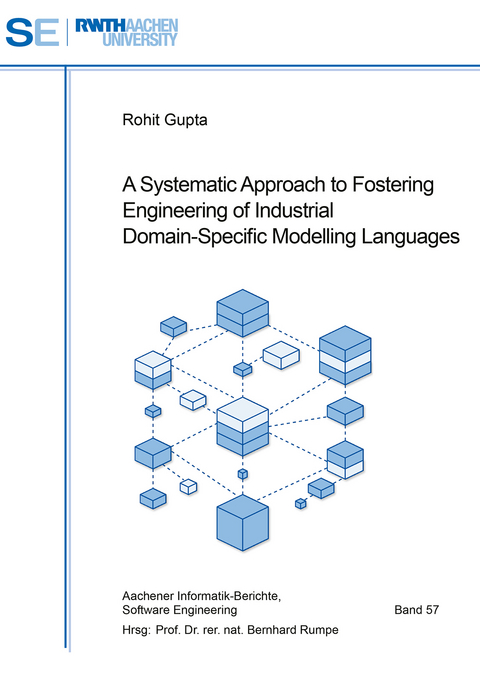
A Systematic Approach to Fostering Engineering of Industrial Domain-Specific Modelling Languages
Seiten
2025
Shaker (Verlag)
978-3-8440-9993-5 (ISBN)
Shaker (Verlag)
978-3-8440-9993-5 (ISBN)
Domain-Specific Modelling Languages (DSMLs) help modellers and domain experts in various domains such as healthcare, energy, information technology, and so on, in reducing the gap between the problem space and the solution space by placing models at the centre of development activities. This shift towards model-driven development allows modellers to design complex, heterogeneous real-world abstractions of their systems. In an industrial setting, the methodologies to describe a systematic engineering process for developing modular and reusable DSMLs is still largely neglected. This thesis is aimed at providing the means to engineer graphical DSMLs focussed on industrial contexts. This work presents a systematic approach for the engineering of industrial DSMLs by composing reusable language infrastructure parts. The reusable units of a DSML, termed DSML building blocks, consist of reusable language components contributing to the technical definition of the language. The language components compose through different forms of language composition to form heterogeneous, integrated DSMLs. A bidirectional exchange mechanism is detailed to foster the interoperability of common language infrastructure parts between modelling environments. This work provides design decisions that language engineers must consider to elevate the experience of modellers. An approach for integrating methods and techniques for guidance and recommendations to modellers is detailed for model-aware and dynamic views focussing on the current modelling situation. This thesis presents approaches to modularly build reusable DSML units and allows language engineers to provide an integrated language infrastructure ultimately aimed at improving the modelling experience of practitioners in the industry.
Domain-Specific Modelling Languages (DSMLs) help modellers and domain experts in various domains such as healthcare, energy, information technology, and so on, in reducing the gap between the problem space and the solution space by placing models at the centre of development activities. This shift towards model-driven development (MDD), where models are introduced at early stages in any software or systems engineering process and are the primary software engineering artefacts, allows modellers to design complex, heterogeneous real-world abstractions of their systems. In such complex systems, concepts from individual domains are often integrated as part of the bigger language infrastructure. Specifically in an industrial setting, the methodologies to describe a systematic engineering process for developing such complex yet modular and reusable DSMLs that provides a seamless modelling experience to modellers in both the large scale organisations as well as in small and medium enterprises is still largely neglected.
Accordingly, this thesis is aimed at providing the means to engineer graphical DSMLs that are specifically focussed on industrial contexts. Based on existing approaches, this work presents a systematic approach to fostering the engineering of industrial DSMLs by composing reusable language infrastructure parts without the need for creating completely new language infrastructure for similar domains every time. These reusable units of a DSML, termed DSML building blocks, consist of reusable language components that, entirely or in part, contributes to the technical definition of the language itself. The language components compose through different forms of language composition to form heterogeneous, integrated DSMLs. To foster the interoperability of such common language infrastructure parts between modelling environments, a bidirectional exchange mechanism is detailed in this work. This work further provides guidelines and design decisions that language engineers should consider for their language infrastructure in order to elevate the overall experience of modellers. An approach for integrating methods, techniques, and concepts in terms of guidance and recommendations for modellers is detailed in this thesis that aims to move away from plain technical views of models to instead model-aware and dynamic views that are focussed on the current modelling situation of such modellers.
Overall, this thesis presents approaches to modularly build reusable units of DSMLs that compose together. The approaches presented in this thesis allows language engineers to provide a more complete and integrated language infrastructure that is ultimately aimed at improving the modelling experience of practitioners in the industry.
Domain-Specific Modelling Languages (DSMLs) help modellers and domain experts in various domains such as healthcare, energy, information technology, and so on, in reducing the gap between the problem space and the solution space by placing models at the centre of development activities. This shift towards model-driven development (MDD), where models are introduced at early stages in any software or systems engineering process and are the primary software engineering artefacts, allows modellers to design complex, heterogeneous real-world abstractions of their systems. In such complex systems, concepts from individual domains are often integrated as part of the bigger language infrastructure. Specifically in an industrial setting, the methodologies to describe a systematic engineering process for developing such complex yet modular and reusable DSMLs that provides a seamless modelling experience to modellers in both the large scale organisations as well as in small and medium enterprises is still largely neglected.
Accordingly, this thesis is aimed at providing the means to engineer graphical DSMLs that are specifically focussed on industrial contexts. Based on existing approaches, this work presents a systematic approach to fostering the engineering of industrial DSMLs by composing reusable language infrastructure parts without the need for creating completely new language infrastructure for similar domains every time. These reusable units of a DSML, termed DSML building blocks, consist of reusable language components that, entirely or in part, contributes to the technical definition of the language itself. The language components compose through different forms of language composition to form heterogeneous, integrated DSMLs. To foster the interoperability of such common language infrastructure parts between modelling environments, a bidirectional exchange mechanism is detailed in this work. This work further provides guidelines and design decisions that language engineers should consider for their language infrastructure in order to elevate the overall experience of modellers. An approach for integrating methods, techniques, and concepts in terms of guidance and recommendations for modellers is detailed in this thesis that aims to move away from plain technical views of models to instead model-aware and dynamic views that are focussed on the current modelling situation of such modellers.
Overall, this thesis presents approaches to modularly build reusable units of DSMLs that compose together. The approaches presented in this thesis allows language engineers to provide a more complete and integrated language infrastructure that is ultimately aimed at improving the modelling experience of practitioners in the industry.
| Erscheinungsdatum | 25.07.2025 |
|---|---|
| Reihe/Serie | Aachener Informatik Berichte Software Engineering ; 57 |
| Verlagsort | Düren |
| Sprache | englisch |
| Maße | 170 x 240 mm |
| Gewicht | 584 g |
| Themenwelt | Mathematik / Informatik ► Informatik ► Programmiersprachen / -werkzeuge |
| Mathematik / Informatik ► Informatik ► Theorie / Studium | |
| Schlagworte | domain-specific languages • Industrial Domain-Specific Modelling Languages • Industrial Language Engineering, Methods • model-based systems engineering |
| ISBN-10 | 3-8440-9993-X / 384409993X |
| ISBN-13 | 978-3-8440-9993-5 / 9783844099935 |
| Zustand | Neuware |
| Informationen gemäß Produktsicherheitsverordnung (GPSR) | |
| Haben Sie eine Frage zum Produkt? |
Mehr entdecken
aus dem Bereich


aus dem Bereich
Grundlagen und praktische Anwendungen von Transpondern, kontaktlosen …
Buch (2023)
Hanser (Verlag)
CHF 125,95


