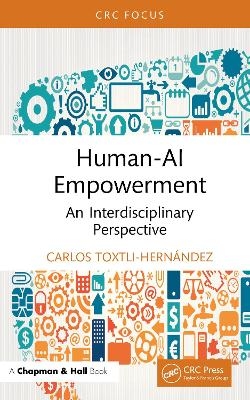
Human-AI Empowerment
Chapman & Hall/CRC (Verlag)
978-1-032-88202-4 (ISBN)
As artificial intelligence (AI) advances, the question of how AI can empower humans over the long term has become increasingly important. This book, Human-AI Empowerment (HAIE), provides a timely exploration of strategies for aligning AI with long-term human goals, ensuring that AI acts as an empowering force across multiple dimensions. Drawing on interdisciplinary research from fields such as AI, HCI, psychology, education, economics, and social science, the book develops comprehensive frameworks for studying and optimizing AI’s impact on human empowerment. HAIE investigates empowerment from a human-centered computing (HCC) perspective, examining how AI systems can track and adapt to progressively achieve long-term goals. The book explores techniques for fostering a mutually beneficial human-AI synergy, delving into AI Empowerment approaches, applicable Human-Computer Interaction methods for long-term engagement, and insights from various disciplines on long-term goal management. Through integrative frameworks, empirical evidence, and ongoing work in the field, this volume informs academics and practitioners seeking to harness AI as a transformative technology for concretely empowering humanity. This book highlights the need for comprehensive approaches to understanding and shaping the future of human-AI collaboration, maximizing its potential to expand human possibilities and support the pursuit of mid-term and long-term goals.
Carlos Toxtli Hern´andez is an Assistant Professor at Clemson University, where he focuses on the study of Human-Centered Artificial Intelligence. His research explores the intersection of artificial intelligence, human-computer interaction, and automation, with a particular emphasis on developing methodologies and frameworks for studying the long-term impact of AI on human empowerment. He has published extensively in leading academic journals and conferences, and his work has been recognized with numerous awards and grants. He holds a Ph.D. degree in Computer Science from Northeastern University.
Part I. Foundations of Human-AI Empowerment
1.1 Defining Human-AI Empowerment
1.2 Key Concepts and Theoretical Frameworks
1.3 The Evolution of Human-Centered AI
1.4 Ethical Considerations in Human-AI Empowerment
Part II. Frameworks for Human-AI Empowerment
2.1 Designing Longitudinal Studies for AI Impact
2.2 Measuring Empowerment
2.3 Qualitative Methods for Human-AI Interaction
2.4 Mixed-Method Evaluation Frameworks
2.5 Challenges & Limitations in Longitudinal Studies
Part III. AI Collaboration for Empowerment
3.1 AI Empowerment Approaches
3.2 HCI Methods for Long-term Engagement
3.3 Psychological Insights on Goal Management
3.4 Educational Strategies for AI-Enhanced Learning
3.5 Economic and Social Perspectives
Part IV. Case Studies and Empirical Evidence
4.1 AI in Healthcare: Empowering Patients and Practitioners
4.2 AI in Education
4.3 AI in the Workplace: Enhancing Productivity and Job Satisfaction
4.4 AI in Creative Industries
4.5 AI in Social Good: Addressing Global Challenges
Part V. Frontiers of Human-AI Empowerment
5.1 Emerging Technologies and Their Potential for Empowerment
5.2 Challenges in Scaling Human-AI Empowerment
5.3 Policy and Governance in AI Empowerment
5.4 Future Research Directions
5.5 Future of Empowered Human-AI Collaboration
6. Conclusion
6.1 The Symbiotic Relationship between Human and Artificial Intelligence
6.2 The Imperative of Ethical AI Development
6.3 The Need for Interdisciplinary Collaboration
6.4 The Importance of Human-Centered Design
6.5 The Challenge of Scalability and Accessibility
6.6 The Role of Policy and Governance
6.7 The Potential for Addressing Global Challenges
6.8 The Imperative of Continuous Learning and Adaptation
6.9 The Exploration of Long-term Impacts
6.10 The Cultivation of AI Literacy
| Erscheinungsdatum | 13.09.2025 |
|---|---|
| Zusatzinfo | 10 Line drawings, black and white; 10 Illustrations, black and white |
| Sprache | englisch |
| Maße | 138 x 216 mm |
| Gewicht | 550 g |
| Themenwelt | Informatik ► Software Entwicklung ► User Interfaces (HCI) |
| Informatik ► Theorie / Studium ► Künstliche Intelligenz / Robotik | |
| ISBN-10 | 1-032-88202-6 / 1032882026 |
| ISBN-13 | 978-1-032-88202-4 / 9781032882024 |
| Zustand | Neuware |
| Informationen gemäß Produktsicherheitsverordnung (GPSR) | |
| Haben Sie eine Frage zum Produkt? |
aus dem Bereich