Human-Computer Interaction and Augmented Intelligence (eBook)
431 Seiten
Springer Nature Switzerland (Verlag)
978-3-031-84453-9 (ISBN)
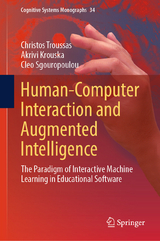
This book explores the transformative roles of human-computer interaction (HCI) and augmented intelligence (AI) in shaping intelligent systems. HCI focuses on designing interactive systems that enhance human-technology relationships, while AI empowers users with adaptive, data-driven tools that complement decision-making. Together, these fields drive innovation, creating systems that are efficient, intuitive, and inclusive, addressing diverse user needs across various domains.
Central to this work is the paradigm of interactive machine learning (IML), which builds on HCI and AI principles to create adaptive systems capable of evolving in real-time. The book highlights the application of IML in educational software, demonstrating how dynamic, personalized, and responsive learning environments can enhance student engagement and success. It provides detailed case studies and practical examples that showcase how IML aligns educational content, feedback, and interactions with learner behaviors and preferences. Additionally, it includes numerous Python code implementations and actionable design strategies, making these concepts accessible to practitioners and researchers alike.
Key topics include leveraging cognitive and communication styles to shape adaptive systems, integrating learning models to enhance personalization, and addressing ethical considerations such as data privacy and algorithmic fairness. Readers will also discover discussions on creating personalized tutoring systems, collaborative platforms, and immersive environments that redefine educational technology.
This book is a valuable resource for researchers, software developers, educators, instructional designers, and technologists at the intersection of human-computer interaction, augmented intelligence, and educational innovation. With its comprehensive framework and practical insights, it offers the tools to design adaptive, inclusive, and impactful learning systems for the future.
| Erscheint lt. Verlag | 13.3.2025 |
|---|---|
| Reihe/Serie | Cognitive Systems Monographs |
| Zusatzinfo | XVI, 431 p. 181 illus., 35 illus. in color. |
| Sprache | englisch |
| Themenwelt | Informatik ► Theorie / Studium ► Künstliche Intelligenz / Robotik |
| Mathematik / Informatik ► Mathematik ► Statistik | |
| Sozialwissenschaften ► Pädagogik | |
| Technik ► Bauwesen | |
| Schlagworte | augmented intelligence • Educational Software • E-Learning • Human-Computer interaction • machine learning |
| ISBN-10 | 3-031-84453-X / 303184453X |
| ISBN-13 | 978-3-031-84453-9 / 9783031844539 |
| Informationen gemäß Produktsicherheitsverordnung (GPSR) | |
| Haben Sie eine Frage zum Produkt? |
 PDF (Wasserzeichen)
DRM: Digitales Wasserzeichen
Dieses eBook enthält ein digitales Wasserzeichen und ist damit für Sie personalisiert. Bei einer missbräuchlichen Weitergabe des eBooks an Dritte ist eine Rückverfolgung an die Quelle möglich.
Dateiformat: PDF (Portable Document Format)
Mit einem festen Seitenlayout eignet sich die PDF besonders für Fachbücher mit Spalten, Tabellen und Abbildungen. Eine PDF kann auf fast allen Geräten angezeigt werden, ist aber für kleine Displays (Smartphone, eReader) nur eingeschränkt geeignet.
Systemvoraussetzungen:
PC/Mac: Mit einem PC oder Mac können Sie dieses eBook lesen. Sie benötigen dafür einen PDF-Viewer - z.B. den Adobe Reader oder Adobe Digital Editions.
eReader: Dieses eBook kann mit (fast) allen eBook-Readern gelesen werden. Mit dem amazon-Kindle ist es aber nicht kompatibel.
Smartphone/Tablet: Egal ob Apple oder Android, dieses eBook können Sie lesen. Sie benötigen dafür einen PDF-Viewer - z.B. die kostenlose Adobe Digital Editions-App.
Buying eBooks from abroad
For tax law reasons we can sell eBooks just within Germany and Switzerland. Regrettably we cannot fulfill eBook-orders from other countries.
aus dem Bereich