


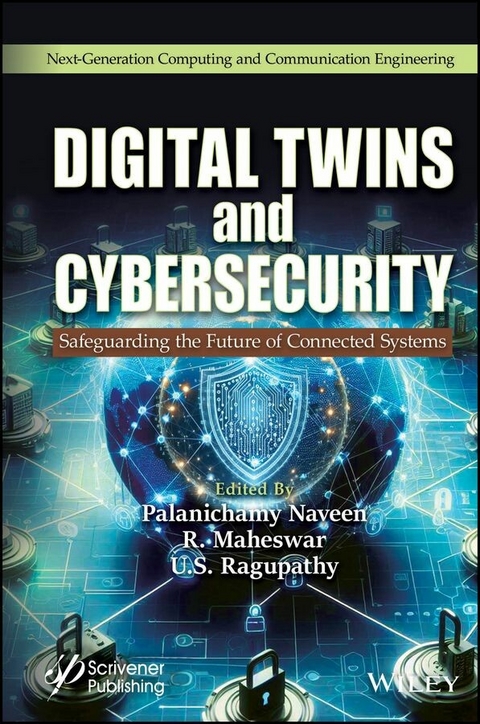
Digital Twins and Cybersecurity (eBook)
692 Seiten
Wiley-Scrivener (Verlag)
978-1-394-27248-8 (ISBN)
This book serves as a comprehensive guide to understanding the complex relationship between digital twins and cybersecurity, providing practical strategies for safeguarding connected systems.
This book explores the convergence of digital twins and cybersecurity, offering insights, strategies, and best practices for safeguarding connected systems. It examines the definition, evolution, types, and applications of digital twins across industries like manufacturing, healthcare, and transportation. Highlighting growing digital threats, it underscores the need for robust cybersecurity measures to protect the integrity and confidentiality of digital twin ecosystems.
The book analyzes key components and infrastructure of digital twins, including data flow, communication channels, vulnerabilities, and security considerations. It also addresses privacy challenges and explores relevant regulations and compliance requirements. Guiding readers through implementing security measures, it presents a comprehensive cybersecurity framework, covering data protection, encryption, and strategies for ensuring data integrity and confidentiality. It also explores incident response and recovery, secure communication protocols, and the roles of gateways and firewalls. Industry-specific challenges and mitigation strategies are examined through real-world case studies, offering valuable insights and lessons learned.
Emerging trends in digital twin technology are thoroughly explored, including the impact of advancements such as AI and quantum computing and their associated cybersecurity challenges and solutions.
Audience
This book is an essential resource for professionals in the fields of cybersecurity and industrial and infrastructure sectors, including manufacturing, healthcare, transportation, and other industries that utilize digital twins. Researchers in computer science, cybersecurity, engineering, and technology, as well as policymakers and regulatory bodies, will also find this book highly useful.
Palanichamy Naveen, PhD, is an assistant professor in the Department of Electrical and Electronics Engineering at KPR Institute of Engineering and Technology, Coimbatore, India, and a visiting researcher at the University of Hradec Králové, Czech Republic. He has authored two books and more than 25 research articles in peer-reviewed journals. His research interests include image processing and machine learning.
R. Maheswar, PhD, is the director in-charge of the Center for Research and Development, head of the Center for IoT and AI (CITI), and a professor in the Department of Electronics and Communication Engineering at KPR Institute of Engineering and Technology, Coimbatore, India. He has published more than 70 papers in international journals and conferences, authored several books, and is affiliated with many journals in wireless communications. His research interests include wireless sensor networks, IoT, queuing theory, and performance evaluation.
U.S. Ragupathy, PhD, is a professor in the Department of Electronics and Communication Engineering at KPR Institute of Engineering and Technology, Coimbatore, India. He has published more than 100 papers in international journals and conferences and has organized over 30 national level seminars and conferences. His research areas include image processing, VLSI signal processing, wavelets, and soft computing techniques. He has received multiple awards, including the Best Faculty Award and the Best Researcher Award from Kongu Engineering College.
This book serves as a comprehensive guide to understanding the complex relationship between digital twins and cybersecurity, providing practical strategies for safeguarding connected systems. This book explores the convergence of digital twins and cybersecurity, offering insights, strategies, and best practices for safeguarding connected systems. It examines the definition, evolution, types, and applications of digital twins across industries like manufacturing, healthcare, and transportation. Highlighting growing digital threats, it underscores the need for robust cybersecurity measures to protect the integrity and confidentiality of digital twin ecosystems. The book analyzes key components and infrastructure of digital twins, including data flow, communication channels, vulnerabilities, and security considerations. It also addresses privacy challenges and explores relevant regulations and compliance requirements. Guiding readers through implementing security measures, it presents a comprehensive cybersecurity framework, covering data protection, encryption, and strategies for ensuring data integrity and confidentiality. It also explores incident response and recovery, secure communication protocols, and the roles of gateways and firewalls. Industry-specific challenges and mitigation strategies are examined through real-world case studies, offering valuable insights and lessons learned. Emerging trends in digital twin technology are thoroughly explored, including the impact of advancements such as AI and quantum computing and their associated cybersecurity challenges and solutions. Audience This book is an essential resource for professionals in the fields of cybersecurity and industrial and infrastructure sectors, including manufacturing, healthcare, transportation, and other industries that utilize digital twins. Researchers in computer science, cybersecurity, engineering, and technology, as well as policymakers and regulatory bodies, will also find this book highly useful.
1
Introduction
Palanichamy Naveen*, R. Maheswar and U.S. Ragupathy
KPR Institute of Engineering and Technology, Coimbatore, India
1.1 Introduction to the Concept of Digital Twins and Cybersecurity
Digital twins and cybersecurity are two rapidly evolving fields that have become increasingly intertwined in today’s technology-driven world. The concept of digital twins has gained significant attention in recent years, promising transformative capabilities across various industries. Simultaneously, the importance of cybersecurity has become paramount, with the proliferation of digital systems and the growing threat landscape.
Digital twins are virtual replicas or representations of physical assets, systems, or processes. They leverage real-time data and advanced analytics to provide insights, simulations, and optimizations. Digital twins can range from simple models representing a single component to complex, dynamic replicas of entire systems or ecosystems. They bridge the physical and digital realms, enabling organizations to monitor, analyze, and interact with their physical counterparts in a virtual environment.
The significance of digital twins lies in their ability to unlock numerous benefits. They facilitate predictive maintenance, enabling organizations to detect and address potential issues before they lead to costly failures. Digital twins empower optimization efforts, allowing organizations to simulate different scenarios and identify opportunities for improvement. They enhance asset management, enabling real-time monitoring and performance optimization. Furthermore, digital twins foster innovation by providing a virtual sandbox for testing and experimentation.
However, as digital twins become more pervasive, their security and resilience become critical concerns. Cybersecurity is the practice of protecting computer systems, networks, and data from unauthorized access, cyberattacks, and data breaches. With digital twins intimately connected to physical assets, systems, and processes, their security vulnerabilities can have far-reaching consequences. A successful cyberattack on a digital twin could result in physical damage, operational disruption, financial loss, or compromise of sensitive information.
Securing digital twins requires a comprehensive cybersecurity approach that encompasses multiple layers of protection. It involves robust authentication mechanisms to ensure authorized access and prevent unauthorized manipulation. Secure communication protocols and encryption techniques are essential to safeguard the integrity and confidentiality of data flowing between the physical assets and their digital replicas. Threat detection mechanisms, incident response strategies, and proactive monitoring are vital to identify and mitigate cyberthreats in real time.
Moreover, privacy considerations play a crucial role in digital twin deployments. Organizations must navigate regulatory frameworks and compliance requirements to ensure the privacy rights of individuals are respected. Balancing the collection and use of data with privacy protection is a significant challenge.
In this book, we will explore the integration of digital twins and cybersecurity in depth. We will delve into the fundamental concepts of digital twins, examining their types, applications, and benefits across various industries. Simultaneously, we will explore the evolving landscape of cybersecurity along with the threats, challenges, and best practices for protecting digital twins.
Through this exploration, we aim to provide a comprehensive understanding of the integration of digital twins and cybersecurity, highlighting the critical importance of securing digital twin environments. We will discuss the architecture of digital twins and the security considerations at each level. We will explore authentication mechanisms, access control models, threat detection strategies, and incident response protocols specific to digital twins. Additionally, we will delve into securing data, communication channels, and privacy considerations within digital twin environments.
Furthermore, we will examine real-world case studies to analyze successful implementations and learn from past mistakes. We will also discuss future trends and challenges, exploring the potential impact of emerging technologies, such as artificial intelligence and quantum computing, on digital twins and cybersecurity.
By the end of this book, readers will have gained a comprehensive understanding of the integration of digital twins and cybersecurity, enabling them to navigate the complex landscape of securing digital twin environments effectively.
Stay tuned as we embark on this journey to explore the fascinating world of digital twins and the crucial role cybersecurity plays in ensuring their resilience and security.
1.2 Significance of Integrating Digital Twins and Cybersecurity
The integration of digital twins and cybersecurity holds significant importance in today’s technology-driven landscape. As digital twins become more pervasive across various industries, ensuring their security and resilience becomes paramount. The key reasons why the integration of digital twins and cybersecurity is crucial are represented in Figure 1.1.
Figure 1.1 Reasons for integrating cybersecurity and digital twins.
1.2.1 Protection of Physical Assets
Digital twins are virtual replicas of physical assets, systems, or processes. The integration of cybersecurity measures ensures the protection of these physical assets from cyberthreats. By securing digital twins, organizations can prevent unauthorized access, manipulation, or control of the physical counterparts. This protection is especially crucial for critical infrastructure, industrial systems, and high-value assets.
Here, digital twins refer to virtual representations of physical assets, systems, or processes. These digital replicas capture the characteristics and behaviors of their physical counterparts in real time, enabling organizations to monitor, analyze, and optimize their performance.
The integration of cybersecurity measures plays a crucial role in safeguarding these digital twins and, consequently, the physical assets they represent. Cybersecurity measures encompass a range of techniques and strategies aimed at protecting digital twins from various cyberthreats, such as unauthorized access, manipulation, or control.
By implementing robust cybersecurity measures, organizations can prevent malicious actors from compromising the security and integrity of their digital twins. Unauthorized access to a digital twin could lead to unauthorized control or manipulation of the corresponding physical asset, posing significant risks to critical infrastructure, industrial systems, and high-value assets.
For example, in the case of critical infrastructure like power plants or transportation systems, a compromised digital twin could potentially allow attackers to manipulate the operation of these physical systems, leading to disruptions, safety hazards, or financial losses. Similarly, in the context of industrial systems, unauthorized access to a digital twin representing a manufacturing process could result in product quality issues or production disruptions.
Securing digital twins involves implementing cybersecurity measures such as access controls, encryption, authentication mechanisms, and monitoring systems. These measures help ensure that only authorized personnel can access and modify the digital twin, reducing the risk of unauthorized control or manipulation of the physical asset.
The protection of physical assets through the integration of cybersecurity measures is vital for organizations operating critical infrastructure, industrial systems, and high-value assets. It helps mitigate the risks associated with cyberthreats, ensuring the reliability, safety, and operational integrity of these assets.
1.2.2 Mitigation of Operational Risks
Digital twins are used to monitor, analyze, and optimize the performance of physical assets and systems. By integrating cybersecurity measures, organizations can mitigate operational risks associated with digital twins. Robust authentication mechanisms, secure communication channels, and threat detection mechanisms help identify potential vulnerabilities and respond proactively, minimizing the risk of operational disruptions and ensuring smooth operations.
Here, digital twins are employed as tools for monitoring, analyzing, and optimizing the performance of physical assets and systems. These virtual replicas provide real-time data and insights that enable organizations to make informed decisions, improve efficiency, and reduce operational risks.
Integrating cybersecurity measures is crucial to mitigating operational risks associated with digital twins. Robust authentication mechanisms play a key role in verifying the identity and access rights of individuals interacting with the digital twin. This ensures that only authorized personnel can make changes or access sensitive information, reducing the risk of unauthorized modifications or data breaches.
Secure communication channels are vital for protecting the transmission of data between the digital twin and external systems. By encrypting the data in transit, organizations can prevent eavesdropping and unauthorized access, maintaining the confidentiality and integrity of the information exchanged.
Threat detection mechanisms form another important aspect of mitigating operational risks. By...
| Erscheint lt. Verlag | 20.12.2024 |
|---|---|
| Sprache | englisch |
| Themenwelt | Mathematik / Informatik ► Informatik ► Theorie / Studium |
| Schlagworte | AI • Compliance with Regulations • cybersecurity • Design Validation • Digital Twins • Emerging trends • Facilitation of Trust • future-proofing • Mitigation of Operational Risks • performance monitoring • Predictive Maintenance • Prevention of Cyber-Physical Attacks • Prevention of Data Breaches • Protection of Physical Assets • Quantum Computing |
| ISBN-10 | 1-394-27248-0 / 1394272480 |
| ISBN-13 | 978-1-394-27248-8 / 9781394272488 |
| Informationen gemäß Produktsicherheitsverordnung (GPSR) | |
| Haben Sie eine Frage zum Produkt? |
 EPUB (Adobe DRM)
Kopierschutz: Adobe-DRM
Adobe-DRM ist ein Kopierschutz, der das eBook vor Mißbrauch schützen soll. Dabei wird das eBook bereits beim Download auf Ihre persönliche Adobe-ID autorisiert. Lesen können Sie das eBook dann nur auf den Geräten, welche ebenfalls auf Ihre Adobe-ID registriert sind.
Details zum Adobe-DRM
Dateiformat: EPUB (Electronic Publication)
EPUB ist ein offener Standard für eBooks und eignet sich besonders zur Darstellung von Belletristik und Sachbüchern. Der Fließtext wird dynamisch an die Display- und Schriftgröße angepasst. Auch für mobile Lesegeräte ist EPUB daher gut geeignet.
Systemvoraussetzungen:
PC/Mac: Mit einem PC oder Mac können Sie dieses eBook lesen. Sie benötigen eine
eReader: Dieses eBook kann mit (fast) allen eBook-Readern gelesen werden. Mit dem amazon-Kindle ist es aber nicht kompatibel.
Smartphone/Tablet: Egal ob Apple oder Android, dieses eBook können Sie lesen. Sie benötigen eine
Geräteliste und zusätzliche Hinweise
Buying eBooks from abroad
For tax law reasons we can sell eBooks just within Germany and Switzerland. Regrettably we cannot fulfill eBook-orders from other countries.
aus dem Bereich


